

By Mariam Lomidze, Culture & Events Reporter · 27/10/2026
Updated 30 October 2026
Swiss citizens can currently enter Georgia without a visa and stay for up to one year, which makes this one of the simplest long-haul destinations in the world to plan for from Zurich, Geneva or Basel. There is no Georgian e-visa to apply for in the ordinary case, no fee, and no need to carry extra paperwork beyond a passport valid for the length of the trip. Visa policy can and does change at short notice for individual countries, so Swiss travellers should check the current rule for their passport on the Ministry of Foreign Affairs of Georgia’s visa information page before booking, rather than relying on last year’s blog post.
Beyond the visa question, the practical side of a Georgia trip for a Swiss traveller is straightforward: there is no direct flight from Switzerland, cards work in most cities but cash still matters outside them, Georgian lari is the only legal tender, and English covers tourist Tbilisi, Kazbegi, Svaneti and Batumi reasonably well while rural Georgia still runs on Georgian and Russian. Ties between the two countries are modest rather than deep, so this guide focuses on what actually helps you plan, book and travel well, and says plainly where the Swiss-Georgian connection is thin.
Visa and entry rules for Swiss citizens
As of October 2026, Switzerland is on Georgia’s list of nationalities exempt from a visa for short and medium stays, with the standard allowance commonly cited at up to 365 days per calendar year, though this figure has shifted before and should not be treated as fixed. There is no Georgian e-visa requirement for ordinary tourist travel by Swiss passport holders under the current policy. If you hold a different or additional passport, a residence permit from a third country, or you are travelling with family members of other nationalities who do need a visa, use the official e-visa portal at evisa.gov.ge, where applications are typically processed within a few working days once the required documents are uploaded. Always confirm your own situation on the Ministry of Foreign Affairs of Georgia’s visa information page close to your travel date, since Georgia reviews its visa-free list periodically and the rule that applied last year may not apply this year.
Getting there: flights and driving in Georgia
There are no scheduled non-stop flights between Switzerland and Georgia at the time of writing. Swiss travellers connect through one of several hub airports, most commonly Istanbul, with other reasonable options via Munich, Warsaw, Vienna, Doha or Dubai depending on the season and carrier. Tbilisi International Airport takes the great majority of international traffic; Kutaisi International Airport and Batumi International Airport are useful alternatives for western and coastal Georgia and sometimes undercut Tbilisi fares on low-cost carriers. Check live routes and schedules directly before booking, since airlines add and drop Georgian connections more often than most European routes.
| Typical hub | Georgian arrival airport | Notes |
|---|---|---|
| Istanbul | Tbilisi, Batumi, Kutaisi | Widest choice of onward times, short connection |
| Munich or Vienna | Tbilisi | Convenient for German-speaking Switzerland |
| Warsaw | Tbilisi, Kutaisi | Low-cost onward option on some dates |
| Doha or Dubai | Tbilisi | Longer routing, useful if combining with Gulf stopover |
A Swiss driving licence is generally accepted for self-drive and car rental in Georgia for the duration of a short stay, since Georgia recognises foreign licences issued in line with the 1949 Geneva Road Traffic Convention, to which Switzerland is a party; carrying an International Driving Permit alongside your Swiss licence is a sensible extra precaution that most rental desks will ask for in any case. Mountain roads to Svaneti, Tusheti and the Kazbegi area are steep, narrow and occasionally affected by weather or works, so check conditions before driving yourself; our own road status page and the Georgian Road Department’s updates are both worth a look the day before you travel.
Money, cards and cash
The Georgian lari (GEL) is the only legal currency; euros, US dollars and Swiss francs are not used for everyday purchases, though hotels and some tour operators quote in euros for convenience. On 29 October 2026 the National Bank of Georgia’s reference rate put one euro at 2.8875 GEL; there is no official Swiss franc cross-rate published locally, so the easiest approach is to withdraw lari from an ATM with a Swiss debit or credit card, or pay by card where accepted, rather than trying to exchange francs in Georgia, where bureaux de change mostly handle euros, dollars and a handful of regional currencies. Cards are widely accepted in Tbilisi, Batumi and Kutaisi hotels, restaurants and supermarkets; carry some cash for markets, minibuses, village guesthouses and mountain regions such as Tusheti or Racha, where card terminals are unreliable or absent.
SIM, eSIM and staying connected
Georgia has decent 4G coverage along main routes and in all cities, thinning out in high mountain valleys. Magti, Geocell and Beeline are the three national operators; a tourist SIM can be bought on arrival at Tbilisi airport with a passport, usually within a few minutes. eSIM options from international providers also work well for short trips and avoid the airport queue, though check compatibility with your phone before departure. Wifi is standard in hotels, cafes and most guesthouses.

Language and embassy support
Georgian is the official language and uses its own script, which Swiss visitors will not be able to sight-read; menus and signage in tourist areas are usually bilingual with English. Russian remains widely understood, particularly by anyone over about forty and in commerce, while English coverage is strongest in Tbilisi’s old town, Batumi’s seafront, Kazbegi and the main Svaneti villages, and noticeably weaker in rural Kakheti, Racha and Tusheti. German is occasionally spoken by guides and hoteliers who have worked with German-speaking tourists, but it should never be assumed. We were unable to confirm a current, publicly listed address and phone number for a Swiss diplomatic mission resident in Tbilisi; Swiss nationals should check their own country’s official travel advisory or contact the consular section via the Ministry of Foreign Affairs of Georgia for the embassy or honorary consulate currently responsible for Georgia before travelling, since representation arrangements have changed over the years.
Food, dietary notes and etiquette
Georgian food leans heavily on bread, cheese, walnuts, fresh herbs and grilled or stewed meat, with khachapuri (cheese bread), khinkali (dumplings), lobio (bean stew) and a long tradition of vegetable and bean dishes giving vegetarians genuinely good options rather than an afterthought. Halal food is not the mainstream, but it is findable, particularly in Adjara and parts of Kvemo Kartli with Muslim communities, and in Tbilisi’s international restaurant scene; ask in advance rather than assuming. Swiss travellers used to strong dairy and bread-based comfort food will find plenty of familiar textures, and the wine culture, with Georgia’s qvevri tradition recognised on UNESCO’s list of intangible cultural heritage, gives a natural point of interest for visitors from a country with its own strong wine regions. Table etiquette matters: a Georgian supra (feast) involves structured toasting led by a tamada, and it is polite to drink to the toast even if only a small sip, though declining alcohol entirely for health or personal reasons is accepted without issue if stated plainly at the start of the meal.
Switzerland and Georgia: ties, seasons and health
Direct historical and trade ties between Switzerland and Georgia are thin rather than deep, and this guide will not overstate them. Switzerland has supported Georgian institutional and health projects through its development cooperation programme, and Swiss expertise in mountain tourism and ski infrastructure has occasionally informed discussions around resorts such as Gudauri and Bakuriani, but there is no large historical population movement or trade relationship comparable to Georgia’s ties with neighbouring regions. The Georgian diaspora in Switzerland is small. Most Swiss visitors arrive in the warmer months, July to September, for wine country, hiking and Tbilisi, with a secondary peak around the Christmas and New Year period for skiing in Gudauri and Bakuriani, where terrain and snow reliability invite comparison with the Alps even though scale and infrastructure differ.
Georgia has required inbound travellers to hold travel medical insurance in recent years as a matter of entry policy rather than a routine border check; rules and enforcement have varied, so confirm the current requirement before you fly via the Ministry of Foreign Affairs of Georgia or the National Center for Disease Control and Public Health, and buy a policy that covers mountain activity, evacuation and the whole length of your stay regardless of whether it is checked. Tap water is generally safe in Tbilisi and other large towns; carry a basic first-aid kit for rural and mountain legs where pharmacies are sparse, and consult your own doctor before travel for any vaccination advice specific to your health history, since this guide cannot substitute for personal medical advice.
What a G Tour private guide adds
For a first visit, the main practical friction points for Swiss travellers are language on rural roads, the gap between Tbilisi’s card-friendly centre and the cash-only mountains, and the steep, unfamiliar driving on routes to Kazbegi, Svaneti or Tusheti. A private guide and driver removes all three at once: fixed, pre-agreed pricing, English or German-speaking guiding at a small daily supplement, and a driver who already knows which Kazbegi or Svaneti road is open that week. Airport pickup starts at 45 euros for a sedan between Tbilisi airport and the city, a licensed city guide for an Old Tbilisi walk runs from 110 euros per group for up to four hours, and full touring days with a car and driver start at 150 euros. Ready-made multi-day routes such as Georgia in 7 Days — The Classic Grand Tour or Kazbegi — 2-Day Mountain Journey bundle guide, driver and logistics into one quoted price per person, which tends to suit Swiss travellers used to transparent, all-in pricing rather than negotiating locally. Full current rates sit on our price data page, tours on gtour.ge/tours, and add-on services on gtour.ge/services.
If this guide is part of a trip you are planning, our Georgia in 10 Days — Tbilisi to Svaneti to the Sea and Tbilisi & Mtskheta — The Essential First Day cover the places it describes with a private guide and driver; a GTour travel expert adapts the route to your dates.
Practical summary
- Visa: Swiss citizens currently travel visa-free for short to medium stays; verify the exact allowance on mfa.gov.ge before booking.
- Flights: no direct Switzerland-Georgia route; connect via Istanbul, Munich, Vienna, Warsaw, Doha or Dubai.
- Driving: Swiss licence generally accepted short-term; carry an International Driving Permit as backup.
- Money: Georgian lari only; use cards in cities, carry cash for rural areas and mountains.
- SIM: buy a tourist SIM at the airport or activate an eSIM before arrival.
- Language: English in tourist hubs, Russian widely understood, Georgian and rural areas need a guide or translation app.
- Insurance: travel medical insurance has been a stated entry requirement in recent years; confirm current status and buy adequate cover regardless.
- Embassy: confirm current Swiss diplomatic representation for Georgia through official channels before travel, as this changes.
Sources
- Georgian e-Visa portal
- Georgian Road Department road conditions
- Georgia e-Visa Portal
- Visa and Border Crossing Rules (Matsne legal act)
- Georgian National Tourism Administration – Travel Georgia
- Georgia National Statistics Office – Tourism Statistics
- Agenda.ge – Georgia Tourism News
Questions this guide does not answer? Write to info@castle.ge or WhatsApp +995 577 41 63 14 — a person in Tbilisi replies. See also our travel services and all guides.
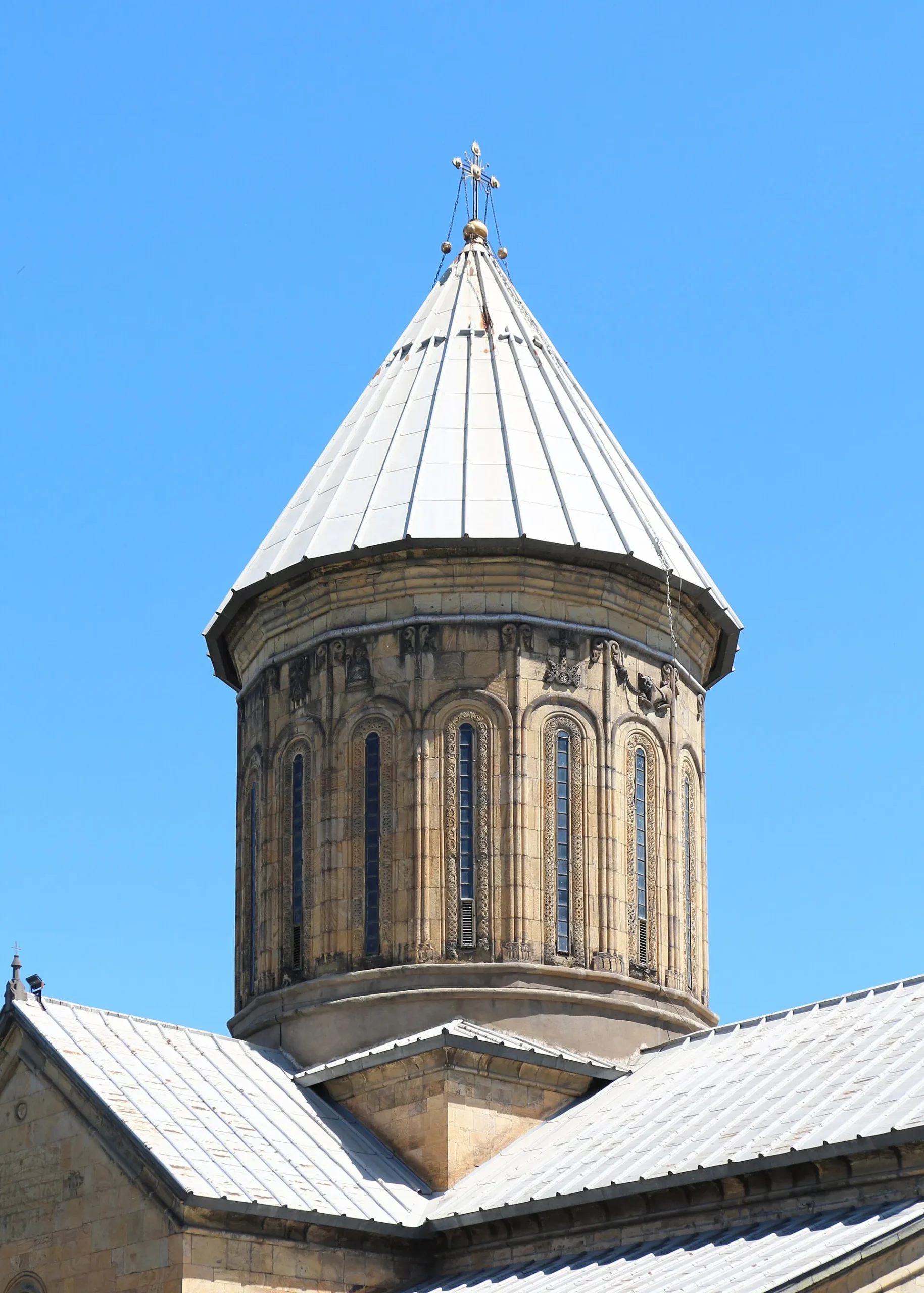
Sioni Cathedral dome in Tbilisi, a landmark in Georgia's capital. · Photo: Bernard Gagnon / Wikimedia Commons, CC BY 4.0
Been to Georgia? Tell us how it went — the best stories are published here.
Share your tripOne email a week: what changed for travellers in Georgia — rules, roads, flights, seasons — plus one place worth the trip. Written by the GTour desk, no advertising, unsubscribe in one click.
This story across our partner network — ქართულად: შენი დასვენება
