


By Mariam Lomidze, Culture & Events Reporter · 27/10/2026
Yes, with a clear caveat: in Tbilisi, Batumi and Kutaisi, and at virtually every site tourists visit, you will find enough English in 2026 to travel independently, but there is no law or measured guarantee of fluency behind that. The practical anchor date is 2010, when English replaced Russian as the compulsory first foreign language in Georgian state schools; people who went through school after that reform, now broadly under 35, have had years of English lessons, while many Georgians educated before it learned Russian as their main second language instead.
The honest nuance is that English ability in Georgia tracks age, job and location far more closely than nationality or region alone. A 25-year-old hotel receptionist in Batumi and a 25-year-old shepherd’s family in a Tusheti summer village had very different schooling and very different daily exposure to foreigners, so both are “young Georgians” with opposite English levels. Geostat, the national statistics office, does not publish a yearly percentage of English speakers, so every figure in this article is descriptive, drawn from tourism patterns and public infrastructure, not from a census question.
English by age and by place
As a rough, honestly approximate picture for 2026:
| Where | Typical English level | Notes |
|---|---|---|
| Tbilisi, under 35, hospitality/tech/university | Good to fluent | Cafés, hotels, museums, ride-hailing apps work in English |
| Tbilisi, 55 and older | Basic or none | Georgian or Russian more likely; patience and gestures help |
| Batumi and the Black Sea coast in season | Good in tourist areas | Staff often juggle English, Russian and Turkish for mixed visitors |
| Kutaisi and Imereti | Fair, improving | Growth of Kutaisi airport traffic has lifted tourism-facing English |
| Kakheti wine villages, Kazbegi, Svaneti towns | Mixed, family by family | Guesthouse owners who host foreigners regularly often speak some English |
| Tusheti, remote highland villages | Minimal | A guide or driver who translates is genuinely useful here |
Russian is still around
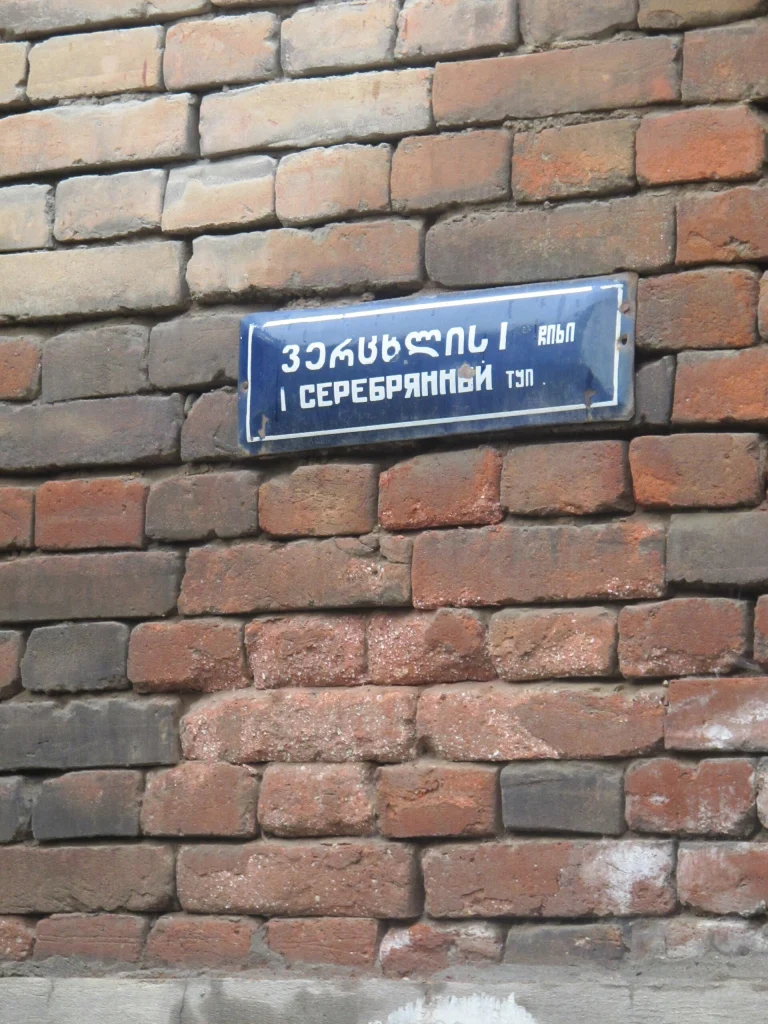
Russian remains widely understood among Georgians who finished school before the 2010s, and it is still common along parts of the Black Sea coast where Russian-speaking visitors are frequent. It is worth naming the social nuance plainly: since the 2008 war and more so since 2022, some younger Georgians are reluctant to use Russian with strangers even when they know it, and prefer English or Georgian with gestures. Travellers should not assume Russian is a safe default simply because it is spoken; English is generally the more welcome fallback with younger staff.
Signage and useful apps
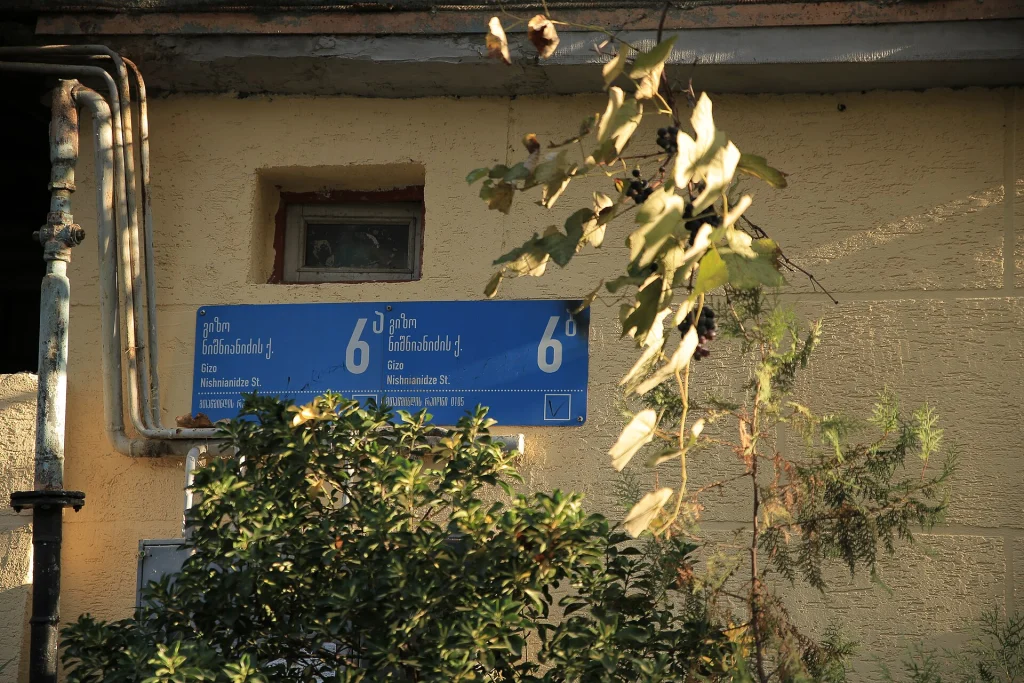
- Road signs across the country carry Latin-script transliteration alongside Georgian script, a longstanding practice tied to national road infrastructure standards.
- Major museums, UNESCO-listed monasteries and national park visitor centres generally post English panels, though smaller rural churches and village museums often do not.
- A phone translation app with offline Georgian support, plus a downloaded offline map, covers most gaps; Georgian script does not transliterate predictably, so a camera-translation app is more reliable than guessing pronunciation.
- Airport information, flight boards and announcements at Tbilisi, Kutaisi and Batumi airports are bilingual Georgian-English as standard.
When a private guide earns its price
A guide matters least in central Tbilisi, where English is easy to find, and matters most once you leave paved tourist routes: village wine cellars, Svaneti towers, the Tusheti passes, or any conversation that needs more than pointing at a menu. Current 2026 guide rates, per group rather than per person, are listed in full at the GTOUR data page:
| Service | Price |
|---|---|
| City walk, up to 4 hours (Old Tbilisi, Mtskheta, Kutaisi or Batumi) | €70 |
| Full day with your own transport, up to 10 hours | €110 |
| Full day, specialist (wine, architecture, hiking, history) | €140 |
| Multi-day touring, per day | €120 |
On our own itineraries such as Tusheti — Georgia’s Last Wild Frontier (4 Days), Mestia & Ushguli — 3 Days in Svaneti and David Gareji — Desert Monasteries on the Edge of Georgia, a licensed English-speaking guide is built in for exactly this reason: once you are past the last paved town, a guide is less a convenience than a translator, driver and safety contact in one. For language needs specific to your passport and home country, see our guides for travellers from different nationalities at gtour.ge/travellers-from/.
Where this comes from
This article draws on general tourism-sector observation rather than a single official English-proficiency statistic, because Geostat does not publish one; population and education background figures come from geostat.ge. Airport and transport signage practice is drawn from the public information pages of Tbilisi, Kutaisi and Batumi international airports. International travel-press coverage of Georgia (lonelyplanet.com and theguardian.com travel sections) was used to cross-check the general picture for 2026. Prices for guides shown here are GTOUR’s own 2026 rates, checked against gtour.ge/data/ on 27 October 2026; always verify current rates at that page before booking, since they can change seasonally.
If this guide is part of a trip you are planning, our Georgia in 10 Days — Tbilisi to Svaneti to the Sea and Monasteries of Georgia — Mtskheta, the Thirteen Fathers and Kakheti in 3 Days cover the places it describes with a private guide and driver; a GTour travel expert adapts the route to your dates.
Sources
- Lonely Planet Georgia country guide
- The Guardian Georgia travel coverage
- Geostat population and social statistics
- UNESCO ICH – Living Culture of Three Writing Systems of the Georgian Alphabet
- Geostat – 2014 General Population Census (Ethnicity, Language, Religion)
- GNTA Georgia.travel – Frequently Asked Questions
- Agenda.ge – Tourism Section
- Georgia Today – Tourism and Travel Articles
Questions this guide does not answer? Write to info@castle.ge or WhatsApp +995 577 41 63 14 — a person in Tbilisi replies. See also our travel services and all guides.
Old Russian-era sign beside a modern Georgian-English sign shows Tbilisi's shift from Russian to English. · Photo: FingerWiki / Wikimedia Commons, CC BY 4.0
Been to Georgia? Tell us how it went — the best stories are published here.
Share your tripOne email a week: what changed for travellers in Georgia — rules, roads, flights, seasons — plus one place worth the trip. Written by the GTour desk, no advertising, unsubscribe in one click.
This story across our partner network — ქართულად: შენი დასვენება