Published: 16 Nov 2026 · Updated: 16 Nov 2026
By David Kiknadze, Transport & Openings Reporter · 16/11/2026
- Visit for landscape and rural character rather than monuments, and pair the villages with the Javakheti lakes and Ninotsminda.
- Check the Roads Department's status page before travelling in November, when snow can affect plateau roads.
- Base yourself in Akhalkalaki and arrange a private transfer or guided day trip, since public transport only reaches as far as Ninotsminda or Akhalkalaki.
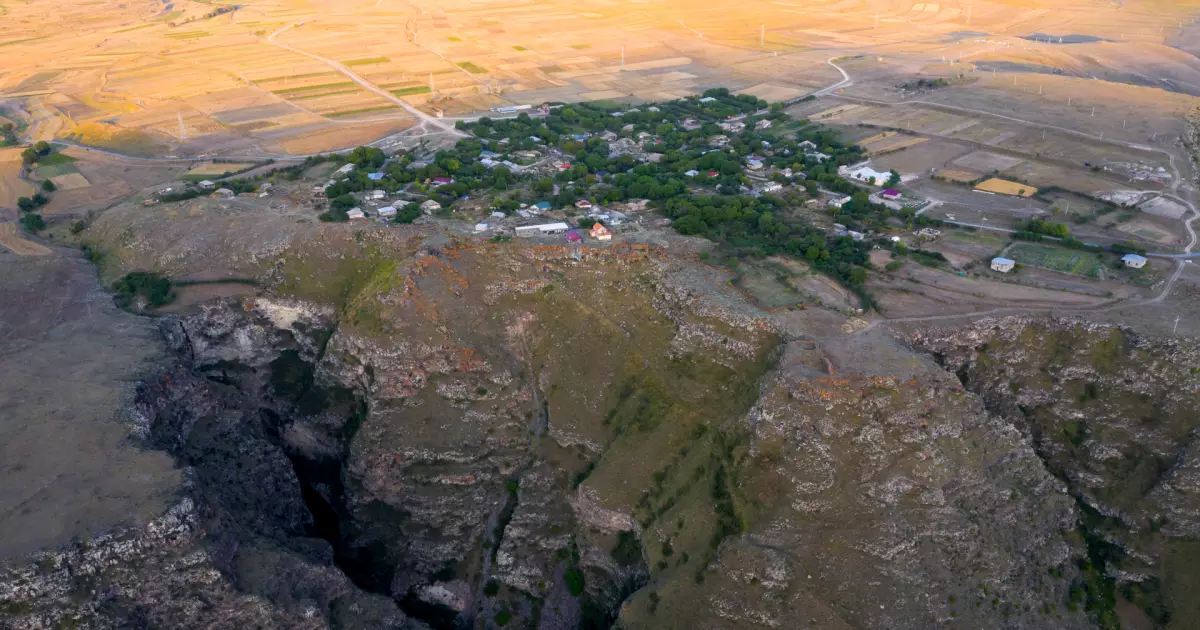
Saro and Khizabavra are unlikely to appear on a first-time itinerary of Georgia, and that is rather the point. The two villages sit on the Javakheti volcanic plateau in Samtskhe-Javakheti, above 1,700 metres, on open basalt grassland studded with extinct volcanic cones. They are not sightseeing stops with a single monument to tick off; they are entry points into a region shaped by high-altitude farming, Armenian Apostolic church life and a volcanic geology unlike anything in Georgia’s forested valleys further north and west.
The present character of both villages dates to the early nineteenth century, when Armenians from the Erzurum and Kars districts resettled across the Akhalkalaki and Akhaltsikhe areas following the Treaty of Adrianople of 1829. That history is still visible today in the Armenian Apostolic churches that anchor each village and in the Armenian language spoken across the plateau. Through the Soviet period the area was organised around potato growing and livestock suited to the cold climate, and both villages remain primarily agricultural, with stone and basalt houses and communal grazing land.
What there is to see
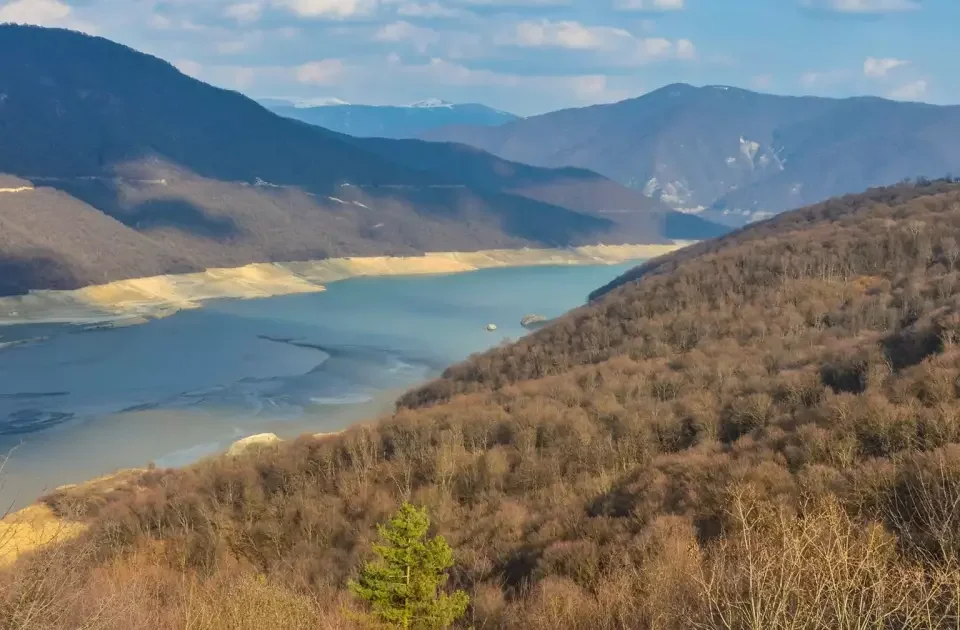
The landscape itself is the draw: treeless, volcanic, and more reminiscent of Armenia’s highlands than Georgia’s better-known valleys. Both village churches can usually be viewed from outside, and travellers who encounter a service should visit quietly and with permission. A short drive brings you to Lake Paravani, Georgia’s largest lake by surface area, and to the smaller wetlands of Khanchali and Madatapa, part of the protected landscape managed by the Agency of Protected Areas.
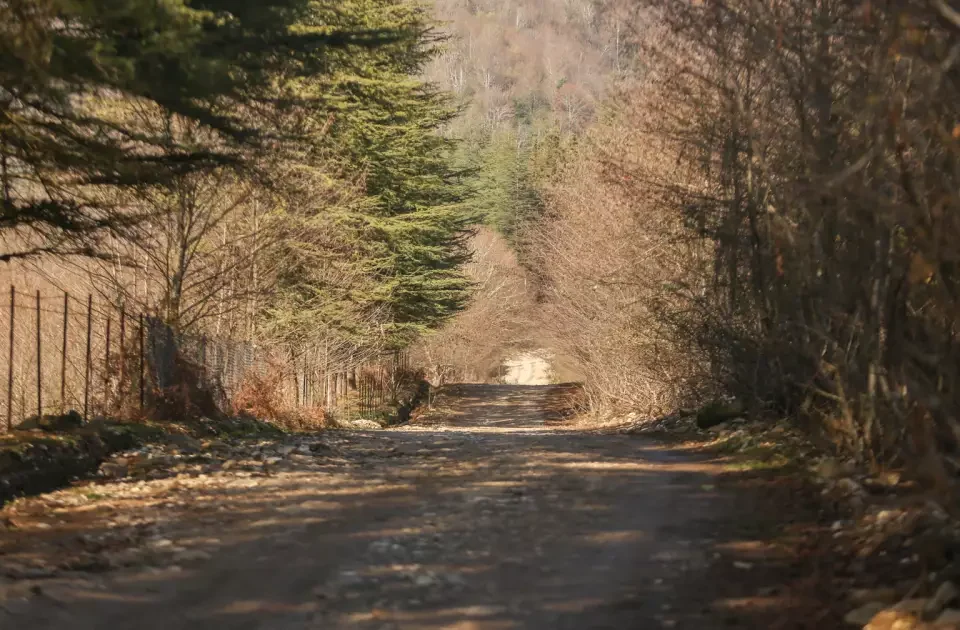
November is not the easiest month here. Snow is possible from October through April, and the plateau’s long winter can affect roads, so this is not the season for lingering outdoors or for birdwatching on the lakes, which is better suited to June through September. What November does offer is the stark, empty quality of the landscape under low light, which suits travellers more interested in geology and rural life than in warm-weather activity, and who are willing to confirm road conditions before setting out.
There is no rail service to this part of Samtskhe-Javakheti. From Tbilisi the drive takes about four hours ten minutes, typically via Tsalka or via Borjomi and Akhaltsikhe; from Kutaisi allow roughly four hours thirty minutes and from Batumi about six hours ten minutes, both via Akhaltsikhe. Marshrutkas run from Tbilisi to Ninotsminda and Akhalkalaki, but onward travel to the villages depends on local or chartered transport, making a private transfer the more practical choice. Akhalkalaki serves as the usual base, and the villages combine naturally with the Javakheti lakes and Ninotsminda on a longer loop through the region.
Read more on gtour.ge: Saro and Khizabavra
What to see — a daily GTour desk feature drawn from the verified-place register and our destination guides. Not sponsored.
Source: apa.gov.ge (apa.gov.ge)
Been to Georgia? Tell us how it went — the best stories are published here.
Share your tripOne email a week: what changed for travellers in Georgia — rules, roads, flights, seasons — plus one place worth the trip. Written by the GTour desk, no advertising, unsubscribe in one click.
Planning a trip to Georgia?
GTour runs private tours with English-speaking guides from Old Tbilisi. See all tours or ask the desk on WhatsApp +995 555 423 845.
Source: apa.gov.ge (apa.gov.ge). Reported by the GTour desk; updated 16 November 2026, 15:45 (Tbilisi).
Spoken summary script
Have you ever wanted to explore a part of Georgia that's truly off the beaten path? Let me introduce you to the villages of Saro and Khizabavra, perched on the Javakheti volcanic plateau. These aren't your typical tourist hotspots. Instead, they offer a unique glimpse into a region defined by its high-altitude farming, rich Armenian heritage, and striking volcanic landscapes unlike anything you'll find in Georgia's lush valleys to the north and west. The villages, settled by Armenians in the early nineteenth century, still echo with the past, seen in their stone and basalt houses and the beautiful Armenian Apostolic churches.
While November might not be the ideal time for birdwatching at nearby Lake Paravani or the wetlands of Khanchali and Madatapa, it's perfect for those who appreciate the stark beauty of a volcanic plateau under the soft glow of low light. Although getting there involves a bit of a journey, it's well worth the effort for those craving an authentic experience. Heading there with G Tour makes it seamless, as we ensure your adventure is both comfortable and enriching. If you're eager to dive deeper into Georgia’s hidden gems and plan a visit, check out gtour.ge for more travel inspiration and guides to create an unforgettable trip.
The stored spoken summary, rather than a full reading of the article.