

By David Kiknadze, Transport & Openings Reporter · 15/11/2026
For most first-time visitors, Sololaki and the Old Town give the best return on a short stay: cobbled streets, sulphur baths, balconied courtyards and almost everything within a 15-minute walk, at the cost of some night noise near the bar strip. Families and anyone staying more than four or five nights generally do better a little further out, in Vera or Vake, where the streets are wider, parking exists, and the parks are real parks rather than a patch of gravel. Chugureti, around Marjanishvili and the river, is the value and nomad choice: cheaper rooms, a strong café and co-working scene, and a metro station on the doorstep, though a few blocks near the railway station are worth avoiding after dark.
None of Tbilisi‘s central districts are dangerous by the standards of a European capital, and the Georgian Ministry of Foreign Affairs does not list the city as a particular risk area for visitors, but the five neighbourhoods differ sharply in noise, gradient, hotel stock and who they suit. This guide compares them directly, with the metro map, realistic price bands, and where to lean if you are travelling with children, as a couple, or working remotely.
Old Town and Abanotubani: atmosphere at a price
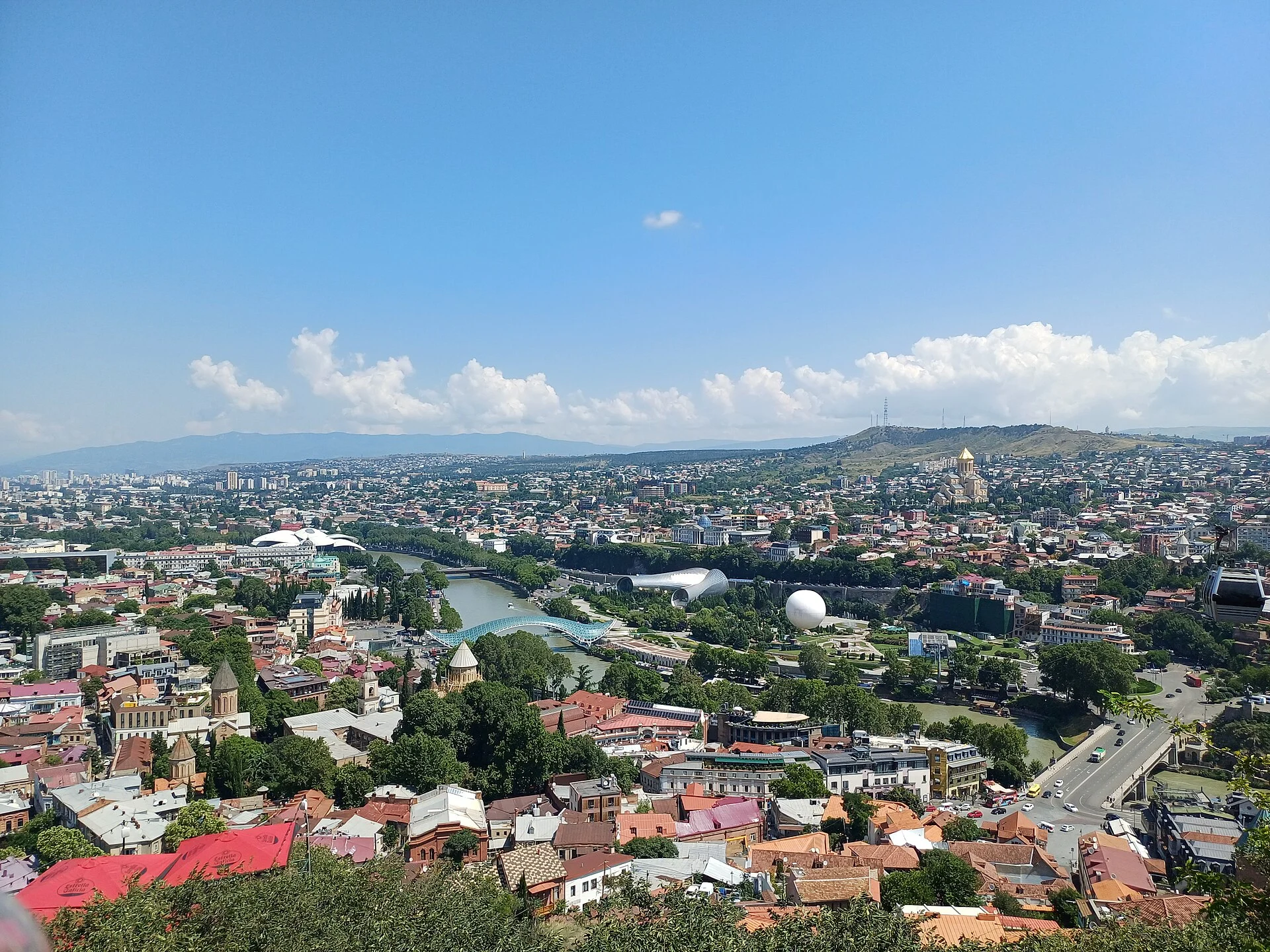
The Old Town — Abanotubani’s sulphur-bath quarter, the Narikala hillside and the lanes down to Meidan Square — is the most photographed part of Tbilisi and the most walkable: the sulphur baths, the Bridge of Peace, Rike Park and the funicular to Narikala are all within ten minutes of each other. It is also the loudest. Erekle II and Shardeni streets fill with bars and live music most nights, and balcony rooms facing the squares can run past 1am on weekends. Hotel stock ranges from simple guesthouses in converted merchant houses to design hotels charging well above the city average; rates move with the season and with events, so check live prices rather than relying on a fixed figure. A private room at a known bathhouse, booked through something like the Sulphur Baths Experience, is one of the better reasons to base yourself here rather than visit for an afternoon.
Walkability is excellent; nightlife noise is the trade-off. Light sleepers should ask for a courtyard-facing room, not a street-facing one.
Sololaki: faded grandeur, the best all-round balance
Immediately south and west of Freedom Square, Sololaki is Tbilisi’s Art Nouveau quarter: ornamented facades on Machabeli and Sulkhan-Saba streets, the Dry Bridge flea market at its edge, and a slower pace than the Old Town proper despite being just as central. It suits couples and independent travellers who want historic character without the loudest bar strip on their street, and it has absorbed much of the city’s boutique-guesthouse growth of the past decade, so quality varies more than price — read recent reviews rather than trusting star ratings alone. Freedom Square metro station sits at its edge, and the Dry Bridge and Dezerter Bazaar markets are a flat ten-minute walk, well covered by the Dry Bridge and Dezerter Bazaar — the Markets Walk, 3 Hours.
Sololaki’s side streets are quiet at night; its main thoroughfares, less so. It is a strong middle option between atmosphere and calm.
Vera: quiet grid between the hills
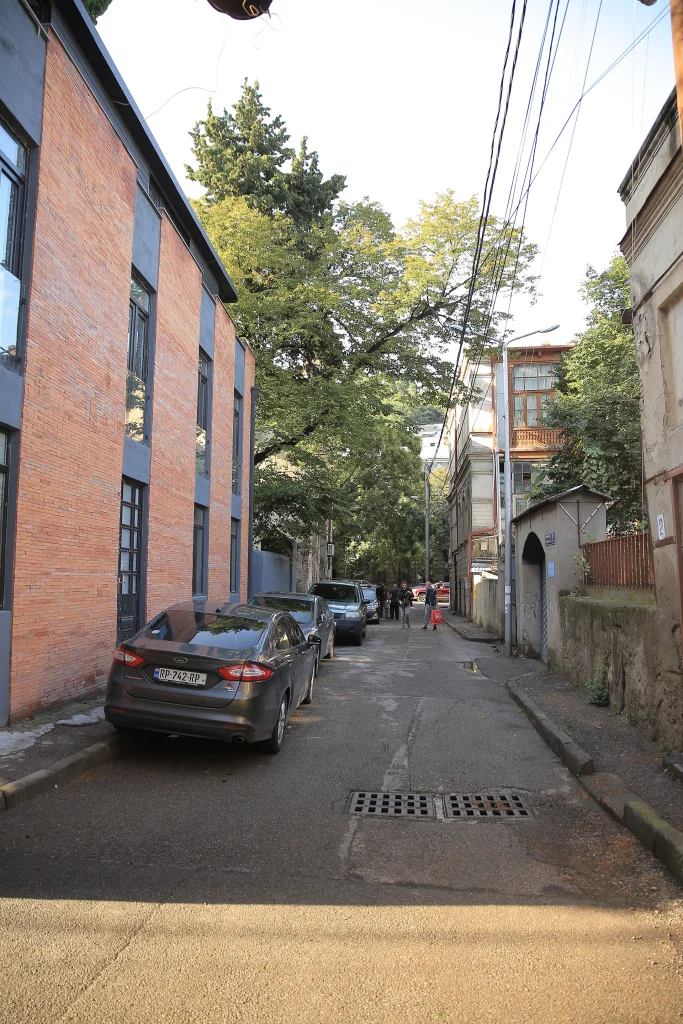
Vera sits above Rustaveli Avenue on a gentler slope, laid out on a European-style grid rather than the Old Town’s lanes. It is residential, embassy-dense, and noticeably quieter after 10pm, with a cluster of good mid-range restaurants rather than tourist-strip bars. Vera Park and the climb toward Mtatsminda give some green space, and the district connects to Rustaveli metro station in a few minutes on foot or a short uphill walk to Technical University station. Hotel stock here leans toward serviced apartments and mid-size hotels rather than hostels, which suits trips of a week or more, business travellers, and families who want a kitchen without paying for a full Vake-style apartment.
Walkability to the Old Town is good (20 to 25 minutes on foot, or two metro stops); walkability within Vera itself, for daily errands, is very good.
Vake: space, schools and the serious upscale stays
Vake is Tbilisi’s most affluent residential district: wide avenues, international schools, the city’s largest central park, and the highest concentration of upscale hotels and long-stay apartments outside the Old Town. It is the clear choice for families who need space, a stroller-friendly park, and quiet nights, and for anyone on a longer remote-work stay who wants reliable cafés and fast internet over historic charm. The cost is distance: Vake has no metro station of its own, and getting to the Old Town means a taxi, a bus, or a 10-minute walk down to Vazha-Pshavela or State University stations on the red line, adding 20 to 30 minutes each way compared with Sololaki. Vake Park and the Mtatsminda ridge above it are covered on the Tbilisi Hills — Mtatsminda Pantheon, Funicular and Vake Park, 3 Hours, which is a useful first orientation walk if you base yourself here.
Vake trades 15 minutes of commute for noticeably more quiet, more green space, and larger rooms for the same budget.
Chugureti and Marjanishvili: river energy, the best value
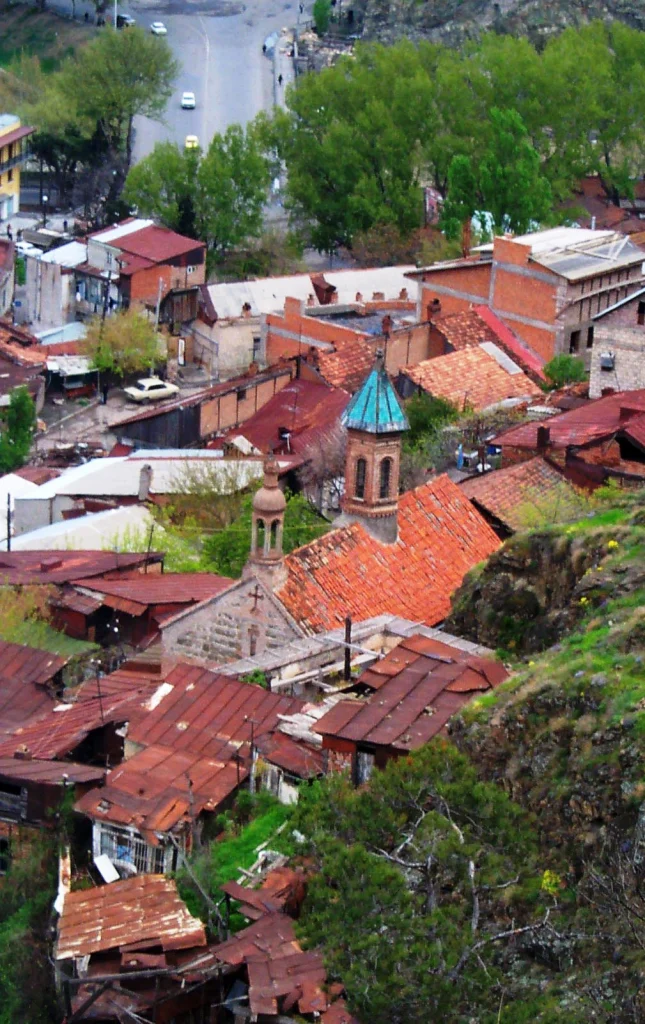
North of the Mtkvari river, Chugureti around Marjanishvili Square and Station Square is Tbilisi’s fastest-changing district: Soviet apartment blocks and merchant houses alongside the Fabrika creative hub, independent coffee roasters, and a growing run of design hostels and budget guesthouses. It is the strongest value base in the city and a natural fit for digital nomads, thanks to Fabrika’s co-working space and the Marjanishvili metro station on the same line as Freedom Square, three stops from the Old Town. Soviet-era modernist buildings and mosaics worth seeking out here are covered on the Soviet Tbilisi — Modernist Architecture and Mosaics walk, and Fabrika’s courtyard is part of the Street Art, Courtyards and Fabrika — the New Tbilisi Walk.
Caution applies narrowly: the streets immediately around the central railway station (Station Square) can feel rough after dark, with a transient crowd and poorer lighting than Marjanishvili proper two blocks away. This is a matter of atmosphere rather than a documented crime hotspot — if in doubt, check current travel guidance from the Ministry of Foreign Affairs of Georgia before you travel and ask your hotel which blocks they recommend walking after midnight.
| Neighbourhood | Character | Night noise | Walkability | Nearest metro | Best for |
|---|---|---|---|---|---|
| Old Town | Cobbled lanes, baths, tourist core | High near Shardeni/Erekle II | Excellent | Freedom Square, Avlabari | First-timers, short stays, couples |
| Sololaki | Art Nouveau, flea market edge | Moderate | Excellent | Freedom Square | Couples, independent travellers |
| Vera | Quiet residential grid | Low | Very good | Rustaveli, Technical University | Business stays, small families |
| Vake | Upscale, parks, schools | Low | Good within district, poor to centre | Vazha-Pshavela, State University (10–15 min walk) | Families, long remote-work stays |
| Chugureti | Creative hub, river energy | Moderate near Fabrika | Good | Marjanishvili | Nomads, budget travellers |
Metro, taxis and realistic walking times
Tbilisi Metro has two lines crossing at Station Square: the red line runs from Akhmeteli Theatre through Marjanishvili, Freedom Square and Rustaveli to Vazha-Pshavela and the Saburtalo end near Vake; the green line serves Station Square to Varketili. Fares and the exact timetable are set by the city authority and can change, so check current fares and operating hours directly rather than relying on a printed figure. In practice, a stay near Freedom Square, Marjanishvili or Rustaveli puts you one or two stops from almost anywhere useful; a stay in Vake means a 10 to 15 minute walk to the nearest station first. Taxis and ride-hailing apps are inexpensive across the city and are the simplest way to move luggage between neighbourhoods; for a fixed, pre-agreed fare with flight tracking and meeting at arrivals, the Tbilisi Airport Transfer — Sedan or Minivan, Meet and Greet covers the ride in from the airport, and a Car with Driver by the Day works well if you are comparing neighbourhoods in person before booking a longer stay.
Who does best where, and where to be more careful at night
- Families — Vake first choice for space and the park; Vera as a close second with a shorter walk to the centre.
- Couples — Sololaki for balance of atmosphere and quiet, Old Town if nightlife and proximity to the baths matter more than sleep.
- Digital nomads and long stays — Chugureti for value and co-working, Vera for a quieter working routine with good cafés.
- First-time, short stays (2–4 nights) — Old Town or Sololaki, for maximum sights on foot.
- Areas to treat with ordinary urban caution after dark — the immediate blocks around the central railway station in Chugureti, and poorly lit back lanes of the Old Town away from the main squares; none of this amounts to a specific warning, and travellers should still check current guidance from Georgia’s Ministry of Foreign Affairs before any trip.
If choosing between two districts is hard from a browser, our hotel-booking service on gtour.ge/services gives free recommendations for your dates and budget, with a plain opinion on noise and location, and a fixed €15 fee only if you ask us to make the booking itself.
If this guide is part of a trip you are planning, our Tbilisi to Gudauri Transfer — Ski Season 4×4 and Mtskheta on Foot — the Ancient Capital in 2 Hours cover the places it describes with a private guide and driver; a GTour travel expert adapts the route to your dates.
Practical summary
- Old Town or Sololaki for short stays and first visits, accepting some night noise.
- Vera for a quiet central base with a short walk to Rustaveli metro.
- Vake for families and long stays, accepting a 10 to 15 minute walk to the nearest metro.
- Chugureti (Marjanishvili) for the best value and the strongest nomad scene, avoiding the immediate railway station blocks after dark.
- Check current metro fares and hours, and any Ministry of Foreign Affairs travel guidance, before you travel rather than relying on printed figures.
- Use a fixed-price airport transfer and a licensed guide for the first orientation walk if this is your first visit to the city.
Sources
- Ministry of Foreign Affairs of Georgia, travel advice
- Georgia National Tourism Administration
- Georgia Travel, official destination site
- Tbilisi City Hall, municipal services
- Lonely Planet, Tbilisi destination guide
- Agenda.ge, Tbilisi city news
- Georgia Today, Tbilisi lifestyle coverage
Questions this guide does not answer? Write to info@castle.ge or WhatsApp +995 555 42 38 45 — a person in Tbilisi replies. See also our travel services and all guides.
Panoramic view of Tbilisi and the Mtkvari River from the Sololaki Range. · Photo: Radosław Botev / Wikimedia Commons, CC BY 3.0 pl
Been to Georgia? Tell us how it went — the best stories are published here.
Share your tripOne email a week: what changed for travellers in Georgia — rules, roads, flights, seasons — plus one place worth the trip. Written by the GTour desk, no advertising, unsubscribe in one click.
