

Published: 10 Nov 2026 · Updated: 13 Nov 2026
By Nino Gelashvili, Travel News Editor · 10/11/2026
Updated 13 November 2026
Yes, Georgia can be visited comfortably by Muslim travellers, but with realistic expectations: halal food exists and is growing, especially in Tbilisi and Batumi, functioning mosques are easy to find, and Adjara has an indigenous Muslim Georgian population that has shaped its own food and architecture. What Georgia does not have is a national halal certification scheme or widespread prayer-time infrastructure, so a little planning on food, prayer and Ramadan logistics goes a long way.
Georgia is an overwhelmingly Orthodox Christian country, but Islam is its second-largest faith, concentrated in three distinct communities: ethnic Georgian Muslims in the Adjara highlands, ethnic Azerbaijanis in Kvemo Kartli, and Kist and Chechen Sunni and Sufi communities in the Pankisi Gorge. Figures are updated periodically by the national statistics office; for the most current breakdown see Geostat, the National Statistics Office of Georgia. This guide covers mosques, halal and alcohol-free dining, Ramadan, and the dress expected at Orthodox churches, which most itineraries also include.
Georgia’s Muslim communities and the Adjara connection
Adjara, the autonomous region around Batumi, was under Ottoman administration until 1878, and a substantial share of its highland population, in villages around Khulo, Shuakhevi and Keda, remained Muslim afterwards even as the coastal city modernised. This is the one part of Georgia where mosques sit beside churches in the same valley, and where older residents may speak some Turkish alongside Georgian and Adjarian dialect. Travellers who want to see this side of the region in person usually combine it with mountain scenery: the Adjara Highlands — Khulo, the Goderdzi Pass and the Green Lake day trip, and the longer Adjara Highlands by 4×4 — Beshumi, Goderdzi and the Alpine Villages reach the same highland villages where this heritage is most visible.
Kvemo Kartli, south of Tbilisi, and the Pankisi Gorge in the northeast are the other two centres of Georgian Islam. Pankisi in particular has drawn foreign media attention for its Sufi traditions and its distinct identity within Georgia; background pieces have appeared from outlets such as BBC News, useful context before a visit, though Pankisi itself is outside most standard tour routes.
Mosques in Tbilisi and Batumi, and the Juma Mosque
Tbilisi’s Juma Mosque, in the Abanotubani old town near the sulphur baths, is one of a small number of mosques worldwide where Sunni and Shia Muslims pray together in the same building, a legacy of the city’s long multi-confessional history. It is open outside prayer times to respectful visitors; remove shoes, dress modestly, and avoid photographing worshippers. It sits a short walk from the synagogue and several Armenian churches, and our Faiths of Tbilisi — Synagogue, Mosque and Armenian Churches Walk covers all of them with a licensed guide who can explain the etiquette on the spot.
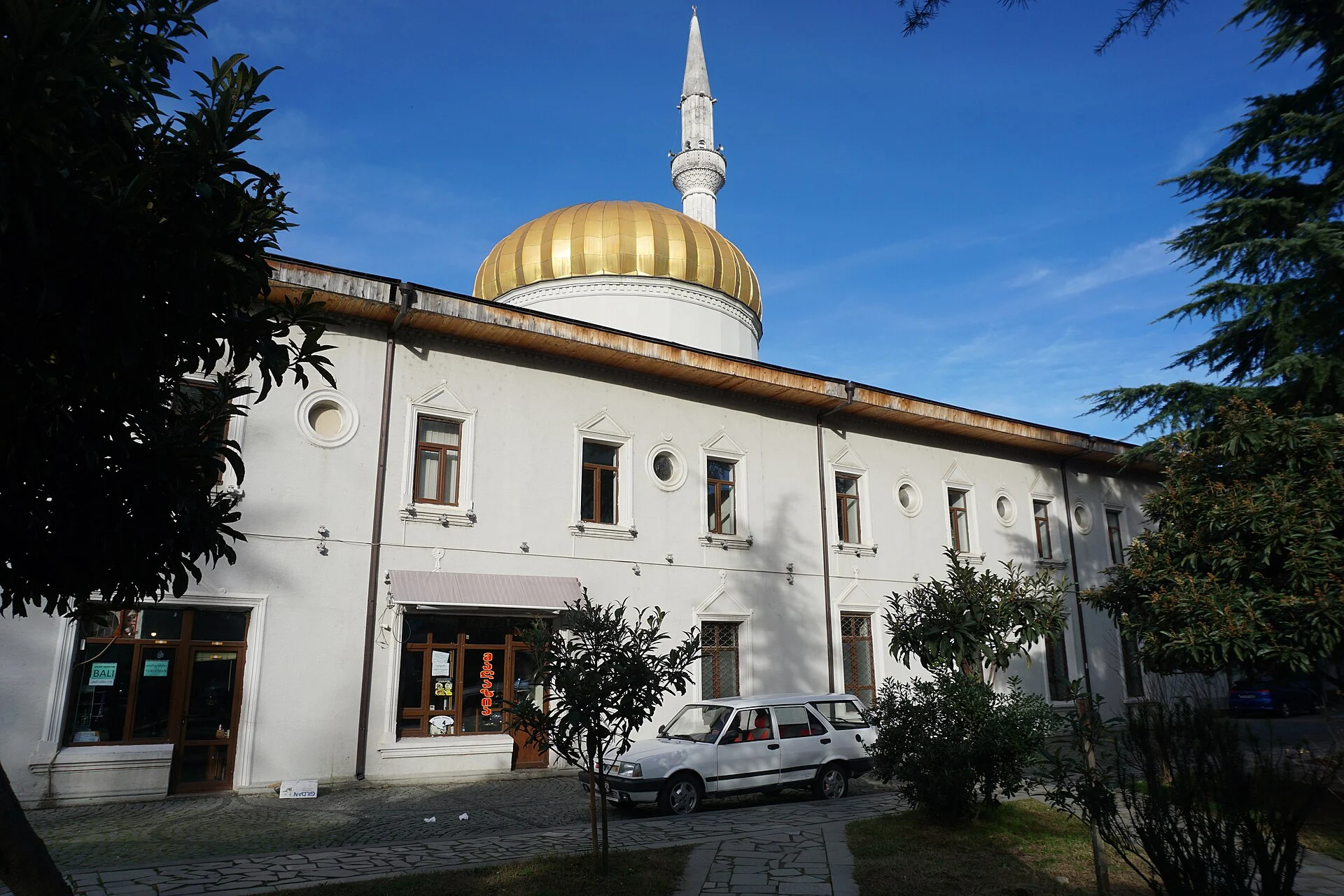
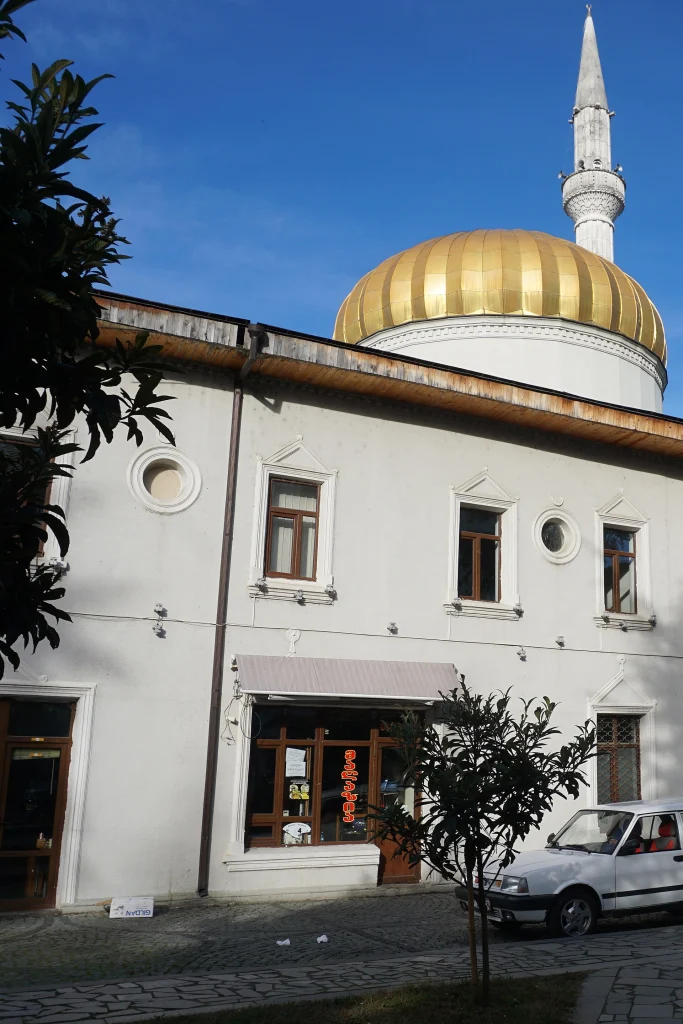
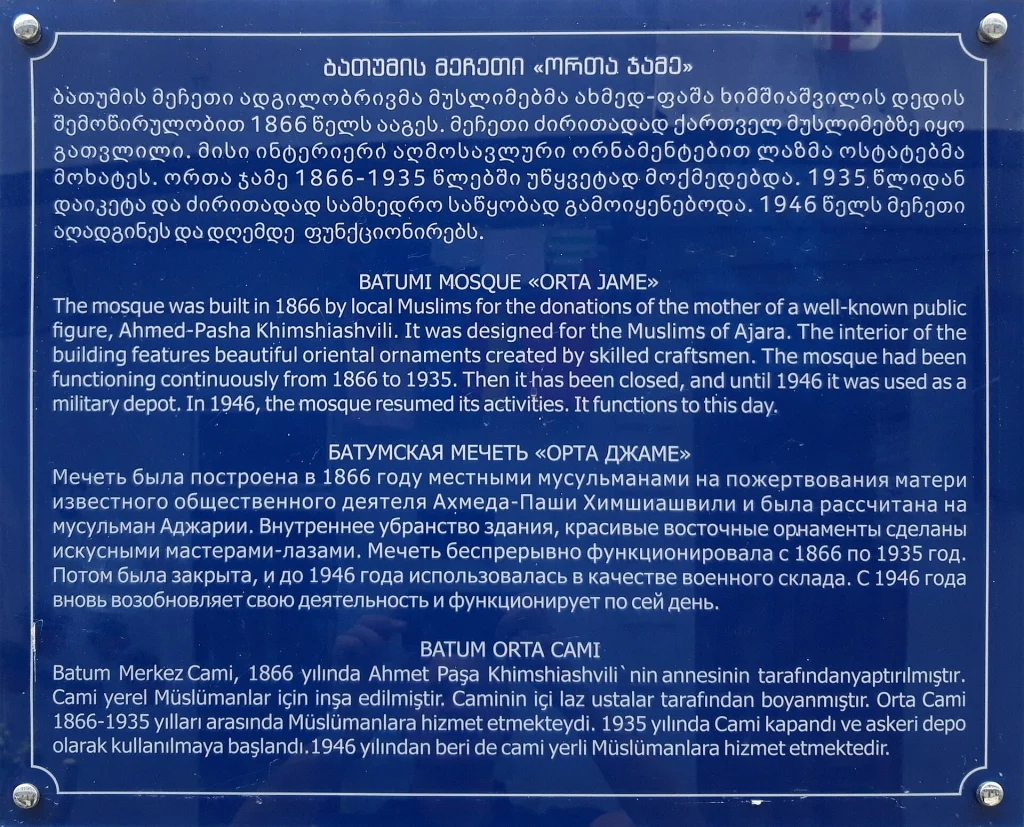
In Batumi, the historic mosque in the old town, commonly known locally as Orta Jame, dates to the Ottoman era and remains active; it is a short stop on our Batumi Old Town and Boulevard Walk or the longer Batumi Half-Day — Old Town, Boulevard and the Botanical Garden. In the Adjara highlands, village mosques tend to be wooden, built in the same wood-shingle vernacular as the churches and houses around them, a visibly different style from the stone mosques of the Gulf or the domed Ottoman mosques of Turkey.
| Mosque | City or region | Notes |
|---|---|---|
| Juma Mosque | Tbilisi, Abanotubani | Shared Sunni-Shia prayer hall, open to visitors outside prayer times |
| Orta Jame (historic mosque) | Batumi old town | Ottoman-era, still active, near the boulevard |
| Village mosques | Khulo, Keda, Shuakhevi (Adjara) | Wooden, vernacular style, serving local Muslim Georgian communities |
Prayer times and Ramadan in Georgia
There is no national prayer-time board or muezzin app maintained by a Georgian authority, so most visitors use an international prayer-times app set to Tbilisi or Batumi, and check qibla direction (roughly south-southeast from both cities) with a compass app rather than relying on signage in hotel rooms, which is uncommon outside a handful of international chains. The Juma Mosque in Tbilisi and the Batumi mosque both hold regular daily prayers and welcome visiting worshippers.
Ramadan is not a Georgian public holiday, and most businesses, restaurants and transport run on a normal schedule; this is worth knowing in advance so fasting travellers can plan meal timing themselves rather than expect adjusted opening hours. Adjara’s Muslim villages and Pankisi do mark the month with community iftars, and a growing number of Tbilisi and Batumi restaurants, particularly Turkish and Azerbaijani-run ones, offer iftar set menus during the month; confirm with the specific restaurant since this is not centrally coordinated. For how to combine a Ramadan-period visit with sightseeing, our Faiths of Tbilisi walk and the Adjara day trips above both work well outside midday heat and fasting hours.
Halal food in Tbilisi
Georgia has no government-run halal certification body, so “halal” in restaurant listings is generally the owner’s own assurance rather than a third-party stamp; asking directly at the counter is normal practice and not considered rude. Tbilisi’s most reliable halal options cluster around Marjanishvili and Agmashenebeli Avenue, where Turkish, Azerbaijani and Middle Eastern-owned kebab houses, grills and bakeries are concentrated, largely because of the city’s long-standing Turkish and Azerbaijani business community.
Traditional Georgian cuisine itself is relatively easy to navigate: khachapuri (cheese bread), lobio (bean stew), pkhali (vegetable pâtés) and mtsvadi (skewered meat, usually pork or beef depending on the restaurant) form the backbone of most menus, and beef or lamb khinkali can usually be ordered instead of the pork-mix version if you ask. Wine and sauces made with wine are common in the national cuisine, so if avoiding alcohol entirely matters, say so when ordering rather than assuming a dish is alcohol-free. Our Bread, Cheese and Churchkhela — Tbilisi Food Workshops and Cooking Class in Tbilisi — Khinkali, Khachapuri and a Family Lunch can both be adapted to beef or lamb only and no wine reductions if arranged in advance.
Halal food in Batumi and Adjara
Batumi sees far more Gulf and Turkish visitors than Tbilisi in summer, reflected in its boulevard restaurants, several of which are explicitly halal-run Turkish or Azerbaijani kebab and grill houses, and in seasonal charter flights; check current routes at Batumi International Airport. In the Adjara highlands, village cooking in Muslim communities draws on mountain lamb, maize bread, honey and dairy, with little pork tradition locally, though always confirm with your host or guide rather than assume. Our Adjarian Khachapuri Class in Batumi and the Machakhela Valley — Arched Bridges, Mirveti Waterfall and a Village Lunch day trip can both be arranged around dietary needs when you book.
Alcohol-free dining and the Georgian supra
Wine is central to Georgian identity; the country’s qvevri clay-vessel winemaking tradition is recognised by UNESCO as intangible cultural heritage, see UNESCO’s listing for the Ancient Georgian traditional Qvevri wine-making method, and a classic supra feast is built around a toastmaster and repeated toasts with wine. None of this is compulsory for a guest: Georgian hospitality is flexible, and hosts routinely serve lemonade, mineral water such as Borjomi, and fruit juices alongside wine without comment. If you are booking a feast evening, say in advance that you want it alcohol-free; our Supra Evening — a Georgian Feast with a Tamada and Polyphonic Song is commonly requested this way and the toastmaster simply substitutes non-alcoholic drinks for the toasts.
Modest dress at Orthodox sites
Most Georgian itineraries include working Orthodox churches and monasteries, and the dress code there is strict regardless of the visitor’s own faith: women cover their hair with a scarf and wear a skirt or wrap over trousers (both are usually provided free at the entrance if you forget), men wear long trousers rather than shorts, and both should avoid bare shoulders. Voices stay low, photography of services is avoided, and visitors do not walk in front of someone venerating an icon. Official guidance is published by the Georgian Patriarchate at Patriarchate.ge. Muslim travellers who already dress modestly will find this code easy to follow; it applies at sites on tours such as Mtskheta Half-Day — Jvari and Svetitskhoveli from Tbilisi and Gelati, Motsameta and Tskaltubo — Kings, Saints and Soviet Spas.
Practical tips for Gulf and Turkish visitors
- Visa: entry rules differ by nationality and change periodically. Check current e-visa eligibility at evisa.gov.ge and consular advice at the Ministry of Foreign Affairs of Georgia before booking flights.
- Currency: the lari (GEL) is the only accepted currency for payment; convert AED, SAR or TRY to GEL or carry EUR/USD for exchange. At the National Bank of Georgia’s 9 November 2026 rate, 1 EUR was about 2.90 GEL and 1 AED about 0.71 GEL; rates move daily, so check the day you travel.
- Language: Turkish is widely understood in Batumi and Adjara due to cross-border trade; Arabic is less common outside large hotels, so a translation app helps for menus and signage.
- Flights: Batumi and Tbilisi both receive seasonal Gulf and Turkish charter and scheduled connections; check current routes at Tbilisi International Airport and Batumi International Airport.
- Airport pickup and transfers are easiest arranged in advance; our Tbilisi Airport Transfer and Batumi Airport Transfer services meet arrivals with a name board and track flights, so no planning is needed on the day.
If this guide is part of a trip you are planning, our Georgia Off the Beaten Track — 9 Days in Racha, Samegrelo and Guria and Batumi to Kutaisi Transfer — Private Car cover the places it describes with a private guide and driver; a GTour travel expert adapts the route to your dates.
Practical summary
- Mosques: Juma Mosque (Tbilisi, shared Sunni-Shia), the historic Batumi mosque, and village mosques in Khulo, Keda and Shuakhevi.
- Halal food: informal, owner-asserted; strongest options in Tbilisi’s Marjanishvili/Agmashenebeli area and on Batumi’s boulevard; always ask directly.
- Ramadan: not a public holiday, businesses run normally; some Turkish and Azerbaijani restaurants offer iftar menus in season, confirm individually.
- Alcohol: wine is central to Georgian hospitality but never compulsory; request an alcohol-free supra or meal when booking.
- Dress: scarf and long skirt or wrap for women, long trousers for men at working Orthodox churches; wraps are usually provided on site.
- Verify before you fly: visa rules at evisa.gov.ge and mfa.gov.ge, the lari exchange rate at the National Bank of Georgia, and flight routes at your departure and arrival airport’s official site.
- Plan Adjara around Khulo, Goderdzi and the Batumi old town for the clearest view of Georgia’s Muslim Georgian heritage.
Sources
- National Statistics Office of Georgia
- Georgia e-Visa portal
- Ministry of Foreign Affairs of Georgia
- UNESCO, Qvevri wine-making heritage listing
- BBC News
Questions this guide does not answer? Write to info@castle.ge or WhatsApp +995 577 41 63 14 — a person in Tbilisi replies. See also our travel services and all guides.
Batumi Central Mosque, the city's Ottoman-era mosque serving Adjara's Muslim community. · Photo: Andrew Milligan sumo / Wikimedia Commons, CC BY 2.0
Been to Georgia? Tell us how it went — the best stories are published here.
Share your tripOne email a week: what changed for travellers in Georgia — rules, roads, flights, seasons — plus one place worth the trip. Written by the GTour desk, no advertising, unsubscribe in one click.
This story across our partner network — ქართულად: შენი დასვენება
Spoken summary script
If you're considering a trip to Georgia and wonder how it accommodates Muslim travelers, you'll be pleased to know the country offers a variety of experiences tailored for you. While Georgia is predominantly Orthodox Christian, it has a rich tapestry of Muslim communities, especially in regions like Adjara, which boasts an intriguing mix of mosques and churches. In cities like Tbilisi and Batumi, halal food options are increasingly available, and you'll find functioning mosques where Sunni and Shia Muslims can pray together, a testament to Georgia's diverse religious history. However, planning is key since the country lacks a national halal certification and extensive prayer-time infrastructure.
For those curious about exploring Georgia's unique Muslim heritage, Adjara is a must-visit destination. Here, you can find villages where mosques and churches coexist, reflecting centuries of cultural interweaving. And if you want to delve deeper into the spiritual landscape, consider visiting Kvemo Kartli and the Pankisi Gorge, areas with distinct Islamic communities.
Joining a G Tour can enhance your experience, offering guided visits to these culturally rich areas with insights you might miss on your own. Visit gtour.ge for more travel guides and to plan your Georgia trip.
The stored spoken summary, rather than a full reading of the article.
