

By Mariam Lomidze, Culture & Events Reporter · 10/11/2026
Updated 13 November 2026
Yes, and more reliably than most visitors expect: Georgia’s Orthodox fasting calendar (known locally as the samarkhvo table) removes meat, dairy, eggs, and sometimes oil from huge sections of the national menu for roughly half the year, which means walnuts, beans, and vegetables carry the cuisine rather than decorate it. A vegetarian or vegan traveller who learns to ask “samarkhvoa?” (is this a fasting dish?) can eat extremely well in Tbilisi, Batumi, and almost every wine village between them, without ever touching a tasting menu built for foreigners.
The trick is timing and vocabulary, not luck. Outside the fasting periods, Georgian cooking leans on pork, beef, and dairy, and stock-based soups hide meat in places a menu rarely states outright. This guide sets out which dishes are naturally vegan, which look vegetarian but usually are not, where to eat in Tbilisi and Batumi, and how to decline meat and wine at a supra without causing offence. As with any dietary question, if you have allergies or a medical condition, confirm ingredients directly with the kitchen rather than relying on a guidebook.
The fasting-day trick: how samarkhvo works in your favour
The Georgian Orthodox Church observes a long annual fasting cycle: every Wednesday and Friday, the 40 days of Great Lent before Easter, the Dormition fast in the first half of August, and the Nativity fast, which in 2026 runs from 28 November to Christmas Eve on 6 January (Georgia keeps the Julian calendar for church dates, so Christmas falls on 7 January). On these days observant households and many restaurant kitchens switch to samarkhvo cooking: no meat, no dairy, no eggs, and on the strictest days no fish or oil either. The exact calendar shifts slightly year to year around Easter, so if you are travelling on a specific date, check it against the parish calendar rather than assume last year’s dates apply; the Patriarchate of Georgia publishes the Orthodox calendar in Georgian, and any hotel reception or guide can confirm whether a given date is a fasting day.
The practical effect for a vegan traveller is that a huge portion of the national repertoire, built around walnuts, pulses, and vegetables, was never designed with animal products in the first place. A kitchen that cooks for fasting customers on Wednesdays already has the vegan versions of its best dishes on hand; you are simply asking for the Wednesday menu on a Tuesday.
The dishes to order
These are naturally vegan or easily made so, and appear on almost every traditional menu in the country.
| Dish | What it is | Vegan by default |
|---|---|---|
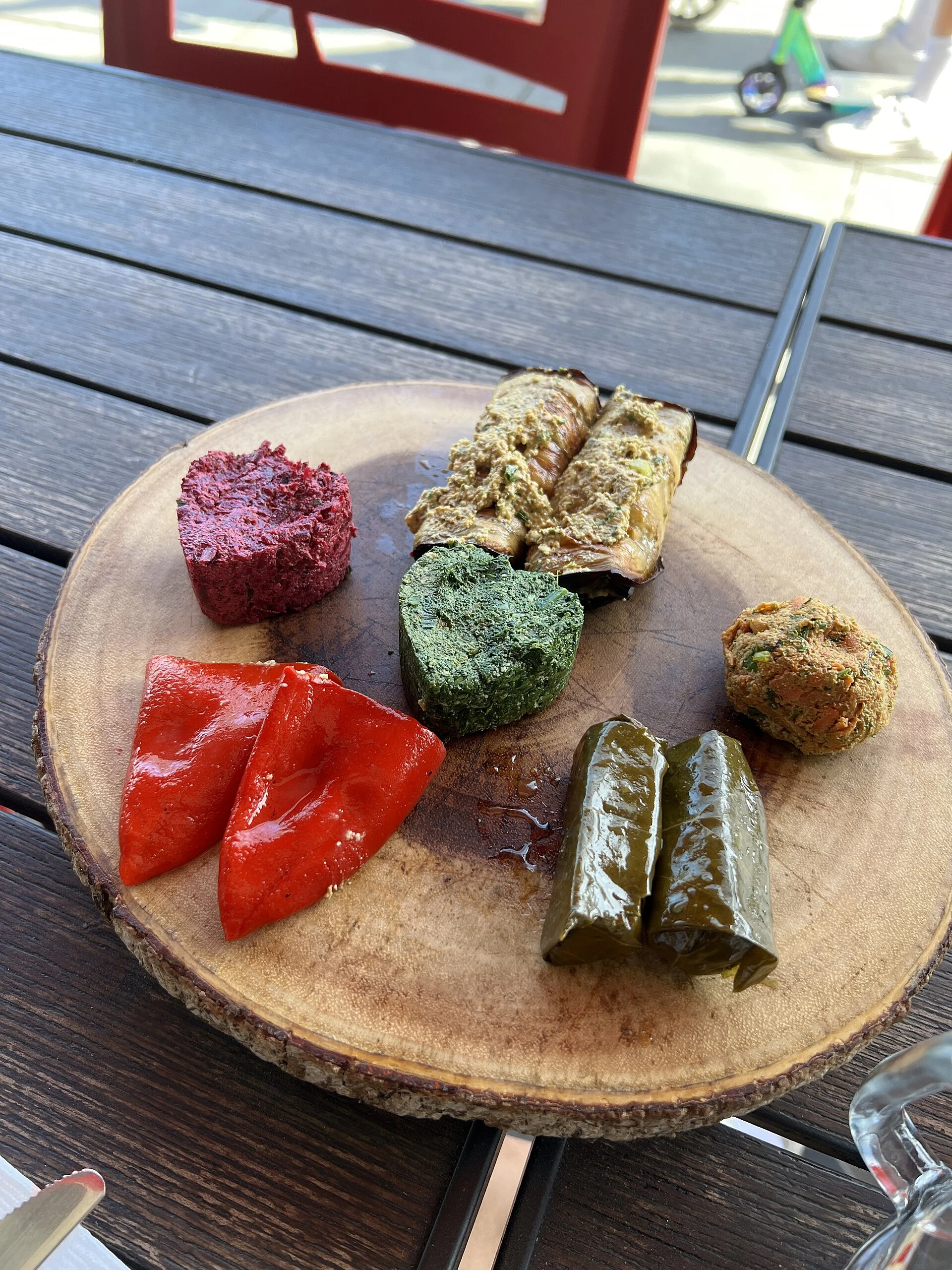
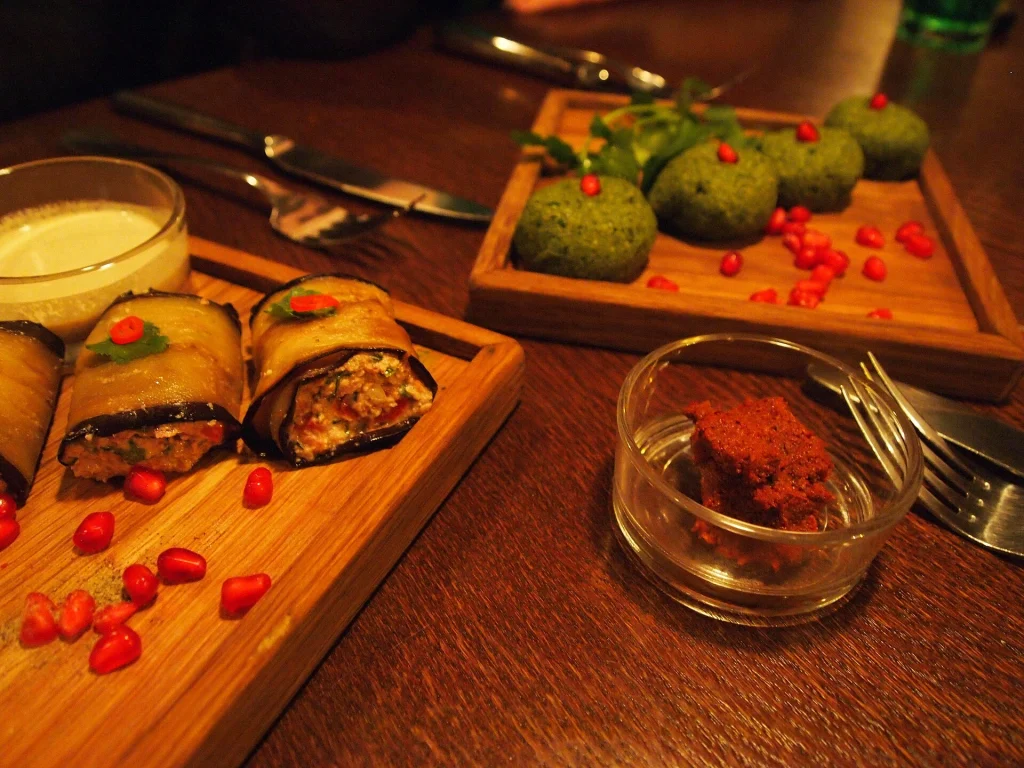
| Pkhali | Spinach, beetroot, leek, or bean paste bound with ground walnut, garlic, and vinegar | Yes |
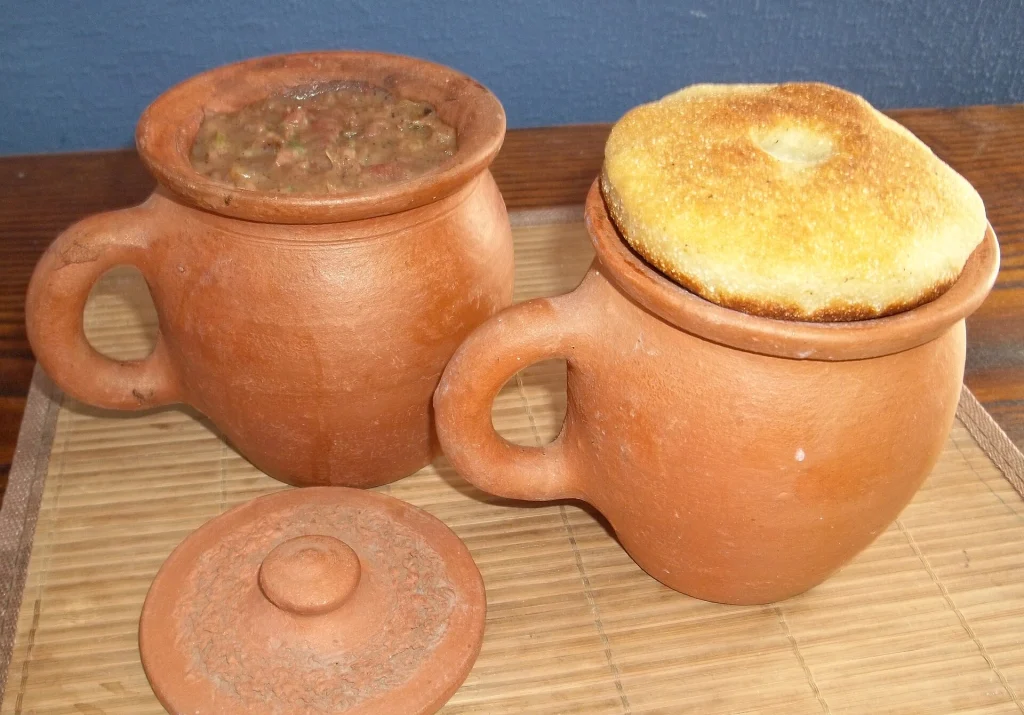
| Lobio | Red kidney beans stewed with onion, coriander, and spices, often served in a clay pot | Usually, confirm no meat stock was used |
| Ajapsandali | Aubergine, pepper, tomato, and onion stew, close in spirit to ratatouille | Yes |
| Mushrooms on ketsi | Wild or cultivated mushrooms sizzled with onion in a clay dish, sometimes finished with Sulguni cheese | Ask for it without cheese |
| Badrijani nigvzit | Fried aubergine rolled around a walnut-garlic paste | Yes |
| Lobiani (fasting version) | Bread filled with mashed beans rather than cheese | Only the fasting variant; the everyday version uses cheese and sometimes butter |
| Mchadi | Cornbread, usually plain | Yes, but it is often served alongside Sulguni, not inside it |
| Churchkhela | Strings of walnuts dipped in grape or fruit juice thickened with flour, dried | Yes |
A full-length tasting of this repertoire is easiest with someone cooking alongside you: our Megrelian Cooking Day covers elarji, kharcho, and ajika from a region where walnut and corn dominate regardless of the calendar, and the Cooking Class in Tbilisi can be adapted toward khinkali made with potato or mushroom filling instead of meat if you ask when booking.
What usually contains meat, stock, or hidden dairy
- Khinkali: the classic filling is beef and pork, though mushroom and potato khinkali exist on most menus and are genuinely vegetarian if made without lard in the dough, which is worth asking.
- Khachapuri: made with cheese and usually egg and butter, so vegetarian but not vegan; the Imeretian and Megrelian versions are the simplest to check ingredient by ingredient.
- Soups and broths: kharcho and chikhirtma are typically built on meat or chicken stock even when the final dish looks like a vegetable soup; always ask specifically about the stock, not just the visible ingredients.
- Lobio and pkhali at non-fasting restaurants: some kitchens add a spoon of meat fat or stock to lobio for richness outside fasting periods, so the safest move is to ask for the “samarkhvo” or Lenten version by name, which signals you want the dairy-free, meat-free recipe regardless of the date.
- Bread: Georgian puri and shoti bread are usually just flour, water, salt, and yeast, but tandoor-baked bread occasionally uses a small amount of dairy in the dough in private households, less so commercially.
Where to eat in Tbilisi
Old Tbilisi has several restaurants built specifically around the fasting menu year-round, alongside standard Georgian houses that will happily serve a full vegan spread if asked plainly. Look for the word “samarkhvo” on the menu itself, which signals a kitchen that treats the Lenten repertoire as a standing option rather than a seasonal one. Dedicated vegan and vegetarian cafés have also multiplied in Vake and Vera over the past decade, generally serving a mix of Georgian staples and international vegan comfort food. For a guided introduction rather than trial and error, our Tbilisi Market and Street-Food Walk takes in Dezerter Bazaar’s bean, walnut, and dried fruit stalls, and the Bread, Cheese and Churchkhela workshop can be adjusted to skip the cheese-tasting stage and focus on bread and walnut confectionery instead.
Where to eat in Batumi and along the coast
Adjara‘s cuisine is built around khachapuri, so it leans dairy-heavy, but the region’s mountain villages produce excellent beans, corn, and walnuts, and coastal Batumi has absorbed enough international tourism to support genuinely vegan menus in the Old Town and along the Boulevard. Ajapsandali and lobio are standard here too. For a structured way to taste both sides, the khachapuri-focused Adjarian Khachapuri Class in Batumi can be booked alongside, or instead of, a walnut-and-bean cooking session if you flag dietary preferences when reserving, and the Batumi Old Town and Boulevard Walk is a good way to scout restaurants on foot before committing to a dinner booking.
Supra etiquette when you do not eat meat
A Georgian supra is built around toasts led by a tamada, not around any single dish, so declining meat does not mean declining the evening. A few points of etiquette make this smoother:
- Say so early, ideally when the meal is booked, so the host or restaurant can plan a vegetarian or vegan spread rather than removing dishes from a meat-based menu at the table.
- Declining wine is accepted without question if you explain you do not drink; the tamada will usually offer juice or water for your toast instead, and no one will pressure a guest who states this plainly once.
- Pkhali, lobio, mchadi, and bread are never seen as “lesser” supra food; a table can be entirely vegetarian and still be a full, respected supra, especially in households that fast regularly themselves.
- If offered a dish you are unsure about, asking “khortsi aris?” (does it contain meat) is a normal, polite question in Georgian hospitality culture, not an awkward one.
For a structured first supra with these questions already anticipated by the organisers, our Supra Evening with a Tamada can be set up as a vegetarian or vegan table in advance, and a private Kakheti Table over three days combines cellar visits with village kitchens that are used to adapting the menu.
If this guide is part of a trip you are planning, our Georgia Off the Beaten Track — 9 Days in Racha, Samegrelo and Guria and Batumi to Kutaisi Transfer — Private Car cover the places it describes with a private guide and driver; a GTour travel expert adapts the route to your dates.
Practical summary
- Ask for the “samarkhvo” or Lenten menu by name at any traditional restaurant, any day of the week, not only during official fasting periods.
- Core vegan dishes: pkhali, lobio, ajapsandali, badrijani nigvzit, mushrooms on ketsi, mchadi, churchkhela.
- Watch for hidden meat stock in soups and kharcho, and hidden dairy or egg in standard khachapuri and khinkali dough.
- Check the Orthodox fasting calendar for your travel dates rather than assuming last year’s pattern, since Easter-linked fasts move each year.
- State dietary preferences when booking a supra or cooking class so the kitchen can plan rather than adapt at the table.
- Declining wine or meat at a supra is accepted without pressure once stated plainly to the tamada.
Sources
- Ancient Georgian traditional qvevri wine-making method
- Smithsonian Magazine: Georgian Food and Wine History
- Agenda.ge: Vegan Restaurants in Tbilisi
Questions this guide does not answer? Write to info@castle.ge or WhatsApp +995 577 41 63 14 — a person in Tbilisi replies. See also our travel services and all guides.
A sampler plate of Georgian vegan dishes including pkhali, eggplant rolls and roasted pepper, typical fasting-day fare. · Photo: Fastily / Wikimedia Commons, CC BY-SA 4.0
Been to Georgia? Tell us how it went — the best stories are published here.
Share your tripOne email a week: what changed for travellers in Georgia — rules, roads, flights, seasons — plus one place worth the trip. Written by the GTour desk, no advertising, unsubscribe in one click.
This story across our partner network — ქართულად: შენი დასვენება
