

By Mariam Lomidze, Culture & Events Reporter · 29/10/2026
Georgia teaches a surprising range of subjects in English, from medicine to international relations, at both state and private universities in Tbilisi, Kutaisi and Batumi. Georgian-language study runs from one-week taster courses to full academic years at state universities, and formal volunteering exists but is smaller and less structured than in Western Europe, usually arranged through an international organisation, a faith institution or a specific NGO project rather than a generic “volunteer visa”. For non-EU citizens, whether you need a student visa before you travel depends on your nationality and the length of your course, and this is worth checking directly with Georgian authorities before you commit to a programme.
This guide sets out what is realistically on offer in 2026, how the student visa and residence-permit system works, what volunteering actually looks like on the ground, and what a modest monthly budget needs to cover in Tbilisi compared with the regions. Our founder, a public-health academic, has reviewed the medical-education section for accuracy, but admissions requirements, tuition fees and visa rules change yearly, so every section below tells you exactly which official page to check before you apply or travel.
English-language degree programmes, including medicine
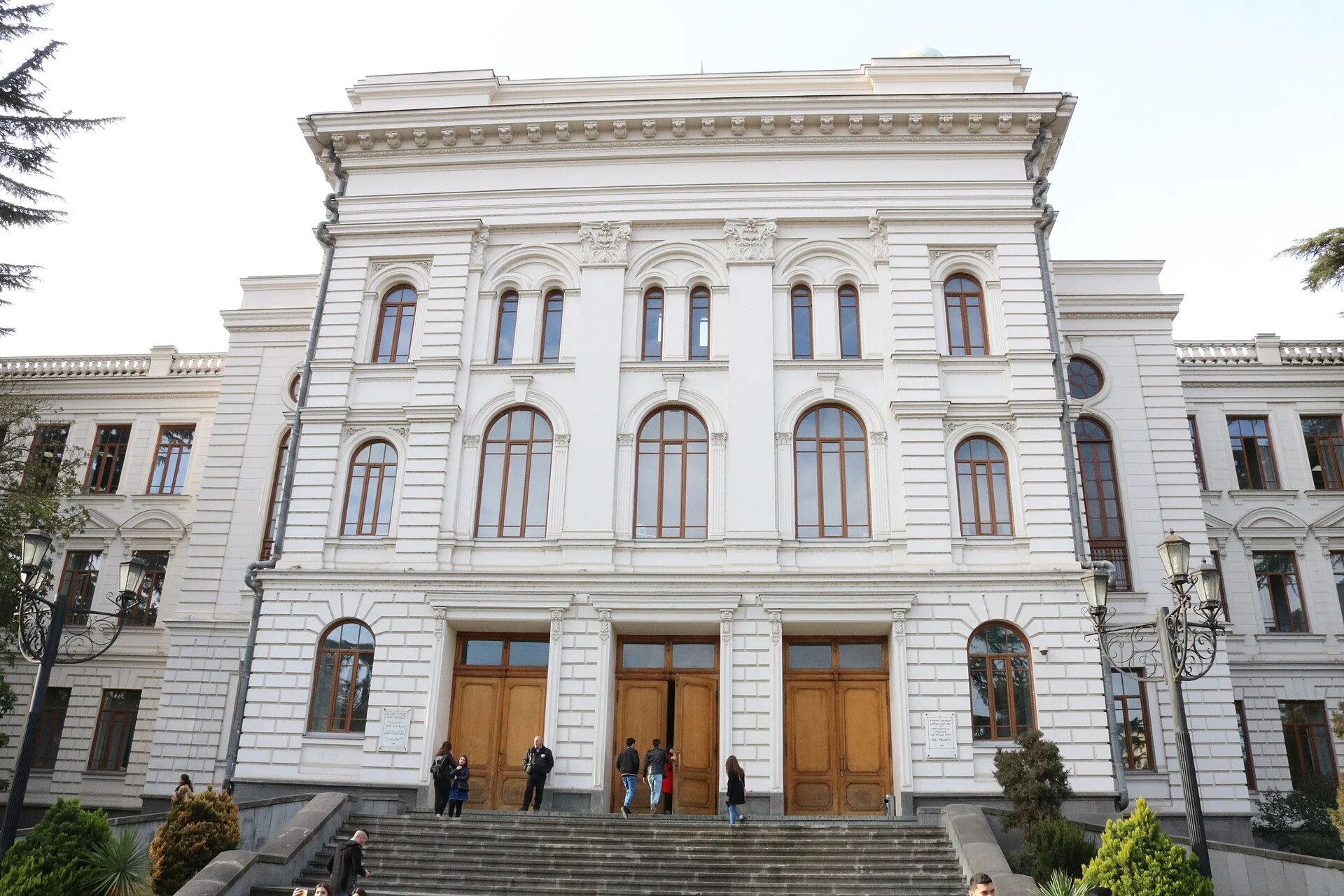
Georgia’s largest public university, Tbilisi State University, runs English-medium bachelor’s, master’s and professional programmes, including a Doctor of Medicine track aimed partly at international applicants; current faculties, entry requirements and tuition are published on its own site rather than summarised reliably elsewhere, so check the university directly at tsu.ge. Ilia State University, Tbilisi’s other large public research university, also publishes English-taught degrees and international-admissions information at iliauni.edu.ge. Beyond these two, a number of private medical and business universities in Tbilisi and Kutaisi market six-year MD programmes specifically to international students, often with instruction partly or wholly in English; these are legitimate and accredited by the Georgian state, but accreditation status, clinical placement arrangements and recognition in your home country vary by institution and change over time, so verify any private medical school’s current licence and graduate outcomes directly with the institution and, separately, with the medical regulator in the country where you intend to practise before enrolling or paying a deposit.
- Confirm a programme’s national accreditation status in Georgia before applying.
- If the goal is to practise medicine abroad, check recognition of the Georgian MD with that country’s medical council first, not after graduation.
- Ask for the full multi-year fee schedule in writing, not just the first-year figure.
Learning Georgian: university courses and private schools
Georgian is written in its own alphabet and is not related to Russian, Turkish or any Indo-European language, so most newcomers start with an intensive beginner course rather than trying to pick it up from signage. Tbilisi State University runs Georgian-as-a-foreign-language courses for exchange students and the wider public, from absolute beginner to advanced, and publishes current intakes and fees through its international office at tsu.ge. Several smaller private language schools in Tbilisi and Batumi offer shorter group or one-to-one courses, typically two to four weeks of intensive study or longer part-time evening classes; quality and teaching style vary considerably, so ask for a trial lesson and recent student references before paying for a full course. If you are already on one of our trips and want a gentle first exposure to the language and the Old Town where several schools are based, our Old Tbilisi Walking Tour is a practical orientation before term starts.
Study visas and residence permits: what current law requires
Georgia’s immigration framework is set out in the Law of Georgia on the Legal Status of Aliens and Stateless Persons, available in full at matsne.gov.ge; everything below is a simplified summary and should be checked against the current text and current consular guidance before you book flights.
In broad terms, citizens of countries that hold a visa-free regime with Georgia can enter without a visa and, once formally admitted to a recognised educational institution, apply at a Public Service Hall for a temporary residence permit on the grounds of study, which then covers the length of the academic programme. Citizens of countries that require a visa to enter Georgia at all generally need a category D3 study visa arranged before travel, applied for through the e-Visa portal or the nearest Georgian consulate, and should not assume they can simply arrive and sort out paperwork afterwards. Visa categories, current fee schedules and the online application system are maintained at evisa.gov.ge, and consular guidance by nationality is published by the Ministry of Foreign Affairs at mfa.gov.ge. Our own nationality-by-nationality notes, updated as rules shift, are at our travellers from page, but the government sites above are the legal authority.
| Situation | Typical route | Where to confirm |
|---|---|---|
| Visa-free national, degree programme over 90 days | Enter visa-free, then apply for a residence permit on study grounds after admission | evisa.gov.ge, mfa.gov.ge |
| National of a country requiring a visa for Georgia | D3 study visa before travel, via consulate or e-Visa | evisa.gov.ge |
| Short course or summer school under 90 days | Usually covered by the standard visa-free or tourist entry | mfa.gov.ge |
| Any category, exact permitted stay and renewal | Confirm current length and renewal rules before your course ends | matsne.gov.ge |
Volunteering in Georgia: how it actually works
Georgia has no dedicated “volunteer visa” distinct from the categories above, so most volunteers either enter under the standard visa-free or tourist rules for short, informal placements, or join a structured programme that handles its own paperwork. Formal international volunteering tends to arrive through three channels: church-affiliated placements connected to heritage restoration or community work, coordinated through the Patriarchate of Georgia at patriarchate.ge; development and capacity-building placements linked to United Nations agencies active in the country, with country information published by UNDP Georgia at undp.org; and exchange schemes connected to Georgia’s status as an Eastern Partnership country within the European Union’s neighbourhood policy, with current eligibility described on the EU’s own pages at europa.eu. Smaller, independent volunteering, for example on an organic farm or at a rural guesthouse in exchange for board, happens informally across Kakheti, Racha and Svaneti, but it sits outside any formal regulatory framework, so treat verbal arrangements cautiously, confirm your entry status covers unpaid work of this kind, and keep a written record of what was agreed.

Cost of living for students in Tbilisi, Kutaisi and Batumi
Georgia remains inexpensive by Western European standards, though Tbilisi has risen noticeably in the past few years, particularly for central rentals. The figures below are rough, late-2025 observed ranges in Georgian lari, converted at the National Bank of Georgia’s reference rate of 2.8943 GEL per euro; always check current averages and the consumer basket directly through the national statistics office at geostat.ge, since inflation has moved these numbers before and will again.
| Item | Typical monthly range (GEL) | Approx. EUR equivalent |
|---|---|---|
| Shared room, outside the centre | 600–1,000 | 207–345 |
| Studio flat, near a university | 1,200–2,000 | 415–691 |
| Groceries, self-catering | 500–700 | 173–242 |
| Public transport (metro and bus) | 30–60 | 10–21 |
| Mobile data SIM | 20–40 | 7–14 |
Kutaisi and Batumi generally run ten to twenty per cent cheaper than Tbilisi for rent, though Batumi’s seaside rents spike in the summer tourist months. Tbilisi’s metro and bus network uses a rechargeable transport card, described by the city authority at tbilisi.gov.ge, and is the cheapest way to move around once you have a Georgian address.
Settling in: housing, documents and family visits
Most students find a flat through local agents or university noticeboards rather than international platforms, and it is normal to view a property before signing a Georgian-language lease, ideally with help from a Georgian-speaking classmate or your university’s international office. Once you have an address, the residence-permit application at the Public Service Hall will ask for proof of enrolment, proof of accommodation and health insurance valid in Georgia, so keep digital and paper copies of your admission letter, passport pages and insurance certificate together from day one. If parents or partners come to visit during the term, a private driver for the day or a licensed guide for a proper first orientation to the Old Town, Mtskheta or the wine region covers more ground in less time than public transport and is a popular way for families to see where you are actually living; a half-day in Old Tbilisi or a single day trip to Kakheti wine country both work well on a tight family visit.
If this guide is part of a trip you are planning, our Tbilisi to Borjomi or Bakuriani Transfer and Mtskheta on Foot — the Ancient Capital in 2 Hours cover the places it describes with a private guide and driver; a GTour travel expert adapts the route to your dates.
Practical summary
- Check whether your nationality needs a D3 study visa before travel, or can apply for a residence permit on arrival, via evisa.gov.ge and mfa.gov.ge.
- Confirm any medical or other degree programme’s current Georgian accreditation and, for medicine, recognition abroad, before paying fees.
- For Georgian-language study, start with a trial lesson at a state university or private school before committing to a full term.
- Treat informal volunteering as outside formal regulation; prefer structured programmes through the Patriarchate, UNDP or EU-linked exchanges for clearer terms.
- Budget roughly 1,800–2,800 GEL a month in Tbilisi for rent, food and transport combined, less in Kutaisi and Batumi outside summer.
- Keep enrolment, accommodation and insurance documents ready for the Public Service Hall residence-permit process.
- Re-check all rules shortly before departure, since Georgian visa and education regulations are revised more often than most Western systems.
Sources
- Tbilisi State University, international programmes
- Ilia State University
- e-Visa Georgia, visa categories and application
- Ministry of Foreign Affairs, consular and visa information
- Law on the Legal Status of Aliens and Stateless Persons
- National Statistics Office of Georgia, consumer prices
- Tbilisi City Hall, public transport
- European Union, Eastern Partnership information
- Patriarchate of Georgia
Questions this guide does not answer? Write to info@castle.ge or WhatsApp +995 577 41 63 14 — a person in Tbilisi replies. See also our travel services and all guides.
Main building of Tbilisi State University, a leading institution for degree and language programmes. · Photo: Mehman Ibragimov for UG Georgia / Wikimedia Commons, CC BY-SA 4.0
Been to Georgia? Tell us how it went — the best stories are published here.
Share your tripOne email a week: what changed for travellers in Georgia — rules, roads, flights, seasons — plus one place worth the trip. Written by the GTour desk, no advertising, unsubscribe in one click.
This story across our partner network — ქართულად: შენი დასვენება
