

By Nino Gelashvili, Travel News Editor · 27/10/2026
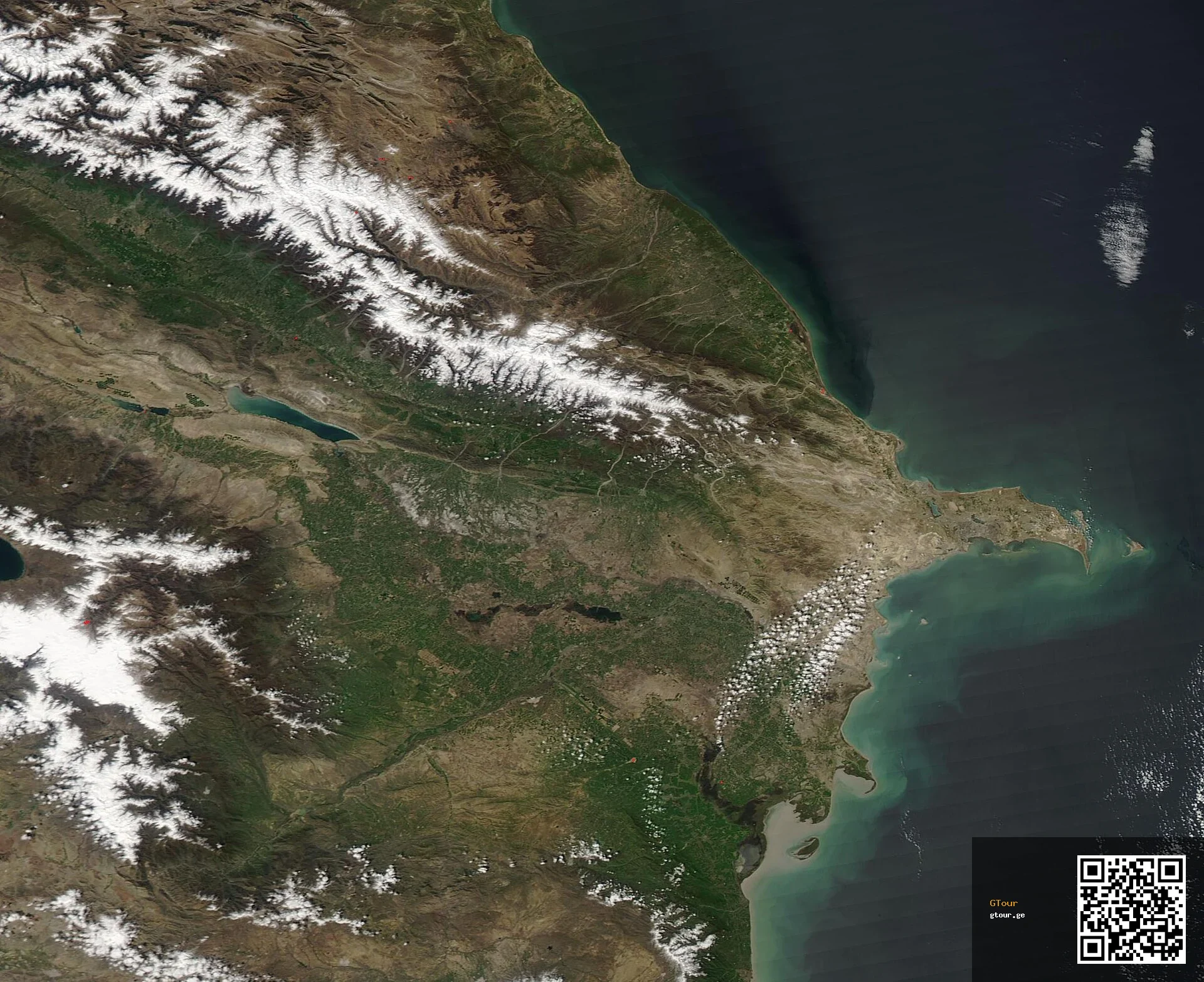
Geographically, Georgia sits on the border between Europe and Asia, and most atlases draw that line along the crest of the Greater Caucasus mountains, which puts the country’s northern slopes in Europe and the bulk of its territory in a transitional zone often labelled Western Asia. There is no single scientific authority that settles this, so the honest answer is both and neither, depending on the convention used.
Politically and culturally, Georgia positions itself as European. Its constitution instructs the government to pursue integration into the European Union and NATO, and in December 2023 the European Council granted Georgia candidate status for EU membership, a formal step toward that goal, though not membership itself. For travellers, the practical details — time zone, plug type, driving side — mostly match continental Europe, with a few differences worth knowing before you fly.
Where geographers draw the line
The conventional Europe-Asia boundary follows the Ural Mountains, the Ural River, the Caspian Sea, and then the Caucasus range to the Black Sea. Within that last stretch, different reference works put the line at the main Caucasus watershed, the Kura-Araxes river system, or the Turkish-Georgian border further south. Britannica’s own entry on the Caucasus notes the region has long been treated as a transition zone rather than a clean cut, and Georgia’s capital, Tbilisi, together with most inhabited areas, falls on what many maps mark as the Asian side even though the country’s mountainous north reaches into territory conventionally called Europe. Neither the United Nations nor any scientific body issues a binding ruling on this, which is why reference sources differ.
Georgia’s own position
Georgia does not treat the question as open. Article 78 of the Constitution of Georgia directs state authorities to take all measures to secure the country’s full integration into the European Union and the North Atlantic Treaty Organization. Georgia has been a member of the Council of Europe since 1999, long before EU candidacy, and its government and civil society routinely describe Georgia as a European nation with a shared Christian and classical heritage reaching back more than a millennium. Whatever a given atlas shows, Tbilisi’s institutional identity is European by choice and by constitutional text.
EU candidate status, and what it is not
The European Council granted Georgia candidate status on 14 December 2023, following a European Commission recommendation. Candidate status is a formal milestone, not membership: it opens a path toward accession negotiations once the European Commission and member states agree the country meets specific conditions on judicial independence, anti-corruption measures, media freedom and electoral reform. It carries no immediate change to visas, currency or borders. Because EU accession politics move quickly and conditions attached to Georgia’s path have shifted since 2023, readers planning around this status should check the European Council’s own pages rather than rely on a fixed date for further steps.
What travellers actually notice
| Practical detail | Georgia | Note for visitors |
|---|---|---|
| Time zone | Georgia Standard Time, UTC+4, no daylight saving | Same zone year-round; check the gap against your home country before booking transfers |
| Electrical plugs | Type C and F, 220V, 50Hz | Matches most of continental Europe; UK and most of Asia need an adapter |
| Driving side | Right-hand side | Matches mainland Europe; visitors from the UK, Japan or Australia should take extra care |
| Currency | Georgian Lari (GEL) | Not the euro; current exchange rates are kept updated at gtour.ge/data |
| Visa regime | Separate from the Schengen area | EU candidacy has not changed entry rules; check current terms at evisa.gov.ge |
Why this matters for a trip
- Flight searches sometimes file Georgia under “Europe” and sometimes under “Middle East/Caucasus” depending on the airline or booking engine, which can affect baggage allowances and connection routing.
- Mobile roaming plans marketed as “Europe” packages usually exclude Georgia, since it sits outside the EU and the European Economic Area.
- Travel insurance sold as “worldwide excluding Europe” or “Europe only” should be checked carefully; Georgia is commonly treated as outside standard “Europe” zones by UK and EU insurers, so confirm coverage before departure.
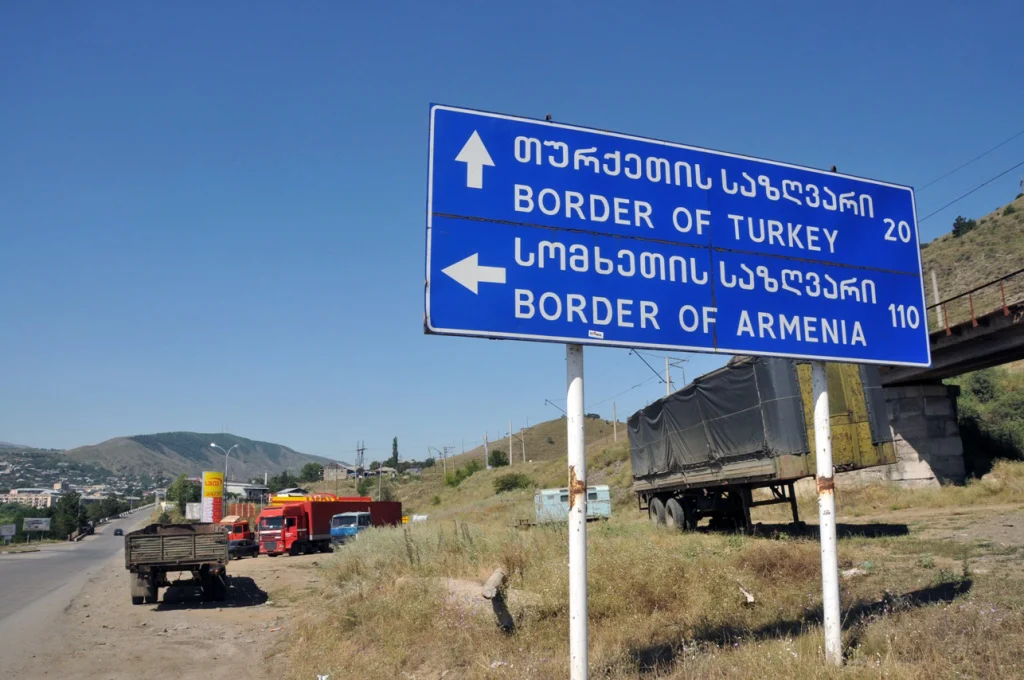
- None of this affects the on-the-ground experience: driving conventions, plug types and the general look of road signage will feel closer to continental Europe than to most of Asia.
Where this comes from
Geographic context draws on Britannica’s entry on the Caucasus. Georgia’s constitutional commitment to European integration is set out in Article 78 of the Constitution of Georgia, published by the Parliament of Georgia. The December 2023 candidate status decision is documented in European Council conclusions. Current exchange rates referenced here were checked against the National Bank of Georgia via gtour.ge/data on 26 October 2026; visa and entry rules should be verified directly at evisa.gov.ge before travel, since EU-related political conditions and bilateral agreements can change without much notice.
If this guide is part of a trip you are planning, our Georgia in 10 Days — Tbilisi to Svaneti to the Sea and Monasteries of Georgia — Mtskheta, the Thirteen Fathers and Kakheti in 3 Days cover the places it describes with a private guide and driver; a GTour travel expert adapts the route to your dates.
Sources
- Georgia e-Visa portal
- Ministry of Foreign Affairs of Georgia
- UNESCO States Parties – Georgia
- World Bank – Georgia Country Overview
- EU External Action Service – Georgia
- BBC News – Georgia Country Profile
Questions this guide does not answer? Write to info@castle.ge or WhatsApp +995 577 41 63 14 — a person in Tbilisi replies. See also our travel services and all guides.
The Caucasus Mountains, seen from space, form the traditional boundary between Europe and Asia. · Photo: MODIS Land Rapid Response Team, NASA GSFC / Wikimedia Commons, Public domain
Been to Georgia? Tell us how it went — the best stories are published here.
Share your tripOne email a week: what changed for travellers in Georgia — rules, roads, flights, seasons — plus one place worth the trip. Written by the GTour desk, no advertising, unsubscribe in one click.
This story across our partner network — ქართულად: შენი დასვენება