

By Mariam Lomidze, Culture & Events Reporter · 27/10/2026
Monaco has no direct flights to Georgia and virtually no diplomatic footprint here, so the honest answer for a Monégasque traveller is this: Georgia is easy to reach via one connection (commonly through Istanbul, Munich or Doha, since Monaco’s own airport does not exist and travellers fly from Nice Côte d’Azur), and under Georgia’s long-standing visa-free regime Monégasque passport holders can normally enter and stay without a visa for tourism, though this rule can change and must be checked before every trip. Everything else — money, SIM cards, food, safety — works the same for a Monaco-based traveller as for any Western European visitor: cards are widely accepted in cities, cash is still needed in villages and mountains, and English covers most tourist situations while French is understood only in a handful of upscale hotels.
Where ties are thin, we say so plainly: Georgia and Monaco have no meaningful trade relationship, no shared history, and a diaspora so small it is not separately tracked in Georgian statistics. What does exist is a loose cultural echo — Batumi‘s seafront casinos and promenade are sometimes compared to Monte Carlo — and a practical complementarity: Monaco has no ski resorts and limited wild nature within its 2 square kilometres, while Georgia offers both in abundance within a two-hour drive of the capital.
Visa and entry rules for Monégasque citizens
Georgia operates a unilateral visa-free regime covering roughly 90 to 100 countries and territories, and Monaco has in recent years been included on that list, typically allowing tourist stays of up to one year without a visa. This is a Georgian government decision, not a reciprocal treaty, and such lists are amended by resolution without much notice. Before booking, check the current, country-specific rule on Georgia’s consular information portal geoconsul.gov.ge, which is run by the Ministry of Foreign Affairs. If for any reason a visa is required for your specific travel purpose (long stay, work, or a change in the rules), it is applied for online through the e-Visa portal evisa.gov.ge; processing for the standard short-stay e-visa is usually a few business days, and the system states clearly whether supporting documents such as a hotel booking or insurance certificate are required for your category.
Getting to Georgia from Monaco: routes and hubs
There is no airport in Monaco itself; travellers use Nice Côte d’Azur, about 20 minutes away by road or helicopter transfer. From Nice there is no nonstop service to Tbilisi, so expect one connection. The most practical options are:
| Hub | Typical first leg from Nice | Onward leg | Notes |
|---|---|---|---|
| Istanbul | Turkish Airlines, Nice–Istanbul | Istanbul–Tbilisi, several daily | Usually the shortest total journey, good baggage allowance |
| Munich | Lufthansa, Nice–Munich | Munich–Tbilisi | Reliable on Lufthansa’s own metal both legs |
| Doha | Via a European hub to Doha, then Qatar Airways | Doha–Tbilisi | Longer routing, useful if combining with a Gulf stopover |
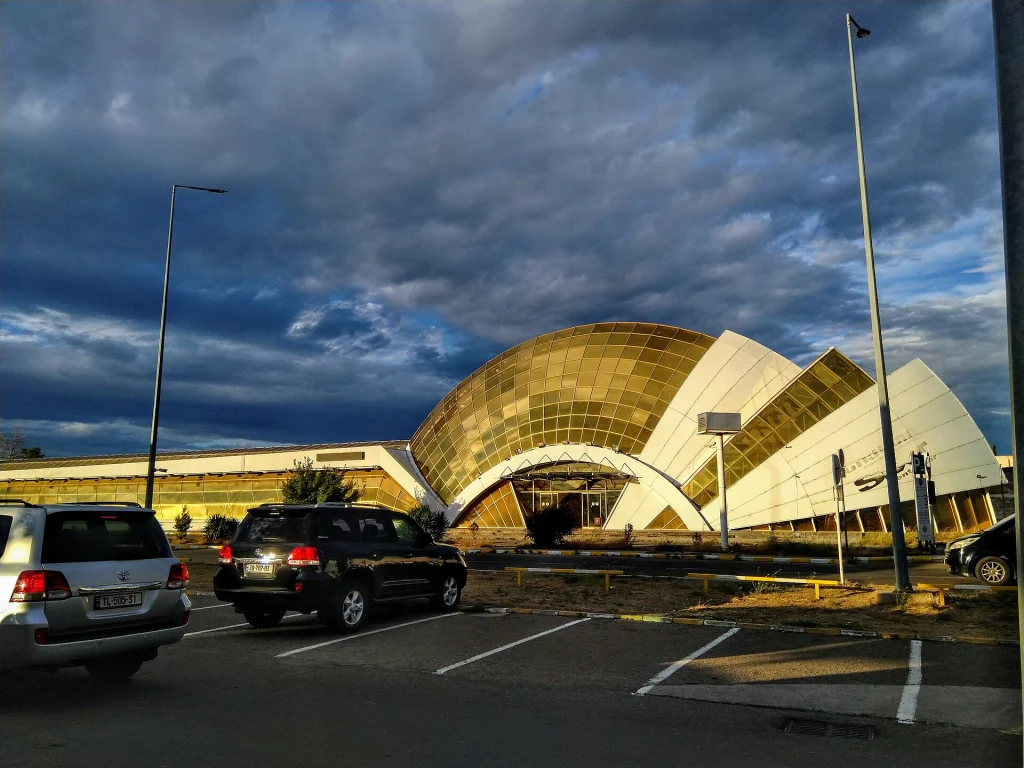
Confirm current schedules directly with the airline or at tbilisiairport.com, since routes and frequencies change seasonally. Kutaisi International Airport (kutaisiairport.com) handles low-cost European carriers and can be worth checking if your connection routes through Warsaw or another Wizz Air point; Batumi International Airport (batumiairport.com) is the better arrival point if the Black Sea coast is your main destination.
Driving licence, money, cards and cash
A Monégasque driving licence in Latin script is generally accepted for a limited period as a visitor, but Georgian traffic rules and the practice of rental companies can differ from what the licence itself states, so carry an International Driving Permit if you plan to self-drive, and confirm requirements with your rental company before arrival. Mountain routes to Svaneti, Tusheti and the Kazbegi passes require a 4×4 and local experience; many visitors prefer a car with an English-speaking driver rather than self-driving on these roads.
Georgia’s currency is the lari (GEL). According to the National Bank of Georgia’s reference rate for 26 October 2026, 1 euro bought approximately 2.908 lari. Monaco’s euro cash and cards work exactly as in France: Visa and Mastercard are accepted in hotels, city restaurants and most shops, while small guesthouses, mountain villages and market stalls expect cash. Carry some lari for these situations and withdraw from bank ATMs (Bank of Georgia, TBC) rather than unbranded machines for better rates.
SIM cards, eSIM and language: what to expect
Tourist SIM cards from Magti, Geocell or Beeline are sold at both Tbilisi and Batumi airports with simple passport registration, and eSIM profiles for Georgia are available from international providers if you prefer to set up connectivity before departure. Georgian is the official language and uses its own script, which can be disorienting on road signs away from major routes, though Latin transliteration is standard in Tbilisi, Batumi, Kutaisi and along the main tourist corridors. English is the default second language in hospitality, tour operations and younger generations in cities; Russian is still widely understood by older Georgians, particularly outside Tbilisi. French, familiar to Monégasque travellers, is spoken by very few people outside some luxury hotels and French-trained guides, so plan on English as your working language.
Consulates, embassies and emergency contacts
Monaco maintains no embassy or honorary consulate in Georgia, and Georgia has no diplomatic mission in Monaco; Monégasque travellers in difficulty should check which third-country mission (commonly France’s, given the close administrative relationship between Monaco and France) is designated to assist Monégasque nationals abroad, a detail that can change and should be confirmed with Monaco’s own external relations authorities before travel. For Georgian-side contacts, the Ministry of Foreign Affairs’ list of accredited missions and consular assistance points is maintained at mfa.gov.ge. In any emergency inside Georgia, dial 112, the single national number for police, ambulance and fire services.
Food, health, insurance, safety and etiquette
Georgian cuisine will feel both novel and approachable to a Monaco-based palate accustomed to Mediterranean cooking: grilled meats, fresh herbs, walnuts, and an Adjaran coastline with seafood similar in spirit to the Riviera’s. Khinkali (dumplings), khachapuri (cheese bread) and a long table of small cold dishes (pkhali, lobio) define the classic supra. Strict halal certification is uncommon outside a few Tbilisi restaurants near the old mosque district, though Turkish-run kitchens often serve halal meat without formal certification; vegetarians are well served through the many bean, walnut and vegetable dishes that predate meat-heavy menus. Wine is central to Georgian hospitality and toasting customs; non-drinkers should feel free to decline without offence.
Georgia does not currently impose a blanket mandatory travel-insurance requirement at the border for visa-free tourist entry, but insurance can be a stated condition for certain visa or e-visa categories, and GTour strongly recommends a policy covering medical treatment and evacuation regardless, since Monaco’s social security system does not cover treatment abroad. Check the exact, current requirement for your entry category on evisa.gov.ge before you fly, and see a doctor for any personal medical questions before travel, particularly regarding altitude if you plan to hike above 2,500 metres in Svaneti or Tusheti.
Georgia is broadly safe for travellers, with petty theft rare by European standards; normal city precautions apply. Dress modestly and cover shoulders and, for women, hair when entering Orthodox churches and monasteries; photography inside active monasteries is sometimes restricted and should be checked locally.
Cultural and historical ties, and the best season to visit
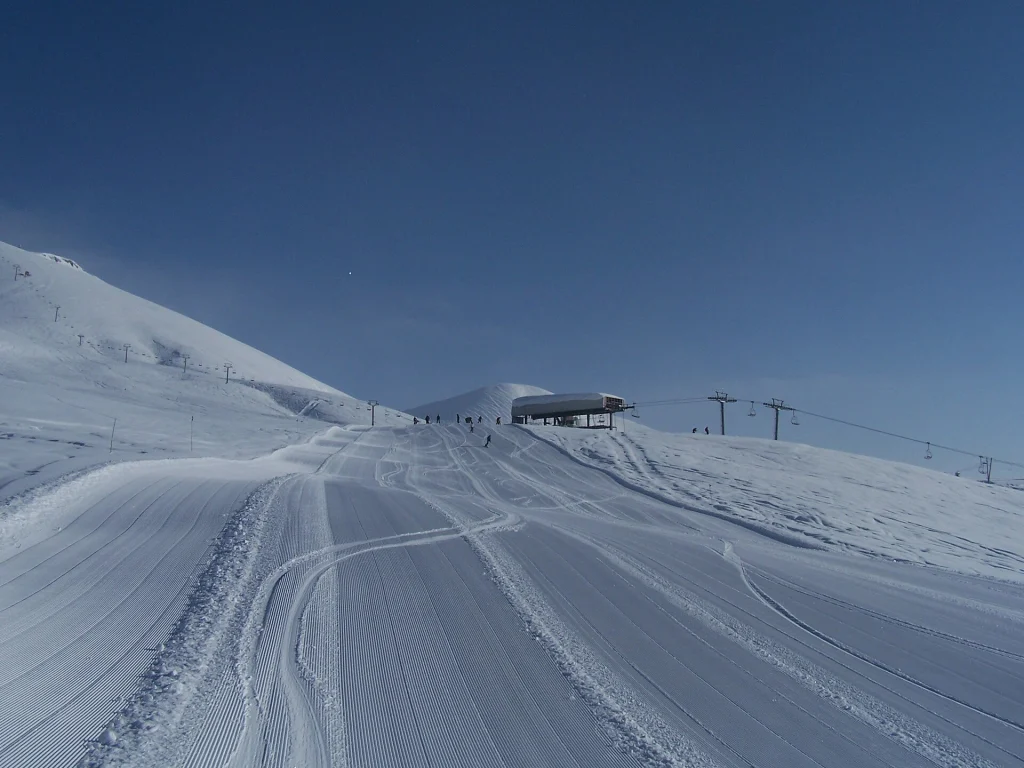
Direct historical ties between Georgia and Monaco are essentially nonexistent, and trade flows are negligible; Georgia’s National Statistics Office does not report Monaco as a distinct trading partner, which tells its own story. The one genuine cultural echo is Batumi, whose seafront casinos, promenade and dense, glamorous skyline are sometimes informally likened to Monte Carlo on a Black Sea scale; see Batumi’s own tourism information at batumi.ge. Monégasque visitors most often come in the warm months, May to September, matching Riviera habits, though Georgia’s winter programme offers something Monaco entirely lacks: real skiing at Gudauri, reachable from Tbilisi in under two hours.
What a G Tour private guide adds
For a short, high-value trip from Monaco, a private guide and driver removes the two real friction points: script-based road signs outside the capital and a tourism industry that, outside hotels, rarely operates in French. G Tour’s licensed guides work in English and Russian as standard, with French available for a surcharge of €25 per day on top of the base guide rates (from €70 for a half-day city walk to €120 per day on multi-day touring). A sedan with an English-speaking driver starts at €90 per day around Tbilisi and €100 per day on multi-day routes, rising to a 4×4 (€150 to €165 per day) for Svaneti, Tusheti or the winter passes. Airport transfers are fixed and quoted before you fly, from €25 for Tbilisi airport to the city. Worth considering for a Monaco-based traveller: Tbilisi & Mtskheta — The Essential First Day for orientation on arrival, Batumi & the Ajara Mountains for the closest cultural parallel to home, and Georgia in Winter — Gudauri Skiing, Tbilisi & Kakheti for the one experience Monaco cannot offer its own residents.
If this guide is part of a trip you are planning, our Georgia in 10 Days — Tbilisi to Svaneti to the Sea and Tbilisi & Mtskheta — The Essential First Day cover the places it describes with a private guide and driver; a GTour travel expert adapts the route to your dates.
Practical summary
- Visa: check geoconsul.gov.ge before every trip; if required, apply via evisa.gov.ge
- Flights: no direct route; connect via Istanbul, Munich or Doha from Nice Côte d’Azur
- Driving: carry an International Driving Permit alongside your Monégasque licence; 4×4 needed for mountain regions
- Money: lari (GEL); cards work in cities, carry cash for villages and mountains; ATMs widely available
- Connectivity: airport SIM or eSIM from Magti, Geocell or Beeline; English is the practical working language
- Consular cover: no Monégasque mission in Georgia; confirm which embassy assists Monégasque nationals before travel
- Insurance: not universally mandatory at the border, but a condition for some visa categories and strongly recommended regardless
- Ties: historically and commercially thin; plan around practicalities, not shared heritage
Sources
- Georgia e-Visa portal
- Consular information, Georgian MFA
- Georgian embassies and consulates
- Batumi city tourism information
- Georgian National Tourism Administration
- National Statistics Office of Georgia
Questions this guide does not answer? Write to info@castle.ge or WhatsApp +995 577 41 63 14 — a person in Tbilisi replies. See also our travel services and all guides.
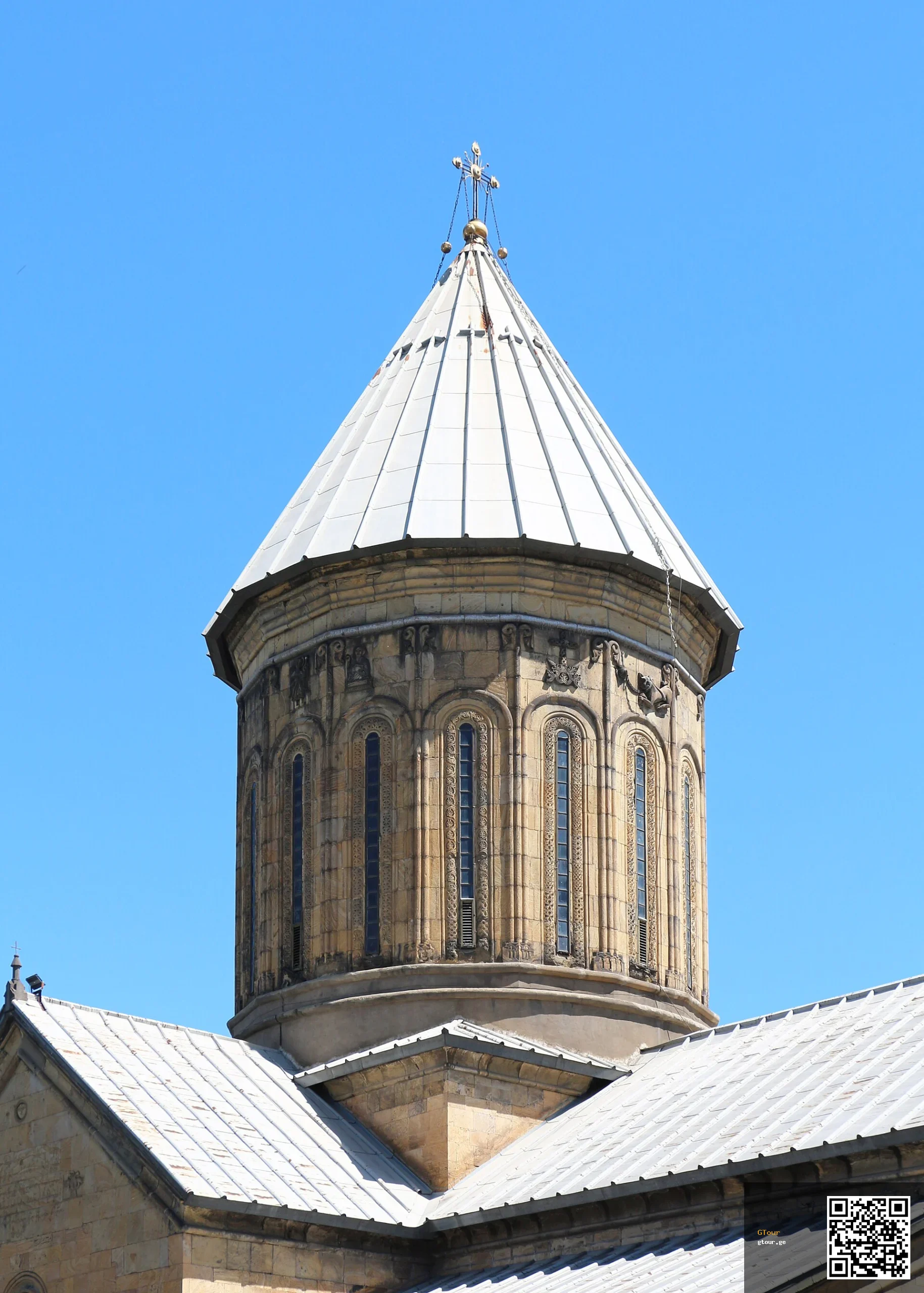
Sioni Cathedral’s dome, a landmark in Tbilisi’s old town worth visiting. · Photo: Bernard Gagnon / Wikimedia Commons, CC BY 4.0
Been to Georgia? Tell us how it went — the best stories are published here.
Share your tripOne email a week: what changed for travellers in Georgia — rules, roads, flights, seasons — plus one place worth the trip. Written by the GTour desk, no advertising, unsubscribe in one click.
This story across our partner network — ქართულად: შენი დასვენება