

By Nino Gelashvili, Travel News Editor · 26/10/2026
Can British citizens travel to Georgia easily in 2026? Yes. UK passport holders can enter Georgia visa-free and stay for up to one year for tourism, business or many short-term purposes, a policy that has been in place for several years and is reconfirmed on the government’s own visa portal. There is no need to apply for anything in advance for a standard holiday, though you should always check the current position before booking because entry rules can and do change at short notice for individual countries.
Getting to Georgia from the UK usually means one connection, most often through Istanbul, Warsaw or Riga, with occasional seasonal direct flights to Tbilisi, Kutaisi or Batumi. Driving is on the right, your UK licence is valid for a defined period, sterling is not used but cards are widely accepted in cities, and English is spoken in tourism settings though not universally elsewhere. This guide sets out what a British traveller actually needs to know, with the official pages to check for anything that is likely to change.
Visa and entry rules for British citizens
Under current Georgian policy, UK citizens travelling for tourism do not need a visa and may stay for up to 365 days per calendar year. This is one of the more generous visa-free allowances Georgia extends to any nationality. The rule covers tourism and most short-term business activity, but it does not automatically cover long-term work, study or residence, which have separate procedures. Because visa categories and durations are set by government decree and have been adjusted before, verify your specific situation on the official e-visa portal, evisa.gov.ge, and on the Ministry of Foreign Affairs consular pages at mfa.gov.ge before you travel, particularly if you plan to stay close to the one-year limit, combine Georgia with visits to the breakaway regions, or hold a passport with unusual endorsements.
Your passport should normally be valid for the length of your intended stay; airlines may apply their own minimum validity rules at check-in, so build in a margin. Children travelling on a parent’s older-style passport or with only one parent should check current practice directly with the Ministry of Foreign Affairs, since document requirements for minors have tightened in various countries in recent years.
Getting there: flights and land borders
There are no scheduled non-stop flights from the UK to Georgia year-round as of 2026; the realistic options are one-stop itineraries, and a handful of seasonal charter or low-cost direct services that have appeared and disappeared on routes such as London to Kutaisi. The most reliable connections run through Istanbul, with Warsaw and Riga serving as useful low-cost hubs for Kutaisi International Airport, which has become the main gateway for budget carriers serving Georgia. Tbilisi International Airport remains the principal hub for legacy carriers and long-haul connections; Batumi’s airport mainly serves regional and seasonal Black Sea routes. Always check current schedules directly, since Georgian aviation routes change seasonally.
| Airport | Typical UK connection | Notes |
|---|---|---|
| Tbilisi (TBS) | Via Istanbul or other European hubs | Main international hub, see tbilisiairport.com |
| Kutaisi (KUT) | Often via Warsaw, Riga or Vilnius with low-cost carriers | Check kutaisiairport.com for current routes |
| Batumi (BUS) | Mostly seasonal and regional | See batumiairport.com |
Travellers combining Georgia with Armenia, Azerbaijan or Turkey sometimes cross by land. The main road borders and rail links are managed by the respective state agencies; for road conditions and border crossing points inside Georgia, the official source is georoad.gov.ge, and for rail timetables including any cross-border services, check railway.ge. British citizens do not need to pre-arrange anything extra for land entry under the current visa-free regime, but carry your passport, not a copy, at every border.
Driving in Georgia with a UK licence
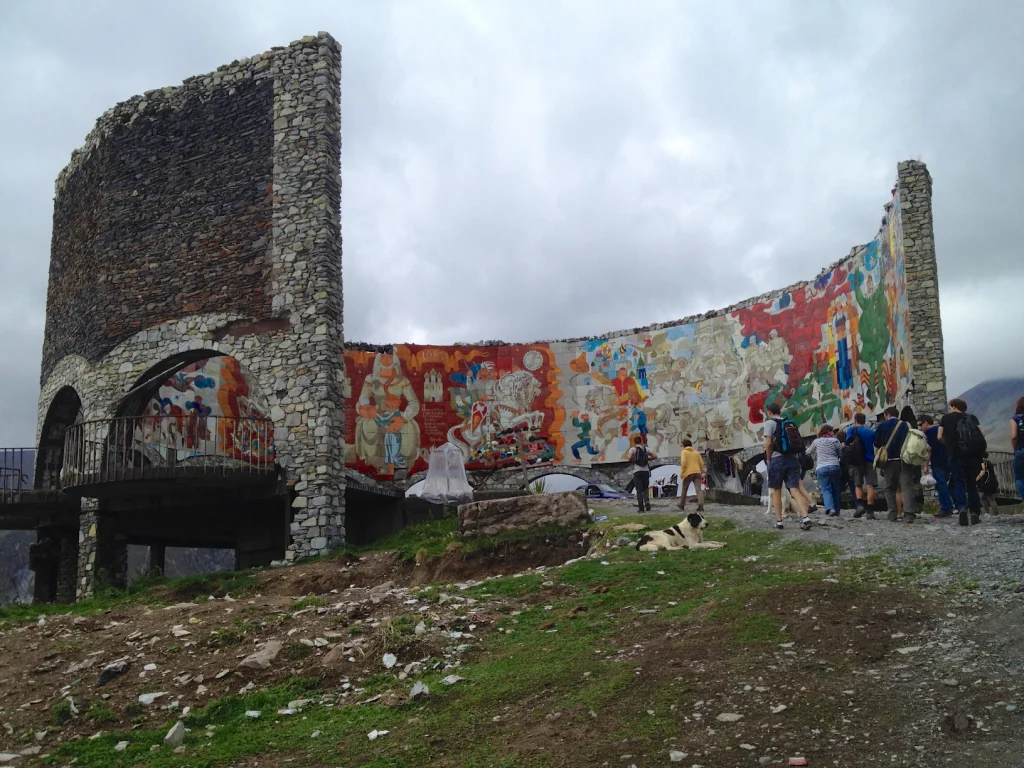
Georgia drives on the right. A full, valid UK driving licence is generally accepted for driving and hiring a car for a limited period after entry, after which an International Driving Permit or a Georgian licence may be required for a longer stay; rules on exactly how many months a foreign licence remains valid, and whether an IDP is needed alongside it, are set in Georgian traffic legislation and have been subject to interpretation by rental companies. Confirm the current position before relying on your UK licence for an extended stay by checking official guidance via georoad.gov.ge or asking your rental company directly, and carry an IDP as a low-cost precaution if you plan to drive for more than a few weeks. Mountain roads, including routes to Kazbegi, Mestia and the Tusheti road, can be unpaved, narrow and seasonally closed; a 4×4 and local advice are often sensible beyond the main highways.
Money, SIM cards and everyday costs
The currency is the Georgian lari (GEL). Sterling is not used and is rarely accepted even informally, so change money or withdraw lari from ATMs, which are widespread in Tbilisi, Batumi and most regional towns. Contactless and chip-and-PIN cards are accepted in most hotels, city restaurants and supermarkets, though small guesthouses, rural shops and some taxis remain cash-only, so carry some lari in smaller towns and in the mountains. Exchange rates move with the market; check a current rate before changing a large sum, and compare the bank rate against street exchange bureaus, which sometimes offer better terms in central Tbilisi than hotels do.
Local SIM cards from Georgia’s main mobile operators are inexpensive and easy to buy at the airport or in town with a passport, and data coverage is generally good in cities and along main roads, weaker in remote mountain valleys. Most UK travellers find a local SIM or an eSIM considerably cheaper than roaming for a trip of more than a few days.
Language, getting help and the British Embassy
Georgian, written in its own unique script, is the official language, and Russian is still widely understood by older generations in many regions. English is commonly spoken in Tbilisi’s hotels, restaurants and tour operations, including at GTour, and in Batumi’s tourist areas, but it thins out quickly in villages and among older residents elsewhere, so a translation app or a phrasebook helps outside the main centres. Georgians are, by most visitor accounts, hospitable toward guests, and a few words of Georgian are warmly received.
The British Embassy in Tbilisi handles consular matters for UK nationals, including emergency travel documents and welfare support in serious situations. Contact details and the current address can change, so rather than relying on a possibly outdated address and phone number, confirm both directly through the UK government’s own travel and consular pages before you need them, and keep a note of the embassy’s details on your phone before you travel. The Georgian Ministry of Foreign Affairs also publishes general information for diplomatic missions in Tbilisi at mfa.gov.ge.
Food, wine and dietary notes
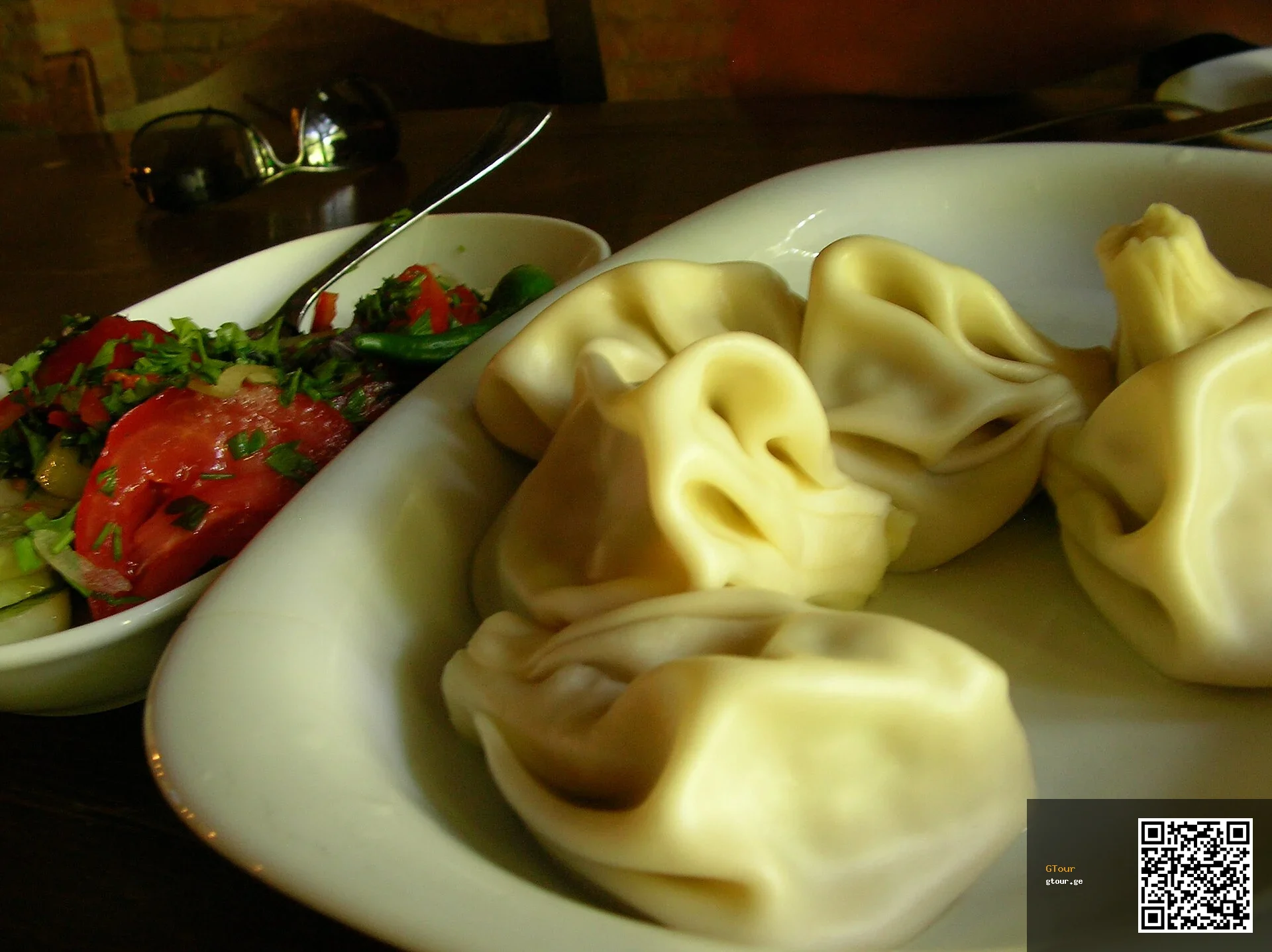
Georgian food leans on bread, cheese, walnuts, fresh herbs and grilled or stewed meat, alongside a strong vegetarian tradition built around bean, aubergine and vegetable dishes that makes it relatively easy for vegetarians to eat well; strict vegans need to ask about dairy and egg in sauces and breads, since cheese and butter appear often. Khachapuri, the cheese-filled bread, and khinkali, the dumpling, are the two dishes every UK visitor should try, alongside the wider table of qvevri wine, made in clay vessels buried underground, a method with deep roots in Georgian viticulture. British palates accustomed to European reds and whites generally find Georgian amber and red wines distinctive rather than difficult, and wine tourism in Kakheti is increasingly geared toward English-speaking visitors with tastings and cellar tours.
Portions are generous and meals, particularly a supra feast with toasting led by a tamada, can run long; pace yourself, and if you have allergies, learn the Georgian words for nuts, dairy and gluten before travelling, since allergen labelling in small restaurants is inconsistent.
Culture, history and sport: UK-Georgia connections
Georgia and the United Kingdom have a modest but genuine set of historical and contemporary ties, including diplomatic relations since Georgia’s post-Soviet independence, British academic and development cooperation, and a growing number of UK visitors drawn by Georgia’s Caucasus landscapes and ancient wine culture. Rugby is one of the clearest cultural bridges: Georgia takes the sport seriously, fields a national team that competes internationally and has repeatedly featured in Rugby World Cup coverage that British audiences follow closely, even though cricket, a staple of British summers, is essentially absent from Georgian sporting life. Expect rugby shirts and passionate conversation about the national team, Lelos, in Tbilisi bars during major tournaments, a point several British sports outlets have noted when covering Georgian rugby’s rise.
Best time to travel, health, insurance and safety
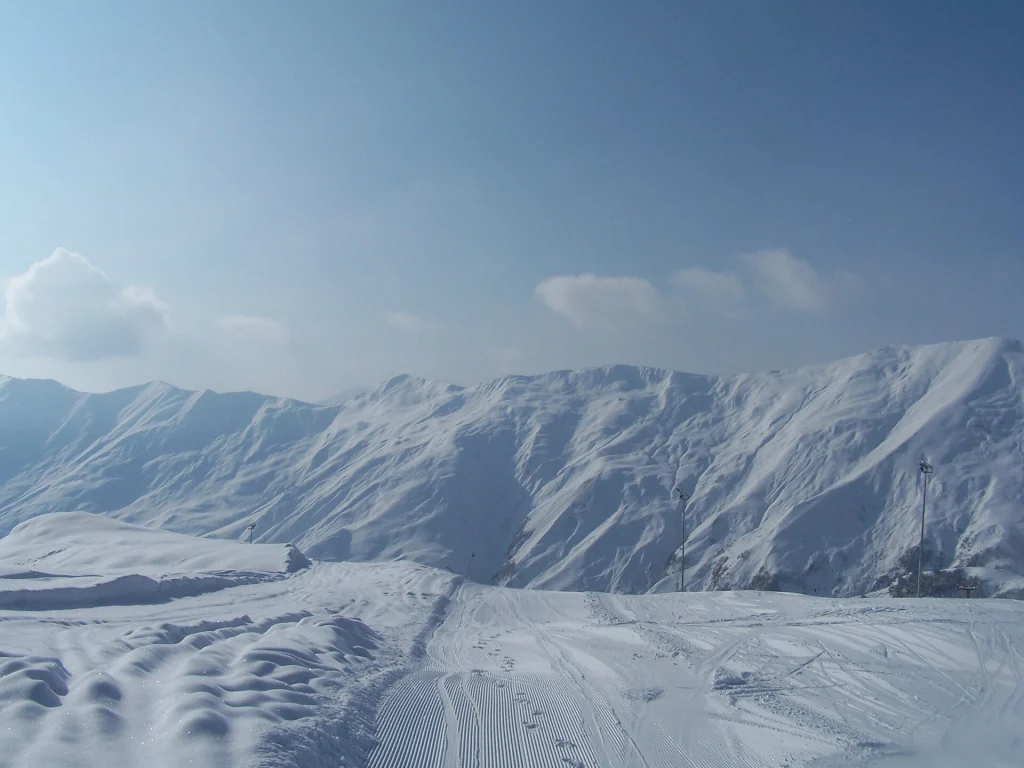
British travellers tend to visit Georgia in the European summer school holidays for hiking in Svaneti and Kazbegi, in the shoulder months of May, June and September for milder weather and fewer crowds, and increasingly in winter for skiing in Gudauri and Bakuriani, which fits neatly around UK half-term and Christmas breaks. Late September into October brings the grape harvest and wine festivals in Kakheti, a strong draw for British wine enthusiasts.
No special vaccinations are mandatory for entry, but routine immunisations should be up to date, and anyone planning high-altitude trekking, long rural stays or an extended trip should discuss tick-borne disease precautions, food and water hygiene, and altitude advice with a GP or travel health clinic well before departure, since personal medical decisions should always be made with a qualified professional rather than a general guide. Comprehensive travel insurance that explicitly covers hiking, mountain activities and medical evacuation is strongly advised given Georgia’s mountainous terrain and the distance to specialist hospital care from remote areas.
Georgia is generally considered safe for tourists by most measures, with petty crime against visitors relatively uncommon in main tourist areas, though the normal precautions around valuables, night-time city walking and unlicensed taxis apply. Road conditions and driving standards outside main highways are the most common safety concern raised by foreign visitors. For anything beyond general guidance, including any evolving security advisories for specific regions, UK travellers should consult their own government’s current foreign travel advice before and during the trip, since this is updated independently of Georgian tourism sources and reflects UK-specific risk assessments.
If this guide is part of a trip you are planning, our Georgia in 10 Days — Tbilisi to Svaneti to the Sea and Rtveli — Wine Harvest in Kakheti (3 Days, September–October) cover the places it describes with a private guide and driver; a GTour travel expert adapts the route to your dates.
Practical summary
- Visa: visa-free for UK citizens, up to 365 days; confirm current terms on evisa.gov.ge and mfa.gov.ge before travel
- Flights: no regular UK non-stop route; connect via Istanbul, Warsaw or Riga, check seasonal direct services to Kutaisi
- Driving: right-hand side of the road, UK licence valid short-term, consider an International Driving Permit for longer stays
- Money: carry Georgian lari in cash for rural areas and small guesthouses, cards widely accepted in cities
- Connectivity: a local SIM or eSIM is cheap and usually better value than UK roaming
- Language: English common in tourism hubs, Georgian or Russian elsewhere; carry a translation app
- Embassy: confirm current British Embassy Tbilisi contact details through official UK government channels before you travel
- Health and safety: check UK government travel advice, ensure robust travel insurance with mountain and medical evacuation cover, and consult a GP for any personal health planning
Sources
- Georgia e-visa portal
- Ministry of Foreign Affairs of Georgia
- Georgian Road Department
- Georgian Railway
- Georgia National Tourism Administration
Questions this guide does not answer? Write to info@castle.ge or WhatsApp +995 577 41 63 14 — a person in Tbilisi replies. See also our travel services and all guides.
A plate of khinkali, Georgia's signature dumplings, a dish every UK visitor should try. · Photo: Kolya Pynti / Wikimedia Commons, CC BY-SA 2.0
Been to Georgia? Tell us how it went — the best stories are published here.
Share your tripOne email a week: what changed for travellers in Georgia — rules, roads, flights, seasons — plus one place worth the trip. Written by the GTour desk, no advertising, unsubscribe in one click.
This story across our partner network — ქართულად: შენი დასვენება