Archives


Kvirikoba in Georgia: dates, meaning and how to experience it
Next dates
28 July 2027 · Church of St Kvirike and Ivlita, Kala, Upper Svaneti. See the full events calendar and Georgia today for roads and weather.
What it is
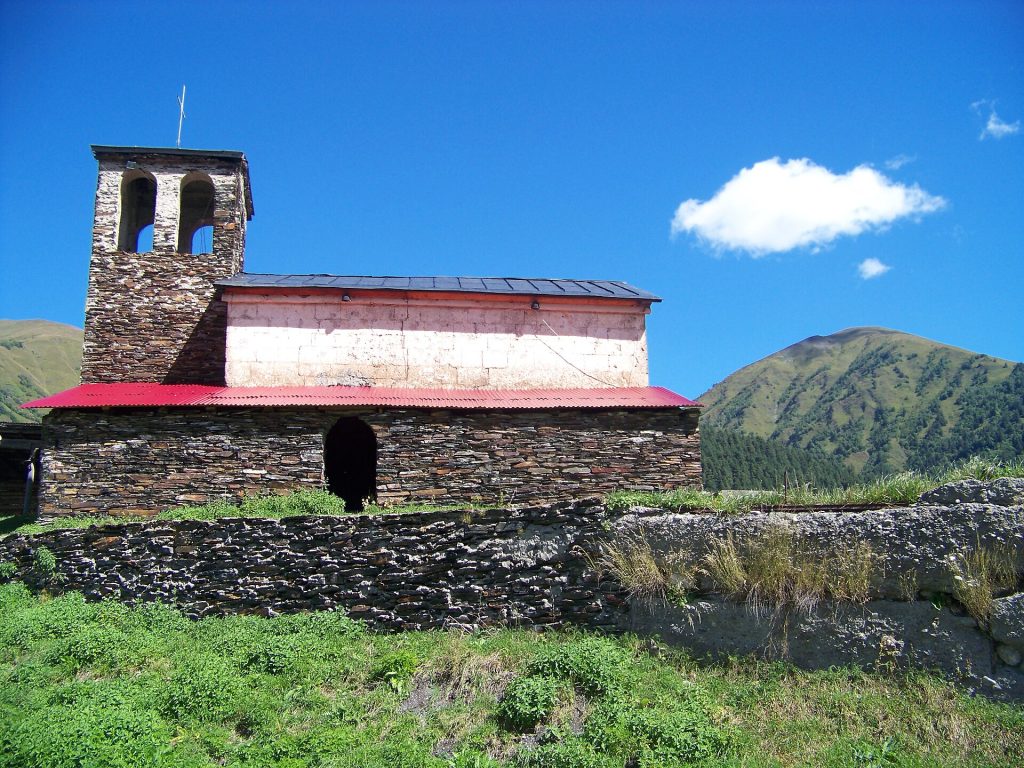
Kvirikoba (k’virik’oba) is the feast day of Saint Kvirike and his mother Saint Ivlita, celebrated above all at the medieval church that bears their name in the village of Kala, in Upper Svaneti. The word itself follows a common Georgian pattern: the suffix -oba turns a saint’s name into the name of their feast day, the same way Giorgoba means “the feast of St George” and Mariamoba means “the feast of the Virgin Mary.” Kvirikoba therefore means, quite literally, “the day of Kvirike.”
The festival is kept by the communities of the Kala valley and, more broadly, by Svans across Mestia municipality, many of whom return from Tbilisi, Zugdidi or abroad for the occasion. It is at once a church feast, with a liturgy and the blessing of bread, candles and livestock, and a communal highland gathering with wrestling, a stone-throwing contest and the layered vocal singing for which Svaneti and Georgia at large are internationally known. Smaller observances of Kvirikoba also occur in other Georgian regions on the same date, but the Kala celebration, centred on the ancient sanctuary known locally as Lagurka, is regarded as the largest and most complete expression of the feast.
Historical background
- 3rd–4th century — According to Christian hagiography, the child Kvirike (Cyricus) and his mother Ivlita (Julitta) were martyred in Asia Minor during the persecutions associated with the emperor Diocletian; their cult subsequently spread across the Christian East.
- 326 (traditional date) — Georgia’s royal house, under King Mirian III, is traditionally said to have adopted Christianity as the state religion, opening the way for the veneration of saints such as Kvirike and Ivlita in local Georgian calendars.
- 9th–10th century — Churches dedicated to the two martyrs appear across Georgia’s mountain provinces as Christianity is consolidated among highland communities, including Svaneti.
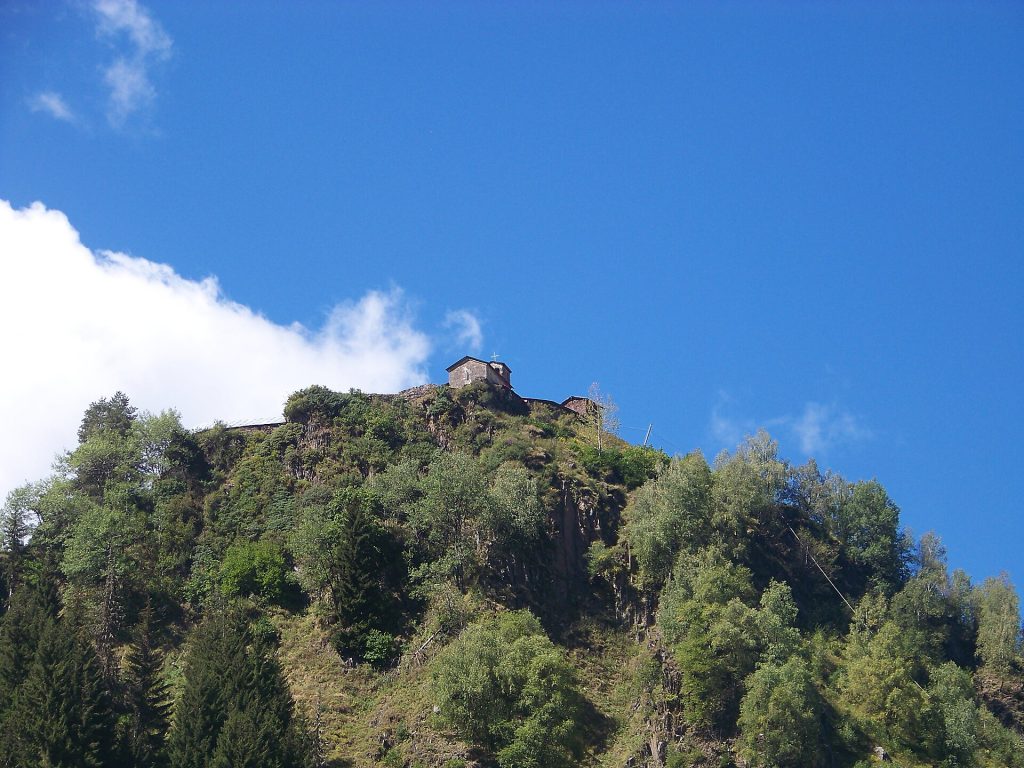
- 10th–11th century — The surviving church of St Kvirike and Ivlita at Kala, part of the sanctuary complex known as Lagurka, is built and later enriched with icons and metalwork, becoming the Kala valley’s principal shrine.
- 1996 — Upper Svaneti, with its fortified medieval villages and churches, is inscribed on the UNESCO World Heritage List.
- Soviet period (1921–1991) — Public religious observance is restricted under state atheism; Kvirikoba survives informally as a village gathering centred on wrestling, feasting and song rather than open liturgy.
- Since 1991 — Following Georgian independence, open pilgrimage and liturgy at Lagurka resume, drawing Svans from scattered highland and lowland settlements.
- 2001/2008 — Georgian polyphonic singing, integral to feast-day gatherings such as Kvirikoba, is proclaimed and later inscribed by UNESCO as part of the Representative List of the Intangible Cultural Heritage of Humanity.
- Today — Kvirikoba remains Svaneti’s largest annual religious and communal festival, held every 28 July at Lagurka.
The feast illustrates a pattern common across the Georgian highlands, in which a universal Christian martyr’s day became the occasion for older communal customs of strength and song to continue under a church calendar. Svaneti’s relative isolation, bounded by the glaciers and passes of the Greater Caucasus, allowed such fusions to persist with unusual continuity; the Christianization of Georgia reached the mountain valleys later and more gradually than the lowland kingdoms, and local saints’ feasts absorbed existing agrarian and warrior rites of the region rather than displacing them outright.
The church at Kala, and the wider sanctuary of Lagurka, functioned historically not only as a place of worship but as a treasury where Svan communities kept icons, manuscripts and processional crosses safe from invasion and raid. That dual role, part shrine and part communal vault, helps explain why Kvirikoba at Kala carries weight far beyond a single parish: it is the day the valley’s dispersed families converge on the place that has, for roughly a thousand years, held what they consider most precious.
Meaning and traditions
The day begins with a liturgy inside or before the church of St Kvirike and Ivlita, where bread, candles and sometimes sacrificial animals are blessed. Families who have made vows during the year, for the health of a child or the safe return of a relative, bring offerings and light candles at the shrine. Afterwards the community moves outside for the more public part of the feast: a wrestling competition held on a cleared patch of ground, and a stone-putting contest in which young men compete to throw a round river boulder the greatest distance, both understood locally as tests of strength carried over from older highland custom rather than church ritual.
Food and drink follow the same logic of communal display. A supra (feast table) is laid in family courtyards and at the church grounds, built around Svan specialities such as kubdari (a spiced meat-filled bread) and tashmijabi or elarji style cornmeal-and-cheese dishes, together with bread, local cheese and homemade wine or chacha brought up from the lowlands. A tamada (toastmaster) leads the table through formal toasts, calling out gaumarjos (“victory,” used as “cheers” or “long life”) to the saints, the dead, the harvest and the gathered guests. Singing accompanies the meal and the open-air gathering: Svan polyphonic hymns and table songs, sung in the close, layered harmony that gives Georgian vocal music its distinct sound, mark the transition from church observance to communal celebration. Regional variations exist: Kvirikoba is also kept, more modestly, as a church and family feast without wrestling or stone-throwing in parts of Racha and other provinces where churches bear the same dedication; the Kala celebration is distinguished precisely by its scale and its sporting contests.
When it happens
Kvirikoba falls on a fixed date in the Georgian Orthodox calendar, 15 July by the Julian reckoning the Church still follows, which corresponds to 28 July in the civil Gregorian calendar used in daily life. This year the feast fell on 28 July 2026; the next observance is 28 July 2027. It is not a national public holiday: government offices, banks and most businesses across Georgia operate normally. Within Mestia municipality and the Kala community, however, it functions as a de facto local holiday — shops and services in the immediate area may close or run reduced hours, and families travel home from Tbilisi and elsewhere, which noticeably increases traffic on the road into Svaneti in the days around the feast.
Where to experience it
The principal place to witness Kvirikoba is the church of St Kvirike and Ivlita at Kala, part of the Lagurka sanctuary complex, a short drive or walk from Mestia, the administrative centre of Upper Svaneti. The liturgy takes place in the morning; the wrestling and stone-throwing contests, along with open-air feasting and singing, generally continue through the afternoon on the grounds around the church. Visitors are welcome to attend as observers. Modest dress is expected for the church itself: covered shoulders and knees, and a headscarf for women entering the sanctuary, in keeping with general Georgian Orthodox church etiquette. Photography of the liturgy and of the wrestling is usually tolerated at a respectful distance, but it is courteous to ask before photographing individuals closely, and visitors should be guided by local custom if told that access to the innermost part of the shrine is restricted during the feast.
Travel with GTour
Georgia in 10 Days — Tbilisi to Svaneti to the Sea and Mestia & Ushguli — 3 Days in Svaneti both pass through Mestia on their way toward Ushguli, close enough to Kala that an arrival timed near 28 July allows a stop at the Church of St Kvirike and Ivlita for Kvirikoba. A GTour travel expert can design the route around your dates to include this detour.
Did you know
- Svan watchtowers surrounding villages such as Kala are part of the same UNESCO World Heritage inscription as the region’s medieval churches.
- Saints Cyricus and Julitta are venerated in both Eastern and Western Christianity, though their feast dates differ between the Julian and Gregorian church calendars.
- Georgian polyphonic singing, heard at gatherings such as Kvirikoba, is recognised by UNESCO as a Masterpiece of the Oral and Intangible Heritage of Humanity.
- The Georgian suffix -oba generates dozens of saints’-day names still in everyday use, from Giorgoba to Barbaroba.
- Many Svan churches, including shrines dedicated to Kvirike and Ivlita, historically doubled as treasuries safeguarding icons and manuscripts during periods of invasion.
Practical tips for visitors
Mestia is reached from Tbilisi or Kutaisi by road, with a seasonal flight link also operating via Kutaisi Airport; travel time by car from Kutaisi is roughly four to five hours through mountainous terrain, so allow extra time around the festival when traffic is heavier. Kala lies a short distance from Mestia and is reachable by local taxi, hired car or on foot for the fitter visitor. Late July weather in Upper Svaneti is generally mild but changeable at altitude; bring layers, sun protection and sturdy footwear. Accommodation in Mestia should be booked well ahead of 28 July, as the feast coincides with the height of the Svaneti trekking season. Dress modestly for the church service, and expect limited mobile signal and services in Kala itself.
Combine it with
Kvirikoba is best combined with a stay in Svaneti itself, exploring Mestia’s medieval towers and museum collections before or after the feast day. Travellers coming from the west may pair the trip with Imereti, gateway region for the Kutaisi route into the mountains, or extend further to Racha, another highland province where churches dedicated to Kvirike and Ivlita keep a quieter version of the same feast.
Questions travellers ask
What does the word “Kvirikoba” literally mean?
It combines the name of Saint Kvirike with the Georgian suffix -oba, which forms the name of a saint’s feast day, so Kvirikoba means simply “the feast of Kvirike.”
Who were St Kvirike and Ivlita?
According to Christian tradition, Kvirike (Cyricus) was a young child martyred together with his mother Ivlita (Julitta) during the Roman persecutions of the early 4th century; their cult later spread to Georgia, where numerous mountain churches bear their joint dedication.
Is Kvirikoba a public holiday in Georgia?
No, it is not a national public holiday; government offices and most businesses nationwide operate as usual. Locally in the Kala community and Mestia municipality it is treated as an important communal and religious occasion with reduced business hours.
Can outside visitors attend the liturgy and festivities at Lagurka?
Yes, visitors are generally welcome to observe both the church service and the outdoor wrestling and feasting, provided they dress modestly and behave respectfully, particularly during the liturgy itself.
What is the wrestling and stone-throwing really about?
These contests are understood locally as tests of strength that predate the church building and were absorbed into the Christian feast day rather than originating from it, continuing older highland customs of communal competition.
How do I get to Kala village for the festival?
Kala is a short drive or walk from Mestia, the main town of Upper Svaneti, which is itself reached by road from Kutaisi or Tbilisi, or by seasonal flight to Kutaisi Airport followed by a road transfer.
Is Kvirikoba celebrated anywhere else in Georgia besides Svaneti?
Yes, churches dedicated to St Kvirike and Ivlita exist in several Georgian regions, including Racha, and keep the same feast date, though usually as a quieter family and church occasion without the wrestling and stone-throwing seen at Kala.
What should visitors wear or avoid doing at the feast?
Modest clothing is expected inside the church, with covered shoulders and knees and a headscarf for women; visitors should ask before photographing people closely and should follow local guidance regarding any restricted areas of the shrine during the liturgy.
Sources
- Upper Svaneti World Heritage listing
- Georgian polyphonic singing, Intangible Cultural Heritage
- Georgian Orthodox and Apostolic Patriarchate
- Georgian National Museum
- Georgian National Tourism Administration
- Georgian National Tourism Administration (GNTA)
- Heritage Sites of Georgia
Plan your Georgia
Want to be in Georgia for Kvirikoba? A GTour travel expert designs the itinerary around it and calls you back.
The 11th-century Church of St Kvirike and Ivlita perched above Kala, the festival's main site. · Photo: Jaba1977 / Wikimedia Commons, CC BY-SA 4.0
This page in other languages: Русский
GTour conciergeAsk anything about Georgia · we reply within hours