Archives


Tushetoba in Georgia: dates, meaning and how to experience it
Next dates
31 July 2027 – 1 August 2027 (to be confirmed) · Omalo, Tusheti. See the full events calendar and Georgia today for roads and weather.
What it is
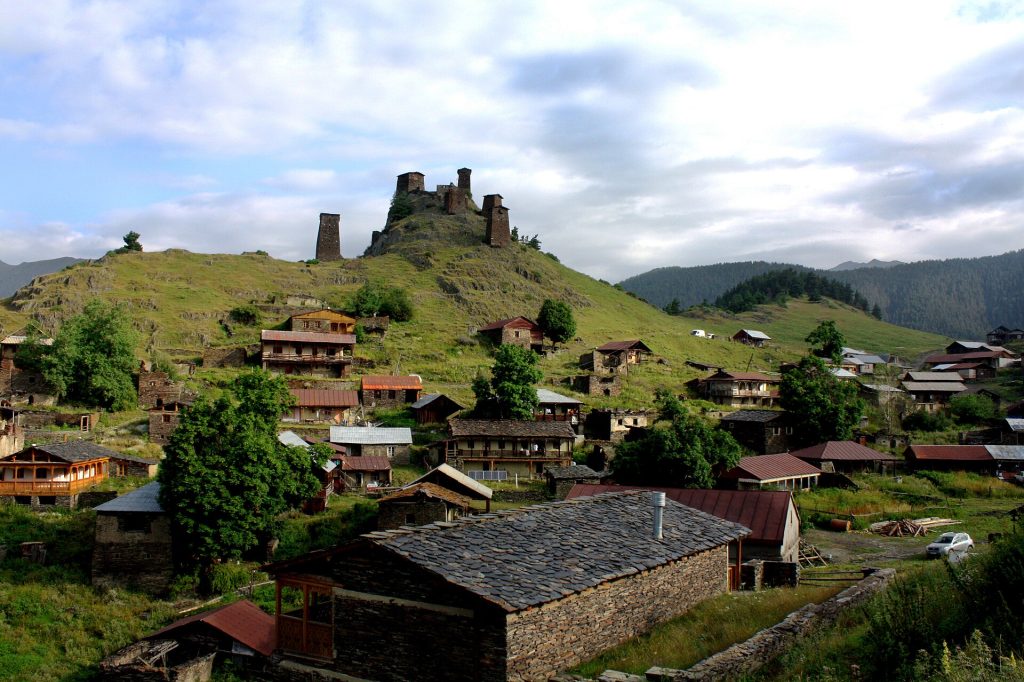
Tushetoba combines the place name Tusheti with the Georgian suffix -oba, the same ending found in feast names such as Giorgoba or Mariamoba, where it marks a day or season “of” something. Tushetoba therefore means roughly “the days of Tusheti” or “Tusheti’s own celebration” — a festival built around the identity of a single highland community rather than a church calendar saint. It is organized each summer in Omalo, the administrative center of Tusheti, a remote mountain province of the Akhmeta municipality in Kakheti, reachable only by a seasonal road over the Abano Pass.
The festival is celebrated primarily by the Tush, an ethnographic group of highland Georgians traditionally occupying Tusheti’s gorges and, for much of the year, the lowland village of Alvani in Kakheti, where many Tush families resettled from the nineteenth century onward while continuing to summer their flocks in the mountains. Tushetoba brings together shepherds, their extended lowland families, neighboring highlanders from Khevsureti and Pshavi, and increasingly Georgian and foreign visitors, for a weekend of horse racing, wrestling, dairy crafts and polyphonic song that marks the height of the short Tusheti summer.
Historical background
- Medieval period (9th–13th centuries) — defensive tower houses and fortified village complexes, such as Keselo above Omalo, are built across Tusheti as the Tush organized themselves into clan-based mountain communities.
- Kingdom of Kakheti era — Tusheti functions as a mountain province owing allegiance to the kings of Kakheti, supplying warriors and shepherds while retaining local self-governance through councils of elders.
- 18th century — the geographer and royal prince Vakhushti Bagrationi describes Tusheti’s terrain, villages and the seasonal movement of flocks between highland pastures and the Alvani plain in his geographic survey of the Georgian kingdoms.
- 19th century — Russian and Georgian ethnographers record Tush dialect, dress, pastoral law and twice-yearly transhumance; many Tush families begin settling permanently in Zemo Alvani and Kvemo Alvani while keeping summer houses in Tusheti.
- Soviet period — collectivization reorganizes livestock herding into state and collective farms, yet Tush shepherd families continue the seasonal migration on foot or horseback between winter lowland pasture and summer highland pasture.
- 2003 — Tusheti’s protected areas (strict nature reserve, national park and protected landscape) are established, opening the region to regulated conservation management and, gradually, to organized tourism.
- Early 2000s onward — Tushetoba is organized as an annual public festival in Omalo, consolidating older shepherd gatherings, horse races and wrestling matches into a single weekend event aimed at both residents and visitors.
- Present day — the festival is held each year on a confirmed summer weekend, timed to the brief window when the Abano Pass road is reliably passable.
Tushetoba’s deeper roots lie not in a single founding event but in the rhythm of transhumance itself: for centuries, Tush households moved their sheep, and often their households, between Tusheti’s high pastures and the lowlands of Kakheti, a pattern that still structures the Tush calendar today. The isolation of the region — cut off by snow for roughly eight months of the year — meant that mountain and lowland life never fully separated; Tusheti became the ancestral homeland that families returned to in summer rather than a place of year-round residence for most.
The modern festival gives public shape to that older pattern. As paved access, electricity and tourism infrastructure slowly reached Omalo in recent decades, local authorities and the Tush diaspora in Alvani began formalizing the summer gathering into an event with races, matches and performances, partly to sustain shepherd livelihoods and partly to keep younger generations connected to a highland culture increasingly lived out, for most of the year, far from the mountains themselves.
Meaning and traditions
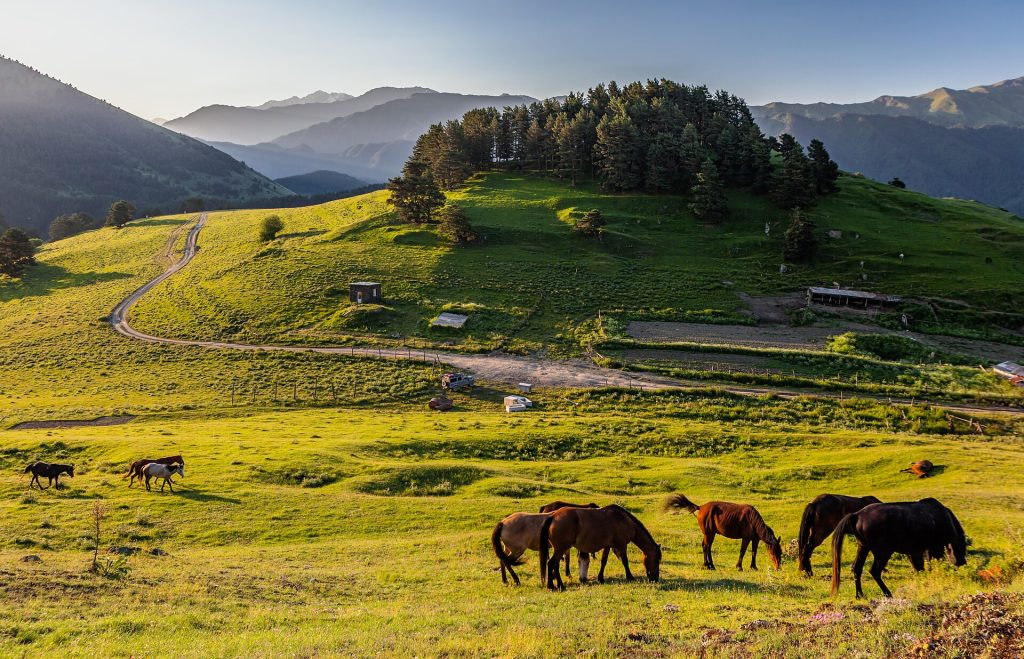
At the center of Tushetoba are two contests inherited from shepherd life. Horse races (cxenebis asparezi) are run on the sturdy, sure-footed Tush mountain horse, bred for steep terrain and traditionally used by shepherds moving flocks and goods across the passes. Traditional Georgian wrestling, chidaoba, is contested on open ground, with bouts judged by elders and prizes — often a live sheep, a saddle, or household goods — awarded to winners, echoing the pastoral economy the festival celebrates.
Dairy work is both demonstration and feast. Visitors see guda, a strong sheep’s-milk cheese cured inside a sheepskin sack, alongside fresh curds, churned butter and highland honey. Women display chitebi, the thick, geometrically patterned wool socks knitted across Tusheti and prized as craftwork, and men often wear the chokha, the traditional belted coat, for the occasion. Music centers on Georgian polyphonic singing — recognized by UNESCO as a masterpiece of intangible cultural heritage — performed alongside highland dances and the panduri, a three-stringed lute common across eastern Georgia’s mountains. Toasts at shared tables follow the Georgian supra format, led by a toastmaster (tamada), with verses honoring ancestors, shepherds and the mountains themselves.
Because many Tush families now live permanently in Alvani and return to Tusheti only in summer, Tushetoba also functions as a homecoming: relatives who have not seen the mountains since the previous autumn travel together over the pass for the weekend, visit family towers and churches, and leave again before the first snows close the road.
When it happens
Tushetoba has no fixed date. It is set each year for a weekend in late July or early August, the period when the Abano Pass road is most reliably open and dry, and is confirmed by local organizers only a few months in advance once weather and road conditions are assessed. It is not a national public holiday, carries no effect on banks, government offices or transport schedules elsewhere in Georgia, and is best understood as a regional cultural event rather than a calendar feast.
The most recently announced edition is provisionally set for 31 July–1 August 2027, subject to confirmation closer to the date. Visitors planning a trip around the festival should check with the Akhmeta municipality or the Georgian National Tourism Administration in the preceding spring, since the exact weekend can shift by a week or two depending on snowmelt on the pass and local agreement among village elders.
Where to experience it
The festival is held on open ground near Omalo, Tusheti’s small administrative village, split between the lower settlement and the historic Keselo fortress cluster of stone towers on the ridge above it. Over the weekend, visitors can expect horse races along a marked course outside the village in the morning, wrestling bouts at midday, and music, dancing and shared meals continuing into the evening, with stalls selling guda cheese, wool goods and honey throughout. Keselo itself, with its medieval towers and small museum, is worth visiting separately from the festival program, at any time of day, and offers views over the Tusheti valley.
Visitors should be aware that Tusheti preserves several sacred highland shrines (khati) governed by strict customary rules, including restrictions on women approaching certain sites; these are not part of the festival program but are visible from village paths, and should not be entered or photographed without local guidance. Church etiquette elsewhere in Georgia applies at Tusheti’s small village churches: modest dress, covered shoulders, and quiet behavior during any service.
Travel with GTour
The Tusheti — Georgia's Last Wild Frontier (4 Days) route runs directly through Omalo, so it can be scheduled around the late July weekend when Tushetoba fills the village with horse races and wrestling, while the Georgia in 10 Days — Tbilisi to Svaneti to the Sea itinerary can be adjusted to pass through the region during the same dates. A GTour travel expert designs the route around the guest’s dates, confirming the festival’s timing closer to the visit.
Did you know
- Tusheti is cut off by snow for roughly eight months of the year; the Abano Pass road, one of the highest in Georgia, is typically passable only from around June to October.
- Some families historically associated with Tusheti’s Tsova gorge speak Batsbi (Tsova-Tush), a Nakh language unrelated to Georgian, even though the Tush as a whole are Georgian by religion, dialect and civic identity.
- Guda cheese is cured inside a whole sheepskin, a preservation method adapted to a region without refrigeration and a long winter of isolation.
- Georgian polyphonic singing, heard at festivals such as Tushetoba, is recognized by UNESCO as intangible cultural heritage.
- Many Tush families now live year-round in Alvani, in Kakheti’s lowlands, and travel back to Tusheti only for the summer pastoral season and events like Tushetoba.
Practical tips for visitors
Reaching Omalo requires a four-wheel-drive vehicle; the Abano Pass road from Pshaveli is unpaved, narrow in places and unsuitable for standard cars or large buses. Many visitors book a driver or organized transfer from Telavi or Tbilisi rather than self-drive. Accommodation in Omalo is limited to small family-run guesthouses, so booking well ahead of the festival weekend is essential, as rooms fill quickly during the brief summer season. Mobile signal and ATMs are unreliable or absent in Tusheti, so cash should be carried from Telavi or Akhmeta. Weather at over 1,800 meters changes quickly even in summer; warm layers, sturdy footwear and rain protection are advisable regardless of forecast, and the festival itself takes place outdoors with no formal shelter.
Combine it with
Tushetoba pairs naturally with a wider highland itinerary through Kakheti, the wine region at the foot of the Tusheti road, and can be combined with the tower villages and glaciers of Svaneti or the mountain shrines and passes of Kazbegi for travelers tracing Georgia’s highland architecture and shepherd culture more broadly.
Questions travellers ask
Is Tushetoba a public holiday in Georgia?
No. It is a regional cultural festival held in Omalo and has no effect on national holidays, banks or offices elsewhere in the country.
How do I get to Omalo for the festival?
By four-wheel-drive vehicle over the Abano Pass from Pshaveli, typically arranged from Telavi or Tbilisi; the road is unpaved and not suitable for ordinary cars.
Why does the date change every year?
The festival depends on the Abano Pass being reliably open and dry, which varies with snowmelt and weather, so organizers confirm the weekend only a few months in advance.
Can I visit Tusheti outside the festival weekend?
Yes, Tusheti is open to visitors throughout the summer season, roughly June to October, with Keselo fortress, village churches and hiking routes accessible on any day the pass is open.
Is there accommodation in Omalo?
Accommodation is limited to small family guesthouses with few rooms, so booking ahead is strongly recommended, especially for the festival weekend itself.
What should visitors eat or try at Tushetoba?
Guda cheese cured in sheepskin, fresh dairy products, highland honey and shared festive meals accompanied by Georgian polyphonic songs and toasts are the central culinary experiences.
Are women allowed at all Tusheti shrines during the festival?
No. Certain highland shrines (khati) follow strict customary restrictions, including limits on women approaching the site; these sites are separate from the festival grounds and should be respected without entering.
Is Tushetoba suitable for families with children?
The outdoor setting, horse races and wrestling are family-friendly to watch, but the remote location, altitude, unpaved roads and basic facilities mean families should plan carefully and allow for limited medical access.
Sources
- Tushetoba marks start of highland tourist season
- Thousands gather in Omalo for Tushetoba festival
- Tushetoba festival draws visitors to Omalo
Plan your Georgia
Want to be in Georgia for Tushetoba? A GTour travel expert designs the itinerary around it and calls you back.
A Tushetian horse in traditional decorated tack, symbol of the region's festive horse races. · Photo: Lidia Ilona / Wikimedia Commons, CC BY 2.0
This page in other languages: Русский
GTour conciergeAsk anything about Georgia · we reply within hours