
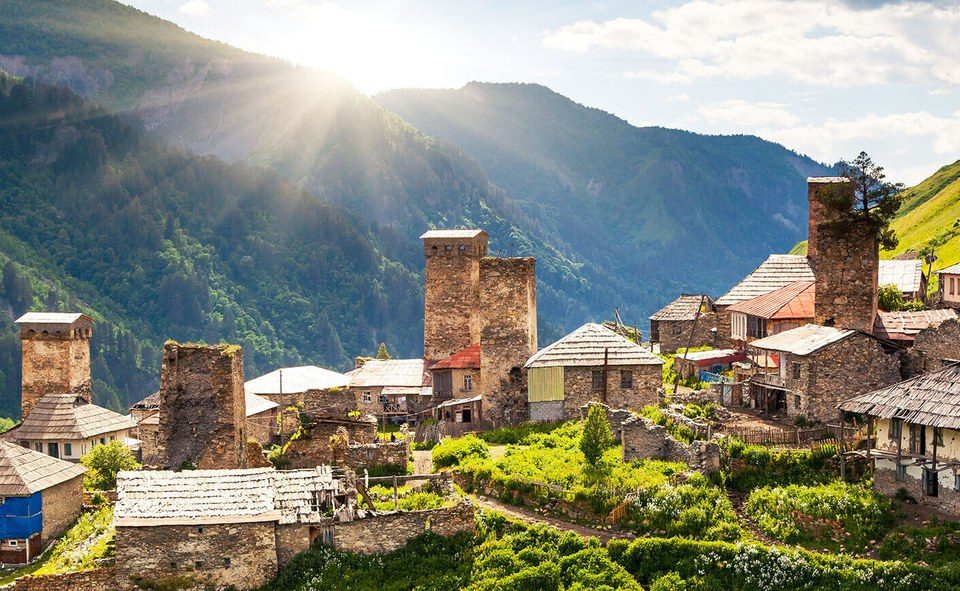
Four villages at the head of the Enguri valley, beneath the 5,000-metre wall of Shkhara, cut off by snow for months every winter. Two hundred people stay. Here is what you find when you get there, and how.

Four villages at the head of the Enguri valley, beneath the 5,000-metre wall of Shkhara, cut off by snow for months every winter. Two hundred people stay. Here is what you find when you get there, and how.
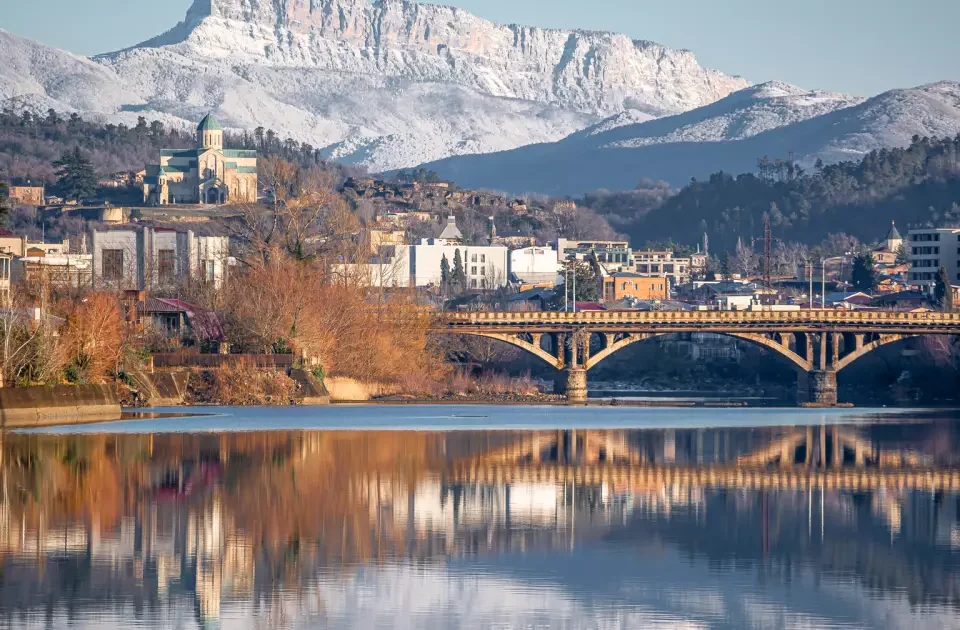
Georgia’s cheese bread has a dozen regional forms and one mother. In Imereti it is a round, flat, sealed disc with the cheese inside — and it is the version Georgians eat at home when nobody is watching.
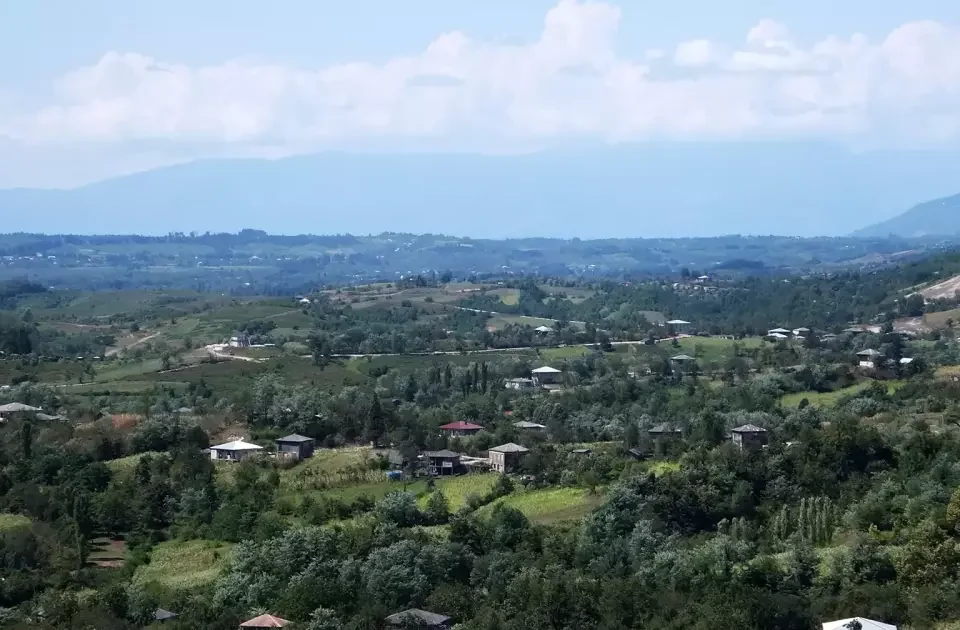
An hour west of Kutaisi, the Abasha river has cut a slot through limestone so narrow and so overgrown that the light inside is green. The Dadiani princes bathed here. Now there are boats.
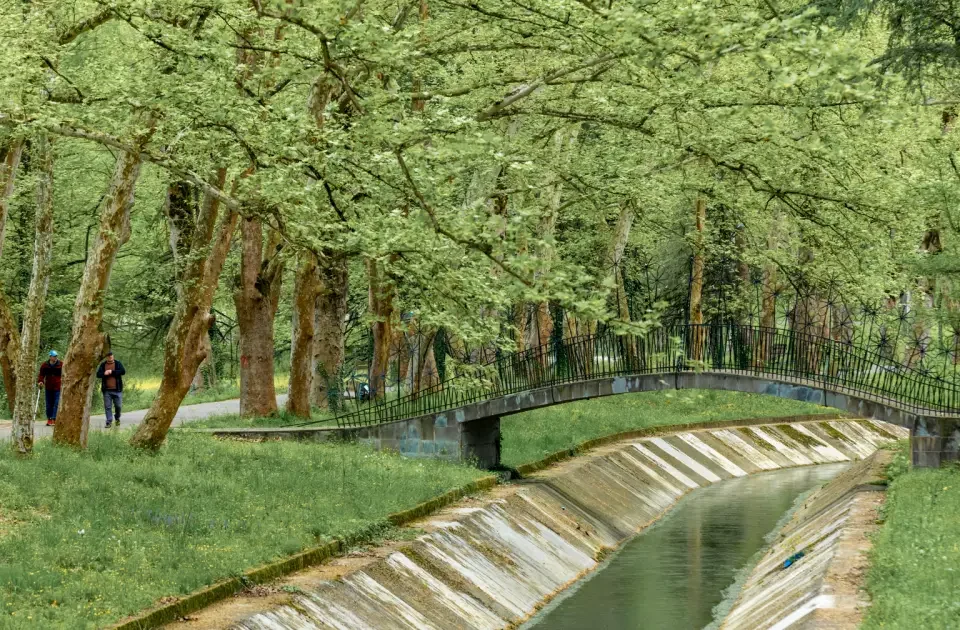
A spa town built for a hundred thousand Soviet workers a year now has a park of colonnaded palaces going quietly to ruin, radon springs still flowing, and Stalin’s private bath. It is the strangest, most photographed afternoon in western Georgia.
Twenty minutes from Kutaisi, a kilometre and a half of lit walkway winds through halls of stalactites, past an underground river, in a cave named for a titan who was chained — according to Georgians — on a mountain a hundred kilometres away.
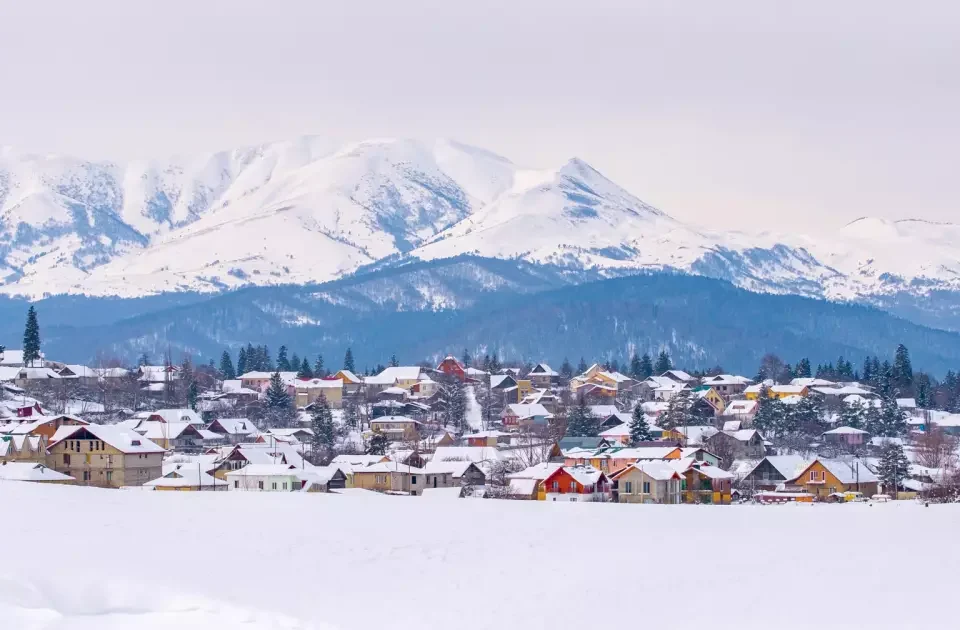
Since 1902 a narrow-gauge train has climbed from Borjomi to Bakuriani through the forest, over a bridge designed by Gustave Eiffel’s firm, at the speed of a brisk walk. Nobody takes it to get anywhere.
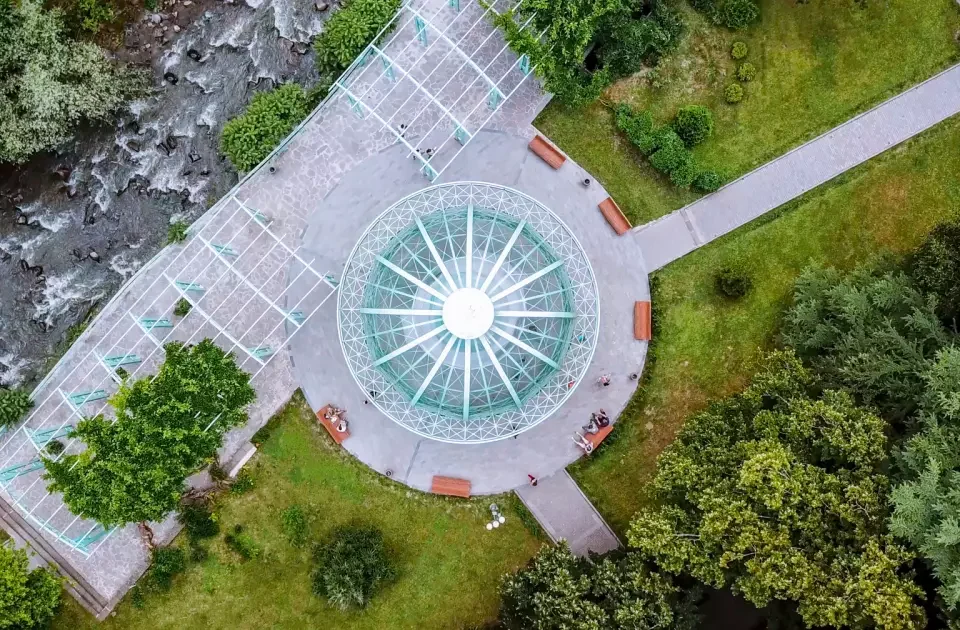
The most famous bottle in the former Soviet Union comes from a wooded gorge two and a half hours from Tbilisi, where the water still rises warm from a spring in a park. It tastes of salt and volcano. There is a reason.
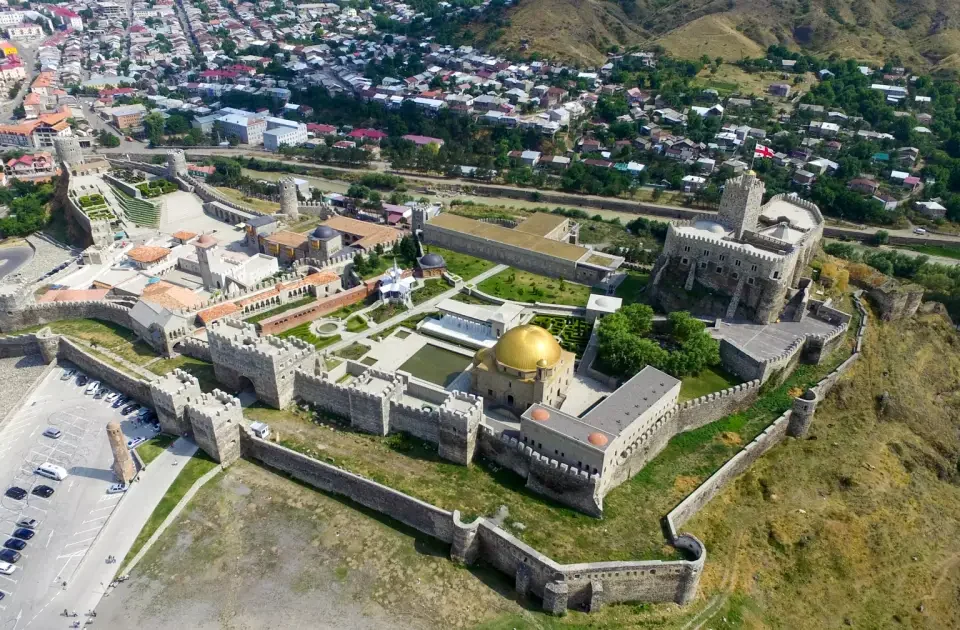
On a hill above Akhaltsikhe, a walled town restored in 2012 contains four centuries of everyone who ruled southern Georgia — and, within a few hundred metres, the places where each of them prayed.
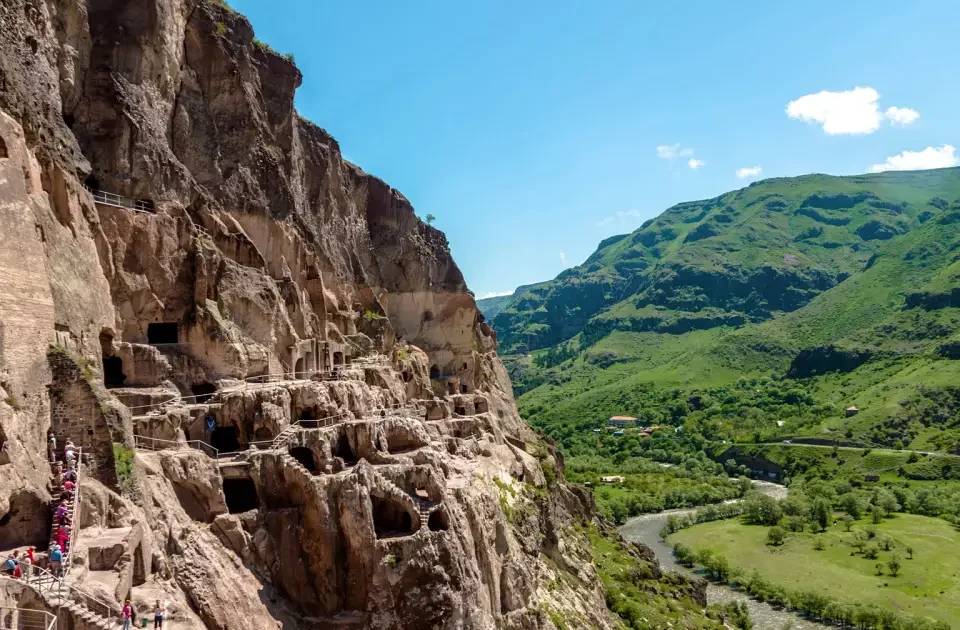
In the 1180s Georgia’s only reigning queen ordered a monastery-fortress cut into a mountainside above the Kura — thirteen storeys, six hundred rooms, a church, a bell tower and its own water supply. Most of it is still there, and you can walk through it.
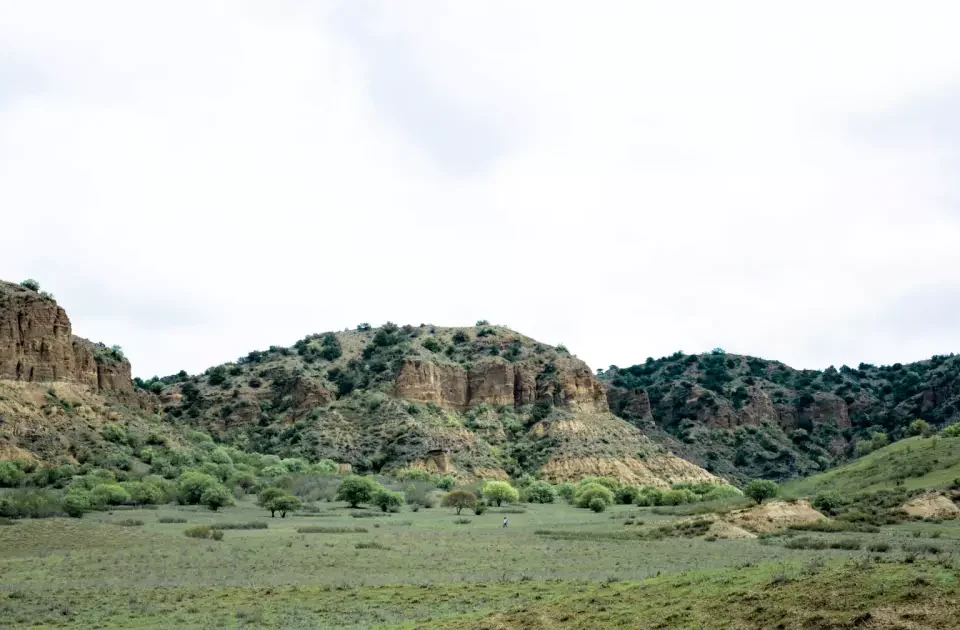
Ninety minutes from Tbilisi, on a striped ridge where Georgia ends and Azerbaijan begins, a 6th-century monk dug a cell into the rock. Fifteen centuries later the monastery is still there, and so are the monks.
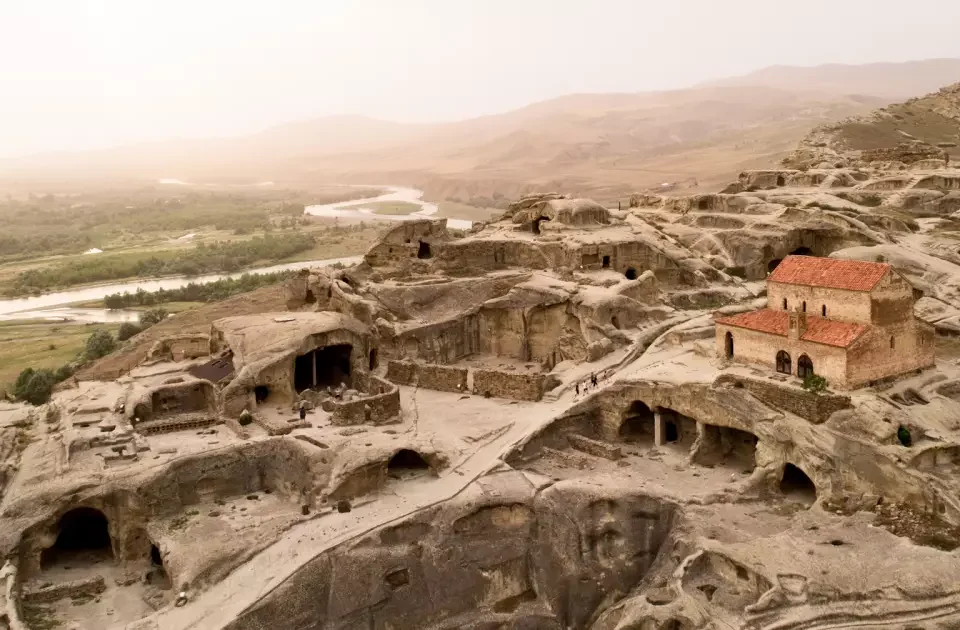
On a sandstone ridge above the Kura, an hour west of Tbilisi, is a town of halls, temples, streets and wine cellars carved from the living rock — inhabited from the Bronze Age to the Mongols, and open to walk through.
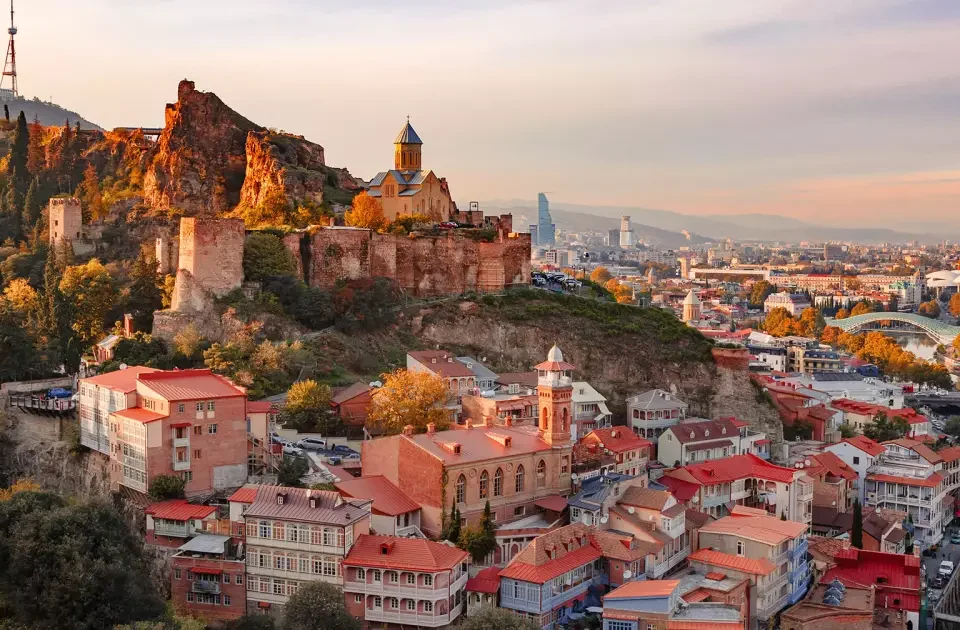
Every day of the year, on a bridge with no river under it, Tbilisi lays out its attic on blankets — medals, enamel, daggers, Zenit cameras, cloisonné, the odd icon. It is the best hour of browsing in the Caucasus.