

By Nino Gelashvili, Travel News Editor · 26/10/2026
Yes, Georgia remains one of the simplest countries in the world for Azerbaijani citizens to visit: ordinary passport holders from Azerbaijan do not need a visa for tourism, business or family visits, and the land border is a short drive or a two-hour flight away. The relationship is also unusually close in everyday terms, because several hundred thousand ethnic Azerbaijanis live in Georgia’s Kvemo Kartli region, Azerbaijani-speaking guides work across Kakheti and Tbilisi, and the Red Bridge crossing has linked the two countries’ trade and travel routes for centuries.
This guide sets out what changes for an Azerbaijani traveller specifically: entry rules and how to verify them before you leave, flight and land options including the overnight train, what to do about a driving licence, money and SIM cards, where Azerbaijani is spoken and understood, and the cultural overlap that makes Georgia feel both foreign and familiar. Rules on visas, tolls and transport schedules change without much notice, so every section below tells you which official page to check close to your travel date rather than relying only on this article.
Visa and entry rules for Azerbaijani citizens
As of October 2026, citizens of Azerbaijan travelling on an ordinary passport can enter Georgia without a visa and stay for an extended period that has historically been set at up to one year, one of the most generous arrangements Georgia offers any nationality. This is governed by bilateral agreement and Georgian migration law rather than a fixed global rule, and it has been adjusted before, so confirm the current permitted stay and any passport-validity requirement before booking non-refundable tickets. The authoritative sources are Georgia’s Ministry of Foreign Affairs and the state e-visa portal, which also lists which nationalities, if any, can cross using a national ID card rather than a passport.
- Check current visa-free status and length of stay: mfa.gov.ge
- Check if an ID-card entry provision applies to Azerbaijani citizens: evisa.gov.ge
- If in doubt, contact Georgia’s diplomatic mission in Baku before travel; details are published on the same MFA site.
If you are not an Azerbaijani citizen but hold Azerbaijani residency, or you are travelling on a non-ordinary passport (diplomatic, service, refugee travel document), the rules differ and you should check with the embassy of Georgia in Baku directly.
Getting there: flights, land borders, and the train
Baku to Tbilisi is a short hop, and several carriers run direct flights most days of the week into Tbilisi International Airport, with onward domestic options to Batumi and Kutaisi airports if your trip continues to the coast or western Georgia. Check live schedules and any seasonal route changes directly with the airports rather than a booking aggregator.
| Option | Typical journey time | Notes |
|---|---|---|
| Direct flight Baku–Tbilisi | about 1h10–1h30 | Confirm current carriers and frequency at tbilisiairport.com |
| Red Bridge land crossing (Tsiteli Khidi / Qırmızı Körpü) | varies with queues | Main road crossing near Gardabani, used by most private cars and buses |
| Lagodekhi–Balakan crossing | varies with queues | Useful if arriving from eastern Azerbaijan or combining with Kakheti |
| Baku–Tbilisi overnight train | roughly 11–13 hours | Confirm current timetable at railway.ge |
Border wait times at Red Bridge and Lagodekhi can lengthen sharply around major holidays in either country, so build in slack on both sides. Road condition and any works on the approach roads are listed by Georgia’s road authority.
- Border crossing points and road status: georoad.gov.ge
- Rail timetable and tickets: railway.ge
Driving in Georgia with an Azerbaijani licence
A valid Azerbaijani national driving licence is generally accepted for short tourist stays in Georgia, consistent with international practice for a neighbouring country, but requirements for longer stays, rental-car insurance, or whether an International Driving Permit is expected can change and differ between rental companies. Confirm directly with your rental agency and, for anything beyond a short holiday, check current rules with Georgia’s road authority or the MFA page above before you travel. Mountain roads in Svaneti, Tusheti and parts of Kakheti require a 4×4 and local experience; a Georgia road guide can help you plan a safe route in winter.
Money, cards, and SIM cards
Georgia’s currency is the lari (GEL), not the manat, and prices are not normally quoted in Azerbaijani manat outside a few tourist-facing exchange points near the border. Cards are widely accepted in Tbilisi, Batumi and Kakheti’s wine towns, but smaller guesthouses, mountain villages and market stalls in Kvemo Kartli still prefer cash. ATMs are common in cities and at both main land borders. Exchange bureaus near Red Bridge and in central Tbilisi handle manat, but rates improve the further you are from the border crossing itself, so changing a small amount at the border and the rest in the city is usually more economical.
A local SIM or eSIM is inexpensive and sold at both airports and at kiosks near the Red Bridge crossing; bring your passport to register it, as Georgian law requires ID for SIM registration.
Language: Azerbaijani-speaking communities and guides
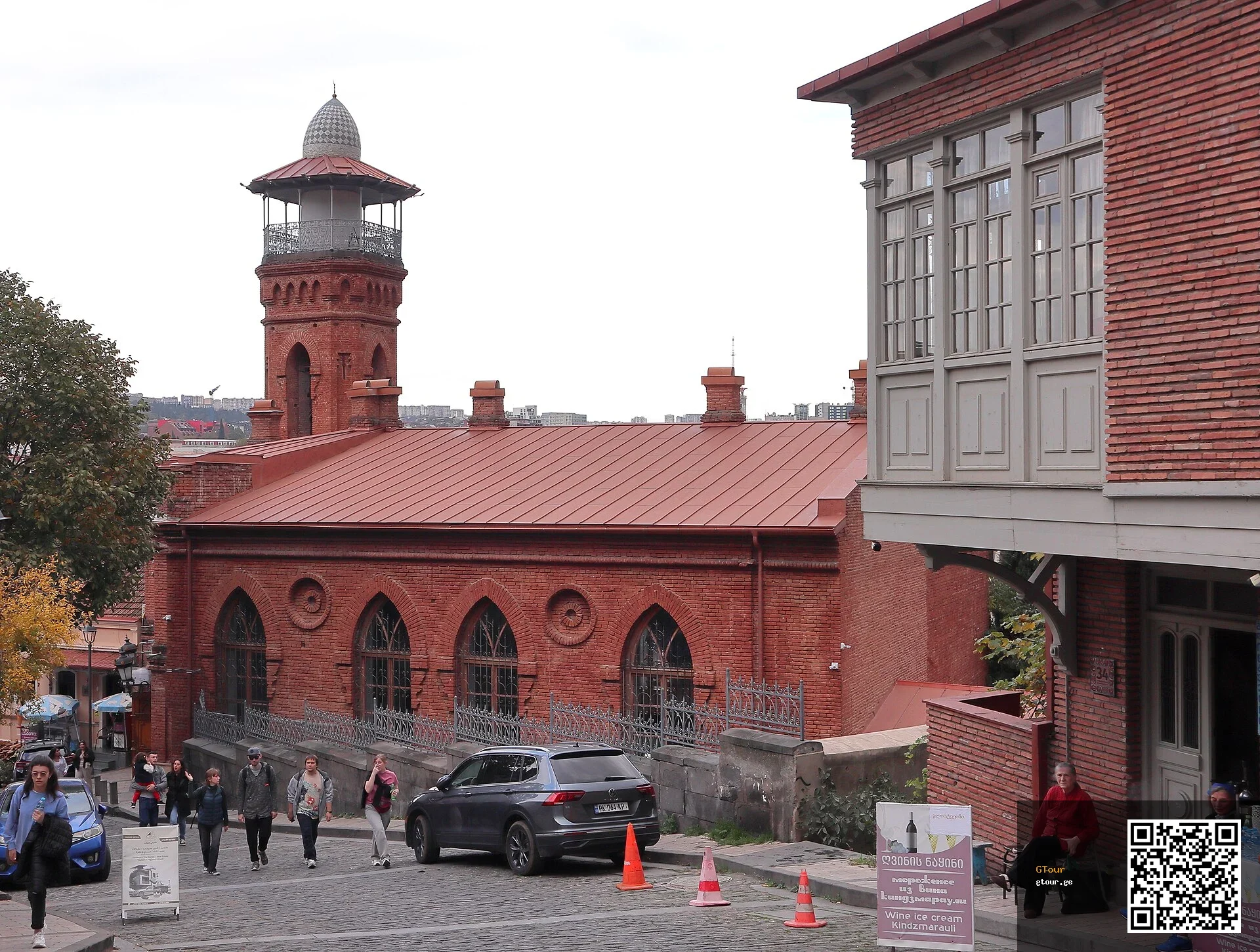
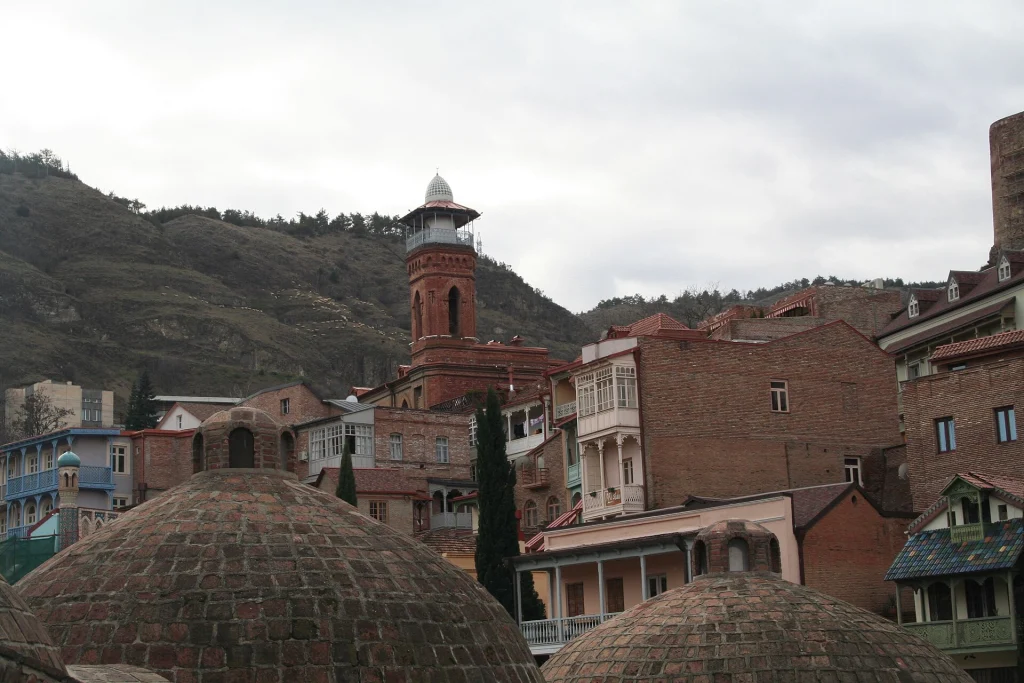
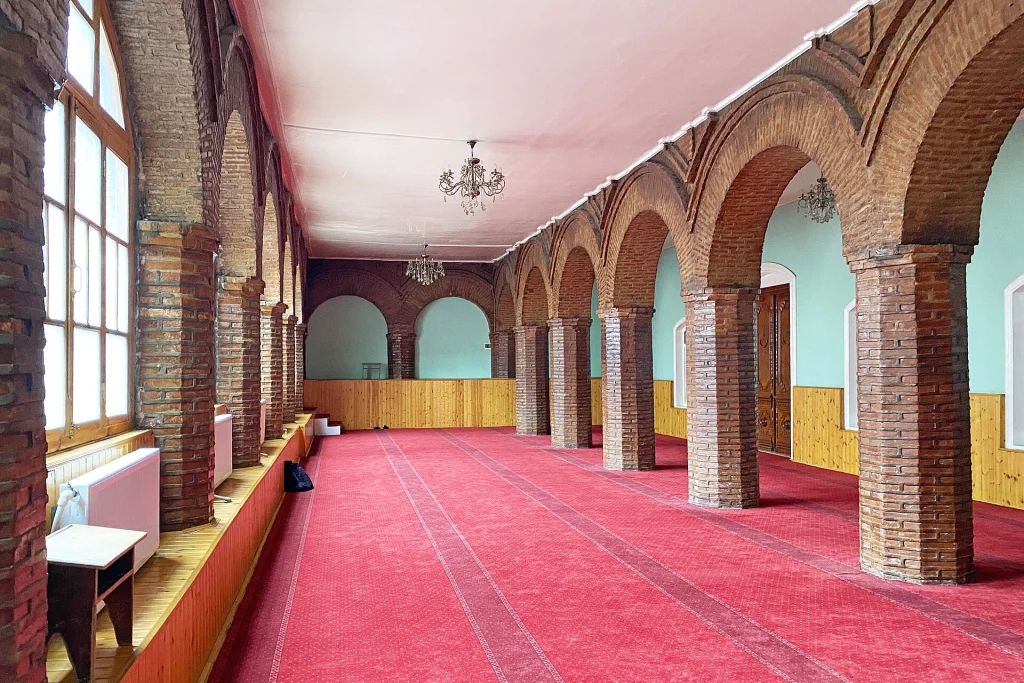
Azerbaijani is a living, everyday language in parts of Georgia, not just a border-town phrasebook courtesy. Kvemo Kartli, especially around Marneuli, Bolnisi, and Gardabani, has Georgia’s largest ethnic Azerbaijani population, and Azerbaijani is heard in markets, mosques and schools there; Georgia’s national statistics office publishes population breakdowns by region and ethnicity for travellers or researchers who want the detail. In Tbilisi, the historic Juma mosque in the old town serves both Sunni and Shia worshippers and is a point of reference for Muslim visitors from Azerbaijan. Russian remains a practical second language for older Georgians in rural areas, and English is standard in Tbilisi’s tourism sector; GTour’s private tours can arrange Azerbaijani-speaking guides for Tbilisi, Kakheti and the mountains on request.
- Population and regional ethnic data: geostat.ge
Food and dietary notes
Georgian and Azerbaijani cuisines share a great deal: grilled meats, fresh herbs, walnuts, pomegranate, and a culture of long shared tables, so the food will feel recognisable rather than foreign. The main differences to expect are Georgia’s heavy use of pork in some dishes (clearly avoidable, as khinkali and most grilled meats are also made with beef or lamb, and halal options exist particularly in Marneuli and around the Juma mosque in Tbilisi) and the centrality of wine, including at business and family gatherings, which travellers who do not drink alcohol can politely decline without offence. Kakheti, Georgia’s main wine region, borders Azerbaijan’s Qax-Zaqatala area and is an easy add-on if you are already near the Lagodekhi crossing.
Cultural and historical ties, holidays and best seasons to travel
The two countries share centuries of Silk Road trade, overlapping Caucasus cuisine and music traditions, and a modern relationship built on energy transit and open borders. Tbilisi is a common weekend and short-break destination for Azerbaijani travellers, and traffic at Red Bridge and on the Baku-Tbilisi train rises sharply around Novruz, New Year, and the Qurban/Ramadan holiday periods, as well as around Georgian public holidays when accommodation in Tbilisi and Kakheti fills quickly. Spring (April-May) and autumn (September-October, including grape harvest, rtveli, in Kakheti) are the most comfortable seasons for sightseeing and wine touring; July-August suits the Georgian mountains (Svaneti, Kazbegi, Tusheti) but can be hot and busy on the coast at Batumi.
Health, insurance, and safety notes
No special vaccinations are required for travel between Azerbaijan and Georgia, but routine immunisations should be up to date, and anyone with a chronic condition or planning high-altitude trekking in Svaneti or Tusheti should see a doctor before departure for personal advice. Travel insurance that explicitly covers Georgia (including mountain evacuation if you plan to hike) is strongly recommended, since public hospital care is not free for foreign visitors and private clinics expect payment or insurance proof upfront. Georgia is generally a safe destination for Azerbaijani travellers, including in Kvemo Kartli where you will often hear your own language spoken; normal precautions apply around border-crossing scams with unofficial money changers and unlicensed taxis, and it is worth agreeing a taxi fare before departure, especially at airports and border points.
If this guide is part of a trip you are planning, our Rtveli — Wine Harvest in Kakheti (3 Days, September–October) and Racha — Khvanchkara Wine & Mountain Lakes (2 Days) cover the places it describes with a private guide and driver; a GTour travel expert adapts the route to your dates.
Practical summary
- Visa: ordinary passport holders from Azerbaijan currently travel visa-free; confirm length of stay at mfa.gov.ge and evisa.gov.ge before booking.
- Flights: direct Baku-Tbilisi services exist; check current carriers at tbilisiairport.com.
- Land: Red Bridge (Gardabani) and Lagodekhi-Balakan are the main crossings; check road status at georoad.gov.ge.
- Train: Baku-Tbilisi overnight service, schedule at railway.ge.
- Driving: an Azerbaijani licence is generally accepted for short stays; confirm with your rental company and georoad.gov.ge for longer visits.
- Money: currency is the lari, not the manat; cards work in cities, carry cash for villages and Kvemo Kartli markets.
- Language: Azerbaijani is widely spoken in Kvemo Kartli (Marneuli, Bolnisi, Gardabani) and understood around Tbilisi’s Juma mosque; Azerbaijani-speaking guides are available for Kakheti and the mountains.
- Food: cuisines overlap closely; halal and non-pork options are easy to find, especially near Marneuli and the Juma mosque.
- Health: no mandatory vaccinations, but buy insurance that covers Georgia and see a doctor for personal advice before mountain travel.
- Busy periods: expect border and flight congestion around Novruz, Qurban/Ramadan, and Georgian public holidays.
Sources
- Georgia Ministry of Foreign Affairs
- Georgia e-Visa portal
- Georgian road authority, crossing and road status
- Georgian Railway, international services
- National Statistics Office of Georgia, population by region
- Agency of Protected Areas, Lagodekhi area
Questions this guide does not answer? Write to info@castle.ge or WhatsApp +995 577 41 63 14 — a person in Tbilisi replies. See also our travel services and all guides.
Tbilisi's Juma Mosque, a key gathering place for Azerbaijani-speaking visitors and residents in the Old Town. · Photo: Александр Сигачёв / Wikimedia Commons, CC0
Been to Georgia? Tell us how it went — the best stories are published here.
Share your tripOne email a week: what changed for travellers in Georgia — rules, roads, flights, seasons — plus one place worth the trip. Written by the GTour desk, no advertising, unsubscribe in one click.
This story across our partner network — ქართულად: შენი დასვენება