Archives


Chocolate Festival at the Botanical Garden in Georgia: dates, meaning and how to experience it
Next dates
5 December 2026 – 6 December 2026 (to be confirmed) · National Botanical Garden, Tbilisi. See the full events calendar and Georgia today for roads and weather.
What it is
The Chocolate Festival at the Botanical Garden (in Georgian, shokoladis festivali, “chocolate festival,” a straightforward loanword from the English “chocolate” paired with the Georgian word for festival) is a contemporary, secular event held each winter inside the National Botanical Garden of Georgia in Tbilisi. It is not a religious feast or a holiday rooted in antiquity; it belongs to the newer layer of Tbilisi’s cultural calendar, alongside wine, jazz and film festivals, that has grown up since Georgia’s tourism sector expanded after independence.
The audience is broad: Tbilisi families looking for an outdoor weekend activity as the weather turns cold, visiting tourists curious about Georgian flavors, and a growing community of small-batch Georgian chocolatiers who use the event to sell directly to the public. Children are a particular focus, through hands-on workshops, while adults come for tastings and for the chance to see traditional sweet-making techniques, especially churchkhela and tatara, reinterpreted with chocolate.
Historical background
- 17th century — traditionally, a royal garden (mepis baghi) occupied the ravine below Narikala Fortress, watered by the Tsavkisi stream, long before it became a scientific institution.
- 1845 — the garden is reorganized under the Russian imperial administration as the Tiflis Botanical Garden, with systematic plant collection and record-keeping.
- Early 20th century — the garden’s scientific work becomes linked to Tbilisi’s growing university system as Georgian botanical scholarship develops.
- Soviet period — the garden operates as a research institute of the Academy of Sciences of the Georgian SSR, with expanded greenhouses and a wider international plant collection.
- 1991 — Georgia regains independence; the garden continues as a state scientific and public institution through the subsequent decades of reorganization.
- 2010s — according to organisers, the Botanical Garden begins hosting a dedicated chocolate festival as part of a wider effort to diversify Tbilisi’s seasonal public events.
- 2020 — like many public gatherings worldwide, the festival is affected by pandemic-era restrictions, with scaled-back or paused editions reported in the local press.
- Today — the festival returns each year on the first weekend of December as a fixed point in Tbilisi’s early-winter cultural calendar, reported annually by local outlets such as Agenda.ge and Georgia Today.
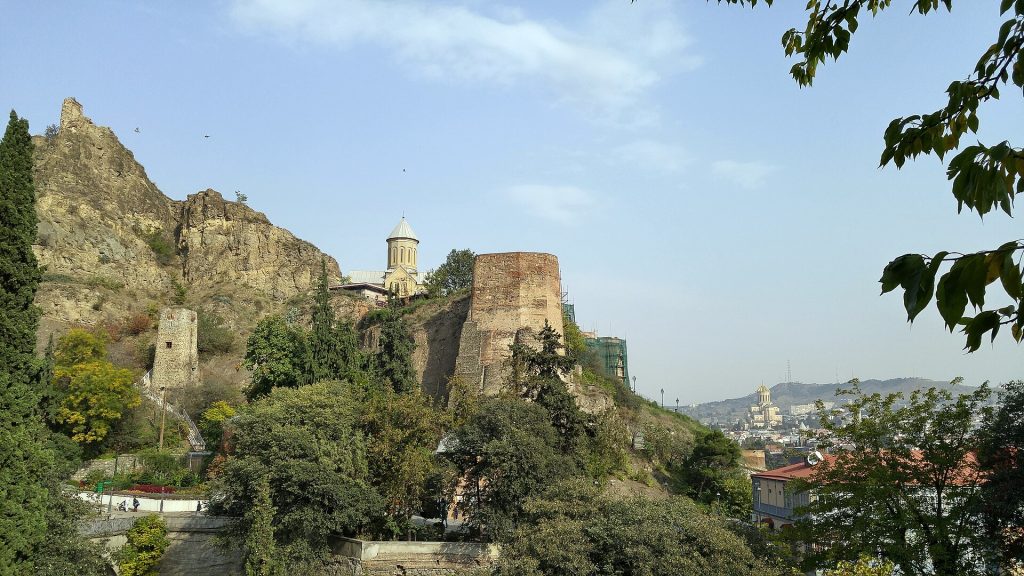
The garden itself carries far more history than the festival that now takes place in it. The ravine beneath Narikala Fortress, known locally as Dabakhana, was long associated with tanning and craft industry, and with a royal garden that predates the scientific institution founded in the mid-nineteenth century. That institution, reorganized repeatedly under imperial, Soviet and independent Georgian administration, remains one of Tbilisi’s principal green spaces and a research center in its own right, as noted in general city and tourism references such as Britannica’s entry on Tbilisi.
The Chocolate Festival is a recent addition to this layered site, and it is best understood as a civic invention rather than an ancient custom. Its organisers have deliberately placed it close to the first week of December, a period that in western Georgian tradition already carries associations with sweet-making ahead of St. Barbara’s Day (Barbaroba) and the approach of winter feasts. In this sense the festival borrows the seasonal logic of older Georgian customs, built around walnuts, grape must and the first cold weather, and recasts it with imported cacao and modern craft chocolate techniques.
Meaning and traditions
At its core the festival pairs two things: professional and amateur chocolate-making, and two much older Georgian sweets, churchkhela and tatara. Churchkhela consists of walnuts or hazelnuts threaded on string and repeatedly dipped in pelamushi, a thickened paste of boiled grape juice and flour, then dried until firm; the result is a candle-shaped sweet traditionally made during the grape harvest and associated with winemaking culture, a practice connected to Georgia’s inscribed traditional qvevri wine-making method. At this festival, chocolatiers coat the same nut strings in melted chocolate instead of, or alongside, pelamushi, producing a “chocolate churchkhela” aimed at both children and souvenir-seeking visitors.
Tatara is a softer, spoon-eaten sweet made from boiled wheat, ground walnuts, sugar and cinnamon, traditionally prepared in Samegrelo, Guria and Imereti around Barbaroba on 4 December and through the following weeks of Advent-season cooking. Workshops at the festival typically let visitors mix and taste tatara, sometimes with a chocolate variation added to the walnut-wheat base. Other Georgian flavorings regularly appear in festival chocolate: honey, dried fruit, tklapi (dried fruit leather), and the spiced bread nazuki. Visitors should expect simple polite phrases rather than ritual language: a taster might be offered with “gaskhit” (try it) or thanked with the everyday “madloba.”
When it happens
The festival follows a loose but consistent rule: it is held on the first weekend of December each year, confirmed in detail by the National Botanical Garden and Tbilisi municipal tourism channels only a few weeks beforehand. For 2026 the dates given by organisers are 5–6 December 2026, to be confirmed. Applying the same “first weekend” pattern, the 2027 edition would fall around 4–5 December 2027, subject to confirmation closer to the date.
The festival is not a public holiday. Government offices, schools and businesses operate normally on these days; only the garden hosts the special programming, and the rest of Tbilisi continues as usual. The Botanical Garden itself keeps its regular opening hours during the event, with festival stalls and workshops added within the normal visiting area.
Where to experience it
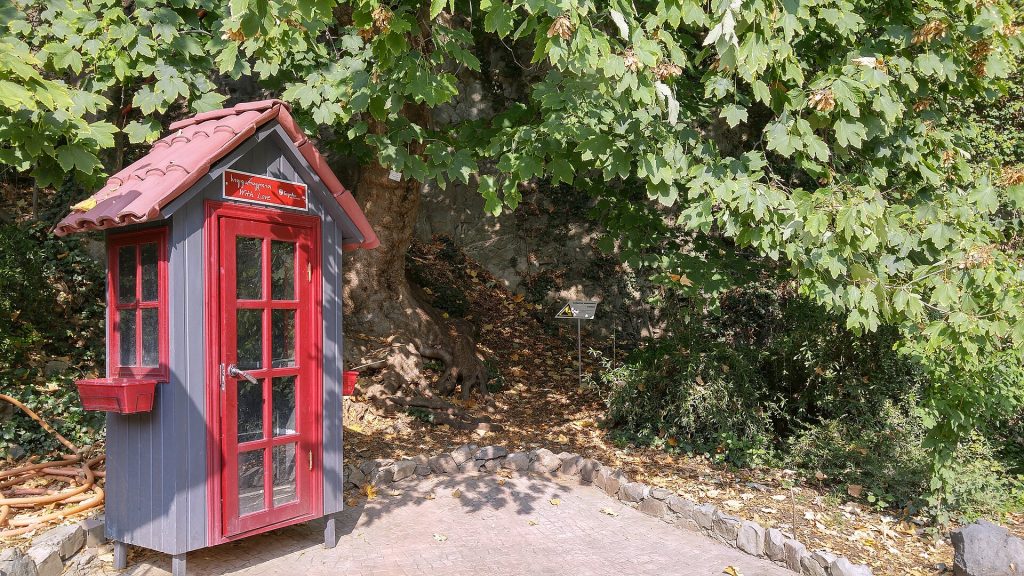
The event takes place inside the National Botanical Garden of Georgia, entered from Abanotubani, Tbilisi’s sulphur-bathhouse district, a short walk from Meidan Square, or reached by the Narikala cable car from Rike Park followed by a walk down through the fortress grounds. Festival stalls and workshop tents are usually set along the garden’s lower paths near the waterfall, where chocolatiers display their work, children’s workshops run on a rolling schedule through the day, and tastings are offered at modest cost or included with entry.
As a secular, outdoor event, there is no specific church etiquette required. Visitors should, however, be mindful that the garden sits beside Narikala Fortress and several working churches in Abanotubani; modest, respectful behavior is appropriate if entering those separate religious sites during the same outing. Comfortable shoes are useful, since the garden’s paths are uneven and sloped.
Travel with GTour
Tbilisi & Mtskheta — The Essential First Day begins in the capital and can include a stop at the National Botanical Garden on 5–6 December, when chocolate makers host churchkhela and tatara workshops, while Georgia in 10 Days — Tbilisi to Svaneti to the Sea opens with a Tbilisi day that allows the same early-December visit before heading toward Svaneti. A GTour travel expert designs the route around the guest’s dates to make this possible.
Did you know
- Georgia has no commercial cacao cultivation; every chocolate sold at the festival is made from imported beans, with Georgian walnuts, honey and fruit added for local character.
- Churchkhela is sometimes described by visitors as a “natural candy bar” for combining nuts and a sweet coating without added fillers.
- Tatara is traditionally tied to St. Barbara’s Day (Barbaroba), celebrated on 4 December in western Georgia, close to the festival’s usual dates.
- The ravine occupied by the Botanical Garden, Dabakhana, takes its name from an old term for a tannery, reflecting the site’s pre-garden craft history.
- Remnants of Narikala Fortress’s old defensive wall are still visible above the garden, linking the festival grounds directly to Tbilisi’s medieval fortifications.
Practical tips for visitors
Early December in Tbilisi is cold and occasionally wet, so warm layers and waterproof footwear are advisable for an outdoor event on sloped garden paths. The garden is reachable on foot from Old Tbilisi, by taxi or ride-hailing app, or via the Narikala cable car; parking near Abanotubani is limited. Specific workshops, especially those for children, can fill up during the day, so arriving earlier rather than later improves the chance of joining one. GTour arranges a private driver or guide for the day for visitors who prefer not to navigate Tbilisi’s Old Town on foot in winter weather.
Combine it with
A festival visit pairs naturally with time in Tbilisi’s Old Town and Narikala Fortress on the same day. Travellers with more time can extend the trip into Kakheti, the wine region where the grape-must pelamushi used in traditional churchkhela originates, or into Mtskheta-Mtianeti for Georgia’s early Christian heritage sites within easy reach of the capital.
Questions travellers ask
Is the Chocolate Festival a religious holiday?
No. It is a modern, secular public event; it has no connection to a church calendar, though its early-December timing echoes older western Georgian sweet-making traditions tied to St. Barbara’s Day.
Is entry free?
The Botanical Garden charges a small standard entrance fee, and festival tastings or workshop materials may carry an additional modest cost; exact pricing is set and announced by organisers closer to each edition.
Do I need to book in advance?
General attendance does not require booking, but specific children’s workshops can have limited space on the day, so arriving early is recommended if a particular activity is the goal.
Is this suitable for children?
Yes, the festival is explicitly family-oriented, with hands-on chocolate churchkhela and tatara workshops designed for children alongside tastings aimed at adults.
What if the dates change or weather is bad?
Dates are confirmed annually by the Botanical Garden and Tbilisi tourism channels only weeks in advance; the event is largely outdoors, so light rain or cold does not usually cancel it, but visitors should check current announcements before traveling.
How do I get to the Botanical Garden?
The main entrance is reached on foot through Abanotubani near the sulphur baths, or via the Narikala cable car from Rike Park followed by a downhill walk through the fortress grounds; taxis can drop passengers near the Abanotubani entrance.
What traditional sweets should I look for?
Look for chocolate-dipped churchkhela, the candle-shaped nut-and-grape-must sweet, and tatara, a walnut-and-wheat pudding traditionally made for St. Barbara’s Day, both offered in chocolate-themed variations at the festival.
Is the festival only about chocolate?
While chocolate is the organizing theme, much of its content showcases older Georgian sweet-making traditions reinterpreted with cacao, making it as much an introduction to churchkhela and tatara as to craft chocolate itself.
Sources
- Georgian National Tourism Administration
- Agenda.ge
- Georgia Today
- UNESCO – Ancient Georgian traditional Qvevri wine-making method
- National Parliamentary Library of Georgia
- Georgia Today report
Plan your Georgia
Want to be in Georgia for Chocolate Festival at the Botanical Garden? A GTour travel expert designs the itinerary around it and calls you back.
Churchkhela, the traditional Georgian candy featured in the festival's workshops, displayed at a market stall. · Photo: Neslihan_Turan / Wikimedia Commons, CC BY-SA 3.0
This page in other languages: Русский
GTour conciergeAsk anything about Georgia · we reply within hours