

By Nino Gelashvili, Travel News Editor · 26/10/2026
Yes. Ukrainian citizens can enter Georgia without a visa and stay for up to one calendar year on each entry, one of the most generous arrangements Georgia offers to any nationality. A valid international passport is enough for tourism, business or family visits, and no advance application is needed in normal circumstances. Because entry rules are set by Georgian government decree and can be revised, always check the current position on mfa.gov.ge or the e-visa portal at evisa.gov.ge before you travel, rather than relying on this or any other guide.
The harder part since February 2022 is not the visa, it is the journey itself. Ukrainian civilian airspace has been closed and Georgian Airways, UIA and other carriers that once flew Kyiv-Tbilisi or Kyiv-Batumi direct no longer operate that route. Most Ukrainians now reach Georgia by a combination of road or rail out of Ukraine followed by a connecting flight, commonly via Chisinau, Warsaw or Istanbul, occasionally via Yerevan. This guide sets out the visa rules, the realistic routes, money and SIM cards, language, the Ukrainian community already living in Tbilisi and Batumi, and health and safety points specific to Ukrainian travellers, including the firm advice on the occupied regions.
Visa and stay rules for Ukrainian citizens
Georgia’s visa-free regime for Ukrainian nationals allows a stay of up to 365 days per entry without a residence permit, which in practice covers almost any holiday, study period or extended stay of digital workers. No work visa is required for short-term paid remote work for a foreign employer, but anyone planning to work for a Georgian company, start a business or stay beyond a year should look into Georgia’s residence permit categories. The legal basis sits in Georgia’s law on the legal status of foreigners and stateless persons, published on matsne.gov.ge, and the practical, day-to-day version of the rules is kept current on gov.ge and mfa.gov.ge. Rules on visa-free regimes have changed before and can change again with little notice, so Ukrainian travellers, like anyone else, should verify the current position shortly before departure rather than trust older articles, including this one.
How to reach Georgia from Ukraine now
There is no direct flight between Ukraine and Georgia at the time of writing, because Ukrainian airspace remains closed to civilian traffic. The practical routes used by Ukrainians in 2026 are:
- Overland to Chisinau, Moldova (bus or private car, roughly 6 to 10 hours from western Ukraine), then a direct flight to Tbilisi or Kutaisi.
- Overland or rail to Poland, then a flight from Warsaw, Krakow or Rzeszow to Tbilisi, Kutaisi or Batumi.
- A flight from any EU hub to Istanbul, then an onward short hop to Tbilisi, Kutaisi or Batumi; Istanbul has the widest choice of daily connections of any single hub.
- Via Yerevan, Armenia, which also has multiple flights into Tbilisi and a land border crossing into Georgia for those arriving overland from the south.
Kutaisi International Airport is worth checking separately, since it is the main base for several low-cost carriers connecting Georgia with Central Europe and is often the cheapest entry point; schedules are on kutaisiairport.com. Tbilisi and Batumi airport arrivals and current carriers are listed on tbilisiairport.com and batumiairport.com. Georgia’s land border with Russia at Upper Lars is open but is not a recommended or, in many cases, realistic route for Ukrainian citizens; the Georgia-Turkey crossings at Sarpi and Vale are the relevant land option for anyone driving down through Europe and Turkey, and crossing details are published by georoad.gov.ge.

Driving and licences
A valid Ukrainian national driving licence is generally recognised in Georgia for the duration of a legal stay, and an International Driving Permit is useful but not always required for short visits; rental companies in Tbilisi and Batumi will tell you their own requirement at the counter. Because recognition rules for foreign licences sit within Georgia’s road traffic legislation and can be amended, confirm the current position through georoad.gov.ge or matsne.gov.ge before renting a car, especially if you plan to stay close to or beyond the one-year visa-free limit, since licence recognition periods and visa-free periods are not always the same length.
Money, cards and SIM cards
Georgia’s currency is the lari (GEL). Visa and Mastercard issued by Ukrainian banks generally work at Georgian ATMs and point-of-sale terminals, but wartime capital controls imposed by the National Bank of Ukraine can limit daily cash withdrawal or transfer amounts abroad, so check your own bank’s current limits before relying on a Ukrainian card as your only source of funds. Carrying a modest amount of cash (euros or US dollars, easily exchanged in Tbilisi and Batumi) as a backup is sensible. Prepaid local SIM cards from Magticom, Geocell or Silknet are inexpensive, widely available at airports and in city centres, and require only a passport to register, which is the simplest way to get reliable mobile data for maps, translation apps and banking alerts.
Language and communication
Georgian is the official language and the one used on road signs, menus and official documents, though Tbilisi, Batumi and tourist areas run comfortably in English in hotels, restaurants and tour operations. Russian remains widely understood among older Georgians and in service industries, a legacy of the Soviet period, and many Ukrainians find it a practical bridge language, though some travellers prefer to default to English first out of sensitivity to the current context; either approach is accepted without friction in daily tourist interactions. Ukrainian itself is not commonly spoken by Georgians, but the sizeable Ukrainian community in Tbilisi means Ukrainian is heard regularly in certain cafes, churches and cultural events, and staff at Ukrainian-run businesses will usually speak it.
Ukrainian community, cultural ties and seasons
Georgia and Ukraine share a long history of resisting Russian and Soviet domination, and the two countries’ recent political trajectories, including Georgia’s 2008 war with Russia and Ukraine’s full-scale invasion from 2022, have produced strong public sympathy in both directions, visible in Tbilisi’s street art, solidarity rallies and the Georgian flags flown alongside Ukrainian ones in Freedom Square. Since 2022 a substantial number of Ukrainians have relocated to Tbilisi, particularly around Vake and Saburtalo, and to Batumi, where Ukrainian-run cafes, grocery shops stocking familiar brands, Orthodox services and informal support networks have grown up. For Ukrainian travellers this means practical help is easier to find than in most destinations: Ukrainian-speaking tour guides, estate agents and tutors advertise locally, and community groups coordinate everything from school places to legal advice on residence status. In terms of timing, many Ukrainian visitors travel around the Julian Christmas period in early January, which Georgia also observes as a major holiday, around Orthodox Easter, and during the summer school break; Tbilisi and especially Batumi get noticeably busier and pricier in July and August, so shoulder months of May, June, September and October are worth considering for better value and milder weather.
Food and dietary notes
Georgian cuisine will feel broadly familiar to Ukrainian visitors in its love of bread, dumplings, grilled meat and generous hospitality, while offering distinct dishes worth seeking out: khachapuri (cheese-filled bread), khinkali (dumplings, eaten by hand), lobio (bean stew), and a wine culture built around qvevri clay-vessel fermentation that is recognised by UNESCO as intangible cultural heritage, documented at ich.unesco.org. Vegetarian and vegan travellers are well catered for, since Georgian Orthodox fasting traditions produced an extensive repertoire of meat-free dishes using walnuts, beans and seasonal vegetables; ask for “mariani” (fasting) dishes if keeping to a plant-based diet. Those with nut allergies should be cautious, since walnut paste appears in many sauces and salads that are not always obvious from the menu name, and it is worth stating allergies clearly in Georgian, Russian or English before ordering.
Health, insurance and safety notes
Georgia does not currently require proof of travel health insurance for entry, but given the cost of private treatment for serious illness or injury, insurance covering medical evacuation is strongly recommended for every visitor, Ukrainian or otherwise, and anyone with ongoing health conditions should discuss travel plans with their own doctor beforehand. General public health advisories and clinic information are published by Georgia’s National Center for Disease Control and Public Health at ncgh.ge. On safety, Georgia is generally calm for travellers, but two points are specific to Ukrainian nationals. First, the breakaway regions of Abkhazia and South Ossetia are under Russian military presence and outside the control of the Georgian government; Georgia’s own guidance treats entry into these territories from the Russian side as illegal, and for Ukrainian citizens specifically there is an elevated personal risk that makes any visit, from either direction, strongly inadvisable. Second, Russian tourists and short-term residents are present in Georgia in meaningful numbers since 2022, and while direct incidents are rare, many Ukrainian visitors prefer to avoid discussing the war with strangers in shared spaces such as marshrutka minibuses or shared taxis. For consular help, the Embassy of Ukraine maintains a presence in Tbilisi; confirm its current address, phone line and appointment system directly with Ukraine’s own foreign ministry channels before you need them, since contact details can change.
If this guide is part of a trip you are planning, our Batumi & the Ajara Mountains — 2 Days and Georgia in 10 Days — Tbilisi to Svaneti to the Sea cover the places it describes with a private guide and driver; a GTour travel expert adapts the route to your dates.
Practical summary
- Visa: visa-free for Ukrainian citizens for up to one year per entry; confirm current terms on mfa.gov.ge and evisa.gov.ge before travel.
- Flights: no direct Ukraine-Georgia flights; connect via Chisinau, Warsaw, Istanbul or Yerevan into Tbilisi, Kutaisi or Batumi.
- Driving: Ukrainian licence generally valid for the legal stay period; carry an International Driving Permit if possible and check with your rental company.
- Money: Visa/Mastercard from Ukrainian banks usually work, but check your bank’s wartime withdrawal limits and carry backup cash in euros or dollars.
- SIM: buy a local prepaid SIM (Magticom, Geocell, Silknet) with your passport on arrival.
- Language: English and Russian both work in tourist areas; Ukrainian is spoken within the local Ukrainian community.
- Community: established Ukrainian networks in Tbilisi (Vake, Saburtalo) and Batumi can help with practical settling-in questions.
- Safety: avoid any travel into Abkhazia or South Ossetia; carry travel insurance with medical evacuation cover.
Sources
- Visa information
- E-visa portal
- Law on legal status of foreigners
- Road and border crossing data
- Qvevri winemaking heritage
Questions this guide does not answer? Write to info@castle.ge or WhatsApp +995 577 41 63 14 — a person in Tbilisi replies. See also our travel services and all guides.
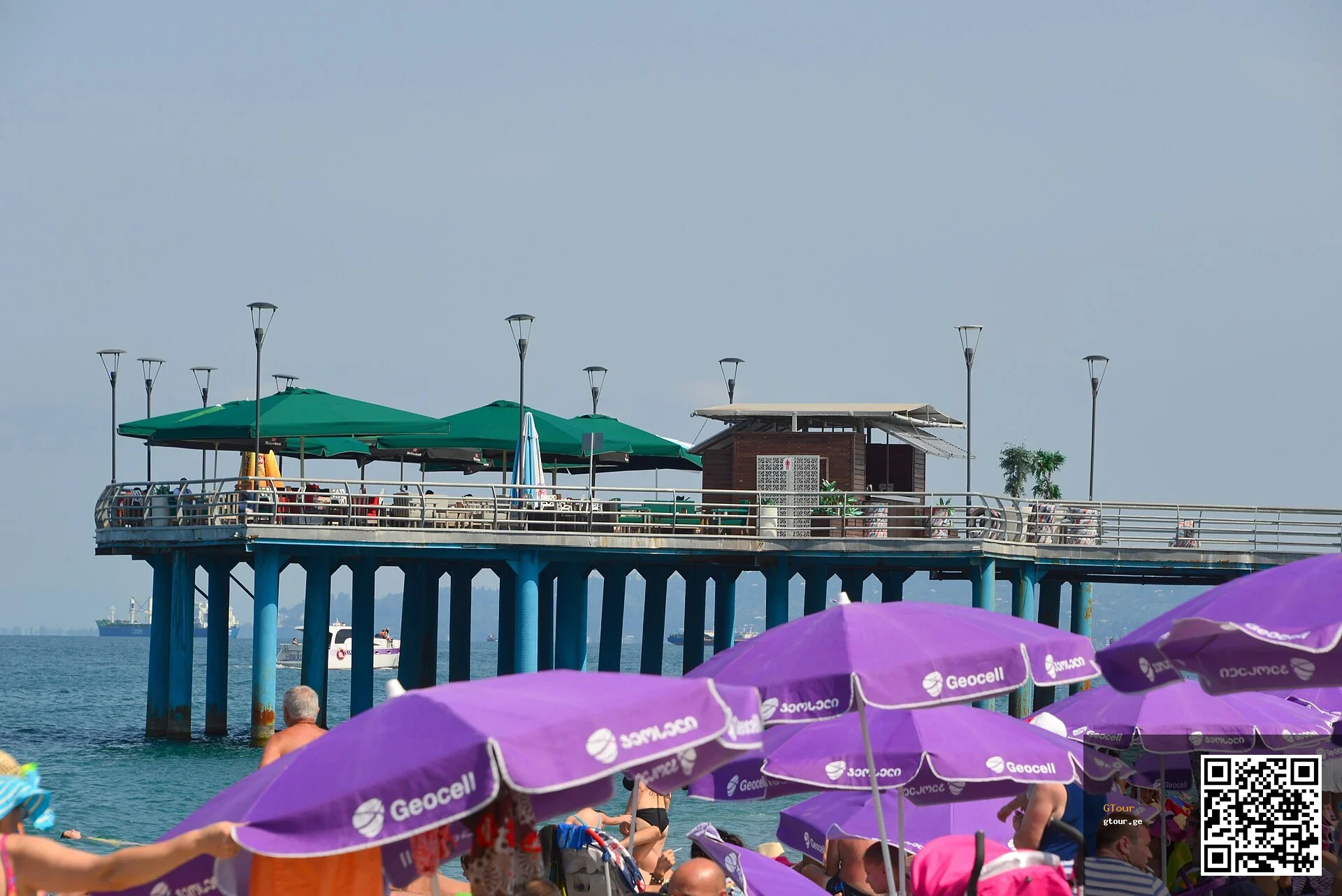
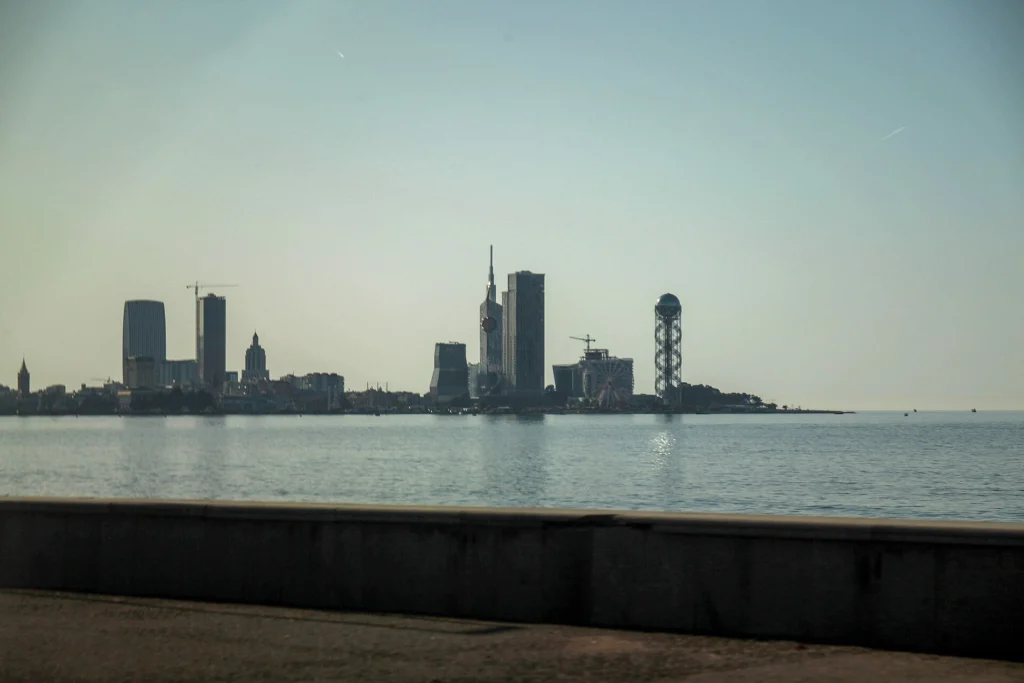
Beach-goers under umbrellas along Batumi's seafront promenade, a common Black Sea entry point. · Photo: Андрей Бобровский / Wikimedia Commons, CC BY 3.0
Been to Georgia? Tell us how it went — the best stories are published here.
Share your tripOne email a week: what changed for travellers in Georgia — rules, roads, flights, seasons — plus one place worth the trip. Written by the GTour desk, no advertising, unsubscribe in one click.
This story across our partner network — ქართულად: შენი დასვენება