

By Nino Gelashvili, Travel News Editor · 26/10/2026
Czech citizens do not need a visa to visit Georgia. As of October 2026, holders of a valid Czech biometric passport can enter for tourism, business, or family visits and stay visa-free for up to one year in any 12-month period, a policy Georgia has held since 2006 and periodically reconfirmed. This is one of the most generous visa-free regimes in the world, but Georgian entry rules have changed before without much notice, so check your exact allowance before booking using the official visa-free country checker at geoconsul.gov.ge and the Ministry of Foreign Affairs consular pages at mfa.gov.ge.
What else should a traveller from Czechia expect. A direct flight from Prague lands not in the capital but in Kutaisi, Georgia’s second city near the historic Imereti region. Cards work in most places, cash is still useful in villages, Georgian is written in its own alphabet so a little German or English goes further than Czech, and the national drink is wine, not beer, though craft beer has a growing following in Tbilisi. Mountain regions such as Svaneti and Tusheti reward hikers who come prepared for altitude, weather, and limited connectivity, and Czech-speaking guides are rare, so trips are normally run in English or German.
Visa and entry rules for Czech citizens
Georgia’s standard visa-free stay for Czech nationals is up to 365 days per calendar year under current practice, applied on entry by border officers. You need a passport valid for the intended stay, and children travelling need their own passport. There is no requirement to register locally for short stays. Because Georgia has adjusted visa-free terms for several nationalities in recent years, and because rules can differ for minors, dual nationals, or those arriving via land border versus air, do not rely on older blog posts. Confirm current terms before travel at geoconsul.gov.ge, and if you plan to work, study long-term, or bring a vehicle registered outside the EU for an extended period, read the residence and e-visa categories at evisa.gov.ge before departure.
Getting there: flights and land borders
The most direct option for Czech travellers is Wizz Air’s route between Prague and Kutaisi International Airport, which also serves western Georgia, Imereti, and is a practical gateway to Svaneti and Batumi. Check current schedules and seasonal variation at kutaisiairport.com. To reach Tbilisi, most Czech travellers connect through Vienna, Warsaw, Munich, or Istanbul; there is no low-cost nonstop Prague–Tbilisi route at the time of writing, so compare total journey time against flying into Kutaisi and travelling overland. Arrival information for the capital’s airport is at tbilisiairport.com. Overland entry from Armenia, Azerbaijan, or Turkey is straightforward for EU passport holders and occasionally useful if combining Georgia with a wider Caucasus trip, but border-crossing hours and documentation requirements for vehicles should be checked locally rather than assumed.
Driving licence, car rental, and getting around
A valid Czech driving licence, which follows the EU format, is accepted in Georgia for the duration of a visa-free stay without needing an International Driving Permit, though carrying one is a reasonable precaution for car rental desks that ask for it. Driving is on the right, mountain roads in Svaneti, Tusheti, and Racha can be narrow, unpaved, or closed seasonally, and winter driving in the Greater Caucasus requires experience and sometimes a 4×4. Current road conditions, seasonal closures such as the Abano Pass to Tusheti, and traffic rules are published by Georgia’s Roads Department at georoad.gov.ge. For travel between Tbilisi, Kutaisi, and Batumi without a car, the national railway is a comfortable option; timetables are at railway.ge. Marshrutka minibuses and licensed taxis cover routes trains do not reach, including most mountain regions.
Money, cards, and everyday costs
The local currency is the Georgian lari (GEL). Contactless cards are widely accepted in Tbilisi, Batumi, and Kutaisi, in supermarkets, most restaurants, and hotels, but small guesthouses, mountain homestays, and rural shops in Svaneti or Tusheti often take cash only. ATMs are common in cities and towns but scarce once you leave the main road networks, so carry enough lari before heading into the mountains. Compared with Czechia, Georgia is generally cheaper for food, transport, and guesthouse accommodation, though Tbilisi’s newer hotels and city-centre restaurants have narrowed that gap. Tipping is appreciated but not obligatory; rounding up or leaving 5 to 10 percent is common practice in restaurants.
SIM cards, language, and daily life
Prepaid SIM cards from Georgian operators are inexpensive and available at the airport and in city kiosks with just a passport for registration; coverage is good in cities and main valleys but patchy in high Svaneti and parts of Tusheti. Georgian uses its own script, Mkhedruli, unrelated to Latin or Cyrillic, so even basic signage requires some adjustment; menus and road signs in tourist areas are usually bilingual with English. Russian is still widely understood among older Georgians, but English has become the default second language in tourism, and German is common among guides who trained for the European hiking market. Czech is not spoken, so travellers relying on language should expect to use English or, outside cities, simple gestures and translation apps.
Food, wine, and dietary notes
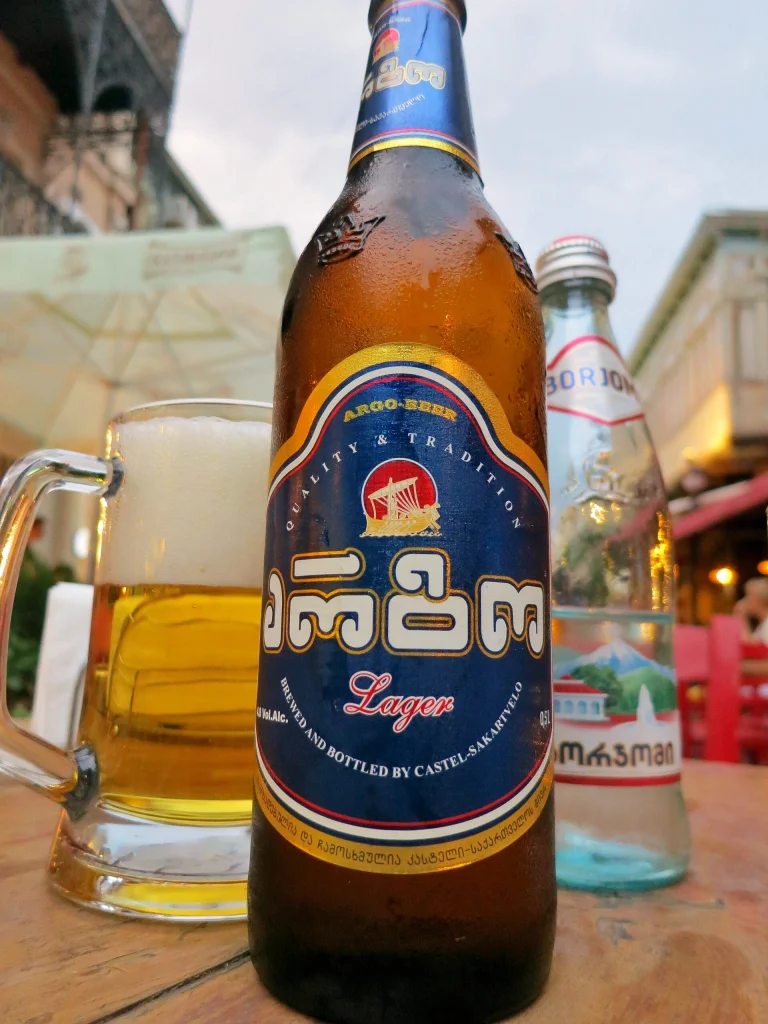
Georgian cuisine centres on bread, cheese, walnuts, pomegranate, and slow-cooked meat and bean dishes, with khachapuri (cheese bread) and khinkali (dumplings) as the two dishes nearly every visitor tries. For a country whose culture runs on wine rather than beer, Czech travellers used to pilsner-style lager will find a different drinking culture: Georgia is one of the oldest wine-producing regions in the world, with qvevri clay-vessel winemaking recognised internationally, and amber (orange) wine is a specialty worth trying even for sceptics. Craft beer bars do exist in Tbilisi for those who want a familiar pint. Vegetarian eating is easy thanks to bean, mushroom, and cheese-based dishes, though most traditional meals are built around meat or dairy; those with dairy or nut allergies should ask about walnut sauces and cheese fillings specifically, as they appear in many dishes that do not look obviously dairy-based.
- Khachapuri (cheese bread), several regional versions, widely vegetarian
- Khinkali (dumplings), usually meat, some mushroom or cheese versions available
- Qvevri wine, amber and red styles, a core part of any food tour
- Pkhali, cold vegetable and walnut pâté, good for vegans
- Churchkhela, a traditional grape-and-nut snack, easy to carry while hiking
Cultural ties, seasons, and hiking Svaneti and Tusheti
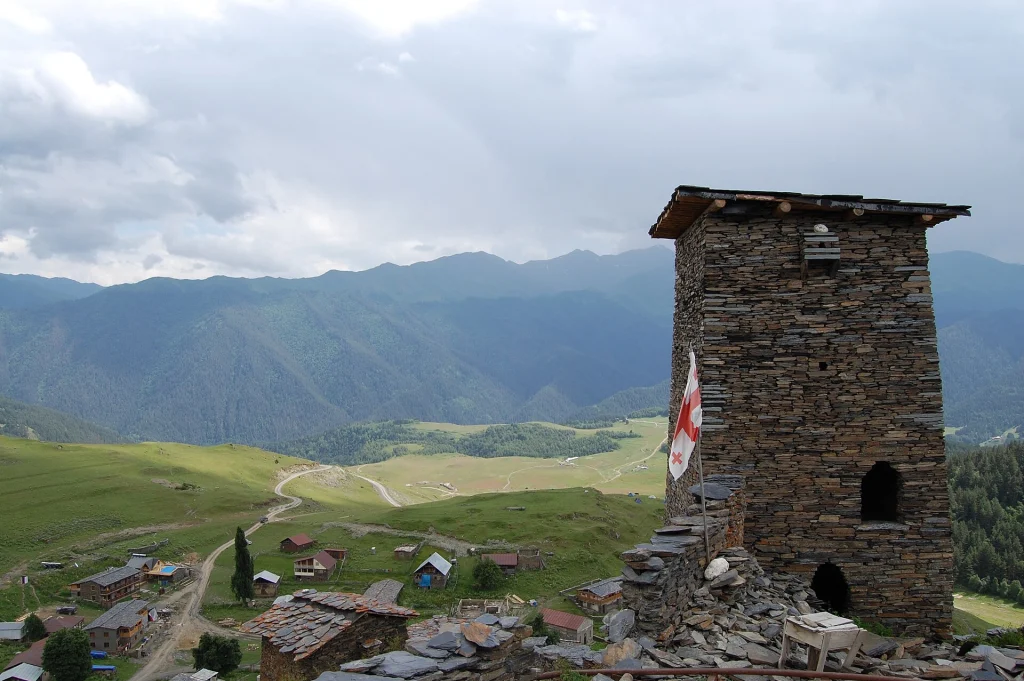
Direct historical ties between Czechia and Georgia are modest but real: both nations share an interest in viticulture and mountain tourism, and Czech mountaineers, cyclists, and backpackers have become a familiar presence on the Caucasus trekking circuit over the last two decades, drawn partly by shared Central and Eastern European travel networks built after 1989. Czech school holidays in July and August, plus the autumn half-term, line up with Georgia’s harvest season (rtveli), making late September and October a good window for travellers who want wine festivals alongside hiking weather. For high-altitude trekking, Upper Svaneti, a UNESCO World Heritage region for its medieval defensive towers, is accessible from June to September, with details at whc.unesco.org; Tusheti, reached via the seasonal Abano Pass, is typically open only from roughly June to early October due to snow, and both regions should be planned around current conditions published by Georgia’s national tourism authority at georgia.travel. Czech-speaking guides are uncommon, so most trekking and wine-region tours for Czech visitors run in English or German; arranging a guide in advance is strongly advised for Tusheti in particular, where trails are remote and mobile signal is unreliable.
Health, insurance, and safety for Czech travellers
No special vaccinations are mandatory for entry from Czechia, but travellers should be up to date on routine immunisations and discuss tick-borne encephalitis and rabies precautions with a doctor or travel clinic before mountain hiking, since both risks exist in rural Georgia as they do in parts of Czechia. Georgia does not have a reciprocal healthcare agreement with the Czech Republic, so comprehensive travel insurance covering medical evacuation is essential, particularly for Svaneti and Tusheti trekking where mountain rescue and transport to a hospital can be slow and costly. Tap water is generally safe in Tbilisi and major towns but less reliable in remote villages, where bottled or boiled water is the safer default. Overall crime against tourists is low by regional standards, and the main safety issues for visitors are road conditions, mountain weather, and altitude rather than crime; register your trip and carry your insurer’s emergency number, and for consular emergencies confirm the current Czech diplomatic contact in Tbilisi through mfa.gov.ge or the Czech Ministry of Foreign Affairs before you travel, since staffing and contact details can change.
If this guide is part of a trip you are planning, our Georgia in 10 Days — Tbilisi to Svaneti to the Sea and Rtveli — Wine Harvest in Kakheti (3 Days, September–October) cover the places it describes with a private guide and driver; a GTour travel expert adapts the route to your dates.
Practical summary
- Visa: visa-free for Czech passport holders, typically up to one year; confirm current terms at geoconsul.gov.ge before booking
- Flights: direct Prague–Kutaisi on Wizz Air; Tbilisi usually reached via a one-stop connection through Vienna, Warsaw, Munich, or Istanbul
- Driving: Czech EU licence accepted for the visa-free stay; check seasonal mountain road closures at georoad.gov.ge
- Money: lari (GEL) cash needed outside cities; cards work well in Tbilisi, Batumi, and Kutaisi
- Language: Georgian script and English signage in tourist areas; Czech is not spoken, guides work in English or German
- Food and drink: wine-centred culture (qvevri wine), not beer; khachapuri and khinkali are essential tastings
- Hiking: Svaneti and Tusheti are seasonal, roughly June to September/October; book an English- or German-speaking guide in advance
- Health: no mandatory vaccines, but get comprehensive travel insurance with evacuation cover and discuss tick-borne risks before trekking
Sources
- Road conditions and traffic rules
- Upper Svaneti World Heritage listing
- UNESCO World Heritage – Historical Monuments of Mtskheta
- UNESCO World Heritage – Gelati Monastery
- UNESCO Intangible Heritage – Georgian Polyphonic Singing
- Geoconsul – Consular Services Portal
- GNTA – Georgia.travel Official Tourism Site
Questions this guide does not answer? Write to info@castle.ge or WhatsApp +995 577 41 63 14 — a person in Tbilisi replies. See also our travel services and all guides.
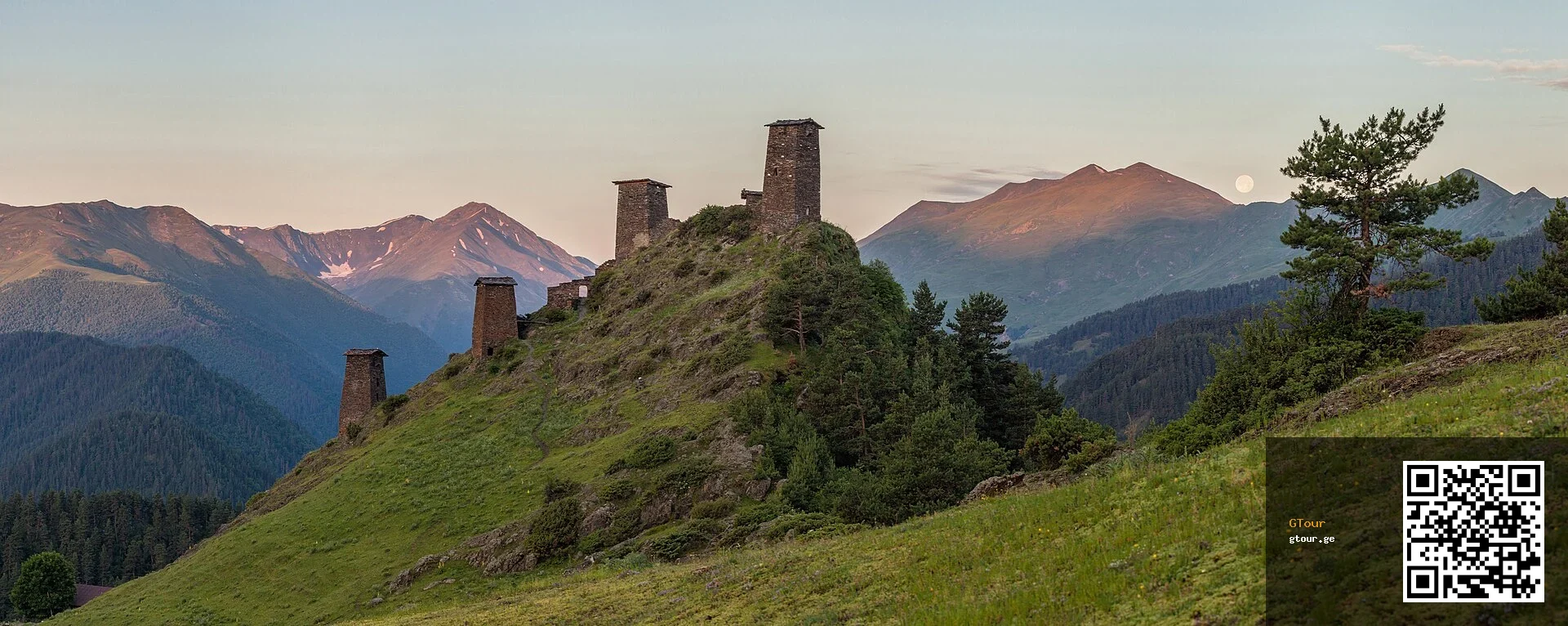
The medieval Keselo fortress towers above Omalo, the iconic silhouette of Tusheti's highland landscape. · Photo: Moahim / Wikimedia Commons, CC BY-SA 4.0
Been to Georgia? Tell us how it went — the best stories are published here.
Share your tripOne email a week: what changed for travellers in Georgia — rules, roads, flights, seasons — plus one place worth the trip. Written by the GTour desk, no advertising, unsubscribe in one click.
This story across our partner network — ქართულად: შენი დასვენება