Archives


Chakvistavoba in Georgia: dates, meaning and how to experience it
Next dates
9 September 2027 (to be confirmed) · Chakvistavi, Kobuleti municipality, Adjara. See the full events calendar and Georgia today for roads and weather.
What it is
Chakvistavoba is the annual feast day of the highland village of Chakvistavi, in Kobuleti municipality, Adjara. The name follows a pattern common across Georgia: the suffix -oba is added to the name of a place, saint or deity to mean “the day of” or “the feast of” — the same construction that gives Georgian its Alaverdoba, Lomisoba and Atengenoba. “Chakvistavi” itself is a compound of the river and district name Chakva and the Georgian word tavi, meaning “head” or “source,” so the village’s name literally describes a settlement at the head of the Chakvistskali valley. Chakvistavoba is therefore, in the plainest sense, “the feast day of the village at the source of the Chakva.”
The people who keep the day are first the residents of Chakvistavi and the neighbouring highland hamlets of Kobuleti municipality, then the much larger circle of families who descended to Kobuleti, Batumi or further afield in search of work and school but return every year for this one day. In recent years the festival has also drawn visitors from other parts of Georgia and from abroad, encouraged by municipal and regional tourism offices that list it among Adjara’s calendar of highland village days. It belongs to a wider family of Georgian “-oba” festivals — part harvest fair, part family reunion, part open-air concert — that mark the turn of the agricultural year in mountain communities across the country.
Historical background
- 4th century — Christianity becomes the state religion of the kingdom of Kartli (Iberia); over the following centuries Christian practice, including local saints’ day gatherings, spreads through the highlands of what is now Adjara. (Britannica)
- Medieval period — the mountain communities of historical Adjara, then part of the Georgian kingdom, mark the agricultural year with communal village and saints’ day gatherings, the ancestors of today’s “-oba” festivals.
- 17th–19th centuries — Adjara falls under Ottoman administration and much of the highland population converts to Islam over this period; village festivals such as the one that became Chakvistavoba continue chiefly as social, family and agricultural occasions alongside the region’s changing religious life.
- 1878 — by the Treaty of Berlin, Adjara is transferred from Ottoman to Russian administration, renewing contact between the highlands and Georgian Orthodox lowland traditions.
- 1921 — Adjara is constituted as an autonomous republic within Soviet Georgia, formalising its distinct administrative status within the country. (Government of the Autonomous Republic of Adjara)
- 1921–1991 — under Soviet rule, religious festivals are discouraged by state policy; many local village days are reframed as secular “days of the village” or harvest celebrations, a shift widely believed to have shaped the largely non-liturgical, communal character Chakvistavoba retains today.
- 1991 — Georgian independence allows open, public celebration of local and religious festivals to resume across Adjara, including highland village days.
- 2000s–present — Kobuleti Municipality and the Adjara regional government support Chakvistavoba and comparable highland festivals as part of regional cultural and tourism programming, confirming the exact date each year. (GoBatumi, Adjara tourism portal)
Like most Georgian “-oba” days, Chakvistavoba does not derive from a single documented founding event; it is the modern continuation of a seasonal gathering whose roots lie in the pre-Christian and early Christian agricultural calendar of the Caucasus highlands. What can be said with confidence is the layered history of the valley it belongs to: a Christian kingdom, several centuries of Ottoman administration and Islamisation, incorporation into the Russian Empire, Soviet-era secularisation of religious custom, and a post-1991 revival that has turned many such village days into occasions that are at once family reunion, folklore showcase and small agricultural fair.
That layering explains why Chakvistavoba, like its highland neighbour Atengenoba in Khulo, mixes elements that would look odd side by side in a single-tradition calendar: a church or roadside shrine visit for some families, open-air wrestling and dance for everyone, and a produce table built on the orchard and livestock economy of upland Adjara rather than the vineyard economy of eastern Georgia. The festival’s survival through Ottoman rule, Russian annexation and Soviet atheism is itself part of what Kobuleti’s cultural administrators now present to visitors — a village day that outlasted three different political orders without losing its basic shape: people come home, sit down together, and sing.
Meaning and traditions
At the centre of Chakvistavoba, as at any Georgian village feast, is the supra — the long shared table — presided over by a tamada (toastmaster) who leads a structured sequence of toasts, often passed from speaker to speaker in a custom called alaverdi. Expect toasts to family, to the village, to the dead, and to guests, delivered with the same seriousness as the songs that follow them. Adjara’s highland communities are known for vigorous male and mixed dance, including forms of the adjaruli, and for Georgian polyphonic singing, the multi-voice choral tradition recognised internationally as a masterpiece of intangible heritage. On the meadow outside the feast tables, younger men often compete in chidaoba, traditional Georgian jacket-wrestling, and in horse games that echo the transhumance economy of the highlands.
Food reflects the upland orchard and dairy economy of Kobuleti’s mountains rather than the vineyard culture of Kakheti: corn bread (mchadi), highland cheeses, honey, late-summer fruit, and home-distilled chacha (fruit pomace spirit) typically appear alongside the national staples of khachapuri and roasted meat. Where a village church or shrine stands near the festival ground, a service or blessing is, according to local tradition, held in the morning before the secular part of the day begins; visitors should treat this part of the proceedings with the same quiet respect expected at any Georgian church.
Regional comparison helps place Chakvistavoba: Khulo’s Atengenoba, held slightly higher in the Adjara mountains, is the best documented of these highland “-oba” days and shares the same basic structure of wrestling, dance and shared table; Shuamtoba and other village days across Adjara and Guria follow a similar pattern on their own dates. Lowland Adjara instead keeps church calendar feasts such as Mariamoba (the Dormition, 28 August). Chakvistavoba sits firmly in the highland, family-reunion branch of this tradition rather than the fixed liturgical branch.
When it happens
Chakvistavoba has no fixed date on either the civil or the church calendar. It is set by Kobuleti municipal and village organisers each year, conventionally in early September, timed to the end of the summer highland grazing season and the first harvest of mountain orchards — a pattern it shares with other Adjara highland village days. For 2026 the festival is scheduled for 10 September 2026; for 2027 organisers have provisionally indicated 9 September 2027, to be confirmed closer to the date. It is a local cultural event, not a Georgian public holiday: government offices, banks and shops across the country, and indeed in Kobuleti and Batumi themselves, operate on a normal schedule, with activity visibly concentrated only in and around Chakvistavi village on the day itself.
Where to experience it
The festival takes place on and around the open ground of Chakvistavi village, in the hills above Kobuleti town, reached by a mountain road of roughly one to one and a half hours’ drive. A typical day begins in the morning with families arriving and small stalls of local produce, cheese, honey and fruit appearing along the approach road; by midday the meadow fills for folk music and dance performances and, where organised, wrestling or horse-riding displays; the afternoon is given over to the shared feast, with toasting that can run for hours; evening often brings further music and informal dancing around the village. Visitors entering any church or shrine on the grounds should dress modestly, covering shoulders and knees, and should ask before photographing a service. At the feast table, it is polite to accept at least a small amount of food or drink when offered, and to remain for a toast rather than leave mid-sequence.
Travel with GTour
The mountain stretch of Batumi & the Ajara Mountains — 2 Days passes near Chakvistavi in Kobuleti municipality, so the second day can be shifted toward 9 September to coincide with the village festival, and the coastal leg of Georgia in 10 Days — Tbilisi to Svaneti to the Sea allows a similar detour on its way through Adjara. A GTour travel expert designs the exact route and timing around the guest’s own dates.
Did you know
- The suffix “-oba” generates the names of dozens of Georgian festivals, from Alaverdoba in Kakheti to Lomisoba in Mtskheta-Mtianeti, each marking the feast day of a particular place, saint or, in some cases, pre-Christian figure.
- Adjara’s highland “-oba” festivals typically layer pre-Christian seasonal custom with Christian practice and, in places, Muslim heritage, reflecting the region’s distinctive history under Ottoman and then Russian rule.
- Kobuleti municipality rises from Black Sea sea level to highland terrain within a short distance, a sharp relief that historically supported transhumant livestock grazing — the seasonal return from summer pasture that village days like Chakvistavoba traditionally mark.
- Georgian polyphonic singing, routinely performed at feasts such as this one, is inscribed on UNESCO’s Representative List of the Intangible Cultural Heritage of Humanity.
- The ancient qvevri clay-vessel wine-making method, also recognised by UNESCO, is strongest in eastern Georgia; Adjara’s highland festival tables instead favour fruit-based chacha and dairy produce, reflecting a different mountain economy.
Practical tips for visitors
The nearest airport is Batumi International Airport, roughly 30–40 minutes from Kobuleti by car; the drive onward into the Chakvistavi highlands is on a winding mountain road best attempted by car with good clearance, especially if rain has fallen recently. Layered clothing is advisable even in early September, since mountain weather above Kobuleti can shift quickly from warm sun to cool wind. Accommodation in Chakvistavi itself is limited, so most visitors base themselves in Kobuleti or Batumi and travel up for the day; booking lodging in advance is recommended if the festival falls on a weekend. GTour arranges a private driver or guide for the day for visitors who prefer not to navigate the mountain road independently.
Combine it with
Chakvistavoba pairs naturally with a wider tour of the Adjara highlands, including the Goderdzi Pass route toward Samtskhe-Javakheti, or with a coastal-to-mountain itinerary that continues on to Imereti via Kutaisi.
Questions travellers ask
What does “Chakvistavoba” mean?
It combines the village name Chakvistavi, itself built from “Chakva” and the Georgian word for “head” or “source,” with the suffix “-oba,” meaning “the day of” or “the feast of.” It translates roughly as “the feast day of the village at the source of the Chakva.”
When is Chakvistavoba celebrated in 2026 and 2027?
In 2026 it is scheduled for 10 September; in 2027 organisers have provisionally set 9 September, pending confirmation closer to the date. The festival is always held in early September but the exact day is confirmed annually by local organisers.
Is Chakvistavoba a public holiday in Georgia?
No. It is a local municipal and village festival, not one of Georgia’s national public holidays. Shops, offices and transport across the country, including in Kobuleti town itself, operate normally on the day.
How do I get to Chakvistavi from Batumi or Kobuleti?
Chakvistavi lies in the highlands of Kobuleti municipality, roughly one to one and a half hours by car from Kobuleti and somewhat longer from Batumi, on a winding mountain road. Private car, taxi or a hired driver are the practical options, as public transport to the village is limited.
Is Chakvistavoba a religious or secular festival?
It is best understood as a mixed occasion: a community and family reunion with secular feasting, music, dance and sport, alongside a possible morning church or shrine visit for families who keep that custom. It is not governed by the fixed liturgical calendar of the Georgian Orthodox Church.
What food and drink are served at Chakvistavoba?
Expect corn bread, highland cheeses, honey, seasonal fruit, roasted meat and khachapuri, along with home-distilled chacha, reflecting the orchard and dairy economy of upland Adjara rather than a wine-producing region.
Can tourists attend, and is it free?
Yes, the festival is open to visitors and attendance is generally free, though guests should expect to pay for food, drink or purchases at produce stalls. Visitors are welcome to observe the music, dance and sporting events and are often included in the hospitality of the shared table.
What should visitors wear or bring?
Comfortable walking shoes and layered clothing are advisable for the mountain setting, with a modest covering layer if a church or shrine visit is planned. Cash is useful for small produce stalls, and sun protection is worth carrying even in early autumn.
Sources
- Kobuleti Municipality
- Visit Batumi – Kobuleti area
- Kobuleti municipal news
- Adjara festivals coverage
- Kobuleti cultural life report
Plan your Georgia
Want to be in Georgia for Chakvistavoba? A GTour travel expert designs the itinerary around it and calls you back.
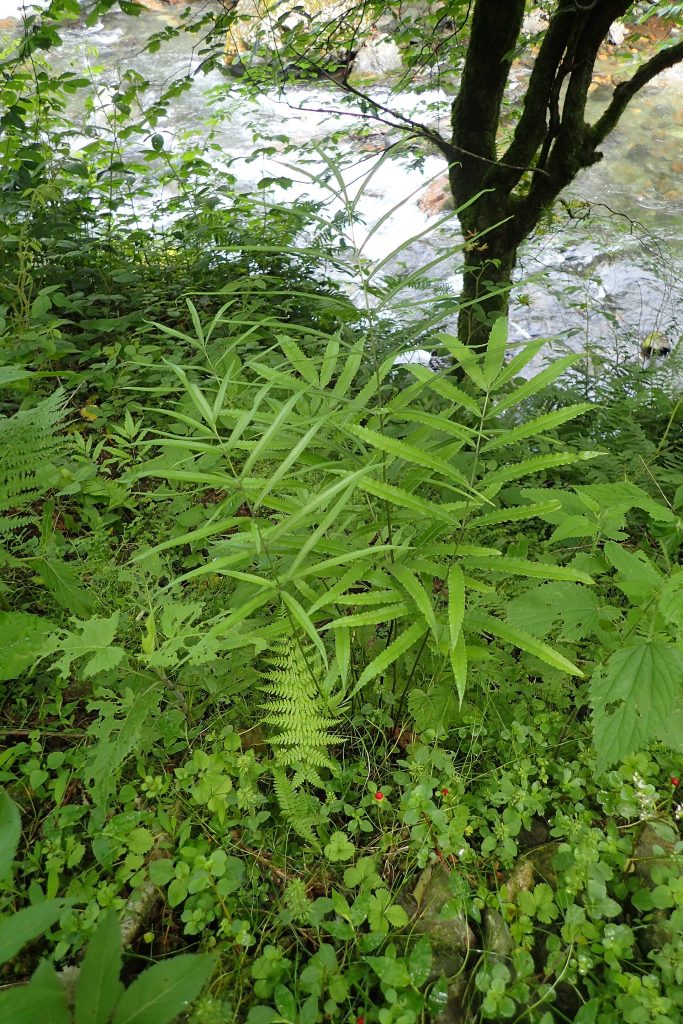
Lush fern forest in Chakvistavi, the mountain village that hosts the Chakvistavoba festival. · Photo: Krzysztof Ziarnek, Kenraiz / Wikimedia Commons, CC BY-SA 4.0
This page in other languages: Русский
GTour conciergeAsk anything about Georgia · we reply within hours