Archives


Autumn Tbilisi in Georgia: dates, meaning and how to experience it
Next dates
12 September 2027 (to be confirmed) · Djansug Kakhidze Centre, Tbilisi. See the full events calendar and Georgia today for roads and weather.
What it is
Autumn Tbilisi — in Georgian, Tbilisis Shemodgoma (თბილისის შემოდგომა) — is the international classical music festival organised each year by the Tbilisi Symphony Orchestra. The Georgian word shemodgoma (შემოდგომა), meaning “autumn,” is built from the verbal root dgoma (“to stand” or “to set in”) with the prefix shemo- (“coming in” or “arriving”), so the word carries the sense of a season that settles in rather than simply a calendar period. The festival’s name therefore reads literally as “Tbilisi’s settling-in of autumn,” and it is used by the orchestra and the city as shorthand for the concert series itself, not for any folk or religious observance.
Unlike Georgia’s church feasts and village festivals, Autumn Tbilisi is a modern civic and artistic event rather than a popular holiday. It is attended by residents of Tbilisi, the city’s growing community of music students and professionals, and visiting travellers who plan an evening around it; there is no public holiday attached and no requirement of faith or ethnicity to take part. The festival matters to Georgia’s cultural calendar because it is one of the few fixed autumn dates when international soloists, conductors and ensembles appear alongside the Tbilisi Symphony Orchestra and Georgian composers on a single stage, continuing a line of orchestral performance in the city that reaches back to the nineteenth century.
Historical background
- 1851 — An Italian-style opera house opens in Tbilisi under the Russian imperial viceroyalty, establishing a European concert and opera tradition in the city.
- 1917 — The Tbilisi Conservatoire (today the Tbilisi State Conservatoire) is founded, training generations of Georgian composers, conductors and instrumentalists.
- 1935 — Conductor Jansug Kakhidze is born in Tbilisi; he later becomes the central figure in Georgian orchestral life of the Soviet and post-Soviet period.
- 1968 — Kakhidze founds the Tbilisi Symphony Orchestra, which becomes the city’s principal resident orchestra.
- 2002 — Jansug Kakhidze dies; the orchestra he built continues under his successors, and his name is later attached to its home venue.
- Early 2010s — The Djansug Kakhidze Tbilisi Centre for Music and Culture opens on the Mtkvari riverbank as a purpose-built concert hall for the orchestra.
- 2000s–2010s — Autumn Tbilisi is established as the orchestra’s annual international showcase, opening each September and extending into the autumn months.
- Ongoing — The festival continues yearly, with exact concert dates confirmed each season by the Tbilisi Symphony Orchestra and the Tbilisi City Hall.
The deeper roots of Autumn Tbilisi lie in Tbilisi’s long role as a crossroads city where Georgian, Russian, Armenian, Persian and later Soviet musical cultures met. The opera house built under Vorontsov’s viceroyalty in the mid-nineteenth century and the conservatoire founded on the eve of the 1917 revolutions gave the city institutions capable of training and housing a professional orchestral tradition well before the Soviet period formalised state patronage of the arts. Jansug Kakhidze, trained in this environment, built the Tbilisi Symphony Orchestra into an ensemble capable of touring internationally even under Soviet restrictions, and his reputation as both conductor and composer anchored Tbilisi’s claim to a serious concert culture independent of Moscow.
Since Georgian independence, the orchestra and the concert hall that bears Kakhidze’s name have used the September–November window to invite conductors, soloists and ensembles from abroad, pairing them with Georgian premieres and with repertoire by Georgian composers such as Zakaria Paliashvili, Otar Taktakishvili and Giya Kancheli. The festival’s loose, several-week structure — rather than a single festival night — reflects this ambition: it functions less as a one-off spectacle and more as an autumn season within the orchestra’s year, built around the Djansug Kakhidze Centre but occasionally extending to other Tbilisi stages.
Meaning and traditions
Autumn Tbilisi has none of the ritual vocabulary of a church feast; its “traditions” are those of a concert season. A typical evening (saghamo, საღამო) opens with an orchestral programme conducted by a visiting or resident dirizhori (დირიჟორი, conductor), often paired with a guest solisti (სოლისტი, soloist) on piano, violin or voice. Programmes mix European symphonic staples — Brahms, Tchaikovsky, Shostakovich — with Georgian orchestral works, and the festival has historically used its autumn slot to premiere new compositions by Georgian composers.
There is no fixed festival food or song, since this is a concert-hall event rather than a folk celebration, but audiences often continue the evening in the restaurants and wine bars along the nearby Mtkvari embankment and in Tbilisi’s Old Town, where Kakhetian wine and late suppers are the natural extension of an evening at the kontsert-darbazi (კონცერტ-დარბაზი, concert hall). Regional variation exists only in the sense that Batumi and Kutaisi host their own, separate classical and chamber music series at different points in the year; Autumn Tbilisi itself belongs specifically to the capital and to the Tbilisi Symphony Orchestra.
When it happens
The festival follows a variable, organiser-confirmed pattern rather than a fixed date: it customarily opens in mid-September and its concerts continue through the autumn, into October and sometimes November, with specific programme dates announced by the Tbilisi Symphony Orchestra ahead of each season. In 2026 the festival is already underway through the autumn period; the next edition is provisionally expected to open on 12 September 2027, though organisers caution that this date is to be confirmed closer to the season. Autumn Tbilisi is not a public holiday in Georgia — offices, shops, schools and transport operate normally throughout, and only the individual concert evenings are fixed appointments for ticket holders.
Where to experience it
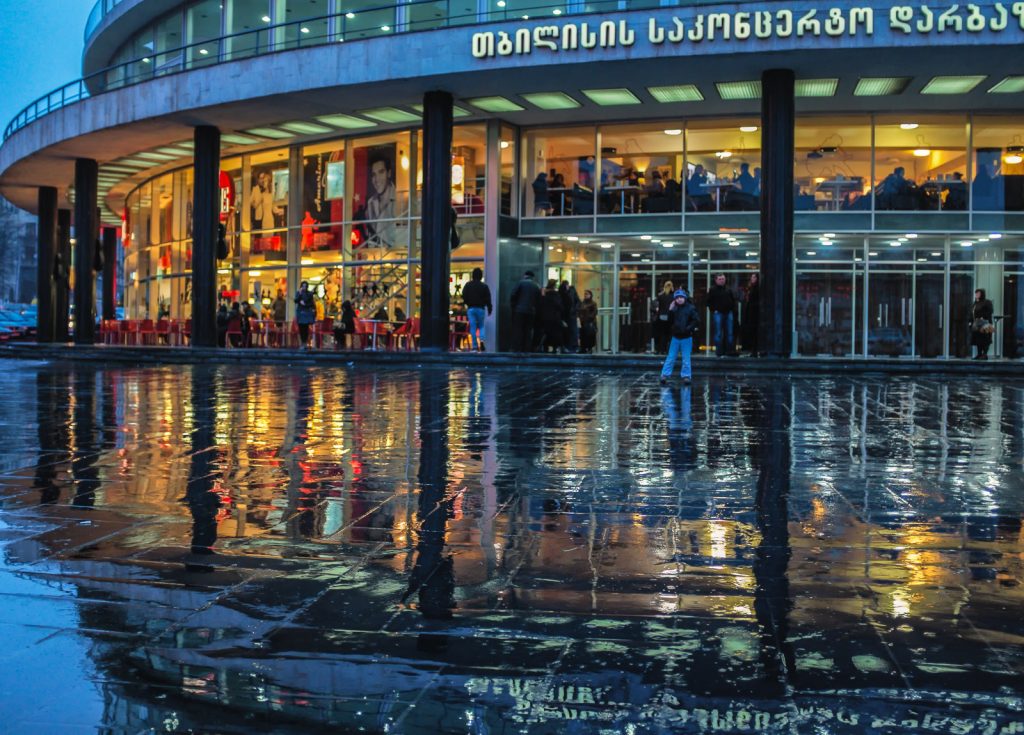
The festival’s home is the Djansug Kakhidze Tbilisi Centre for Music and Culture on the Mtkvari riverbank, a modern concert hall built specifically for the Tbilisi Symphony Orchestra. Evening concerts typically begin around 19:00; visitors should arrive at least twenty minutes early, as latecomers are usually seated only between movements or pieces. Smart-casual dress is appropriate — formal wear is welcome but not required — and phones should be silenced before the performance begins, as is standard concert-hall etiquette anywhere. Some festival events are also staged at the Tbilisi Opera and Ballet Theatre or at smaller recital venues in the Old Town; tickets are usually available through the orchestra’s own booking channels and from standard Tbilisi box offices closer to the date.
Travel with GTour
Tbilisi & Mtskheta — The Essential First Day begins in the capital and can be scheduled around 12 September so an evening at the Djansug Kakhidze Centre fits naturally before heading onward, while Georgia in 10 Days — Tbilisi to Svaneti to the Sea starts from the same city and can be arranged to open with a festival concert ahead of the journey to Svaneti and the coast. A GTour travel expert designs the route around the guest’s dates, confirming the Autumn Tbilisi program once announced.
Did you know
- Tbilisi’s opera house, which anchored the city’s European concert tradition, was built in 1851 under the Russian imperial viceroy Mikhail Vorontsov.
- Jansug Kakhidze, founder of the Tbilisi Symphony Orchestra, was also an active composer, scoring Georgian feature films in addition to his conducting career.
- The Tbilisi State Conservatoire, founded in 1917, trained many of the musicians who later built Georgia’s orchestral and operatic institutions.
- Georgian composer Zakaria Paliashvili, whose works often appear in Tbilisi orchestral programmes, has a Tbilisi opera house named after him.
- Tbilisi’s layered musical history — Georgian, Russian, Armenian and Persian influences overlapping over centuries — is part of why the city supports several distinct, differently-timed music festivals rather than one.
Practical tips for visitors
September and October bring Tbilisi’s mildest, most comfortable weather, with warm days and cool evenings, making concert nights pleasant for walking to and from the venue along the river. The Djansug Kakhidze Centre is reachable on foot from much of central Tbilisi or by taxi; public transport runs normally since the festival carries no holiday closures. Tickets for popular programmes and well-known guest soloists can sell out, so booking ahead once dates are confirmed is advisable, and visitors combining a concert with dinner should reserve a table nearby in advance, particularly on weekend evenings. GTour arranges a private driver or guide for festival evenings for visitors who prefer not to navigate booking and transport independently.
Combine it with
Autumn in Tbilisi coincides with the grape harvest further east, making a concert evening easy to pair with a day trip to Kakheti for wine country and harvest traditions, or with the churches and fortress sites of Mtskheta-Mtianeti just outside the capital. Travellers extending their stay in the Tbilisi region can also combine the festival with the ancient capitals and cave towns of Kartli.
Questions travellers ask
Is Autumn Tbilisi a public holiday?
No. It is a music festival, not a civic or religious holiday, so shops, offices, schools and transport continue as normal throughout its run.
Do I need to buy tickets in advance?
For popular programmes and well-known guest artists, yes — once the festival confirms its schedule, booking ahead is recommended since some evenings sell out.
What should I wear to a concert?
Smart-casual dress is standard; formal attire is welcome but not expected. Comfort for an evening of sitting is more important than formality.
Is the festival suitable for children?
Most programmes are standard orchestral concerts aimed at general adult audiences rather than children’s performances, so they suit older children and teenagers with an interest in classical music more than very young children.
Where exactly is the Djansug Kakhidze Centre?
It sits on the Mtkvari riverbank in central Tbilisi, within easy walking distance or a short taxi ride of the Old Town and most central hotels.
Are performances only in Georgian repertoire?
No. Programmes typically mix European orchestral staples with Georgian works, and guest conductors and soloists from abroad are a regular feature of the festival.
What is the weather like in Tbilisi during the festival?
September and October are generally mild, with warm afternoons and cooler evenings, making it a comfortable season for combining concerts with walking in the city.
Can a private guide help plan a festival evening?
Yes; a private driver or guide can handle ticket collection, transport to the venue and dinner reservations, which is useful given that exact dates are confirmed only each season.
Sources
- Tbilisi City Hall
- Ministry of Culture of Georgia
- Georgian National Tourism Administration
- Tbilisi State Conservatoire
- Georgia Today
- Agenda.ge
Plan your Georgia
Want to be in Georgia for Autumn Tbilisi? A GTour travel expert designs the itinerary around it and calls you back.
The Tbilisi Symphony Orchestra performs beneath the giant organ at the Djansug Kakhidze Centre. · Photo: Sakralorgel / Wikimedia Commons, CC BY-SA 3.0
This page in other languages: Русский
GTour conciergeAsk anything about Georgia · we reply within hours