Archives


Honey, Tea and Cheese Festival in Georgia: dates, meaning and how to experience it
Next dates
11 September 2027 – 12 September 2027 (to be confirmed) · Mtatsminda Park, Tbilisi. See the full events calendar and Georgia today for roads and weather.
Honey, Tea and Cheese Festival: Tbilisi’s Autumn Celebration of Georgian Produce
What it is
The Honey, Tea and Cheese Festival — in Georgian, roughly Taplis, Chais da Qvelis Festivali, combining tapli (“honey”), chai (“tea”) and qveli (“cheese”) — is a joint producers’ fair held each early autumn in Mtatsminda Park, the hilltop park above central Tbilisi. It is not a religious feast or a date fixed by the church calendar; it is a contemporary agricultural and culinary event that brings small-scale farmers, apiarists, tea growers and cheesemakers from Georgia’s regions into the capital to sell, demonstrate and talk about their products directly to the public.
The festival is celebrated by producers’ cooperatives and family farms rather than by a single community or confession, and its audience is correspondingly broad: Tbilisi residents doing their weekend shopping, families out for a day in the park, and visitors curious about Georgia’s food traditions. It sits within a wider, fast-growing calendar of Georgian food and wine festivals that has developed since the 2000s alongside the country’s agritourism sector, offering a more accessible counterpart to specialist events such as regional wine festivals.
Historical background
- Prehistory — Archaeological work in Georgia has recovered ceramic vessels containing honey residues from ancient burial contexts, evidence of beekeeping traditions in the Caucasus reaching back several thousand years; such finds are held and discussed by Georgia’s national museum collections.
- Medieval period — Monastic and highland communities across Georgia developed distinct pastoral cheese-making methods still practised today, from the brined lowland styles of Samegrelo to the skin-matured mountain cheeses of Tusheti and Svaneti.
- 1880s–1890s — Commercial tea cultivation begins on the Black Sea coast near Chakva and Ozurgeti in present-day Adjara and Guria, under the Russian Empire, with specialists invited from China to help establish the first plantations.
- 1920s–1980s — Under Soviet administration, Georgia becomes the principal tea-producing republic of the USSR, and state and collective farms expand apiaries and dairies across the country.
- 1991 — Georgian independence is followed by the collapse of Soviet-era state procurement, and the tea and large-scale dairy sectors contract sharply.
- 2000s–2010s — Smallholder beekeepers, tea growers and cheesemakers rebuild artisanal production, supported by government and development programmes promoting value-added, regionally branded agricultural goods.
- 2010s — Tbilisi City Hall and producers’ associations begin hosting themed harvest fairs in city parks, including Mtatsminda Park, to connect urban consumers directly with rural producers.
- Present — The Honey, Tea and Cheese Festival is held annually in early autumn, usually September, as an open-air fair in Mtatsminda Park, with exact dates confirmed by organisers each year.
The festival’s three products trace very different histories. Honey and cheese belong to the oldest layers of Georgian rural life, tied to pastoral movement between lowland winter pasture and highland summer pasture, and to monastic estates that kept bees and herds for both subsistence and trade. Tea, by contrast, is a comparatively recent arrival, introduced as a plantation crop on the humid Black Sea coast in the late nineteenth century and expanded into a mass industry under Soviet planning, before nearly disappearing after 1991 and being slowly revived by a new generation of small growers.
What unites them in a single festival is timing and purpose rather than deep shared tradition: early September is when the year’s honey has been extracted, the last flushes of tea leaf are being picked, and fresh autumn cheeses are ready, making it a natural moment for producers to bring their harvest to the city. The choice of Mtatsminda Park, reached by Tbilisi’s historic funicular, also reflects a broader pattern in which Georgian cities have turned public parks into venues for food culture rather than reserving such events for rural festivals alone.
Meaning and traditions
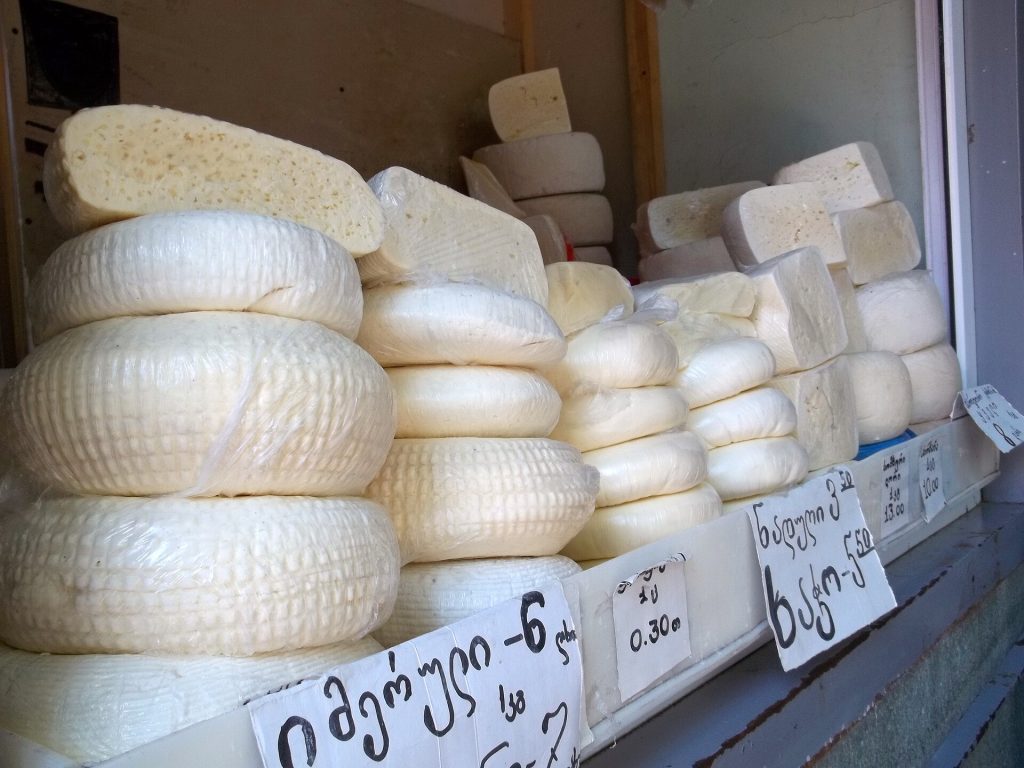
At the festival, stalls run by individual farms and producers’ cooperatives line the park’s walkways, offering free or low-cost tastings before purchase. Visitors can expect to see and taste several types of Georgian honey, including tsablis tapli (acacia honey) and chestnut honey from the forests of Racha and Guria, alongside jars of beeswax, propolis and honeycomb. Tea tables usually present green and black teas grown on the Adjaran and Gurian coast, sometimes alongside high-mountain herbal blends. Cheese producers bring the classic regional range: sulguni (a brined, semi-stretched cheese from Samegrelo), imeruli (a fresh, mild cheese from Imereti), guda (a sheep’s-milk cheese matured in a sheepskin, associated with Tusheti), and tenili, a hand-pulled fibrous cheese from Meskheti.
Alongside the stalls, demonstrations are common: honey extraction from the comb, the stretching and kneading of fresh sulguni, and sometimes tea-leaf processing. Folk ensembles often perform, and Georgian polyphonic singing — recognised by UNESCO as part of the Representative List of the Intangible Cultural Heritage of Humanity — is a frequent feature of such public gatherings, performed informally between stalls or on a small stage. There is no fixed liturgical greeting associated with the day, as there would be for a church feast; conversation centres on the produce itself, its region of origin, and the producer’s own methods.
When it happens
The Honey, Tea and Cheese Festival does not follow a fixed calendar date. It is organised each year by producers’ associations in coordination with Mtatsminda Park, and the exact weekend — typically in early September, after the main honey harvest and ahead of the autumn grape harvest season — is confirmed only a few weeks in advance. It is not a public holiday: government offices, schools, banks and most businesses in Tbilisi operate normally on festival days.
As of late 2026, the most recent edition took place in early September of that year. The next edition is provisionally set for 11–12 September 2027, though organisers describe this as subject to confirmation. Travellers planning a visit around this date should check announcements from Tbilisi City Hall or the festival’s producers’ association closer to the time, since the final weekend can shift by a week in either direction.
Where to experience it
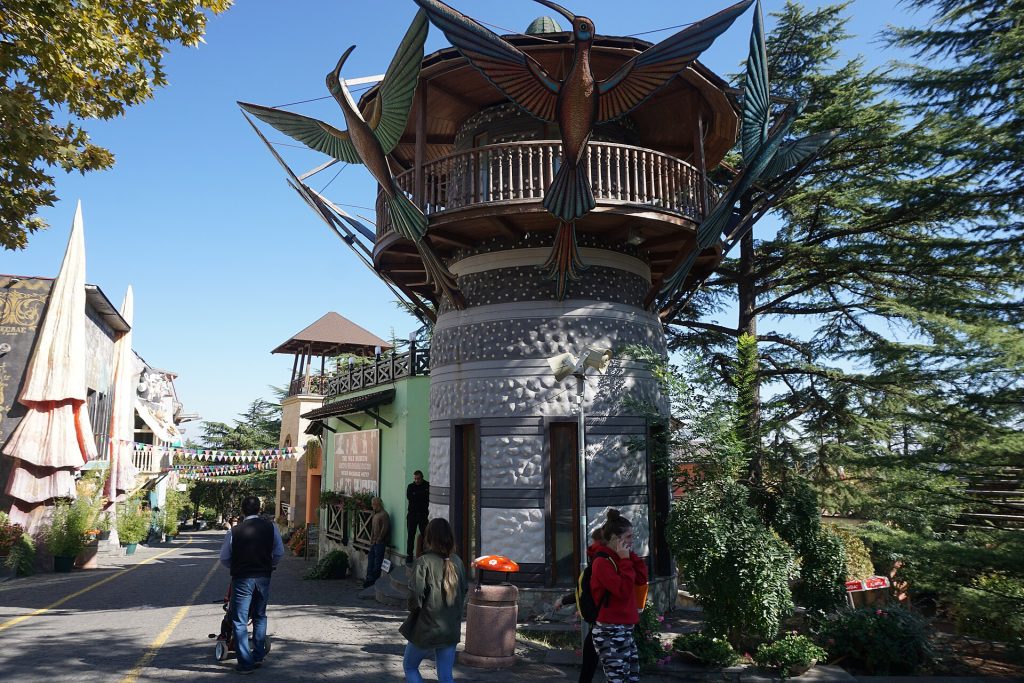
Mtatsminda Park sits at the summit of Mtatsminda (“Holy Mountain”), the ridge overlooking central Tbilisi, and is reached by the historic Tbilisi Funicular from its lower station near Chonkadze Street, or by road. The park is best known for its amusement rides, Ferris wheel and panoramic terraces over the city, and the festival typically occupies the open plaza and promenade areas near the upper funicular station. Visitors should expect producer tents arranged along the main walkway, with the busiest tastings and best stock available in the late morning and early afternoon on weekend days.
This is a secular, open-air event rather than a church occasion, so there is no specific dress code or ritual etiquette beyond ordinary courtesy: ask before photographing individual producers up close, and it is customary to make a small purchase after an extended tasting rather than sampling repeatedly without buying. Cash in Georgian lari is useful for smaller stalls, though many vendors also accept cards.
Travel with GTour
The Tbilisi & Mtskheta — The Essential First Day tour begins in the capital and can be arranged to include an afternoon at Mtatsminda Park on 11–12 September 2027, when local producers gather for the Honey, Tea and Cheese Festival, while Georgia in 10 Days — Tbilisi to Svaneti to the Sea opens with the same Tbilisi stretch before heading west. A GTour travel expert designs the route around the guest’s dates to fit the festival in where it works.
Did you know
- Archaeologists working in Georgia have recovered some of the oldest known honey residues found anywhere in the world, preserved in ceramic vessels from ancient burial sites.
- Commercial tea growing in Georgia began on the Black Sea coast near Chakva in the late nineteenth century, with specialists invited from China to help establish the first plantations.
- During the Soviet period, Georgia supplied the great majority of the tea consumed across the entire USSR.
- Georgia’s cheese tradition includes well over a dozen named regional varieties, from the brined sulguni of Samegrelo to the skin-matured guda of highland Tusheti.
- Georgian polyphonic singing, often heard informally at public festivals, was inscribed by UNESCO on its Representative List of the Intangible Cultural Heritage of Humanity in 2008.
Practical tips for visitors
Reach Mtatsminda Park by the Tbilisi Funicular, by taxi, or on foot from the upper streets of Sololaki; parking near the summit is limited on festival weekends. Early September weather in Tbilisi is usually mild by day but can turn cool and breezy on the exposed hilltop in the evening, so a light layer is worth carrying. Entry to the festival itself is typically free, with payment only for tastings and purchases; separate fees apply for park rides such as the Ferris wheel. Because exact dates are confirmed shortly before the event, check current listings with the park or Tbilisi City Hall if travelling specifically for the festival, and build flexibility into an itinerary in case dates shift by a week.
Combine it with
A visit pairs naturally with a day exploring Tbilisi itself, from the Old Town below Mtatsminda to the city’s markets and churches. For the tea side of the story, the plantations and coastal towns of Adjara make a logical extension, while Kakheti‘s vineyards
Sources
- Honey, Tea and Cheese Festival
- Honey, Tea and Cheese Festival
- Georgian Honey Producers Festival
- National Statistics Office Honey Production Data
- Interpress News Report on Festival
Plan your Georgia
Want to be in Georgia for Honey, Tea and Cheese Festival? A GTour travel expert designs the itinerary around it and calls you back.
Jars of Georgian honey and honey vodka displayed for tasting at a producers' fair. · Photo: Giorgi Abdaladze / Wikimedia Commons, CC BY-SA 4.0
This page in other languages: Русский
GTour conciergeAsk anything about Georgia · we reply within hours