Archives


Rtveli in Georgia: dates, meaning and how to experience it
Next dates
15 September 2027 – 20 October 2027 (to be confirmed) · Kakheti, Kartli, Imereti, Racha. See the full events calendar and Georgia today for roads and weather.
What it is
Rtveli (რთველი) is the Georgian grape harvest — the weeks each autumn when families, villages and commercial wineries bring in the vintage. The word is generally traced to an old Georgian root meaning “to pick” or “to gather,” distinguishing it from the broader harvest vocabulary used for grain. Unlike a single feast day, Rtveli is a season: a rolling sequence of harvest mornings that moves across Georgia’s wine regions as grapes ripen, grower by grower, village by village.
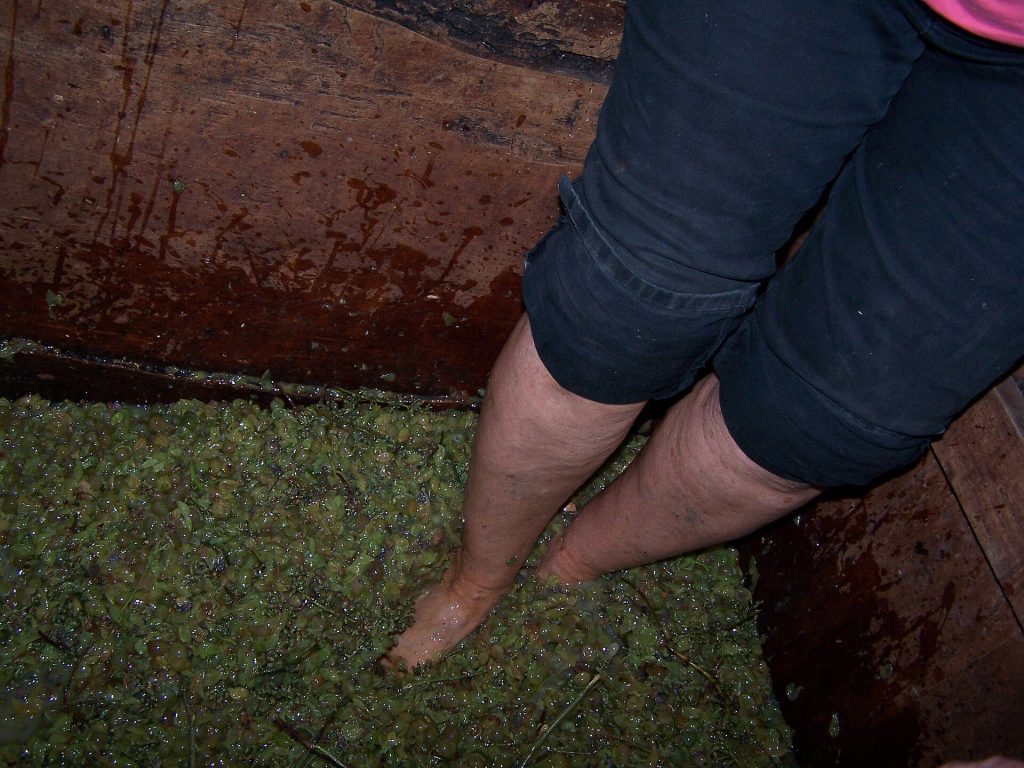
Rtveli is celebrated by anyone with a vineyard — smallholders with a few rows behind the house as much as large estates — and by extension by entire communities, since harvesting a neighbor’s vines and being helped in return is part of the custom. It is strongest in Kakheti, Georgia’s principal wine region in the east, but is equally real in Kartli around Tbilisi and Mtskheta, in Imereti in the west, and in the mountain valleys of Racha, where cooler air delays picking into late autumn. Visitors are not spectators at Rtveli so much as extra hands: many estates and guesthouses invite guests to cut bunches, carry baskets, tread grapes by foot in a satsnakheli (wooden press trough), and then sit down to the meal that follows.
Historical background
- c. 6000 BCE — Chemical residue found on pottery from Neolithic sites in Kvemo Kartli, south of present-day Tbilisi, points to some of the earliest known grape-based fermentation in the world.
- 1st millennium BCE — The qvevri, a large egg-shaped clay vessel buried in the ground for fermenting and storing wine, is established as the standard technology of Georgian viticulture.
- 4th century (traditionally 337) — Christianity becomes the state religion of Kartli; wine takes on liturgical significance alongside its agricultural role, and monasteries begin cultivating vineyards.
- 11th century — Alaverdi Cathedral is built in Kakheti; its monastery, along with Ikalto nearby, becomes a center of organized winemaking and manuscript learning.
- Early 19th century — Prince Alexander Chavchavadze establishes a European-style winery and gardens at Tsinandali in Kakheti, blending local qvevri tradition with imported methods.
- 1801 — The kingdom of Kartli-Kakheti is annexed by the Russian Empire; Georgian wine is increasingly traded northward over the following century.
- 1921–1991 — Under Soviet rule, vineyards are collectivized and Georgia becomes a major wine supplier across the USSR, with large state wineries built alongside family plots.
- 2013 — UNESCO inscribes the ancient Georgian traditional qvevri wine-making method on the Representative List of the Intangible Cultural Heritage of Humanity.
- Present — Rtveli continues as both a private family ritual and an organized visitor experience promoted by Georgia’s wine regions and tourism bodies.
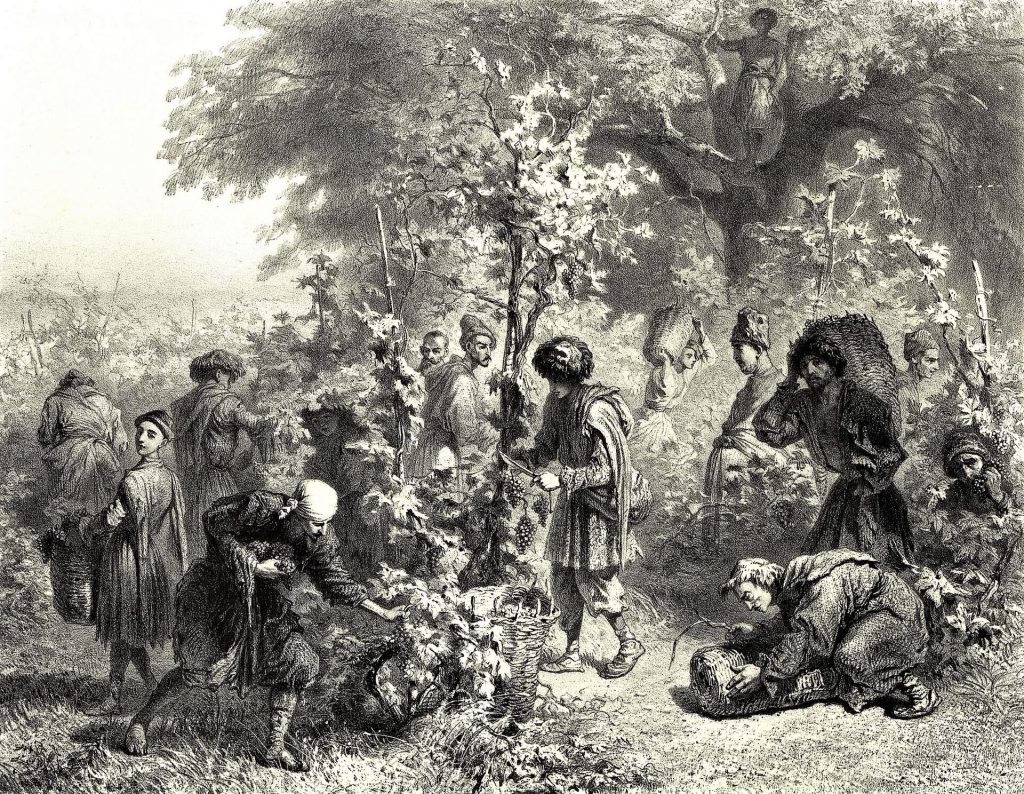
For most of Georgian history, Rtveli was a practical necessity rather than a festival in the fixed sense of a saint’s day: grapes had to be picked when ripe, and an entire household’s calendar, along with that of neighbors and relatives who came to help, bent around it. The qvevri method that UNESCO recognized in 2013 is inseparable from the harvest itself, since the freshly pressed juice, skins, stalks and sometimes seeds go directly into the buried vessels within hours or days of picking, a sequence that has changed little in form even as equipment has modernized.
The rhythm of Rtveli also shaped Georgia’s religious calendar. Autumn feast days at monasteries such as Alaverdi, traditionally observed in late September, fall close to the harvest and are still remembered by older residents of Kakheti as markers of the season, even though the church commemoration and the agricultural work are formally distinct. The persistence of family-scale harvesting alongside large commercial wineries, documented by Georgia’s National Wine Agency, is one reason Rtveli has remained a lived tradition rather than a staged reenactment.
Meaning and traditions
A typical Rtveli day begins early, before the heat of the day, with pickers moving along the rows with secateurs and baskets. The grapes are carried to a marani (wine cellar) where they are crushed, traditionally underfoot in a wooden satsnakheli, though mechanical presses are now common even on small holdings. The must, sometimes with skins and stems for red varieties such as Saperavi, is poured into a qvevri sunk in the cellar floor, sealed, and left to ferment and mature for months.
The work is punctuated and closed by food. A rtveli lunch or evening meal often becomes an informal supra, the long Georgian table feast led by a tamada (toastmaster) whose toasts move through a customary sequence — peace, family, ancestors, the harvest itself, absent friends. Dishes associated with the season include churchkhela, strings of walnuts dipped repeatedly in thickened grape juice (tatara) and dried, and badrijani with walnut paste, alongside the year’s bread and cheese. Songs connected to vineyard work and table polyphony, recognized internationally as part of Georgia’s singing tradition, are commonly heard once the picking is done.
Regional variation is real. In Kakheti, with its warm Alazani Valley, Rkatsiteli and other white grapes are usually picked first, with Saperavi and other reds following into October. In Racha, at higher elevation, the late-ripening Aleksandrouli and Mujuretuli grapes used for Khvanchkara wine are harvested later, sometimes into late October. Imereti favors a different winemaking style, with less skin contact, and family-run marani visits there feel noticeably smaller and quieter than the larger estates of Kakheti.
When it happens
Rtveli has no single fixed date; it is set by ripeness, not by the church or civil calendar, and therefore varies by region, grape variety, altitude and weather from year to year. Lower-lying Kakheti typically begins in mid-to-late September and runs into October; Racha and higher pockets of Imereti follow later, occasionally into the final days of October. Regional winegrowers’ associations and the National Wine Agency generally confirm approximate start dates each August once sugar levels are tested in the vineyards.
In 2026, harvesting in most of Kakheti ran from early September into mid-October; at the time of writing, 25 October 2026, picking continues only in cooler Racha vineyards and some higher Imereti plots where later varieties are still ripening. For 2027, the harvest window is expected to fall approximately between 15 September and 20 October, to be confirmed closer to the season. Rtveli is not a public holiday: government offices, schools, banks and shops operate normally, though family-run guesthouses and some wineries in Kakheti and Racha book out well in advance during peak weeks.
Where to experience it
Kakheti offers the widest range of options: estates around Telavi, Kvareli and the hill town of Sighnaghi open their vineyards and cellars to visitors through the season, and the Tsinandali estate combines a historic house-museum with working vineyards. In Kartli, smaller family wineries near Mtskheta and Mukhrani are easier day trips from Tbilisi. Imereti’s low-key family marani visits, often arranged through local guesthouses around Kutaisi, show the western style of winemaking with less contact between skins and must. Racha’s Khvanchkara-producing villages, reached by mountain roads, offer the latest and coolest harvest, usually into late October.
A visitor typically sees baskets of grapes carried from the rows, the crush at the satsnakheli, and the sealing of a qvevri, followed by a shared meal. When visiting a private home or monastery grounds such as Alaverdi, modest dress is expected — covered shoulders and, for women entering church buildings, a headscarf, available at most monastery entrances. Accepting an offered toast at the table is polite even if only sipping; refusing bread or the first toast outright can seem abrupt. Clothes that can get stained purple, and shoes suited to muddy cellar floors, are sensible for anyone joining the actual work.
Did you know
- Residue on Neolithic pottery found south of Tbilisi is among the earliest known evidence of grape-based fermentation anywhere in the world.
- The qvevri method of burying clay vessels to ferment and age wine was inscribed by UNESCO on the Representative List of Intangible Cultural Heritage in 2013.
- Georgia’s National Wine Agency records several hundred indigenous grape varieties, among the highest counts of any wine-producing country.
- Churchkhela, the walnut-and-grape-juice sweet eaten during Rtveli, is sometimes called “Georgian Snickers” by visitors for its shape and sweetness, though it predates the comparison by centuries.
- Rtveli meals typically end with a supra led by a tamada, whose toasts follow a customary order rather than being improvised at random.
Practical tips for visitors
Tbilisi International Airport is the usual gateway for Kakheti and Kartli, roughly one to two hours by road from Telavi and Mtskheta respectively; Kutaisi Airport is closer for Imereti and Racha. Book winery or guesthouse visits ahead during peak weeks in late September and early October, since many estates are genuinely working the harvest rather than running demonstrations on demand. Bring clothes and shoes that can get stained or muddy if planning to join the picking or treading, a hat for sun exposure in open vineyards, and a layer for cooler mornings, especially in Racha. Mountain roads into Racha are winding; allow extra time and check conditions if traveling after rain. Since Rtveli is not a public holiday, offices and transport run on normal schedules, but rural guesthouses can fill quickly, so early booking is advisable.
Combine it with
Rtveli pairs naturally with a longer stay in Kakheti, Georgia’s main wine region and home to Alaverdi, Tsinandali and Sighnaghi. Travelers interested in the later, cooler harvest and Khvanchkara wine can combine it with Racha, while those exploring western Georgia’s distinct winemaking style can add Imereti, within reach of Kutaisi.
Questions travellers ask
Is Rtveli a public holiday in Georgia?
No. Rtveli is a harvest season, not an official holiday, so government offices, banks and most shops operate normally throughout.
Can tourists actually join a grape harvest?
Yes, many family wineries and guesthouses, particularly in Kakheti, welcome guests to pick grapes, help with pressing, and share the meal afterward; arrangements are usually made in advance through the estate or a local tour operator.
What is the best time to see Rtveli?
Late September through mid-October generally offers the widest activity across Kakheti and Kartli, while Racha and parts of Imereti can still be harvesting into late October.
Do I need to book in advance?
Booking ahead is strongly advised during peak weeks, since wineries are conducting genuine harvest work and guesthouse capacity in small wine villages is limited.
What should I wear to join a harvest?
Clothes and closed shoes that can get stained or muddy, a sun hat, and a light layer for cool mornings; modest dress is expected if visiting a monastery such as Alaverdi.
Is Rtveli the same as Tbilisoba or the New Wine Festival?
No. Rtveli is the agricultural harvest itself, spread over weeks across the countryside, while Tbilisoba is an autumn city festival and the New Wine Festival is a separate organized tasting event; they fall in the same general season but are distinct occasions.
What food and drink should I expect?
Freshly pressed grape must, churchkhela, walnut dishes, bread and cheese, and often a supra with toasts led by a tamada once the day’s picking is finished.
Can children take part in Rtveli?
Yes, family harvesting traditionally includes children in lighter tasks such as carrying small baskets, and many estates are comfortable with families joining for a few hours.
Sources
- UNESCO Intangible Cultural Heritage — ancient Georgian qvevri wine-making method
- National Wine Agency of Georgia
- Georgian National Tourism Administration
- Ministry of Culture, Sport and Youth of Georgia
- Patriarchate of Georgia
Plan your Georgia
Want to be in Georgia for Rtveli? A GTour travel expert designs the itinerary around it and calls you back.
Grape harvest (Rtveli) underway in the vineyards of Kakheti, Georgia. · Photo: rugbyxm / Wikimedia Commons, CC BY 2.0
This page in other languages: Русский
GTour conciergeAsk anything about Georgia · we reply within hours