

By Nino Gelashvili, Travel News Editor · 26/10/2026
Yes, Iranian citizens can travel to Georgia in 2026, but the entry conditions have changed more than once in recent years and must be checked before booking. For much of the past decade Iranian passport holders could enter Georgia visa-free for up to 45 days, then the rule was tightened to a standard visa or e-visa requirement for several years, and policy has shifted again since. Because this is one of the most frequently revised rules in Georgia’s visa regime, do not rely on this article, a travel agent, or a forum post for the current status. Check the Georgian Ministry of Foreign Affairs consular portal and the national e-visa system before you buy tickets, and again a few weeks before departure.
Beyond the visa question, a trip from Iran to Georgia is straightforward logistically: there are direct flights between Tehran and Tbilisi, a well-worn overland option through Armenia or Azerbaijan for those who prefer not to fly, and a tourism sector in Tbilisi and Batumi that is used to Iranian visitors, including Farsi-speaking guides. The main practical frictions are banking (Iranian cards generally do not work in Georgia, so plan on cash), and seasonal travel patterns around Nowruz. The two countries also share centuries of entangled history, visible in Tbilisi’s old town and in Kakheti, which is worth building into any itinerary rather than treating as a footnote.
Visa and entry rules for Iranian citizens
Georgia’s treatment of Iranian travellers has oscillated between a generous visa-free allowance and a stricter visa or e-visa regime, driven by regional security and migration concerns rather than tourism policy. Because of this, the single most important step for any Iranian traveller is to verify the current rule directly before planning dates or buying non-refundable tickets. The authoritative sources are the Georgian e-visa portal and the consular pages of the Ministry of Foreign Affairs, both of which list nationality-specific requirements, permitted length of stay, and required documents such as proof of funds, accommodation, and return travel.
- Start at the e-Visa Portal of Georgia to check whether Iranian citizens currently need an e-visa, and to apply if required.
- Cross-check with the Consular Services page of Georgia, which lists visa categories and terms by nationality.
- For general entry policy and any emergency notices, see the Ministry of Foreign Affairs of Georgia.
Whatever the current rule, keep printed and digital copies of your hotel bookings, return or onward ticket, and a bank statement or cash declaration, since border officers can ask for them regardless of visa status. If you are travelling with a tour operator, confirm with them which document set they recommend for the current month, since requirements for Iranian passports have been adjusted with little public notice before.
Getting there: flights and land routes
Tbilisi International Airport has periodically had direct flights to and from Tehran, operated by Georgian or regional carriers, alongside well-connected one-stop options through Istanbul, Baku, Dubai, or Doha. Direct schedules on this route have changed seasonally and have occasionally been suspended, so always confirm live departures on the airport’s own page rather than a historical schedule.
| Route | Typical option | Notes |
|---|---|---|
| Tehran to Tbilisi, direct | Seasonal direct flights | Confirm current operator and frequency before booking |
| Tehran to Tbilisi via Baku | One-stop | Short layover, Azerbaijan transit rules may apply |
| Tehran to Tbilisi via Istanbul | One-stop | Frequent daily connections |
| Overland via Armenia | Bus, shared taxi, or private car | Requires separate Armenian entry conditions |
| Overland via Azerbaijan | Bus or private car to the Red Bridge border | Requires separate Azerbaijani visa or transit rules |
Check live arrivals, departures, and any route announcements at Tbilisi International Airport. There is no direct land border between Iran and Georgia, so an overland trip means transiting Armenia or Azerbaijan, each with its own visa and transit requirements that are independent of Georgia’s rules and must be checked with those countries’ own authorities.
Driving in Georgia with an Iranian licence
Georgia generally recognises foreign driving licences for a limited period after entry, after which a local or international permit may be required to continue driving legally; the exact threshold and documentation rules are set out in Georgian legislation and can change. If you plan to rent a car or drive your own vehicle, check the current rule before travel rather than assuming last year’s terms still apply.
- Consolidated legislation, including the law on road traffic and status of aliens, is published at the Legislative Herald of Georgia.
- Road conditions, border crossing points, and driving advisories are listed by the Roads Department of Georgia.
Mountain roads toward Kazbegi and Svaneti are steep and can close with snow outside the main season, so winter driving plans should always include a weather and road-status check rather than relying on a map alone.
Money, cards, and connectivity
This is the point where Iranian travellers most often run into trouble. Because of international sanctions, most Iranian bank cards do not work at Georgian ATMs, hotels, or shops, and transfers from Iranian banks cannot reliably reach a Georgian account. The practical solution used by most visitors is to carry sufficient cash, usually in euros or US dollars, and exchange it at licensed currency exchange points in Tbilisi or Batumi, which are numerous and competitive. The Georgian lari (GEL) is the only legal tender for cash purchases; keep exchange receipts in case you need to convert leftover lari back before departure.
- Carry cash for your full trip budget plus a buffer, since relying on cards is not realistic for Iranian-issued accounts.
- Compare exchange rates at several bureaus rather than the first one you see near a hotel or the airport.
- A local SIM card is inexpensive and widely available at the airport and in city kiosks, and is the most reliable way to stay connected, since some messaging and banking apps used at home may behave differently abroad.
Language and finding Farsi-speaking guides
Georgian is the official language, with Russian still widely understood by older residents and English increasingly common in Tbilisi, Batumi, and tourist sites. Farsi is not widely spoken by the general public, but Tbilisi’s tourism sector, which has served Iranian visitors for years, includes Farsi-speaking guides and drivers, particularly for old town walks, Kakheti wine day trips, and mountain excursions to Kazbegi or Gudauri. If language is a concern, ask a tour operator in advance whether a Farsi-speaking guide is available for your dates, since this is usually arranged rather than guaranteed on arrival.
Food and dietary notes
Georgian cuisine centres on bread, cheese, grilled and stewed meats, walnuts, and fresh vegetables, with wine and chacha present at most traditional meals. For visitors avoiding alcohol or pork, this requires some care: many dishes are wine- or pork-free by default (khinkali dumplings are usually meat or potato, khachapuri is cheese-filled bread), but it is worth asking directly about ingredients rather than assuming. Halal options have grown in Tbilisi, especially in neighbourhoods with a longstanding Muslim and Persian-connected population near the old town and Abanotubani, and a halal-aware restaurant or guide can help identify suitable places quickly rather than through trial and error.
Persian heritage and historical ties in Tbilisi and Kakheti
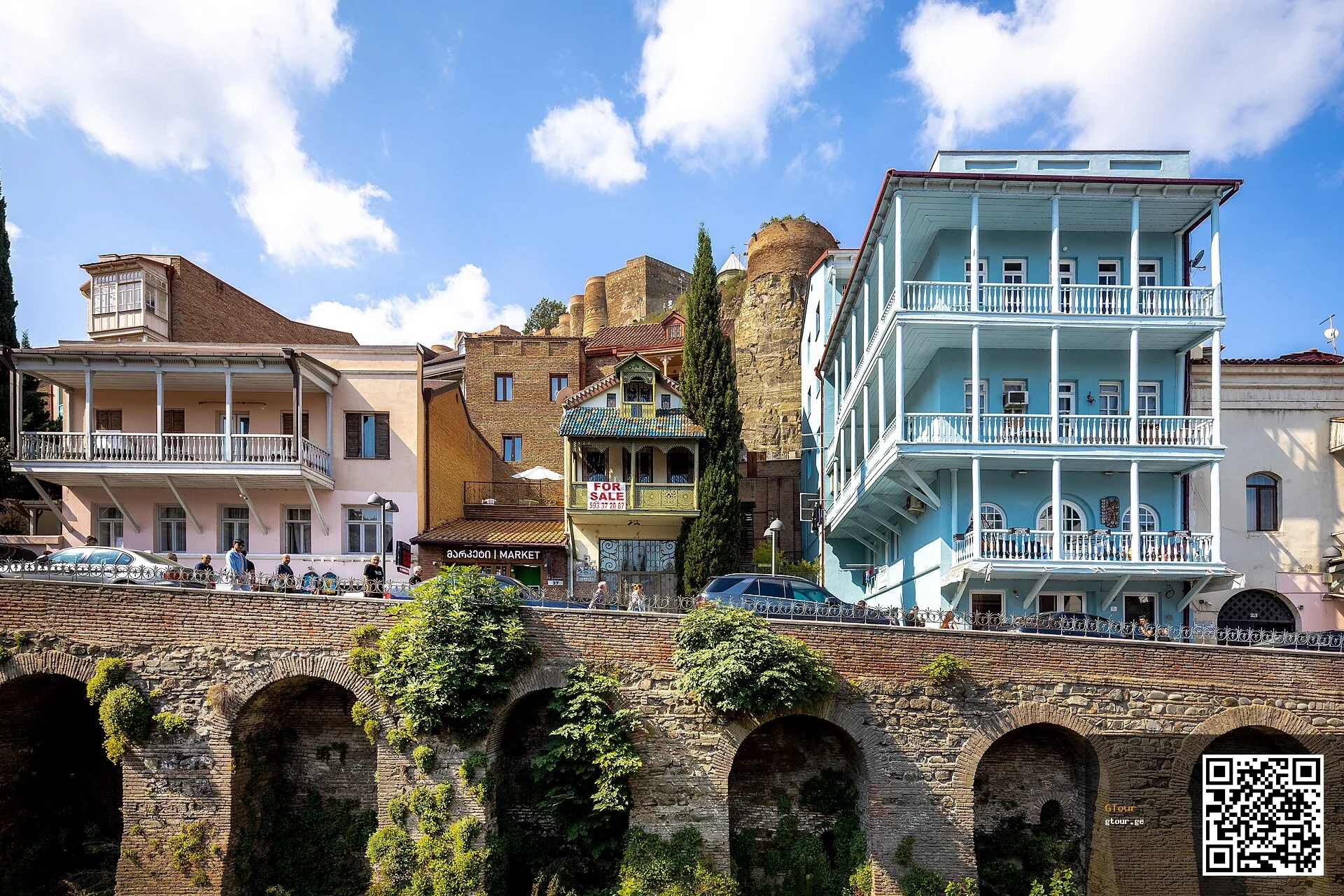
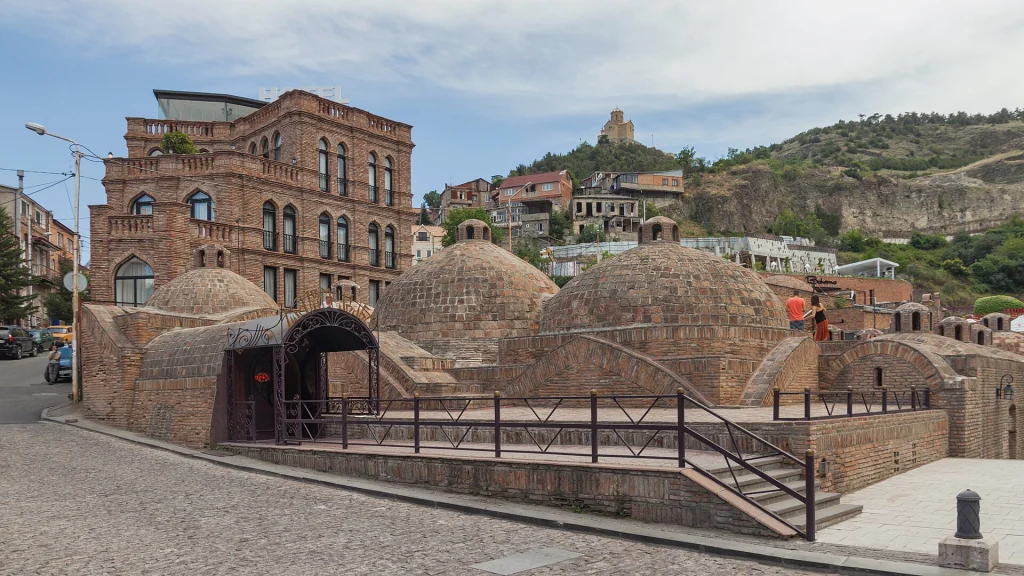
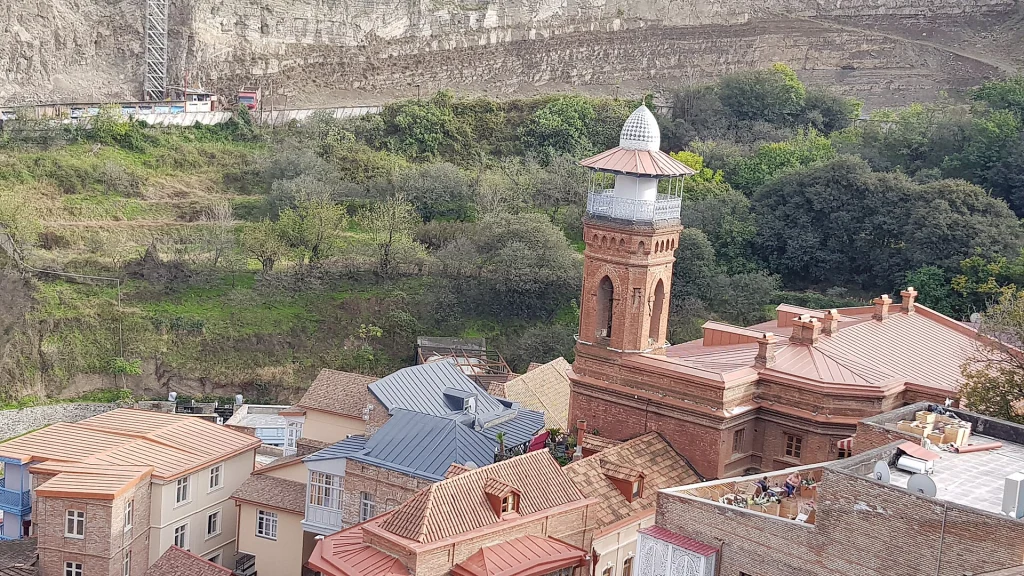
Georgia and Iran share a long and layered history that is visible rather than abstract once you are in Tbilisi. The sulfur bathhouses of Abanotubani, in the old town below Narikala fortress, sit in a district whose domed brick architecture reflects centuries of Persian and wider Islamic building traditions, and the area remains one of the most photographed corners of the capital. Nearby, Tbilisi’s historic mosque quarter, sometimes referred to by visitors through the “blue mosque” association with Persian-era tilework, reflects the city’s long role as a meeting point of Georgian, Persian, and Ottoman influence. Further east in Kakheti, fortified towns such as Gremi and the old capital Telavi carry the marks of the Safavid-era invasions of the early seventeenth century, when Shah Abbas’s campaigns reshaped the region, followed by long periods of coexistence, trade, and intermarriage between Georgian and Persian courts. For a structured visit, GTour’s Tbilisi old town walking guide and Kakheti wine region guide both cover these layers in more depth than a quick stop allows. Background on protected monuments and museum collections touching this period can be checked through the Ministry of Culture of Georgia and the Georgian National Museum.
Best season to travel: holidays and climate
Nowruz, the Persian new year around 20 to 21 March, is a natural travel window for Iranian visitors and tends to coincide with early spring weather in Tbilisi, cool but workable for city walking and Kakheti day trips, though mountain areas can still have snow. Summer, when Tehran and much of the Iranian plateau is at its hottest, is the peak season for Iranian travel to Georgia’s cooler mountain resorts, particularly Gudauri, Kazbegi, and the Black Sea coast around Batumi. Winter brings ski season to Gudauri and Bakuriani, which also draws Iranian visitors, while late spring and early autumn remain the most comfortable, least crowded months for Tbilisi sightseeing and Kakheti wine touring. General seasonal and event information is published by the Georgian National Tourism Administration and georgia.travel.
Health, insurance, and safety notes
Georgia does not require specific vaccinations for entry from Iran as a routine matter, but personal health needs vary, and anyone with chronic conditions or planned high-altitude travel to Kazbegi or Svaneti should see a doctor before departure rather than after arrival. Travel insurance that explicitly covers emergency medical treatment and evacuation is strongly recommended, since Iranian health insurance generally does not extend coverage to Georgia and private treatment can be costly without it. For general health advisories relevant to travellers, check the National Center for Disease Control and Public Health of Georgia, and consult your own physician for guidance specific to your health history.
On safety, Georgia is broadly calm for tourists, and Iranian travellers are not singled out in daily life, though the banking limitations above make cash security a practical concern worth planning for rather than a political one. Keep a photocopy or photo of your passport and visa documents separate from the originals, register your trip with your embassy if that service is offered, and keep a note of the current Iranian diplomatic contact details in Tbilisi before you travel, since consular information such as address and phone numbers is best confirmed directly with the embassy or Iran’s own foreign ministry rather than repeated from an outdated source.
If this guide is part of a trip you are planning, our Rtveli — Wine Harvest in Kakheti (3 Days, September–October) and Racha — Khvanchkara Wine & Mountain Lakes (2 Days) cover the places it describes with a private guide and driver; a GTour travel expert adapts the route to your dates.
Practical summary
- Verify the current visa or e-visa requirement for Iranian passports at evisa.gov.ge and geoconsul.gov.ge before booking any ticket.
- Look for direct Tehran–Tbilisi flights first, but have a one-stop backup via Istanbul or Baku in case schedules change.
- Plan for a cash-based trip; do not count on Iranian-issued cards working at ATMs or shops in Georgia.
- Ask your tour operator in advance if you want a Farsi-speaking guide, especially for Kakheti or mountain day trips.
- Confirm halal or alcohol-free dining needs directly with restaurants rather than assuming from the menu.
- Build in time for Abanotubani, the old town mosque quarter, and Kakheti’s Gremi and Telavi to see Persian-Georgian history firsthand.
- Buy travel insurance with medical evacuation cover, and see your doctor before any high-altitude leg of the trip.
- Recheck driving licence validity rules at matsne.gov.ge if you intend to rent or drive a car.
Sources
- Georgia e-Visa Portal
- Georgia Consular Services
- Ministry of Foreign Affairs of Georgia
- Legislative Herald of Georgia
- Roads Department of Georgia
- Ministry of Culture of Georgia
- Georgian National Tourism Administration
Questions this guide does not answer? Write to info@castle.ge or WhatsApp +995 577 41 63 14 — a person in Tbilisi replies. See also our travel services and all guides.
Abanotubani, Tbilisi's historic sulfur bath district with Persian architectural heritage. · Photo: This Photo was taken by Supanut Arunoprayote.
Feel free to / Wikimedia Commons, CC BY 4.0
Been to Georgia? Tell us how it went — the best stories are published here.
Share your tripOne email a week: what changed for travellers in Georgia — rules, roads, flights, seasons — plus one place worth the trip. Written by the GTour desk, no advertising, unsubscribe in one click.