

By Nino Gelashvili, Travel News Editor · 26/10/2026
Chinese citizens can currently enter Georgia without a visa for short tourist stays, a policy introduced in 2024 that replaced the previous visa requirement for many travellers from China. The country is reachable with one or two stops through hubs such as Istanbul, Doha, Dubai or Urumqi, the lari is the only currency you need for cash, and Mandarin-speaking guides are available through licensed operators even though the language itself is rarely spoken on the street.
This guide sets out what matters most for a trip planned from China: entry rules and how to double-check them, flight and land-border options, driving documents, money and mobile payments, food and language realities, the historical Silk Road and wine links between the two countries, and when Chinese travellers tend to visit along with basic health and safety notes. Rules on visas, flight routes and payment acceptance change faster than most travel content, so every section below tells you exactly where to confirm the current position before booking.
Visa and entry rules for Chinese citizens
Georgia introduced a visa-free regime for holders of ordinary Chinese passports in 2024, generally described as allowing short tourist stays without a visa. Exact permitted duration, qualifying passport types and any seasonal or reciprocal conditions have been adjusted before and can change again with little notice, so treat any specific day count you read, including on this page, as provisional until you verify it. The two places to check immediately before booking are Georgia’s Ministry of Foreign Affairs and the national e-visa portal, which also covers travellers who need a visa for business, study or longer stays.
Carry a passport valid well beyond your planned stay, since airlines and land-border officers commonly apply their own minimum-validity rules even where Georgian law does not strictly require it. For consular support while in Georgia, the Embassy of the People’s Republic of China in Tbilisi is the relevant contact point; confirm its current address, phone number and opening hours directly before you need them, as these details are not fixed long-term and are outside the scope of this guide.
Flights and land borders
There is no reliably year-round nonstop service between mainland Chinese cities and Tbilisi; most itineraries route through Istanbul, Doha or Dubai, with Urumqi sometimes used as a shorter connecting point on Central Asian routings. Seasonal or charter links change often, so check live schedules directly with the airports rather than relying on older articles.
- Tbilisi International Airport: the main gateway, with the widest range of connections.
- Kutaisi International Airport: used mainly by low-cost carriers from Europe and the Gulf.
- Batumi International Airport: seasonal, useful for Black Sea coast itineraries.
Georgia has no shared border with China, so overland arrival means crossing from a neighbouring country first. Travellers combining Georgia with Azerbaijan or Armenia sometimes use crossings such as Red Bridge from Azerbaijan or Sadakhlo from Armenia, each governed by its own entry conditions that you must check separately before relying on them.
Driving licence and renting a car
Georgian traffic law sets conditions for driving on a foreign licence after entry, and because China is not a party to the conventions some countries use for mutual licence recognition, the safer approach is to carry an International Driving Permit alongside your Chinese licence. In practice, most Tbilisi car rental companies ask for an IDP, the original licence, a credit card and a minimum age. Confirm the current legal position and any recent changes with the national road authority before you drive, and ask your rental company directly what documents they will accept.
Money, cards and mobile payments
The Georgian lari (GEL) is the only legal tender. Visa and Mastercard are widely accepted in Tbilisi, Batumi and Kutaisi hotels, restaurants and supermarkets, while smaller towns, rural guesthouses and open-air markets often expect cash. ATMs are common in cities and tourist towns.
| Payment method | Typical acceptance |
|---|---|
| Cash (GEL) | Universal, essential outside major cities |
| Visa/Mastercard | Wide in cities, patchy in villages |
| Alipay / WeChat Pay | Growing at hotels, some shops and restaurants aimed at Chinese visitors, not universal |
Treat Alipay and WeChat Pay as a convenience, not a guarantee, and keep a card and some cash as backup, especially outside Tbilisi and Batumi.

SIM cards, connectivity and language
Prepaid SIM cards from the main Georgian operators are sold at airport kiosks with passport registration, and eSIM options are increasingly available before you travel. Georgian is the official language; Russian is still understood by many older residents; English is common in hotels, airports and central restaurants. Mandarin is rarely spoken outside dedicated tour operators, so for multi-day itineraries or anywhere beyond central Tbilisi, booking a Mandarin-speaking guide through a licensed operator, such as GTour’s private tours, closes the gap more reliably than relying on translation apps alone.
Food and dietary notes
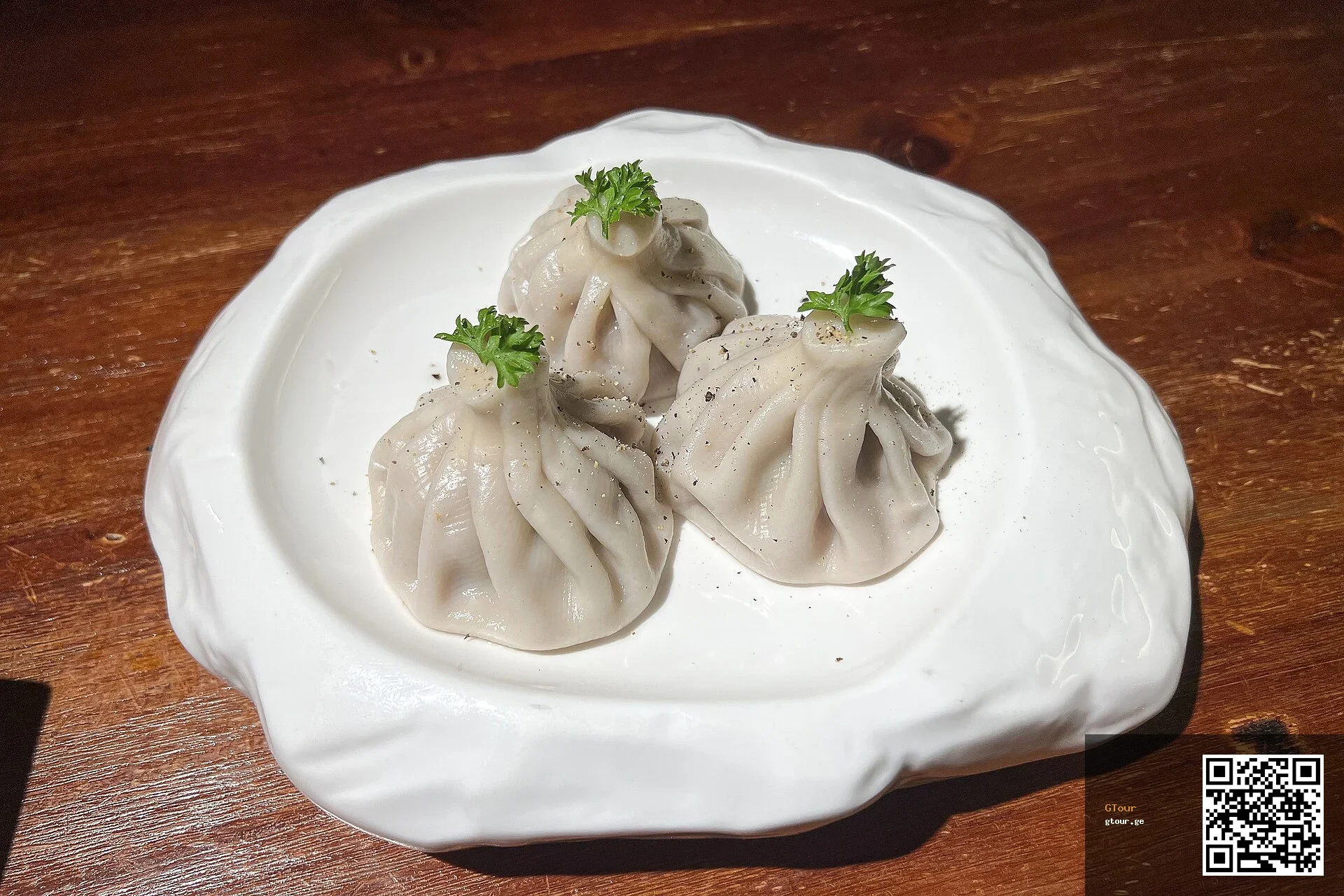
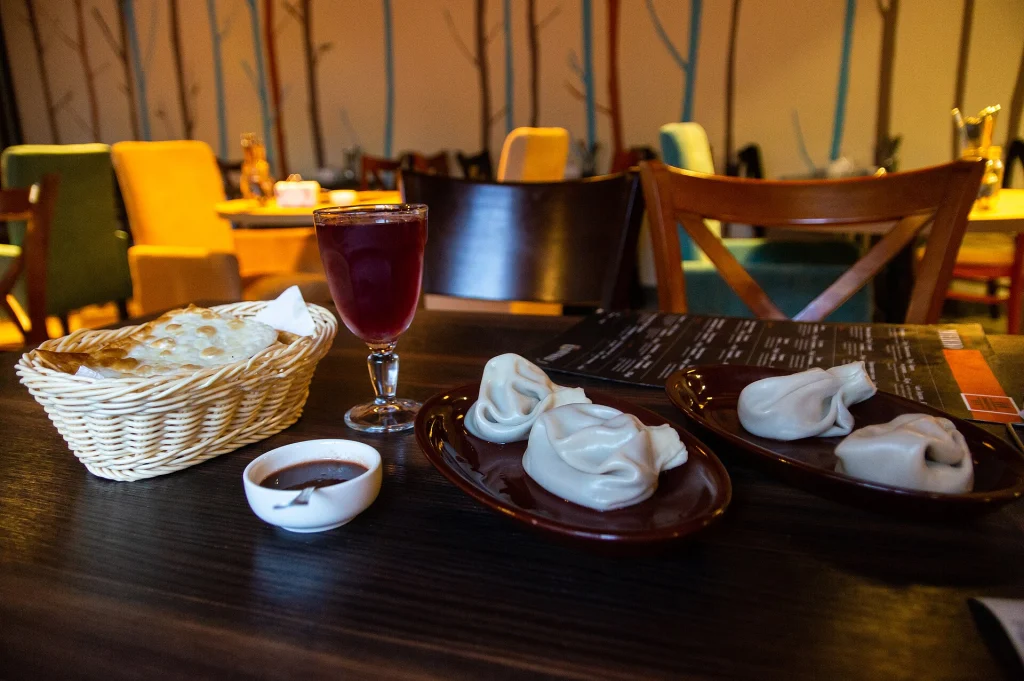
Georgian cuisine is built around bread, cheese, walnuts and grilled or stewed meat. Khinkali (dumplings) and khachapuri (cheese-filled bread) are the two dishes most visitors try first, and lamb grilled over charcoal shares a loose flavour kinship with Xinjiang-style cooking, which some Chinese travellers find a comfortable entry point. Rice-based dishes are far less central than in Chinese cooking, and spicing tends toward walnut, coriander and pomegranate rather than chilli or Sichuan pepper; vegetarians can rely on bean stew (lobio) and fried eggplant dishes but should state dietary restrictions clearly, as meat stock is common in sauces. Chinese restaurants and hot pot venues operate in central Tbilisi, and halal options are available near the city’s historic mosque district for Hui and Uyghur travellers.
Silk Road heritage and wine: the historical draw
Georgia sat on branches of the historic Silk Road connecting Central Asia and China with the Black Sea, and traces of that trade survive in caravanserai architecture and trading towns along the route toward Kakheti. Georgia’s qvevri winemaking method, recognised on UNESCO’s list of intangible cultural heritage, is frequently promoted to Chinese visitors as part of a wine tradition stretching back roughly eight millennia, and Georgia’s National Wine Agency has actively pursued export and tourism links with Chinese markets. Wine-region visits around Sighnaghi and Telavi, often paired with a Tbilisi Old Town walk, are the itinerary most commonly built around this history.
Best time to travel, health and safety
Chinese travellers often plan around Chinese New Year, the early-May holiday and the October National Day holiday, which conveniently line up with Georgia’s winter ski season at resorts such as Gudauri and the mild, scenic shoulder seasons of spring and early autumn, the latter coinciding with the grape harvest (rtveli) in wine country. Summer is warm and busy in Tbilisi and the coast.
No vaccinations are mandatory for entry as a tourist; pharmacies are widely available in cities. Visa-free entry does not include health coverage, so arrange travel insurance before departure, and consult a doctor for personal advice, particularly if you plan high-altitude hiking in Svaneti or Kazbegi. Georgia has a generally low rate of violent crime; standard precautions against pickpocketing apply in crowded areas, and it is sensible to check the Ministry of Foreign Affairs advisory page before travel and to avoid large political gatherings, which occur occasionally in central Tbilisi and are usually peaceful but best observed from a distance. Carrying your hotel name and address written in Georgian helps with taxis, since Mandarin signage is uncommon outside major hotels.
If this guide is part of a trip you are planning, our Rtveli — Wine Harvest in Kakheti (3 Days, September–October) and Racha — Khvanchkara Wine & Mountain Lakes (2 Days) cover the places it describes with a private guide and driver; a GTour travel expert adapts the route to your dates.
Practical summary
- Confirm current visa-free conditions for Chinese passport holders on the Ministry of Foreign Affairs and e-visa sites before booking.
- Book flights via Istanbul, Doha, Dubai or Urumqi connections; check live schedules at the three Georgian international airports.
- Carry an International Driving Permit alongside your Chinese licence if you plan to rent a car.
- Bring a card and cash; do not assume Alipay or WeChat Pay will work everywhere.
- Buy a local SIM or eSIM on arrival; book a Mandarin-speaking guide for multi-day trips.
- Arrange travel insurance in advance; consult a doctor before any high-altitude hiking.
- Check the embassy’s current contact details directly rather than relying on older listings.
Sources
- Georgia Ministry of Foreign Affairs
- Georgia e-Visa portal
- Georgian Road Department
- UNESCO intangible heritage, qvevri winemaking
- Georgia National Wine Agency
- Georgia Travel, Silk Road heritage
- Gudauri ski resort information
Questions this guide does not answer? Write to info@castle.ge or WhatsApp +995 577 41 63 14 — a person in Tbilisi replies. See also our travel services and all guides.
Pork khinkali served at a Georgian restaurant in Beijing, a taste link between the two countries. · Photo: N509FZ / Wikimedia Commons, CC BY-SA 4.0
Been to Georgia? Tell us how it went — the best stories are published here.
Share your tripOne email a week: what changed for travellers in Georgia — rules, roads, flights, seasons — plus one place worth the trip. Written by the GTour desk, no advertising, unsubscribe in one click.
This story across our partner network — ქართულად: შენი დასვენება