

By Nino Gelashvili, Travel News Editor · 26/10/2026
Georgian entry rules have been generous toward Kazakh citizens for years: the standard allowance is visa-free entry with permission to stay up to 365 days per visit, which covers tourism, family visits, business trips and even a first look at long-stay options such as medical treatment or study. That said, Georgia’s visa and immigration rules are set by government decree and can change without much notice, so treat the “one year, no visa” rule as the current baseline rather than a permanent guarantee, and check the official pages before you book, at evisa.gov.ge and the consular section of mfa.gov.ge.
Beyond the paperwork, what should a traveller from Almaty, Astana or Shymkent actually expect? A currency (the lari) you will need cash and cards for, Russian that still works almost everywhere outside the youngest generation, direct flights that make the trip shorter than many domestic Kazakh routes, a driving licence that works for a while but not indefinitely, and a country whose main draws for Kazakh visitors are consistently the Black Sea coast around Batumi, the wine regions of Kakheti, and increasingly, private medical care. This guide covers the practical layer of a Georgia trip for Kazakh citizens: visas, flights, money, language, food, health and the shared history that makes Georgia feel more familiar to Central Asian travellers than many first-time visitors expect.
Visa and entry rules for Kazakh citizens
As of late 2026, Kazakh nationals can enter Georgia without a visa and stay for up to one year, for tourism, business or private visits, under Georgia’s general visa-liberalisation list. This is one of the more generous arrangements Georgia offers, on par with several other Central Asian and Gulf states. If you plan to work, study long-term or bring family members for residency, those categories fall under separate rules administered through Georgia’s Public Service Hall network and are not covered by the simple visa-free stay, so check gov.ge and the residence-permit guidance on mfa.gov.ge before you travel with long-stay intentions.
Two practical notes. First, immigration officers sometimes ask for proof of onward travel, accommodation, or sufficient funds, even for visa-free nationals, so carry a hotel booking and a return or onward ticket. Second, if you have previously spent time in Georgia’s breakaway regions of Abkhazia or South Ossetia via Russia, this can complicate entry from the Georgian-controlled side; the government treats unauthorised entry into those territories as a legal matter, and Georgia’s foreign ministry publishes current guidance at mfa.gov.ge.
Getting there: flights and land routes
Tbilisi International Airport is the main gateway, with Batumi and Kutaisi serving as useful alternatives depending on season and route. Direct flights between Georgia and Kazakhstan have run seasonally and sometimes year-round from both Almaty and Astana, operated at various times by Georgian and Kazakh carriers; frequencies change with demand and season, so verify the live schedule rather than relying on a timetable from a previous year, at tbilisiairport.com. If a direct flight is not running when you book, one-stop connections through Istanbul, Baku or Dubai are common and often no longer in total travel time than a direct seasonal service.
Georgia does not share a land border with Kazakhstan, so overland travel means transiting a third country. The two realistic options are via Azerbaijan, crossing into Georgia at the Red Bridge or Lagodekhi checkpoints, or via Russia through the Verkhny Lars crossing in the north, which has experienced heavy congestion and closures at times in recent years. Anyone planning a land crossing should check current status and any seasonal closures before travelling, via georoad.gov.ge.
Driving in Georgia with a Kazakh licence
Visitors can generally drive in Georgia on a valid foreign national driving licence for a limited period after entry, with an International Driving Permit recommended alongside it, particularly for rental-car companies and for any dealings with traffic police where a document in Latin script avoids confusion. Rules on exactly how long a foreign licence remains valid, and when an IDP becomes mandatory rather than merely advisable, are set in Georgian traffic legislation and have been adjusted before, so check current requirements with the road authority at georoad.gov.ge or with your rental agency before driving. Mountain roads to Gudauri, Kazbegi and Svaneti require winter tyres and caution from November to April; summer driving on the coastal highway to Batumi is straightforward but can be slow in August traffic.
Money, cards and SIM cards
The Georgian lari (GEL) is the only currency used for payment; Kazakh tenge is not exchanged in most banks or exchange bureaus, so bring US dollars or euros to convert, or rely on a bank card. International Visa and Mastercard are accepted at hotels, restaurants and most shops in Tbilisi and Batumi, and ATMs are widespread in cities and tourist towns, less so in remote mountain villages. Cards issued only on the Mir payment system, which some Kazakh banks also support alongside Visa or Mastercard, are not reliably accepted in Georgia because most Georgian banks suspended Mir processing; confirm with your own bank which network is active on your card before relying on it.
For a local SIM, Magticom, Geocell and Beeline (the same Beeline brand active in Kazakhstan, under a separate local operator) all sell prepaid tourist packages at the airport and in city shops with a passport. Data coverage is solid in cities and along the coast, patchier in high mountain areas.
| Topic | Key fact for 2026 | Verify at |
|---|---|---|
| Visa | Visa-free up to 365 days for Kazakh citizens | evisa.gov.ge, mfa.gov.ge |
| Currency | Georgian lari (GEL) only; tenge not exchanged | local banks on arrival |
| Driving licence | Foreign licence valid short-term; IDP advised | georoad.gov.ge |
| Flights | Direct Almaty/Astana routes seasonal, not guaranteed year-round | tbilisiairport.com |
| Language | Georgian official; Russian widely usable | – |
Language and communication
Georgian is the official language and the script, Mkhedruli, is unrelated to Cyrillic or Latin, so street signs can be a genuine barrier at first. The practical reality for Kazakh travellers is that Russian remains widely understood, especially among people over about 35, in hospitality, taxis and medical facilities, a legacy of the shared Soviet-era education system. English has grown quickly in Tbilisi’s tourist districts, in Batumi’s hotels, and among younger Georgians, but it is not universal outside those zones. Downloading an offline translation app and learning a handful of Georgian courtesy words is useful, but Russian will solve most practical situations for this audience more reliably than for travellers from, say, Western Europe.
Food, drink and dietary notes
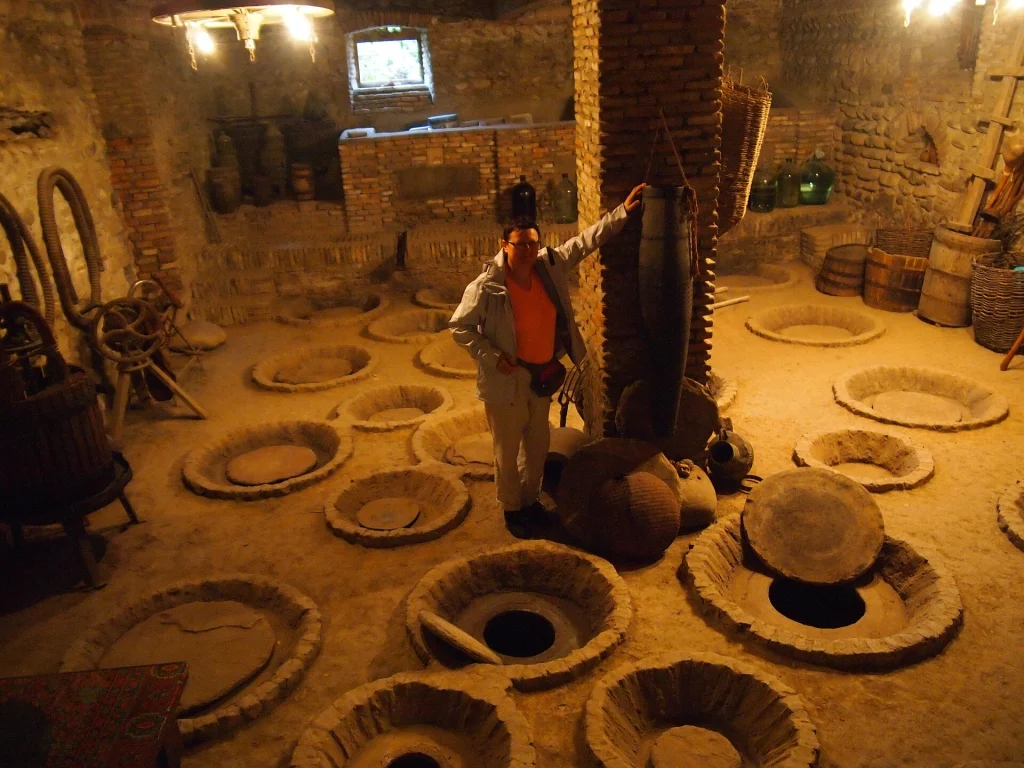
Georgian cuisine centres on bread, cheese, walnuts, fresh herbs and grilled or stewed meat, with khachapuri and khinkali as the two dishes every visitor tries. Pork appears often in Georgian cooking, including in some sausages and stews, so travellers who keep halal or avoid pork for other reasons should ask directly about ingredients; Tbilisi’s Meidan area near the Juma Mosque has restaurants catering to Muslim visitors, and Batumi’s larger hotels are generally used to the request. Wine is central to Georgian hospitality and to the country’s tourism identity, with Kakheth’s qvevri wine tradition recognised by UNESCO as intangible cultural heritage; a toast at a Georgian table is a social ritual, and declining alcohol politely, by citing health or personal choice, is well understood and not considered rude. For details on the wine heritage listing, see ich.unesco.org.
Historical and cultural ties, and when Kazakhs travel
Georgia and Kazakhstan share a Soviet-era administrative and educational history, decades of common institutions, and, going further back, overlapping Silk Road trade routes that ran through the Caucasus toward the Black Sea. That shared background shows up today in practical ways: Kazakh students enrol at Georgian universities including Tbilisi State University, business and trade delegations move between the two capitals, and a modest but visible Kazakh community has grown in Tbilisi and Batumi around tourism, trade and medical travel. Georgian news outlets periodically cover these bilateral trade and cultural exchanges, for example at agenda.ge and civil.ge.
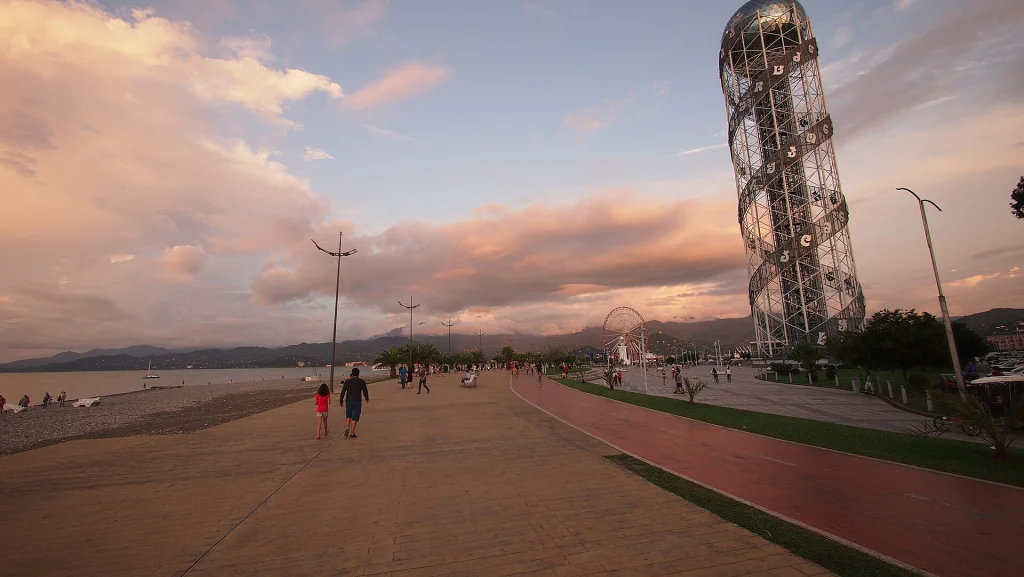
Kazakh travel patterns to Georgia follow a few predictable peaks. Summer, from June through August, draws the largest numbers to the Black Sea coast, Batumi’s boulevard and Adjara‘s hills. Winter school holidays around the New Year, and again in February, bring skiers to Gudauri and Bakuriani, resorts that have become familiar to Kazakh winter-sports travellers thanks to relatively short flight times compared with European alternatives. The Nauryz holiday in March is a quieter window for Georgia tourism generally, and travellers who come then often find lower prices and fewer crowds in Tbilisi and Kakheti.
Health, insurance and safety
Private travel insurance with medical coverage is strongly recommended for any trip to Georgia, since public healthcare access for foreign visitors is limited and private clinics, while generally good quality in Tbilisi and Batumi, charge for treatment upfront. Georgia has also built a reputation in recent years as a destination for medical tourism from the wider region, including dental work, cosmetic procedures and reproductive medicine, often at lower cost than in Western Europe; anyone considering treatment should research the specific clinic’s licensing and get an independent medical opinion before travelling, rather than booking on price alone, and a doctor at home should be consulted for any personal treatment decision. General information on Georgia’s health system and public advisories is published by the National Center for Disease Control and Public Health at ncgh.ge.
Georgia is, by regional standards, a safe destination for tourists, with petty crime against visitors uncommon in central Tbilisi and Batumi. The clearest safety caveat specific to this itinerary is the breakaway regions of Abkhazia and South Ossetia, which Georgia’s government and most foreign ministries, including Georgia’s own, advise against entering without authorisation from Tbilisi; current guidance is on mfa.gov.ge. Mountain travel in winter carries avalanche and road-closure risk that is worth checking locally before setting out, particularly on the Gudauri and Kazbegi routes.
If this guide is part of a trip you are planning, our Rtveli — Wine Harvest in Kakheti (3 Days, September–October) and Racha — Khvanchkara Wine & Mountain Lakes (2 Days) cover the places it describes with a private guide and driver; a GTour travel expert adapts the route to your dates.
Practical summary
- Visa: visa-free stay up to one year for Kazakh citizens as of 2026; confirm current rules at evisa.gov.ge and mfa.gov.ge before booking.
- Flights: direct Almaty and Astana routes exist but run seasonally; check live schedules at tbilisiairport.com and have a one-stop backup via Istanbul or Baku.
- Land border: no direct Georgia-Kazakhstan border; transit via Azerbaijan or Russia, checking crossing status at georoad.gov.ge.
- Driving: Kazakh licence valid short-term, International Driving Permit recommended; verify duration with georoad.gov.ge.
- Money: carry cards plus euros or dollars for cash; tenge is not exchangeable; confirm your card network works, since Mir-only cards are unreliable.
- Language: Russian is widely understood outside younger generations; Georgian script is distinct and worth a translation app.
- Food: ask about pork in dishes if you keep halal; Tbilisi’s Meidan area has Muslim-friendly options.
- Health: buy travel insurance, verify any medical-tourism clinic independently, and see a doctor at home before major procedures abroad.
- Safety: avoid unauthorised travel into Abkhazia or South Ossetia; mountain roads need winter preparation from November to April.
Sources
- Visa and entry information
- Consular services and travel advisories
- Road and border crossing authority
- Georgian wine intangible heritage listing
- Georgia news on bilateral and trade ties
- Georgia news and analysis
Questions this guide does not answer? Write to info@castle.ge or WhatsApp +995 577 41 63 14 — a person in Tbilisi replies. See also our travel services and all guides.
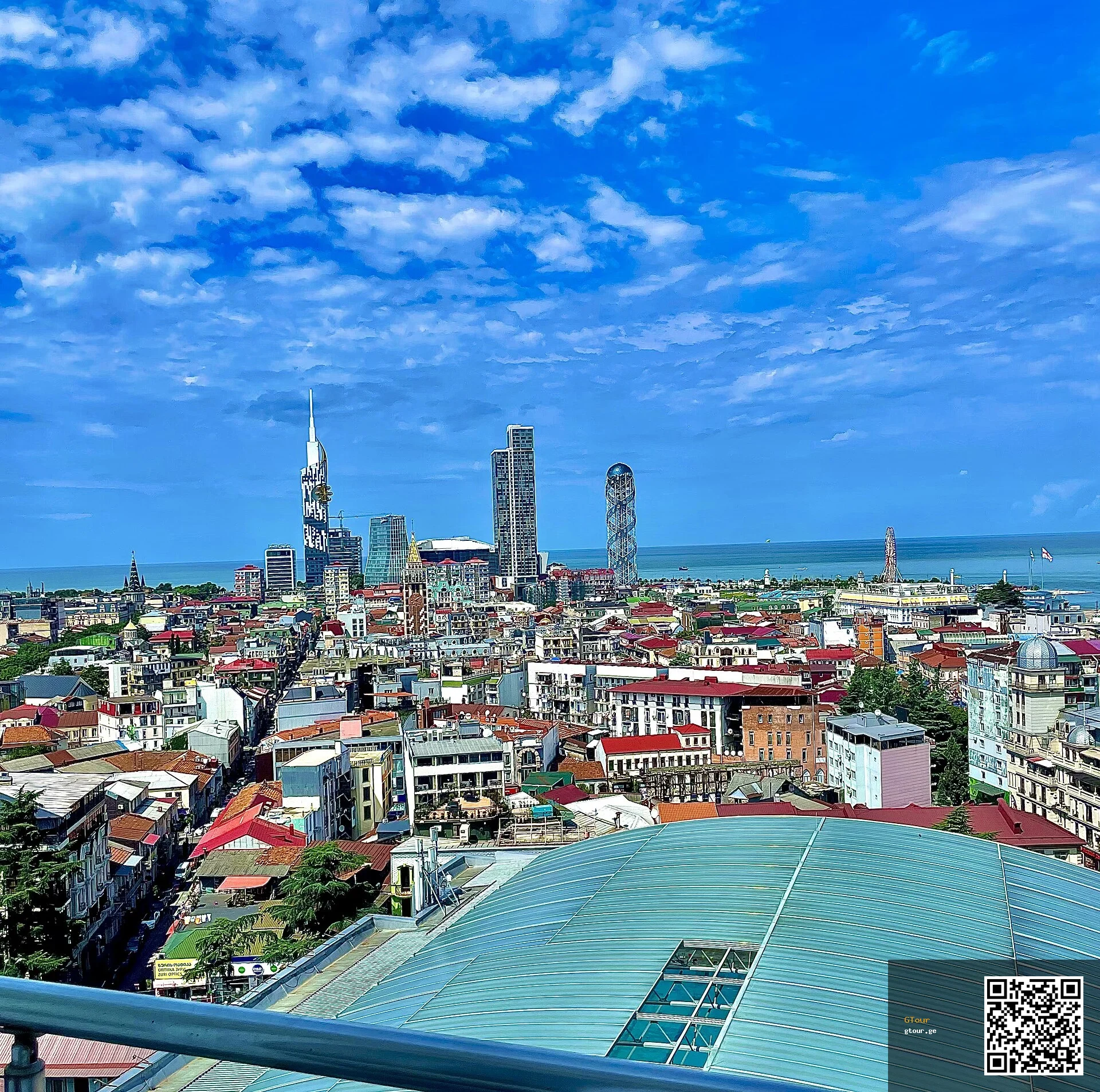
Batumi's modern skyline and Black Sea coastline, the city's main draw for Kazakh visitors. · Photo: AlexandreAssatiani / Wikimedia Commons, CC BY 4.0
Been to Georgia? Tell us how it went — the best stories are published here.
Share your tripOne email a week: what changed for travellers in Georgia — rules, roads, flights, seasons — plus one place worth the trip. Written by the GTour desk, no advertising, unsubscribe in one click.