


By Nino Gelashvili, Travel News Editor · 26/10/2026
Short answer: yes, Georgia is one of the easiest long-haul-feeling trips a Polish citizen can take. As an EU passport holder you currently do not need a visa for tourism stays, the lari is simple to use with a Polish bank card, and Wizz Air’s direct routes to Kutaisi make a weekend or week-long trip realistic from several Polish cities without connecting through Istanbul or Warsaw. Georgian cuisine, wine culture and mountain scenery reward a week to ten days, and the country’s small but historic Polish connection (exiled nobility, a Catholic church still called “the Polish church,” and growing people-to-people ties since 1992) gives the trip an extra layer for anyone curious about it.
That said, visa policy, airline routes and driving-licence recognition are exactly the kind of rules that get adjusted year to year, so this guide gives the 2026 picture as conservatively as possible and tells you where to double-check before you book. Where a detail could plausibly change by the time you travel, we say so and point to the official source rather than guessing.
Visa and stay rules for Polish citizens
Poland is an EU member state, and Georgia’s standing policy has for several years allowed citizens of EU countries to enter without a visa and stay for tourism, business or family visits for up to one year per calendar year. This is a generous rule by regional standards, but it is set by Georgian government decree and can be amended, shortened or made conditional without much notice, so treat “one year” as the 2026 baseline rather than a guarantee for your specific trip. Before booking non-refundable flights or long stays, check the current rule and any required documentation on Georgia’s official consular information portal, geoconsul.gov.ge, and the e-visa portal evisa.gov.ge, which also explains who does need a visa (for example, those arriving via unusual routes or planning to work or study). A valid Polish biometric passport is the standard document; an EU national ID card is not accepted for entry into Georgia, unlike travel within the EU/Schengen area.
Getting there: flights and land borders
For most Polish travellers the practical choice is between a direct low-cost flight to Kutaisi in western Georgia or a one-stop connection into Tbilisi.
| Route | Typical operator | Notes |
|---|---|---|
| Katowice / Gdańsk to Kutaisi | Wizz Air | Seasonal and schedule changes happen; confirm current days and months before booking |
| Warsaw to Tbilisi | One-stop via Istanbul, Warsaw, Vienna or Kyiv-region hubs, or seasonal direct service | Direct Warsaw–Tbilisi service has varied by season and year; check airline sites directly |
| Kraków to Tbilisi or Kutaisi | Varies by season | Low-cost and legacy carriers both appear and drop routes; verify before travel |
Because budget-airline networks to the Caucasus change between seasons, always confirm live schedules on the departure and arrival airport sites rather than relying on last year’s timetable: kutaisiairport.com, tbilisiairport.com and, for a Batumi-side arrival paired with an Adjara stay, batumiairport.com. Land entry is also possible if you are already travelling overland through Turkey, most commonly via the Sarpi crossing on the Black Sea coast near Batumi; this is a realistic option for Polish travellers doing a longer Balkans-Turkey-Caucasus road trip rather than a direct Poland-Georgia route, since Georgia shares no border with Poland or any EU state.
Driving in Georgia with a Polish licence
A standard Polish driving licence is generally usable for driving a rental car in Georgia for the duration of a short tourist stay, in line with Georgia’s recognition of licences issued under international road conventions. Rules on exactly how long a foreign licence remains valid without a Georgian or international equivalent, and whether an International Driving Permit is advisable alongside it, are set in Georgian traffic legislation and can be adjusted, so check current wording via Georgia’s legislative herald at matsne.gov.ge or ask your rental company directly before relying on it for a long self-drive trip into the mountains. Mountain roads to places like Svaneti, Kazbegi or Tusheti are steep, narrow and occasionally unpaved; a Polish driver used to EU-standard roads should budget more time than GPS suggests and consider a 4×4 for high-altitude routes outside the main May-to-October season.
Money, cards and SIM cards
Georgia’s currency is the lari (GEL). Contactless and chip cards are accepted in the great majority of Tbilisi, Batumi and Kutaisi hotels, restaurants and supermarkets, and ATMs are widely available in cities and larger towns. Carrying some cash lari is still sensible for rural guesthouses, small family-run restaurants, marshrutka minibuses and market stalls, where card machines are less common. Polish złoty is not exchanged directly in most Georgian bank branches; euros or US dollars convert more easily if you prefer to bring cash rather than rely on card withdrawals. A local prepaid SIM (Magti, Geocell or Beeline) is inexpensive and quick to buy at the airport or in town with your passport, and gives better coverage in mountain regions than relying solely on EU roaming, which Georgia falls outside of as a non-EU country.
Language: Georgian, Russian, English and Polish-speaking guides
Georgian, written in its own unique alphabet, is the state language, and Georgian signage dominates outside tourist zones. Russian is still widely understood, particularly by the older generation and in regional towns, a legacy of the Soviet period. English has expanded fast in Tbilisi, Batumi and Kutaisi tourism businesses over the past decade but is not universal in villages. Polish is not spoken as a matter of course anywhere in Georgia; if a guide advertises “Polish-speaking,” confirm in advance whether this means fluent Polish or a guide working through Russian or English with some Polish phrases. For a trip that depends on detailed cultural or historical explanation, booking an English- or Russian-fluent licensed guide and translating as needed is usually more reliable than searching specifically for Polish-language service.
Food and dietary notes
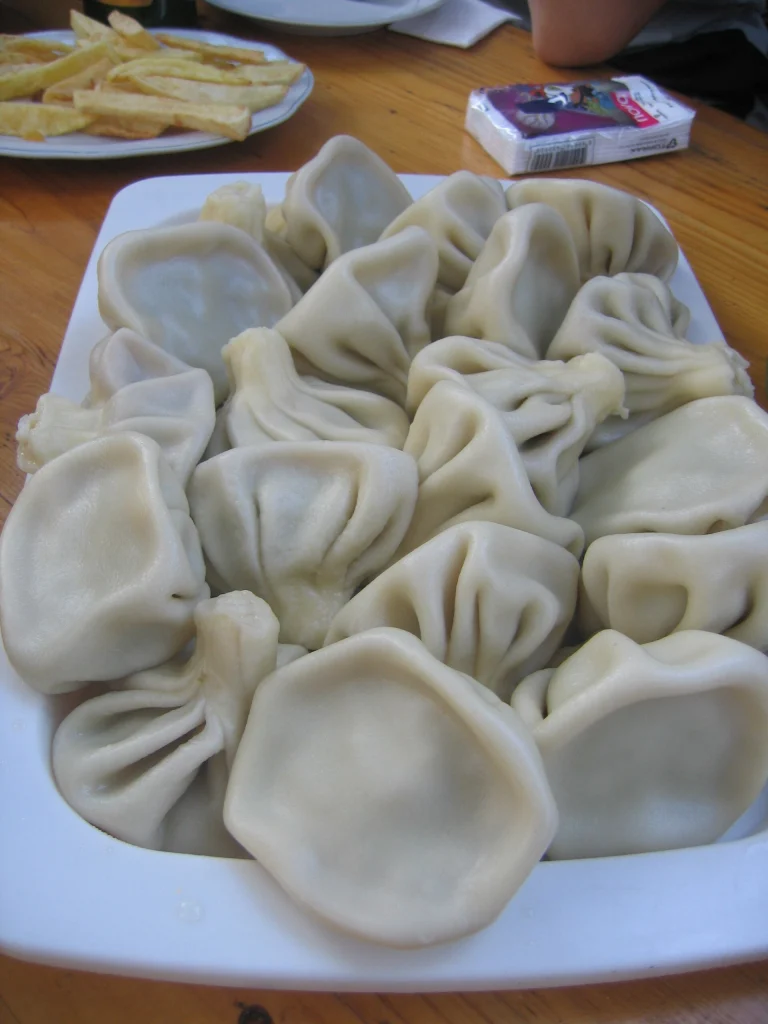
Georgian food centres on bread, cheese, walnuts, pomegranate, fresh herbs and slow-cooked meat, with khachapuri (cheese-filled bread), khinkali (dumplings), and qvevri-fermented wine as the obvious entry points. Compared with Polish cuisine, expect more use of fresh coriander, blue fenugreek (utskho suneli), walnut sauces and pomegranate molasses, and far less dairy fermentation beyond cheese and matsoni yoghurt. Vegetarian travellers eat well, since bean, aubergine, mushroom and cheese dishes are standard rather than an afterthought; vegan and gluten-free options exist in Tbilisi’s newer restaurants but are rarer in rural guesthouses, where a home-cooked supra meal is built around what the host has on hand. If you keep a specific diet, saying so clearly and early (in English or via a guide) avoids a table arriving full of cheese bread and cured meat by default.
Polish-Georgian ties: history, church and culture
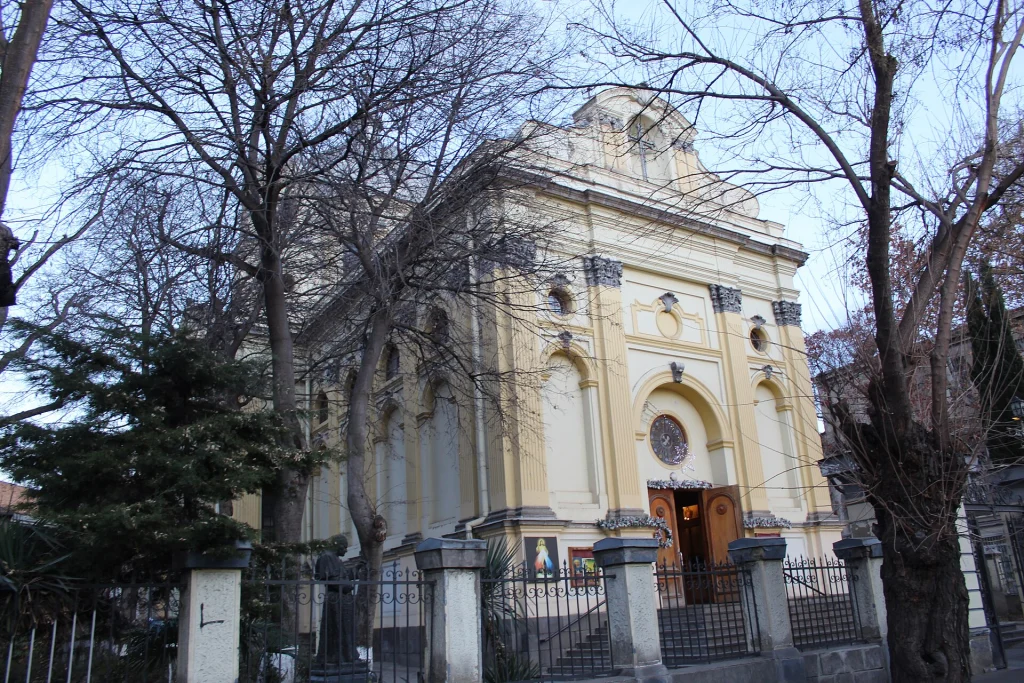
The connection between Poland and Georgia is older than most visitors expect. In the nineteenth century, Polish nobility and officers exiled by the Russian Empire after the uprisings of 1830 and 1863 settled in Tbilisi in meaningful numbers, working as architects, engineers, doctors and military officers in what was then Russian-administered Tiflis. The Catholic church of Saints Peter and Paul, built in the later nineteenth century, is often described locally as the Polish church because of the exile community that worshipped and is commemorated there; it was closed and repurposed during the Soviet period and has since returned to religious use. Mass is held in Georgian and Latin, with occasional Polish on major feast days; schedules change seasonally, so confirm current Mass times with the parish directly rather than relying on an old timetable. Modern ties are formal and active: Poland was among the countries that recognised Georgia’s independence in the early 1990s, maintains an embassy in Tbilisi, and has consistently supported Georgia’s European integration path. For current embassy contact details, use the Georgian Ministry of Foreign Affairs’ list of accredited missions at mfa.gov.ge rather than an outdated address found elsewhere online.
Holidays, seasons and when Poles tend to travel
Polish travel to Georgia clusters around familiar windows: the May long-weekend period, the July-August summer holidays, and a smaller wave around Christmas and New Year for those seeking mountain snow rather than a beach. May to June and September to early October give the most reliable combination of mild weather, open mountain roads and lower prices than peak August, when Georgian domestic tourism to the coast and the Caucasus also peaks and accommodation in Batumi and Svaneti fills up. Winter (December to March) suits skiers heading to Gudauri or Bakuriani but is a poor season for high mountain trekking, since many Tusheti and Svaneti routes close.
Health, insurance and safety notes
No special vaccinations are mandatory for entry from Poland, but routine immunisations should be up to date and a pre-travel check is sensible for anyone with existing conditions or planning high-altitude trekking; discuss this with your GP or a travel medicine clinic, not with general online advice. Georgia’s National Center for Disease Control and Public Health publishes current health guidance at ncgh.ge. Travel insurance is strongly advised and should explicitly cover mountain trekking, winter sports and medical evacuation if you plan to go beyond city sightseeing, since the EU’s European Health Insurance Card, which Polish citizens carry, has no validity in non-EU Georgia. Day-to-day safety for Polish travellers is generally good by regional standards; the main practical risks are road conditions in the mountains, altitude on multi-day treks, and the usual city-centre pickpocket caution in crowded tourist areas of Tbilisi and Batumi rather than any threat specific to Polish nationality. For border-region or political updates, Georgia’s own Ministry of Foreign Affairs and your own government’s travel advisory are the two sources to check shortly before departure.
If this guide is part of a trip you are planning, our Martvili & Okatse Canyons + Prometheus Cave — Day Trip from Kutaisi and Kutaisi & Western Georgia — 3 Days cover the places it describes with a private guide and driver; a GTour travel expert adapts the route to your dates.
Practical summary
- Check current visa-free stay rules for EU citizens on geoconsul.gov.ge before booking; policy can change year to year.
- Fly direct Wizz Air to Kutaisi from select Polish cities, or one-stop into Tbilisi; confirm live schedules on the airport sites, not old timetables.
- A Polish driving licence generally works for short rentals; verify current rules via matsne.gov.ge or your rental company, especially for longer stays.
- Bring a card plus some cash lari; buy a local SIM on arrival since EU roaming does not apply in Georgia.
- Expect Georgian and Russian more than English outside main tourist areas; Polish-speaking guides usually work via English or Russian.
- Visit Tbilisi’s Peter and Paul church for the Polish exile history; confirm Mass times with the parish directly.
- Travel May-June or September-October for the best weather-to-crowd balance; book ahead for August and ski season.
- Arrange travel insurance covering mountain activities and evacuation, since Georgia is outside EU health-card coverage.
Sources
- Georgia e-visa portal
- Consular information for travel to Georgia
- Ministry of Foreign Affairs of Georgia, diplomatic missions
- Georgian legislative herald, traffic and licence rules
- Georgian National Tourism Administration
- Georgia official travel portal
Questions this guide does not answer? Write to info@castle.ge or WhatsApp +995 577 41 63 14 — a person in Tbilisi replies. See also our travel services and all guides.
A Wizz Air aircraft at Kutaisi International Airport, a key link for Polish travellers. · Photo: Giorgi Balakhadze / Wikimedia Commons, CC BY-SA 4.0
Been to Georgia? Tell us how it went — the best stories are published here.
Share your tripOne email a week: what changed for travellers in Georgia — rules, roads, flights, seasons — plus one place worth the trip. Written by the GTour desk, no advertising, unsubscribe in one click.