Archives


Akhalkalakoba in Georgia: dates, meaning and how to experience it
Next dates
11 September 2027 – 12 September 2027 (to be confirmed) · Akhalkalaki, Samtskhe-Javakheti. See the full events calendar and Georgia today for roads and weather.
What it is
Akhalkalakoba is the municipal “city day” of Akhalkalaki, the administrative center of Akhalkalaki Municipality in the Samtskhe-Javakheti region of southern Georgia. The name follows a familiar Georgian pattern: “Akhalkalaki” itself means “new town” or “new city” (akhali, new; kalaki, city/town), and the suffix “-oba” turns a place or saint’s name into the name of its feast day, exactly as in Mtskhetoba, Alaverdoba or Tbilisoba. Akhalkalakoba, then, is simply “the day of Akhalkalaki” — a day set aside by the town and its municipality to mark civic identity rather than a saint’s commemoration or an ancient religious observance.
The holiday is celebrated by residents of the town and the wider Akhalkalaki Municipality, whose population is predominantly ethnic Armenian, together with visiting relatives, Georgian officials from Tbilisi and the regional capital Akhaltsikhe, and travelers drawn by the Javakheti plateau’s fortresses, lakes and cool highland air. Unlike older Georgian Orthodox feast days tied to a fixed saint’s commemoration, Akhalkalakoba belongs to a modern layer of Georgian festival life: municipally organized “city days” that have proliferated since the 1990s and 2000s as local governments promote tourism, civic pride and cultural heritage in a single annual event.
Historical background
- 9th–10th century — Javakheti appears in medieval Georgian chronicles as a province within the lands of the Bagrationi princes of Tao-Klarjeti, later absorbed into the unified Kingdom of Georgia.
- 12th–13th century — A fortress at Akhalkalaki is attested as a Georgian stronghold guarding the southern approaches of the kingdom, part of the Samtskhe (Meskheti) march.
- 1579 — Following Ottoman–Safavid wars, the Principality of Samtskhe, including Akhalkalaki, passes under Ottoman control and is administered as part of the Akhaltsikhe pashalik.
- 1828 — During the Russo-Turkish War, the Akhalkalaki fortress is captured by the Imperial Russian army under General Ivan Paskevich.
- 1829 — The Treaty of Adrianople formally transfers Akhalkalaki and Akhaltsikhe to the Russian Empire; Armenian families from the Erzurum and Kars districts of the Ottoman Empire resettle across Javakheti in the following decades.
- Late 19th century — Akhalkalaki grows as a district town of Tiflis Governorate, its population becoming predominantly Armenian.
- 1930 — Soviet administrative reform establishes Akhalkalaki as the center of its own raion within the Georgian SSR.
- 1995 — Post-Soviet Georgia’s administrative reorganization creates the Samtskhe-Javakheti region, with Akhalkalaki as one of its six municipalities.
- 2007 — The Russian military base long stationed at Akhalkalaki closes, as Russian forces complete withdrawal from Georgian territory under international commitments.
- 2017 — The Baku–Tbilisi–Kars railway opens, passing through the Akhalkalaki area and linking the Javakheti plateau more directly to regional rail networks.
Few towns in Georgia carry as many successive layers of history in so small a footprint as Akhalkalaki. A Georgian frontier fortress became an Ottoman outpost, then a Russian garrison town repopulated largely by Armenian refugees fleeing violence in Ottoman Anatolia, then a closed Soviet military district, and finally a modern Georgian municipal center negotiating a bilingual, bicultural identity. The fortress that once gave the “new city” its name still stands, in ruined but recognizable form, above the modern town and the Toporavani river valley.
Akhalkalakoba, as a civic holiday, is a product of this layered history rather than a continuation of any single medieval rite. It sits alongside similar city-day festivals across Georgia — Batumoba, Akhaltsikhoba, Borjomoba, Tbilisoba — through which post-Soviet local governments stage an annual, secular celebration of place, open to residents of every background and, increasingly, to visitors touring the Samtskhe-Javakheti highlands.
Meaning and traditions
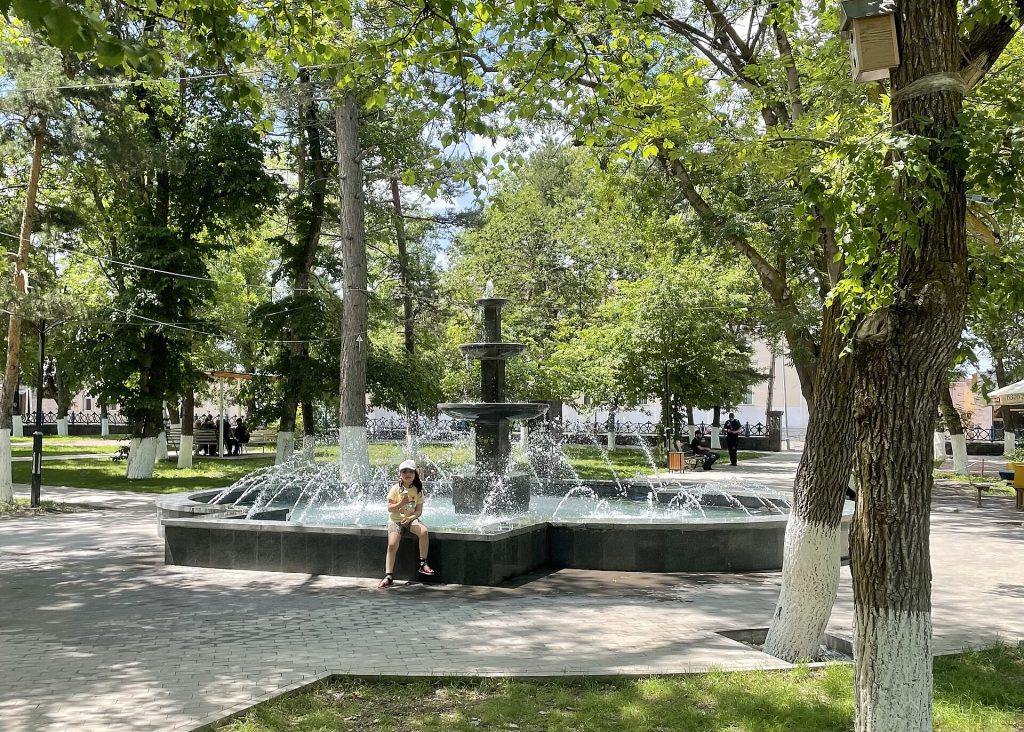
Akhalkalakoba centers on the town’s central square and the open ground beneath the fortress walls, where the municipality (Akhalkalakis munitsipaliteti) erects a stage for concerts, honors long-serving citizens and local institutions, and opens craft and food stalls. Programs typically include Georgian and Armenian folk ensembles performing in turn, sporting competitions such as football tournaments and traditional wrestling (chidaoba), and an evening concert closing with fireworks.
Food stalls reflect the town’s dual heritage: Georgian khachapuri and Javakheti’s own firm, salty cheese (Javakhuri kveli) are sold beside Armenian dishes such as khorovats (grilled meat) and lavash flatbread. A visitor might hear “gilotsavt qalaqis dges” (congratulations on city day) from Georgian speakers and “Shnorhavor” from Armenian speakers in the same crowd — a small but telling sign of Akhalkalaki’s bilingual daily life. Markets also sell Javakheti potatoes and dairy products, staples of the plateau’s cool, high-altitude agriculture.
There is no single liturgical rite attached to the day, no fixed procession and no canonical hymn; it is a civic rather than church holiday, though residents may separately mark the occasion with family gatherings and visits to local churches, both Georgian Orthodox and Armenian Apostolic, which stand close together in the town.
When it happens
Akhalkalakoba has no fixed date tied to a saint’s day or historical anniversary. By established local practice, the municipality holds the festival on a weekend in the first half of September, choosing the exact dates each year according to the harvest calendar, weather and the availability of performers; the dates are confirmed publicly by Akhalkalaki City Hall closer to the event. The 2026 edition took place in September 2026; the next edition is provisionally set for 11–12 September 2027, subject to confirmation.
Akhalkalakoba is not a national public holiday. Banks, courts and government offices across Georgia operate normally, and only the host municipality adjusts local school and office schedules around the main day of events. Visitors planning a trip specifically to see the festival should check with the municipality or a local tour operator in the weeks beforehand, since the exact weekend can shift.
Where to experience it
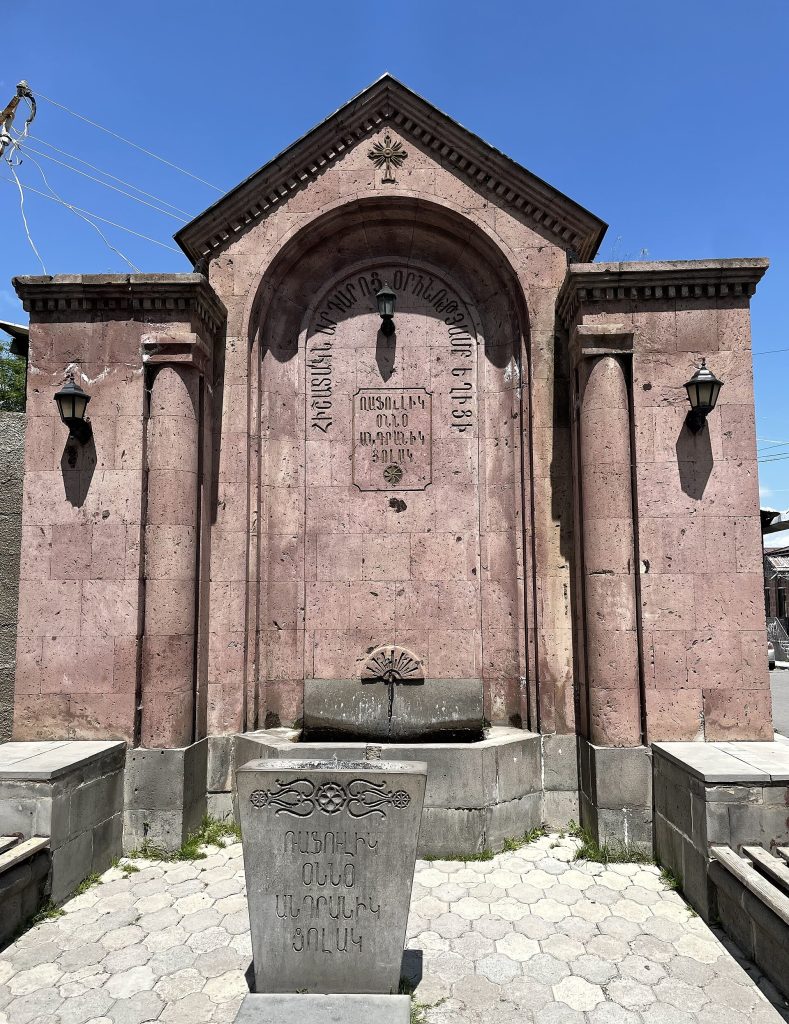
The festival unfolds around Akhalkalaki’s central square and the grounds below the town’s medieval fortress, with the main stage, food stalls and sports grounds active from late afternoon into the evening, when temperatures on the 1,700-plus-meter Javakheti plateau drop quickly even in September. Visitors are welcome to walk the fortress ruins, browse craft stalls selling Javakheti felt and dairy products, and watch the folk performances from the square.
Those visiting Akhalkalaki’s churches — Georgian Orthodox or Armenian Apostolic — should dress modestly, keep voices low during services, and ask before photographing worshippers or interiors. At private homes, it is customary to bring a small gift, such as sweets or wine, if invited to a family table during the festival period.
Travel with GTour
The Borjomi, Bakuriani & Rabati — 2 Days route through Samtskhe-Javakheti can be extended on its second day toward Akhalkalaki, while the Vardzia Cave City — Day Trip passes through the same region and can be scheduled around 11–12 September to coincide with Akhalkalakoba. A GTour travel expert will design the itinerary and timing around your travel dates.
Did you know
- Akhalkalaki means “new city” in Georgian, even though a fortress has stood on the site since at least the Middle Ages.
- The town is the administrative center of Akhalkalaki Municipality, one of six municipalities making up the Samtskhe-Javakheti region.
- Akhalkalaki sits on the Javakheti volcanic plateau at over 1,700 meters above sea level, among the highest municipal centers in Georgia.
- A majority of Akhalkalaki’s population is ethnic Armenian, largely descended from settlers who arrived from the Erzurum region of the Ottoman Empire after 1829.
- A Russian military base stood at Akhalkalaki for decades; it closed in 2007 as Russian forces completed their withdrawal from Georgia.
Practical tips for visitors
Akhalkalaki lies roughly 200 kilometers from Tbilisi, reached by road via Borjomi and Akhaltsikhe in about three and a half to four hours; there is no direct passenger train, though the Baku–Tbilisi–Kars line passes through the wider area. Bring warm layers even in September, since the Javakheti plateau’s altitude brings cold evenings regardless of daytime sun. Roads to outlying sights, such as the fortress at Khertvisi or the cave town of Vardzia, are paved but winding, so a rental car or a private driver is advisable; GTour arranges a private driver or guide for the day. Confirm the current year’s festival dates with the municipality or a local operator before booking accommodation, as they are set only a few months in advance.
Combine it with
Akhalkalakoba pairs naturally with a wider tour of the region’s fortresses and monasteries in Samtskhe-Javakheti, including Vardzia and Khertvisi, or with a return route through Kartli toward Tbilisi via Borjomi.
Questions travellers ask
Is Akhalkalakoba a public holiday in Georgia?
No. It is a local civic festival organized by Akhalkalaki Municipality; national offices, banks and schools elsewhere in Georgia operate as usual.
What language will I hear at the festival?
Both Georgian and Armenian are widely spoken in Akhalkalaki, and the festival program, signage and conversation typically move between the two languages.
How do I get to Akhalkalaki from Tbilisi?
The drive takes roughly three and a half to four hours via Borjomi and Akhaltsikhe. There is no direct passenger rail service to the town, though the Baku–Tbilisi–Kars railway passes through the surrounding area.
Is Akhalkalaki safe and welcoming to visitors?
Yes. It is a quiet rural municipal center with a long tradition of multi-ethnic coexistence, and visitors are generally welcomed warmly, especially during the festival.
What else is worth seeing near Akhalkalaki?
The cave monastery of Vardzia, the fortress of Khertvisi, and the lakes of the Javakheti plateau, part of a wetland area of regional conservation importance, are all within a short drive.
When will the 2027 dates be confirmed?
The municipality typically finalizes the exact September weekend only a few months in advance, so travelers should check closer to the date rather than booking rigidly around 11–12 September.
What should I pack?
Layers are essential; the Javakheti plateau’s altitude means cool evenings and occasional wind even when Tbilisi is warm in September.
Can Akhalkalakoba be combined with other September festivals in Georgia?
September overlaps with Kakheti‘s grape-harvest festival season (rtveli), so travelers touring the country in early autumn can often combine a visit to Akhalkalaki with harvest events further east.
Sources
- Kvira.ge, regional news report
- Kvira.ge, regional news report
- Akhalkalakoba — Akhalkalaki City Day
- Georgia Travel – Samtskhe-Javakheti region overview
- Agenda.ge – Akhalkalaki news tag
- Civil.ge – Samtskhe-Javakheti tag
- Interpressnews.ge – Akhalkalaki search results
- 1TV.ge – Akhalkalaki news
Plan your Georgia
Want to be in Georgia for Akhalkalakoba? A GTour travel expert designs the itinerary around it and calls you back.
The main square of Akhalkalaki, the town hosting the September city-day festivities. · Photo: Sandro Shanidze / Wikimedia Commons, Public domain
This page in other languages: Русский
GTour conciergeAsk anything about Georgia · we reply within hours