Archives


Kolkhoba in Georgia: dates, meaning and how to experience it
Next dates
18 September 2027 – 19 September 2027 (to be confirmed) · Sarpi, Khelvachauri, Adjara. See the full events calendar and Georgia today for roads and weather.
What it is
Kolkhoba (კოლხობა) takes its name from Kolkheti, the Georgian word for ancient Colchis, combined with the suffix -oba, the same ending used for Georgian feast-days such as Mariamoba or Alaverdoba. The word therefore means something close to “the feast of Colchis” or “Colchian gathering” — a name chosen to anchor the festival to the ancient Black Sea kingdom from which the local Laz population traces its cultural memory, including the Greek myth of the Golden Fleece that the Argonautica places on this coast.
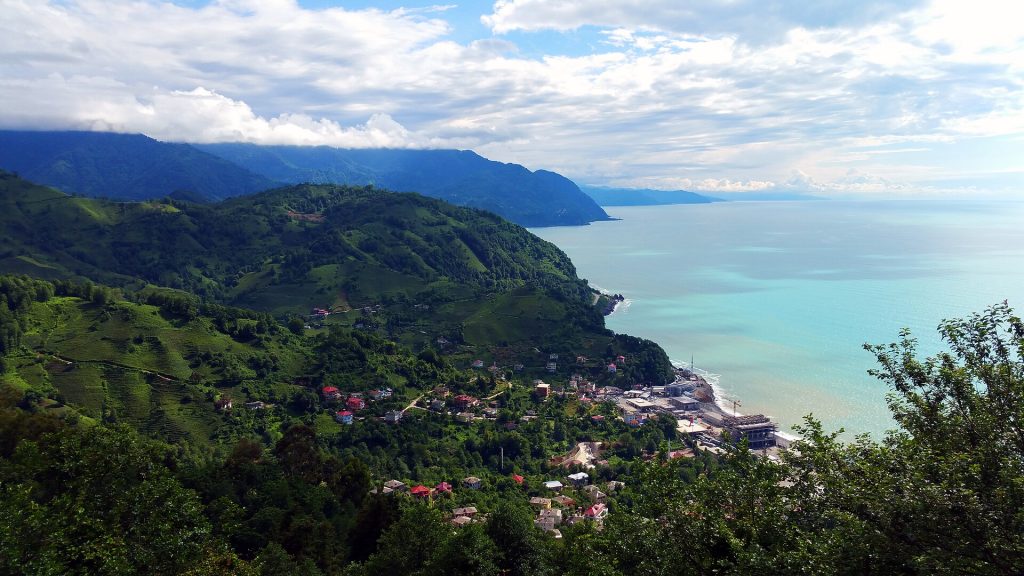
The festival belongs to the Laz, a Kartvelian-speaking people indigenous to the southeastern Black Sea littoral, whose Georgian-side community is concentrated in and around Sarpi, a village of Khelvachauri municipality in Adjara that sits directly on the border with Turkey. Kolkhoba is celebrated by local Laz families, by Georgians from across Adjara who attend as guests, and often by visiting relatives and performers from the much larger Laz community of northeastern Turkey, the historic region once called Lazistan.
Historical background
- 8th–6th century BC — Greek sources place the kingdom of Colchis along this stretch of coast, later woven into the myth of Jason and the Golden Fleece, as recorded in the Argonautica tradition.
- 6th century AD — Byzantine and Sassanid Persian armies fight the so-called Lazic War over control of the local kingdom of Lazica (Egrisi), described by the historian Procopius.
- 1878 — The Treaty of Berlin moves the Russian–Ottoman frontier, bringing Batumi and part of the Laz-inhabited coast under Russian administration while villages further south remain Ottoman.
- 1921 — The Treaty of Kars fixes the Soviet–Turkish border through Sarpi itself, dividing Laz families and farmland between Soviet Georgia and Turkey for most of the 20th century.
- 1944 — The closed Soviet border regime tightens further, and for decades relatives on either side of Sarpi can see but not visit one another.
- 1988 — According to Soviet-era press accounts, the Sarpi crossing opens briefly to pedestrian traffic, allowing divided Laz families to reunite publicly for the first time in half a century.
- 1979 — Local organisers establish Kolkhoba in Sarpi as an annual celebration of Laz language, dance and craft, within the late-Soviet revival of regional folk festivals.
- 1991 — Georgian independence; the festival continues under local and later municipal sponsorship as part of Adjara’s cultural calendar.
- 2010s–present — Khelvachauri municipality folds Kolkhoba into its broader “Khelvachauri Days” programme, holding both events together in late September with municipal support.
The Laz language is the closest living relative of Mingrelian; together the two form the Zan branch of the Kartvelian (South Caucasian) family, distinct from but related to Georgian. Linguists who catalogue endangered languages list Laz among the region’s vulnerable tongues, spoken by a diminishing number of people on the Georgian side and by a larger, though also declining, population across the border in Turkey’s Rize and Artvin provinces. Kolkhoba emerged in this context not as a religious feast but as a deliberate act of cultural preservation, staged in the one Georgian village where Laz identity remains visibly and officially marked.
Sarpi’s position astride an international border gives the festival an unusual texture: it is at once a local harvest-season gathering and, informally, a reunion point for an ethnic group split by twentieth-century geopolitics. The boat procession that opens the day recalls the fishing and seafaring economy of the Colchian coast, while the dances and songs performed afterward are presented explicitly as survivals, or revivals, of Colchian-Laz heritage rather than as part of the Georgian Orthodox liturgical calendar that governs most other Georgian feast-days.
Meaning and traditions
The day typically opens with a flotilla of small decorated fishing boats on the bay at Sarpi, a nod to the Laz community’s traditional livelihood from the Black Sea. Onshore, performers dance the khorumi, a circular male dance found across Adjara and the Laz lands that is widely interpreted as a stylised reenactment of a war formation, accompanied by the chiboni (a local bagpipe) and panduri. Laz-language songs and recitations are performed alongside Georgian ones, a rare public platform for Lazuri nena, the Laz tongue, which has no official status and is rarely heard outside family settings.
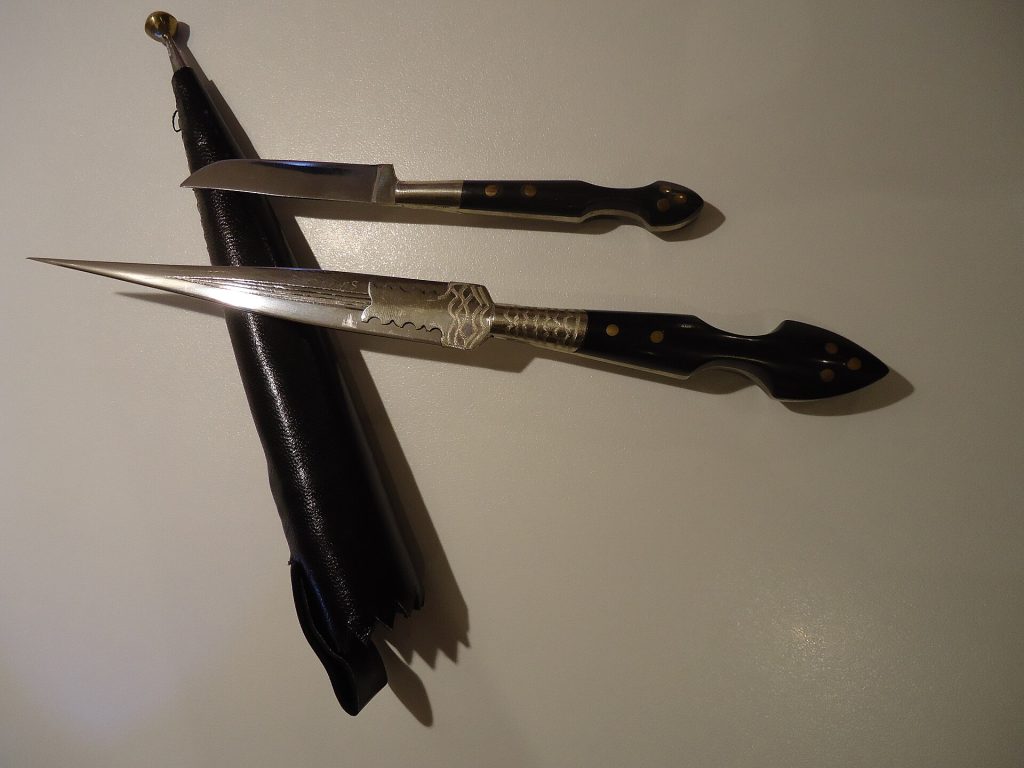
Food stalls serve dishes rooted in the Black Sea coastal kitchen: cornbread (mchadi), bean stews (lobio), dairy and honey from Adjaran highland villages, and fresh or salted Black Sea fish, including anchovy (khamsi), a late-summer staple of the coast. Craft displays show Laz weaving, woodwork and fishing tools, and local associations sometimes mount small exhibitions on Laz history and language. Because the festival now runs alongside Khelvachauri Days, visitors will also see broader Adjaran municipal celebrations — sports contests, concerts and civic ceremonies — sharing the same days and grounds.
There is no single fixed liturgy or script; the programme is set each year by local cultural organisers and the municipality, so the balance between Laz-specific elements and general Khelvachauri festivities varies from year to year.
When it happens
Kolkhoba has no fixed civil or church date. It was traditionally held in summer but in recent years has been scheduled in late September to coincide with Khelvachauri Municipality Day. In 2026 it was held within the Khelvachauri Days programme around 22 September; organisers have indicated the 2027 edition is planned for 18–19 September, though this remains subject to confirmation by Khelvachauri municipality and the Adjara cultural administration closer to the date. Kolkhoba is not a national public holiday: government offices, shops, banks and transport in Batumi and the rest of Georgia operate normally. Only the village of Sarpi and nearby venues see road closures or crowding on the day itself.
Where to experience it
Sarpi lies about 17 kilometres south of central Batumi, immediately beside the Sarpi–Sarp border crossing with Turkey, reached by marshrutka minibus or taxi along the coastal road. On festival day, the main activity centres on the small bay and an open-air stage near the shore, with the boat procession usually taking place in the morning and dance and music performances continuing into the afternoon. Visitors should expect an outdoor, informal atmosphere rather than a solemn ceremony: modest, comfortable dress is appropriate, and photographing performers and stalls is normally welcomed, though it is courteous to ask before photographing individuals closely. As Sarpi sits directly on a border zone, visitors should carry identification; no special permit is generally required to attend the public festival area, but the adjacent crossing facility itself is off-limits to sightseers.
Travel with GTour
The coastal stretch toward Sarpi fits naturally into Batumi & the Ajara Mountains — 2 Days, while Georgia in 10 Days — Tbilisi to Svaneti to the Sea closes along this same Black Sea border route, allowing a stop near the festival if dates align. A GTour travel expert can adjust either itinerary around the confirmed Kolkhoba dates to match a guest’s travel window.
Did you know
- Laz and Mingrelian form the Zan branch of the Kartvelian language family, related to but distinct from Georgian.
- The village of Sarpi was physically divided by the Soviet–Turkish border fixed under the 1921 Treaty of Kars, separating Laz families for decades.
- Colchis, the ancient kingdom associated with the Laz homeland, is the setting of the Greek myth of Jason and the Golden Fleece.
- The khorumi dance performed at Kolkhoba is considered a stylised war dance, its tight circular formation echoing a defensive battle line.
- In the 6th century AD the local kingdom of Lazica (Egrisi) was a battleground between the Byzantine and Sassanid Persian empires, a conflict recorded by the historian Procopius.
Practical tips for visitors
Fly into Batumi International Airport, about 25 minutes by road from Sarpi, or arrive by train or bus to Batumi and continue by marshrutka or taxi along the coastal highway. Book Batumi accommodation in advance if travelling in late September, since rooms fill quickly during the combined Khelvachauri Days period; Sarpi itself has very limited lodging. Late September on the Adjaran coast is generally mild but can bring sudden rain showers typical of the humid subtropical climate, so a light rain jacket is worth packing. Confirm the exact festival date shortly beforehand through the Adjara regional authorities or Batumi-based tour operators, since the schedule shifts from year to year and is set close to the event.
Combine it with
Kolkhoba pairs naturally with a wider exploration of Adjara, from Batumi’s seafront to the Machakhela and Keda highland villages, and with a historical detour into Imereti, home to Kutaisi, traditionally identified as near the heartland of ancient Colchis and a convenient base for exploring the region’s deeper Kartvelian history.
Questions travellers ask
What does the word “Kolkhoba” mean?
It combines Kolkheti, the Georgian name for ancient Colchis, with the feast-day suffix -oba, giving a meaning close to “feast of Colchis.” The name links the festival to the ancient kingdom associated with Laz cultural heritage.
Who are the Laz people?
The Laz are a Kartvelian-speaking ethnic group indigenous to the southeastern Black Sea coast, with the larger community in northeastern Turkey and a smaller one centred on Sarpi in Georgia’s Adjara region. Their language, Laz, is closely related to Mingrelian.
Is Kolkhoba a public holiday in Georgia?
No. It is a local cultural festival, not a national holiday, so government offices, banks and transport across the country run as usual; only Sarpi itself sees festival-related activity and crowding.
Can foreign visitors attend?
Yes, the festival is open to the public and visitors are welcome to watch the boat procession, dances and food stalls alongside local families and guests from Turkey’s Laz communities.
Do I need special permission near the Turkish border to visit Sarpi?
No special permit is required to visit the public festival area of Sarpi village, but visitors should carry identification since the village sits directly beside an active international border crossing, which itself remains off-limits to sightseers.
What language do festival performers sing in?
Performances mix Laz-language songs and recitations, rarely heard elsewhere, with Georgian-language music typical of Adjara, reflecting the bilingual character of the Sarpi community.
Is there a similar festival on the Turkish side of the border?
Laz communities in Turkey’s Rize and Artvin provinces hold their own cultural gatherings, though these are organised separately from Kolkhoba and are not formally linked to the Sarpi event.
How do I get from Batumi to Sarpi?
Sarpi is about 17 kilometres south of Batumi along the coastal highway toward the Turkish border, reachable in roughly 25–30 minutes by marshrutka minibus, taxi, or a pre-booked tour transfer.
Sources
- Georgian polyphonic singing (UNESCO ICH)
- Georgian National Tourism Administration
- Go Batumi tourism portal
- Kolkhoba Festival in Sarpi
- Laz Culture Festival Kolkhoba Marked in Sarpi
Plan your Georgia
Want to be in Georgia for Kolkhoba? A GTour travel expert designs the itinerary around it and calls you back.
Historic postcard of Laz people performing their traditional national circle dance. · Photo: J. Mouratides / Wikimedia Commons, Public domain
This page in other languages: Русский
GTour conciergeAsk anything about Georgia · we reply within hours