Archives


Machakhloba in Georgia: dates, meaning and how to experience it
Next dates
18 September 2027 (to be confirmed) · Sindieti, Machakhela gorge, Khelvachauri, Adjara. See the full events calendar and Georgia today for roads and weather.
What it is
Machakhloba takes its name from Machakhela, the river and gorge that cuts through the mountains of Khelvachauri municipality in Adjara, combined with the Georgian suffix -oba, which turns the name of a place, saint or community into the name of its feast day. The same pattern gives Georgian its other great local festivals — Tbilisoba for the capital, Alaverdoba for the Alaverdi monastery, Mtskhetoba for the old royal city. Machakhloba, then, means literally “the feast of Machakhela”: a day set aside for the gorge itself, for the people who still live there, and for those who left but return each year.
The festival is organized around the village of Sindieti, one of the settlements strung along the Machakhela valley close to the Turkish border. It is celebrated chiefly by residents of the gorge’s villages, by relatives who have moved to Batumi or abroad and come back for the day, and increasingly by visitors drawn by Adjara’s growing reputation for mountain tourism. Unlike church feast days fixed by the liturgical calendar, Machakhloba is a civic and cultural gathering, closer in spirit to a harvest fair than to a saint’s day, and its date is set locally rather than dictated by any national calendar.
Historical background
- Medieval period — the Machakhela gorge developed as a remote highland community of small villages along the river of the same name, part of the historic Adjarian lands on the southwestern edge of Georgia.
- 16th–19th centuries — under Ottoman administration, Adjara, including the Machakhela valley, became a borderland region; many highland communities converted to Islam while retaining elements of older Georgian material culture.
- 1878 — the Treaty of Berlin returned Adjara, including the Khelvachauri district and the Machakhela gorge, to Russian imperial and subsequently Georgian administration, ending direct Ottoman rule.
- Late 19th–20th century — the gorge became known across Georgia for its master gunsmiths, who hand-forged long-barreled flintlock rifles known as Machakhela guns, and for drystone arch bridges built across the river without mortar.
- Soviet period — collectivization and the relocation of mountain populations to lowland Adjara and other regions thinned the gorge’s villages, a pattern common to many highland valleys of western Georgia.
- 2012 — the Georgian government established Machakhela National Park, protecting relict Colchic forest, the gorge’s arch bridges and traditional watermills.
- 2010s — as road access and the national park opened the valley to visitors, Khelvachauri municipality and Adjara’s tourism administration began organizing an annual cultural day in Sindieti, reviving crafts, music and cuisine specific to the gorge.
- Today — Machakhloba appears on Adjara’s regional cultural calendar as one of several village homecoming festivals held in the autonomous republic’s mountain gorges each September, alongside similar gatherings in Keda and Shuakhevi municipalities.
The deeper history of the Machakhela gorge is one of borderland adaptation. For three centuries it sat inside the Ottoman Empire’s northeastern frontier, developing a distinct craft economy built around gunsmithing and subsistence farming on terraced slopes too steep for much else. The 1878 transfer of Adjara, confirmed by the Treaty of Berlin, redrew the frontier west and south of the gorge, and the valley’s communities found themselves once more within a Georgian political framework while keeping customs, cuisine and in many families the Islamic faith that had taken root under Ottoman rule.
The twentieth century brought depopulation rather than destruction: Soviet-era resettlement programs and, later, labor migration to Batumi, Tbilisi and abroad drew younger generations away from the steep, hard-to-farm gorge. The designation of Machakhela National Park in 2012 marked a turning point, giving the valley’s forests, bridges and villages formal protection and a reason for outside visitors to come. Machakhloba grew out of that shift — part harvest festival, part homecoming, part showcase for a craft and architectural heritage that might otherwise have faded with the gorge’s shrinking population.
Meaning and traditions
Machakhloba unfolds as an open-air gathering rather than a religious observance. Families set long supra (feast tables) in gardens and on the village green, and a tamada (toastmaster) leads the customary rounds of toasts that open any Georgian or Adjarian table — to the gorge, to ancestors, to guests, to peace. Craftsmen set out displays of the valley’s signature handiwork: long-barreled flintlock guns once forged by Machakhela gunsmiths, wood carving, and weaving, alongside demonstrations of blacksmithing at portable forges.
Food is central and distinctly Adjarian. Boat-shaped khachapuri acharuli is baked in outdoor clay or stone ovens, served alongside corn bread (mchadi), local cheeses, honey, walnuts and chestnuts gathered from the gorge’s forests, and homemade fruit preserves. Music follows the same regional character: Adjarian polyphonic singing, accompanied by the panduri or chonguri, and group dances performed to the rhythm of hand drums. Visitors should expect informal hospitality — being invited to join a table or offered food is a normal gesture of welcome, not an obligation to be refused outright, though a polite, measured acceptance is appropriate.
Because Adjara’s highland communities include both Christian and Muslim families as a legacy of Ottoman rule, Machakhloba itself carries no single religious character; it is a shared civic celebration of the gorge rather than of a saint or church. Similar village festivals occur elsewhere in Adjara’s mountains each autumn, timed to the end of the harvest, though each valley’s version carries its own name, crafts and dishes tied to local history.
When it happens
Machakhloba has no fixed date on the church or state calendar. It is held on a single day in September, chosen each year by Khelvachauri municipality together with Adjara’s tourism administration to fall after the walnut and chestnut harvest and before autumn rains make the gorge’s mountain roads difficult. The exact Saturday is confirmed and publicized only a few weeks in advance, typically through Adjara’s regional government and local tourism channels.
The next confirmed edition is scheduled for 18 September 2027, though organizers note this date is to be confirmed closer to the event. Machakhloba is not a statutory public holiday; businesses, schools and offices across Adjara and Georgia operate normally, with effects limited to increased traffic and parking pressure on the single access road into Sindieti on the day itself.
Where to experience it
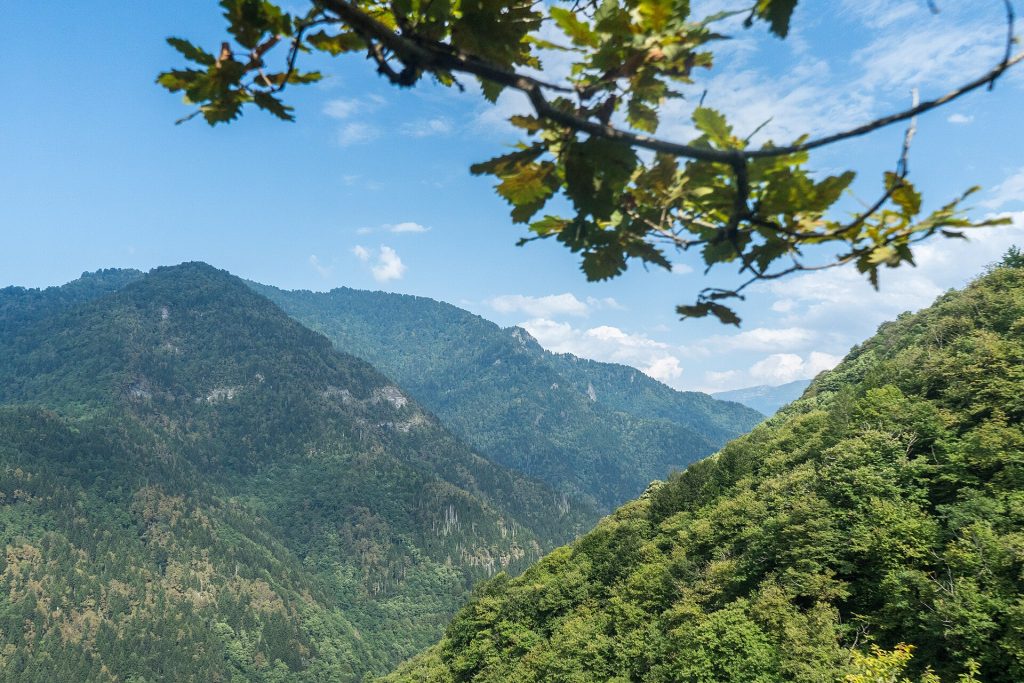
The festival is centered on Sindieti, a village roughly a one-hour drive southeast of Batumi along the Machakhela valley road, close to the Turkish border inside Machakhela National Park. Visitors arriving in the late morning find an open-air gathering with a central stage for music and dance, rows of craft and food stalls, and informal household tables set up along the lanes. The valley’s drystone arch bridges, a short walk from the village center, are worth visiting independently of the festival program, as is the park’s visitor infrastructure for those wanting a longer walk among the gorge’s walnut and chestnut forest.
Dress modestly, as is customary in Adjara’s mountain villages, and ask before photographing craftsmen at work or displaying firearms, even historic or decorative ones. If invited into a home or to a family table, a small gift of fruit, sweets or local wine is appreciated, and accepting a toast rather than declining outright is the more graceful response even for visitors who drink little.
Travel with GTour
The Batumi & the Ajara Mountains — 2 Days tour travels through the Machakhela gorge near Khelvachauri and can be scheduled around 18 September to coincide with the Machakhloba festival in Sindieti, while Georgia in 10 Days — Tbilisi to Svaneti to the Sea passes through Adjara on its route toward the coast. A GTour travel expert designs the itinerary around the guest’s dates, so a stop at the festival can be arranged once the date is confirmed.
Did you know
- The Machakhela gorge is known for a centuries-old tradition of handcrafted, long-barreled flintlock rifles, still made by a small number of master gunsmiths.
- The gorge’s stone arch bridges were built using dry masonry, without mortar, a technique passed down through local builders.
- Machakhela National Park, established in 2012, protects relict Colchic forest containing species such as the Caucasian wingnut tree.
- The suffix -oba names dozens of Georgian festivals tied to places or saints, including Tbilisoba and Alaverdoba.
- Adjara, including the Machakhela gorge, remained under Ottoman administration for roughly three centuries before its return to Georgian and Russian imperial control in 1878.
Practical tips for visitors
Batumi is the practical base; the drive to Sindieti takes about an hour on a winding mountain road, and a private driver is advisable given limited public transport along the valley. September weather in the gorge is generally mild but can turn wet without much warning, so waterproof layers and sturdy footwear are worth packing alongside sun protection. Few guesthouses operate directly in the gorge, so most visitors stay overnight in Batumi and travel to the festival for the day. Cash in small denominations is useful for stalls and craft purchases. GTour arranges a private driver or guide for the day for visitors who prefer not to navigate the mountain road independently.
Combine it with
Machakhloba pairs naturally with a longer visit to Adjara, taking in Batumi’s old town and Black Sea coastline before or after the festival day. Travelers continuing inland from Batumi often combine the trip with Imereti, following the highway toward Kutaisi and its karst caves and monasteries.
Questions travellers ask
What does “Machakhloba” mean?
It means “the feast of Machakhela,” combining the name of the gorge and river with the Georgian suffix -oba, used to name festivals tied to a place, saint or community.
Is Machakhloba a public holiday in Georgia?
No. It is a local cultural festival organized by Khelvachauri municipality and Adjara’s tourism administration, not a statutory holiday, so businesses and offices operate normally.
How do I get to Sindieti from Batumi?
Sindieti lies about an hour’s drive southeast of Batumi along the Machakhela valley road. A private driver or taxi is the most practical option, as public transport into the gorge is limited.
Is entry to the festival free?
The festival itself is typically free and open to the public, though food, drink and craft purchases from individual stalls and family tables are paid for separately.
What food is served at Machakhloba?
Expect Adjarian khachapuri baked in outdoor ovens, corn bread, local cheeses, honey, walnuts, chestnuts and homemade preserves, served at communal tables with toasts led by a tamada.
Can I visit Machakhela National Park on the same day?
Yes. The festival takes place within or near the park’s boundaries, and its forest trails, watermills and drystone arch bridges can be combined with the festival visit.
Is the festival suitable for children?
Yes. It is a family-oriented village gathering with music, craft demonstrations and open-air food stalls, though parents should supervise children near the riverbanks and bridges.
What should I wear and how should I behave in the gorge’s villages?
Modest, comfortable clothing is appropriate, reflecting the customs of Adjara’s mountain communities. Ask before photographing craftsmen or local residents, and accept offered hospitality graciously, even if only briefly.
Sources
- Georgian National Tourism Administration
- Ministry of Environmental Protection and Agriculture (Machakhela National Park)
- Go Batumi
- Visit Batumi
- Georgian Ministry of Culture, Sport and Youth
- Agenda.ge – Machakhloba Festival
Plan your Georgia
Want to be in Georgia for Machakhloba? A GTour travel expert designs the itinerary around it and calls you back.
The medieval stone Zvaria Bridge spans the Machakhela Gorge in Adjara. · Photo: Yasuhiro Kojima / Wikimedia Commons, CC BY-SA 4.0
This page in other languages: Русский
GTour conciergeAsk anything about Georgia · we reply within hours