Archives


Shuamtoba highland festival in Georgia: dates, meaning and how to experience it
Next dates
1 August 2027 – 31 August 2027 (to be confirmed) · Beshumi, upper Adjara. See the full events calendar and Georgia today for roads and weather.
What it is
Shuamtoba (შუამთობა) takes its name from two Georgian roots: shua, “middle,” and mta, “mountain,” joined with the suffix -oba that Georgian uses to name a feast or collective state of being, as in Tbilisoba or Alaverdoba. Read together, the word points to a “mid-mountain gathering” — a pause at the midpoint of the pastoral year, when shepherd families and their flocks have climbed from the valley villages of upper Adjara to the intermediate highland pastures around the Goderdzi pass, before the final push to the highest summer grazing grounds.
The festival belongs above all to the highland communities of Khulo and Keda municipalities in upper Adjara, whose economy has long depended on transhumant sheep and cattle herding between the Black Sea foothills and the Arsiani range. In its modern form, organized with the participation of the Adjara regional government and the national tourism administration, Shuamtoba has also become an open invitation to visitors who want to see a mountain economy’s oldest rituals — horse racing, Georgian wrestling and polyphonic highland song — performed on the pasture itself rather than reconstructed for a stage.
Historical background
- Pre-modern era — according to ethnographic record, highland Adjarian communities marked the movement of flocks to mid-elevation pastures with communal gatherings combining feasting, horse racing and wrestling, timed to the rhythm of transhumance rather than to a fixed calendar date.
- 16th–19th centuries — upper Adjara lay under Ottoman administration, a period that left its mark on local dress, cuisine and the region’s Muslim Georgian communities, while highland pastoral customs, including seasonal gatherings of this kind, persisted largely unaltered.
- 1878 — following the Treaty of Berlin, Adjara was transferred to the Russian Empire, reopening direct administrative and cultural contact between the Adjarian highlands and the rest of Georgia after generations of separation.
- 1921–1991 — under Soviet administration, collective and state farms organized seasonal haymaking and herding festivals across Georgia’s highlands; such events were given a secular, labor-themed framing, which helped keep gatherings like Shuamtoba alive even as their religious or clan associations were played down.
- 1990s — the collapse of collective farming and the economic hardship of the post-Soviet transition sharply reduced transhumant herding in Adjara, and highland festivals continued mainly as smaller, locally organized events.
- 2000s–2010s — as Adjara’s tourism sector grew around Batumi and the Black Sea coast, regional authorities began promoting highland events such as Shuamtoba as part of a wider effort to draw visitors inland to the Goderdzi plateau and the resort of Beshumi.
- Today — Shuamtoba is held annually at Beshumi, usually on the first weekend of August, organized with the involvement of the Adjara Autonomous Republic government and promoted through national channels such as the Georgia National Tourism Administration.
The festival’s deep roots lie not in a single founding event but in the logic of transhumance itself: for herding communities moving between winter villages and summer pastures, a gathering at the midpoint of the climb served practical as well as social purposes, bringing together families, traders and matchmakers who would otherwise be scattered across the mountain for months. Horse races and wrestling bouts were ways of testing and displaying the strength on which highland life depended, while shared meals and song reaffirmed ties between villages that might see little of one another for the rest of the year.
What has changed is less the content of the festival than its audience. Where Shuamtoba once served an internal function within a closed pastoral economy, it now also serves as upper Adjara’s most visible cultural export, drawing visitors from Batumi and beyond to a plateau that, for most of the year, is visited chiefly by shepherds, botanists and skiers. The continuity of horse racing and wrestling alongside newer additions such as organized folk-music programs reflects this double life: a working pastoral custom that has also become a public festival.
Meaning and traditions
At the center of Shuamtoba are two contests long associated with Georgian highland manhood: horse racing across the open plateau, and chidaoba (ჩიდაობა), a form of traditional Georgian wrestling fought in loose jackets, with wins decided by throwing an opponent to the ground. Both have ritual as well as sporting weight, rewarding riders and wrestlers with recognition that, in the pastoral economy, once translated directly into standing within the community.
Around the contests runs a continuous current of music, dance and food. Adjarian highland song, performed in the region’s distinctive polyphonic style, alternates with dance troupes and informal singing among families who have set up camp for the day. Food centers on what the mountain and its herds provide: grilled meat (mtsvadi), fresh mountain dairy, honey, and bread, often shared at an impromptu supra, the Georgian feast table presided over by a tamada, or toastmaster, whose toasts to guests, ancestors and the mountain itself are an essential part of highland hospitality. Adjara’s best-known dish, khachapuri acharuli — an open boat-shaped bread filled with cheese and a raw egg — is widely sold at the festival, alongside mountain cheeses rarely found outside the region.
Regional variation is built into the festival’s informality: there is no single fixed program, and the balance between horse racing, wrestling and music shifts from year to year depending on which villages and herding families are present. Visitors should expect an event organized around the rhythm of the day and the pastures rather than a ticketed schedule.
When it happens
Shuamtoba does not fall on a fixed church or civil date. Because it marks a point in the seasonal movement of flocks rather than a liturgical feast, organizers set the exact weekend each year, typically the first weekend of August, once conditions on the Goderdzi plateau and the herding calendar are confirmed. In 2026 the festival has already taken place; the next edition is expected around 1–31 August 2027, with precise dates to be confirmed closer to the time by the Adjara regional authorities.
Shuamtoba is not a national public holiday, and government offices, schools and most businesses in Georgia operate normally on the day it is held. It is a regional and cultural event rather than a day off work, so visitors should not expect closures outside the immediate area of Beshumi and Goderdzi, where local accommodation and transport can fill up around the festival weekend.
Where to experience it
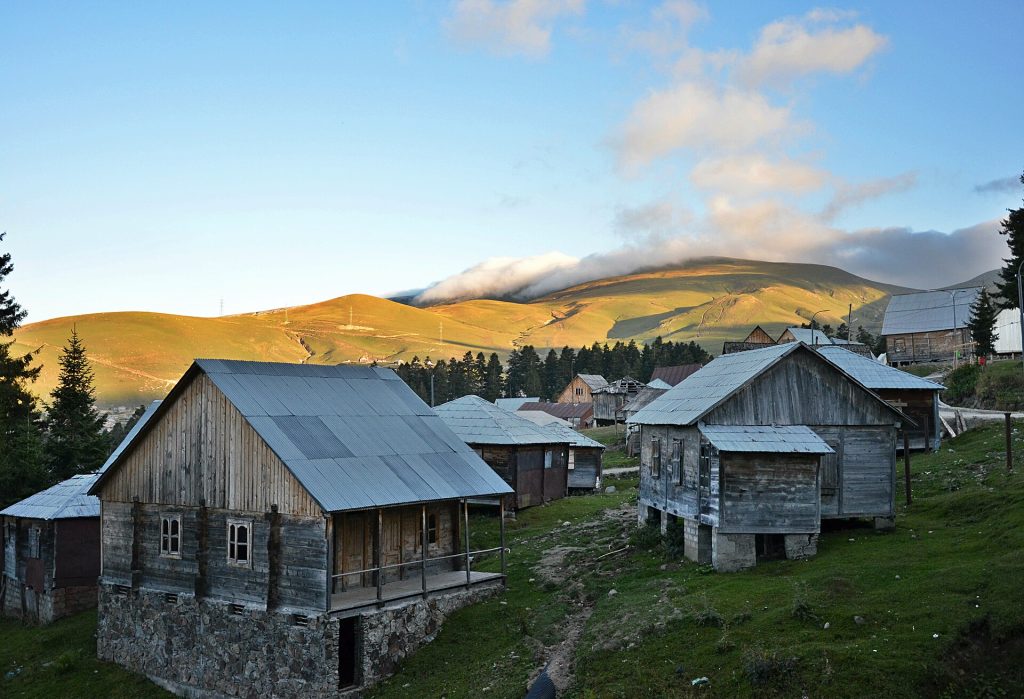
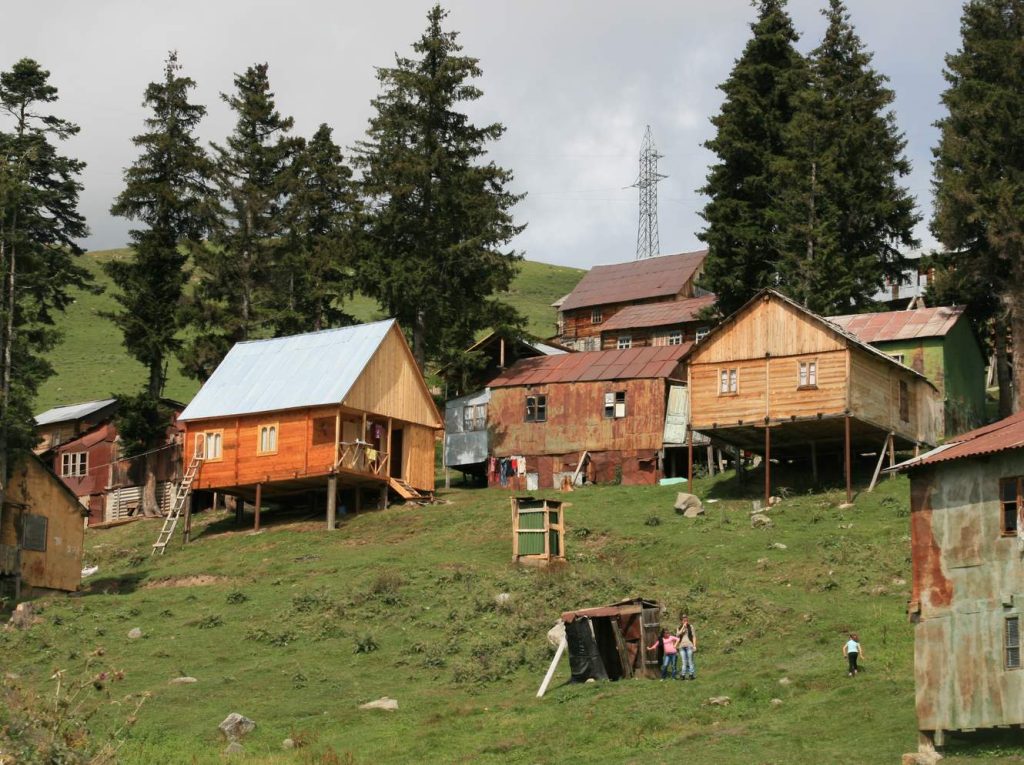
The festival is held on the Goderdzi plateau, around the small highland resort of Beshumi in Khulo municipality, roughly two to three hours by road inland from Batumi. Events typically run through the day, from morning races and wrestling bouts to afternoon and evening music, with families picnicking on the surrounding meadows. Visitors arriving independently should allow for a winding mountain road and should check locally in Khulo or Batumi for the confirmed date and timetable, since no fixed national calendar entry exists for the event.
There is no church ceremony attached to Shuamtoba, so visitor etiquette is the relaxed etiquette of a rural gathering rather than a religious one: modest dress is appreciated given the conservative character of many highland Adjarian communities, and guests invited to join a family’s supra should accept food and toasts graciously, offer a toast in return if asked, and avoid refusing hospitality outright, which can cause offense in highland custom.
Did you know
- The Goderdzi plateau sits above 2,000 metres, making it one of the highest inhabited summer-pasture areas in Adjara and a natural stage for horse racing.
- Chidaoba, the wrestling style featured at Shuamtoba, is practiced in various regional forms across Georgia, each with its own local rules for grips and throws.
- Upper Adjara’s highland villages include both Christian and Muslim Georgian communities, a legacy of centuries of Ottoman administration before 1878.
- The nearby town of Khulo is home to one of Georgia’s oldest working cable cars, built in the Soviet period to link the town with the village of Tago across a deep gorge.
- Adjarian khachapuri, the open-boat cheese bread widely served at highland festivals, differs structurally from the closed, round khachapuri typical of eastern Georgia.
Practical tips for visitors
Travel to Beshumi is by road from Batumi via Khulo; the route climbs steeply and is best undertaken by car, minibus or an organized tour, since public transport options are limited and schedules change seasonally. Warm layers are advisable even in August, as the plateau’s altitude brings cool mornings and evenings and sudden weather changes are common. Accommodation around Beshumi and Goderdzi is modest and can book out around the festival weekend, so arranging lodging or a day tour from Batumi in advance is recommended. Mobile signal and services are limited on the plateau, and visitors should confirm the exact festival date locally or through a tour operator in the weeks before traveling, since the schedule is set annually rather than fixed in advance.
Combine it with
Shuamtoba sits naturally within a wider visit to Adjara, combining the highland festival with Batumi’s Black Sea coast and Adjarian cuisine. Travelers continuing east can connect upper Adjara’s mountain roads with the vineyards and feast culture of Kakheti, or with the glaciers and tower villages of Svaneti for a broader tour of Georgia’s highland cultures.
Questions travellers ask
Is Shuamtoba a religious holiday?
No. It is a secular pastoral and cultural festival tied to the seasonal movement of herds to summer pastures, not to a church feast day, and it carries no liturgical observance.
Do I need tickets to attend?
No formal ticketing is typical; the festival is an open-air gathering on the Goderdzi plateau that visitors can attend freely, though transport and accommodation should be arranged in advance.
Is the exact date published far ahead?
Not reliably. Organizers confirm the first-weekend-of-August date closer to the event each year, so travelers should check with the Adjara tourism authorities or a local operator shortly before planning a trip.
Can I get to Beshumi without a car?
Public transport is limited on the Goderdzi road, so most visitors arrive by private car, taxi from Batumi or Khulo, or as part of an organized day tour.
Is the wrestling dangerous to watch up close?
Chidaoba bouts are controlled contests with traditional rules, and spectators typically watch from a safe perimeter around the contest area; organizers and local families generally manage crowd space informally but effectively.
What should I wear?
Practical outdoor clothing suited to a mountain meadow, with warm layers for cool mornings and evenings, is advisable; modest dress is appreciated given the conservative character of highland Adjarian communities.
Are vegetarian options available at the food stalls?
Yes. Cheese, bread, honey and dairy products are widely available alongside grilled meat, making vegetarian eating straightforward at the festival.
Is Shuamtoba suitable for children?
Yes, families commonly attend together, and the open meadow setting, music and horse racing make it an accessible outdoor event for children, though supervision near the race track and animals is advised.
Sources
- Georgia National Tourism Administration
- Georgian National Tourism Administration (GNTA)
- Go Batumi tourism portal
- Visit Batumi
- Geostat (National Statistics Office of Georgia)
- Shuamtoba in Beshumi
- Shuamtoba Highland Festival News
Plan your Georgia
Want to be in Georgia for Shuamtoba highland festival? A GTour travel expert designs the itinerary around it and calls you back.
The highland village of Beshumi in upper Adjara, host to the Shuamtoba festival. · Photo: Aleksey Muhranoff / Wikimedia Commons, CC BY-SA 3.0
This page in other languages: Русский
GTour conciergeAsk anything about Georgia · we reply within hours