By Safari News — Africa Calling Safaris, Partner desk, Nairobi · 23/10/2026
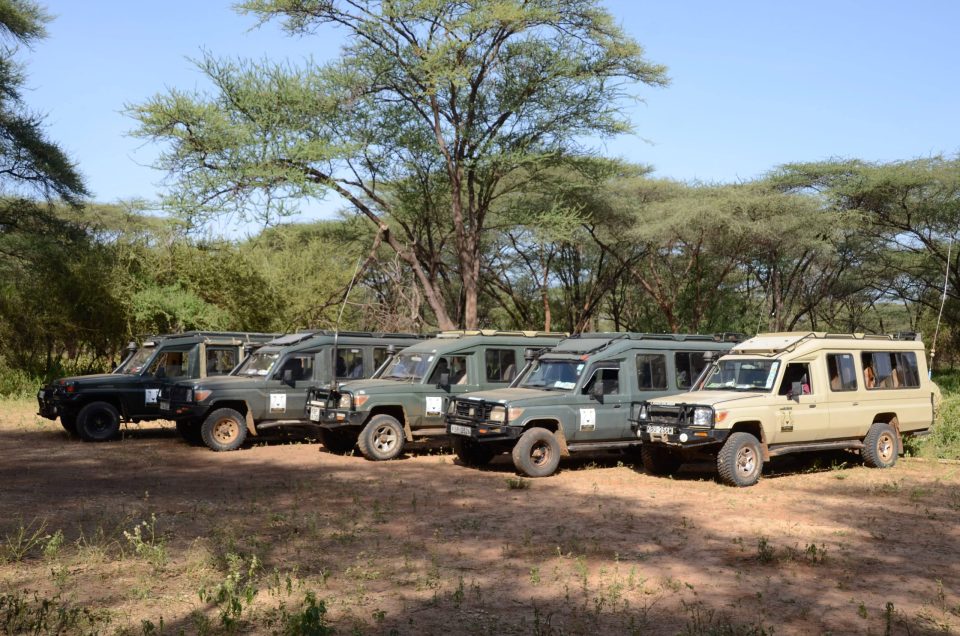
Travellers heading from the Caucasus or Europe to East Africa often underestimate how aggressive the sun becomes once altitude is added to equatorial latitude. Amboseli lies at 1,200 metres, the Masai Mara at 1,500 metres, and parts of northern Kenya climb even higher. UV intensity rises roughly 10 percent for every 1,000 metres gained, pushing midday readings in Nairobi and the Mara to a UV Index of 11 to 13 — classed as extreme by the World Health Organisation. Because this is driven by the sun’s angle near the equator rather than seasonal change, the risk is constant throughout the year, and open-sided safari vehicles leave no shade during peak hours.
At that intensity, fair skin left unprotected can burn in under fifteen minutes, making sun care a routine task rather than something to consider once discomfort sets in. Guides recommend applying broad-spectrum SPF 30 or higher half an hour before the first morning drive, reapplying every two hours or after heavy sweating, and choosing a wide-brim hat over a cap, since caps leave the neck and ears exposed. UV-rated sunglasses are advised too, guarding against glare bouncing off dry lake beds and open water. Nikos Pocock, head guide and co-founder of a Nairobi-based safari operator, notes that cloudy mornings are deceptively dangerous: cloud scatters ultraviolet light rather than blocking it, so UV Index values can still top 8 under overcast skies, and he has seen bad burns result from skipped sunscreen on dull days.
Sunscreen and insect repellent should be layered, not combined into one product — sunscreen first, repellent on top — since prolonged UV exposure can weaken the skin’s local immune response and raise vulnerability at insect bite sites. Lodges stock basic sunscreen, but packing a preferred, generous supply is sensible, particularly for remote camps; travellers connecting through Tbilisi or European hubs should factor sun gear into carry-on luggage given variable availability en route.
Based on reporting by Safari News, the travel desk of Africa Calling Safaris (Nairobi), GTour’s partner for East Africa. Read the original there.
Been to Georgia? Tell us how it went — the best stories are published here.
Share your tripThis story across our partner network — Original reporting: Safari News (Nairobi)
Planning a trip to Georgia?
GTour runs private tours with English-speaking guides from Old Tbilisi. See all tours or ask the desk on WhatsApp +995 577 416 314.
Source: Safari News — Africa Calling Safaris. Reported by the GTour desk; updated 23 October 2026, 13:42 (Tbilisi).