Archives


Ninooba in Georgia: dates, meaning and how to experience it
Next dates
27 January 2027 · Nationwide; Bodbe Convent, Kakheti. See the full events calendar and Georgia today for roads and weather.
What it is
Ninooba (ნინოობა) takes its name from Nino, the woman Georgians call the Enlightener of Georgia, with the suffix “-oba” marking a feast or commemorative day — so the word means, simply, “Nino’s day.” It is kept by the Georgian Orthodox Church and observed, with varying degrees of devotion, across the whole country, since Nino’s mission is held to be the founding event of Georgian Christianity itself.
The day is celebrated by churchgoers nationwide, but its spiritual centre is Bodbe Convent near Sighnaghi in Kakheti, built over the saint’s grave, and Sioni Cathedral in Tbilisi, which holds the cross tradition says she made with her own hands. Pilgrims, monastics, clergy and ordinary families converge on these sites, while parish churches everywhere hold festive liturgies in her honour.
Historical background
- Early 4th century — According to Georgian and early Christian tradition, Nino, a woman from Cappadocia said to be related to Saint George, arrives in the kingdom of Kartli (Iberia) as a missionary.
- c. late 320s–330s — King Mirian III and Queen Nana of Kartli are converted; Christianity is proclaimed the religion of the royal court, an event later corroborated, independently of Georgian sources, by the Roman historian Rufinus of Aquileia around 400, who attributes his account to the Georgian prince Bacurius.
- 4th century — Nino is said to have fashioned a cross from vine branches, bound with strands of her own hair; it survives in Georgian tradition as the Grapevine Cross.
- 4th century — Nino dies at Bodbe in Kakheti; her burial site becomes a place of pilgrimage almost immediately, and 27 January (14 January by the Julian calendar) is kept as her feast.
- 5th–6th centuries — A church, later the Bodbe Convent of Saint Nino, is raised over her tomb; Svetitskhoveli Cathedral in Mtskheta, associated in legend with the same mission, is rebuilt in stone.
- 1994 — The historic monuments of Mtskheta, including Svetitskhoveli Cathedral and Jvari Monastery, both bound up with Nino’s story, are inscribed on the UNESCO World Heritage List as the Historical Monuments of Mtskheta.
- Soviet period (1921–1991) — Church property is nationalised and monastic life at Bodbe is suppressed; Ninooba is kept privately rather than publicly.
- Since 1991 — Georgian independence brings the revival of monastic life at Bodbe and the restoration of public pilgrimage; Ninooba liturgies resume openly across the country.
What distinguishes Nino’s story from many foundational Christian legends is that it is not preserved only in hagiography written by her own community. Rufinus, writing in Latin within a few generations of the events, recorded a version of the conversion of Kartli that he said came from Bacurius, a Georgian commander serving in the Roman army — independent testimony that gives the tradition unusual historical weight for its period. Georgian chronicles, notably the medieval compilation known as the Life of Kartli, later elaborated the narrative: Nino preaching in the royal garden, healing the queen, and converting Mirian III after he is caught in sudden darkness while hunting and vows to adopt her faith if delivered.
The consequence, whichever precise year is preferred by scholars, was that Kartli became one of the earliest kingdoms in the world to adopt Christianity as a state religion, following Armenia by perhaps a decade or two. Nino herself refused royal honours, continuing to live and preach modestly until her death at Bodbe, where she was buried at her own request rather than in the capital. The convent that grew around her grave has functioned, with interruptions, as a centre of Georgian female monasticism for roughly sixteen centuries.

Meaning and traditions
The core of Ninooba is liturgical: an all-night or early-morning service (games, “ghame tsiskari” in common parlance for vigils) culminating in the Divine Liturgy, during which hymns recount Nino’s life and her title as “Equal to the Apostles” (tanastsorap’ekvdoliani, a rank she shares in Orthodox tradition with figures such as Mary Magdalene and the Emperor Constantine). Congregants venerate her icon and, where possible, a grapevine cross, kissing it and crossing themselves in the customary Orthodox manner.
At Bodbe, pilgrims also descend a wooded path to Nino’s holy spring (tsmida nino’s ts’q’aro), believed by believers to have healing properties; many bathe or fill bottles to take home. Families in Kakheti and elsewhere may mark the day with a modest festive meal, though, unlike major feasts such as Christmas or Easter, Ninooba carries no distinctive dish of its own; it falls outside the main fasting periods, so no special fasting rules apply. In parish life the day is often used for christenings and for the naming of girls as Nino, one of the most common women’s names in Georgia precisely because of this feast.
Regional emphasis differs: in Kakheti, where Bodbe and Sighnaghi sit at the heart of the wine country, church attendance is matched by family gatherings that echo the supra (feast table) tradition, with toasts offered to the Enlightener alongside the usual toasts to ancestors and homeland. In Tbilisi and Mtskheta, the day is marked more strictly as a church observance centred on Sioni Cathedral and Svetitskhoveli, with less of the communal feasting seen in Kakheti villages.
When it happens
Ninooba falls on a fixed date in the Georgian Orthodox calendar, 27 January by the civil (Gregorian) calendar, corresponding to 14 January in the Julian reckoning the Church still uses for its liturgical dates. In 2026 the feast fell on 27 January; the next observance is Wednesday, 27 January 2027.
Ninooba is a religious commemoration rather than an official non-working public holiday. Government offices, schools, banks and most businesses operate on their normal schedule; it is churches, monasteries and individual believers who treat the day as a holiday, often taking personal leave to travel to Bodbe or to attend services. Visitors should not expect wider closures in shops or transport on this date.
Where to experience it
Bodbe Convent, a short drive from the hilltop town of Sighnaghi in Kakheti, holds the day’s principal pilgrimage. Morning liturgy begins early, and worshippers queue quietly to venerate Nino’s tomb inside the main church before many continue down the forest path to her spring. Sioni Cathedral in central Tbilisi, in the old town near the Mtkvari riverbank, holds its own festive liturgy and displays the Grapevine Cross for veneration. Svetitskhoveli Cathedral in Mtskheta, part of the UNESCO-listed Historical Monuments of Mtskheta, is also closely associated with Nino’s mission and draws visitors on and around the feast.
Visitors are welcome at all three sites but should dress modestly: women are expected to cover their heads with a scarf (provided at the door if needed) and to wear a skirt or long trousers, while men should remove hats and avoid shorts. Photography during the liturgy itself is generally discouraged; it is acceptable once the service has concluded, and always worth asking a monk, nun or priest first. Silence and unhurried movement around worshippers, especially near the tomb at Bodbe, are expected of all visitors regardless of faith.
Did you know
- Georgia’s conversion to Christianity under King Mirian III, traditionally dated to the fourth century, makes Kartli one of the earliest states in the world to adopt Christianity as its official religion.
- The conversion story is corroborated outside Georgian sources by the Roman historian Rufinus of Aquileia, writing around 400, who said he had it from the Georgian military commander Bacurius.
- Nino holds the rare Orthodox title “Equal to the Apostles,” shared by only a handful of saints, including Mary Magdalene and the Emperor Constantine.
- The cross Nino is said to have made from vine branches bound with her own hair is preserved to this day in Sioni Cathedral in Tbilisi.
- Svetitskhoveli Cathedral in Mtskheta, whose name means “Life-Giving Pillar,” is linked by legend to the same mission and forms part of a UNESCO World Heritage Site.
Practical tips for visitors
Bodbe Convent is roughly a ninety-minute to two-hour drive from Tbilisi; travellers without a car can join an organised day tour or take a marshrutka (shared minibus) to Sighnaghi and a short taxi onward. Late January brings cold weather and occasional snow or ice on Kakheti’s rural roads, so warm layers and sturdy footwear are advisable, particularly for the descent to Nino’s spring. Because 27 January is a normal working day, government offices and most shops remain open, but church car parks and village guesthouses in Sighnaghi can fill with pilgrims, so booking accommodation and transport in advance is recommended. Carry a headscarf for women and avoid sleeveless tops or shorts at any of the three churches associated with the feast.
Combine it with
Ninooba pairs naturally with a visit to Kakheti for Bodbe Convent and the wine towns around Sighnaghi, with Mtskheta-Mtianeti to see Svetitskhoveli Cathedral and Jvari Monastery, and with Tbilisi, whose old town Sioni Cathedral holds the Grapevine Cross.
Questions travellers ask
Is Ninooba a public holiday in Georgia?
No. It is a religious feast kept by the Church, not an official non-working holiday, so offices, schools and most businesses operate normally on 27 January.
Where is Saint Nino buried?
Tradition holds that Nino is buried at Bodbe, near Sighnaghi in Kakheti, where she chose to live out her last years; the convent built over her tomb remains an active monastery and pilgrimage site.
What is the Grapevine Cross?
It is the cross Nino is said to have fashioned from vine branches and bound together with strands of her own hair before beginning her mission in Kartli; it is preserved today in Sioni Cathedral in Tbilisi.
Can visitors attend the liturgy at Bodbe?
Yes, services are open to the public, including non-Orthodox visitors, provided dress is modest and behaviour respectful; arriving early secures a place inside the small main church.
Why is a woman credited with converting an entire kingdom?
Georgian and early external sources alike attribute the conversion of King Mirian III and Queen Nana to Nino’s preaching and reputed healing of the queen, a narrative the Church later honoured by granting her the rare title “Equal to the Apostles.”
Is there a second commemoration of Saint Nino during the year?
Some local traditions keep a smaller, secondary commemoration tied to events in her mission, but 27 January remains by far the principal, nationwide Ninooba observed in Georgian churches.
What should visitors wear to Bodbe Convent?
Women should wear a headscarf and a skirt or long trousers, and men should avoid shorts and remove hats indoors; scarves and wraps are usually available at the entrance for those unprepared.
How far is Bodbe from Tbilisi and how can I get there?
Bodbe is roughly 90 to 120 minutes from Tbilisi by road, near Sighnaghi in Kakheti; options include a private driver, an organised tour, or a marshrutka to Sighnaghi followed by a short taxi to the convent.
Sources
- UNESCO World Heritage – Historical Monuments of Mtskheta
- Georgian Orthodox Patriarchate
- Georgian National Tourism Administration
- National Parliamentary Library of Georgia
- Ninooba — St Nino's Day
- Ninooba — St Nino's Day
- Ninooba — St Nino's Day
- Ninooba — St Nino's Day
Plan your Georgia
Want to be in Georgia for Ninooba? A GTour travel expert designs the itinerary around it and calls you back.
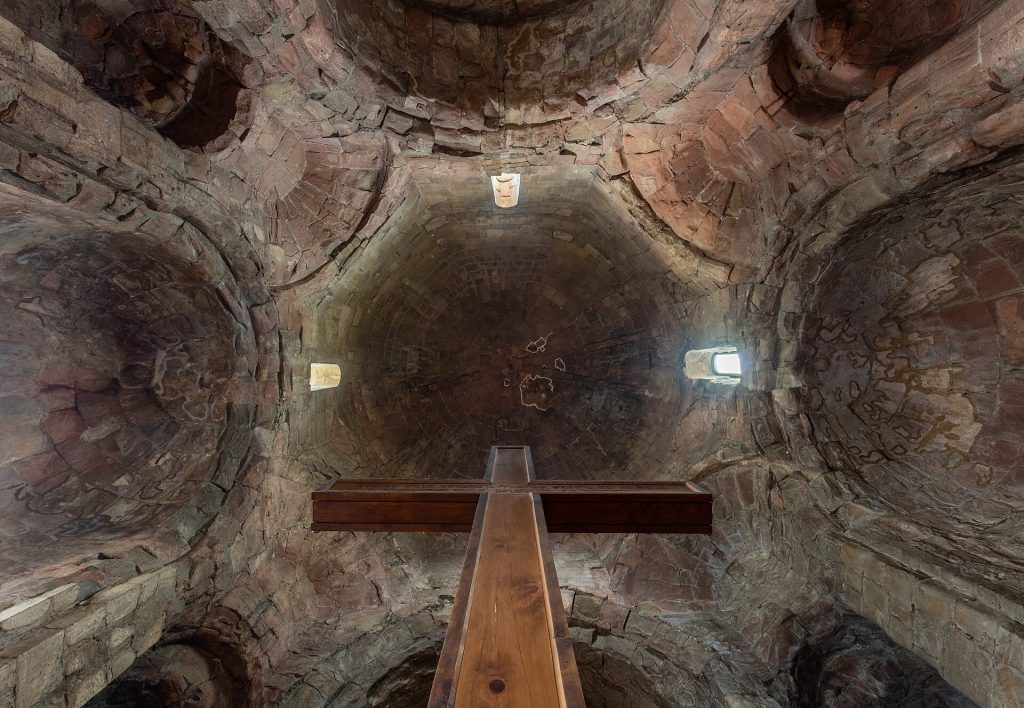
Svetitskhoveli Cathedral in Mtskheta, linked to St Nino's mission and Georgia's conversion to Christianity. · Photo: Bernard Gagnon / Wikimedia Commons, CC BY 4.0
This page in other languages: Русский
GTour conciergeAsk anything about Georgia · we reply within hours