Archives


National Farmers’ Day and Agro Expo in Georgia: dates, meaning and how to experience it
Next dates
20 November 2026 · ExpoGeorgia, Tbilisi. See the full events calendar and Georgia today for roads and weather.
What it is
National Farmers’ Day — in Georgian, fermerta dghe (ფერმერთა დღე), literally “day of the farmers,” built on the modern loanword fermeri (“farmer”), which replaced the Soviet-era vocabulary of kolmeurne (“collective-farm worker”) after independence — is a civil observance recognising the men and women who grow Georgia’s grain, fruit, wine grapes, vegetables, and livestock. It is celebrated nationwide but has its most visible public face in Tbilisi, where the Ministry of Environmental Protection and Agriculture (MEPA) and the Georgian Farmers’ Association mark the day with award ceremonies, and in the weeks that follow, with the Agro Expo trade fair.
Unlike the great religious feasts of the Georgian Orthodox calendar, Farmers’ Day is a secular, state-recognised day of appreciation rather than a day of worship. It sits alongside other professional observances on the Georgian calendar — such as Teacher’s Day or Doctor’s Day — that single out a profession for public thanks rather than close the country down. For a nation whose identity is still closely tied to the vine, the orchard, and the mountain pasture, the day functions as a reminder that agriculture remains central to regional economies, from the vineyards of Kakheti to the hazelnut groves of Samegrelo and the high meadows of Svaneti and Racha.
Historical background
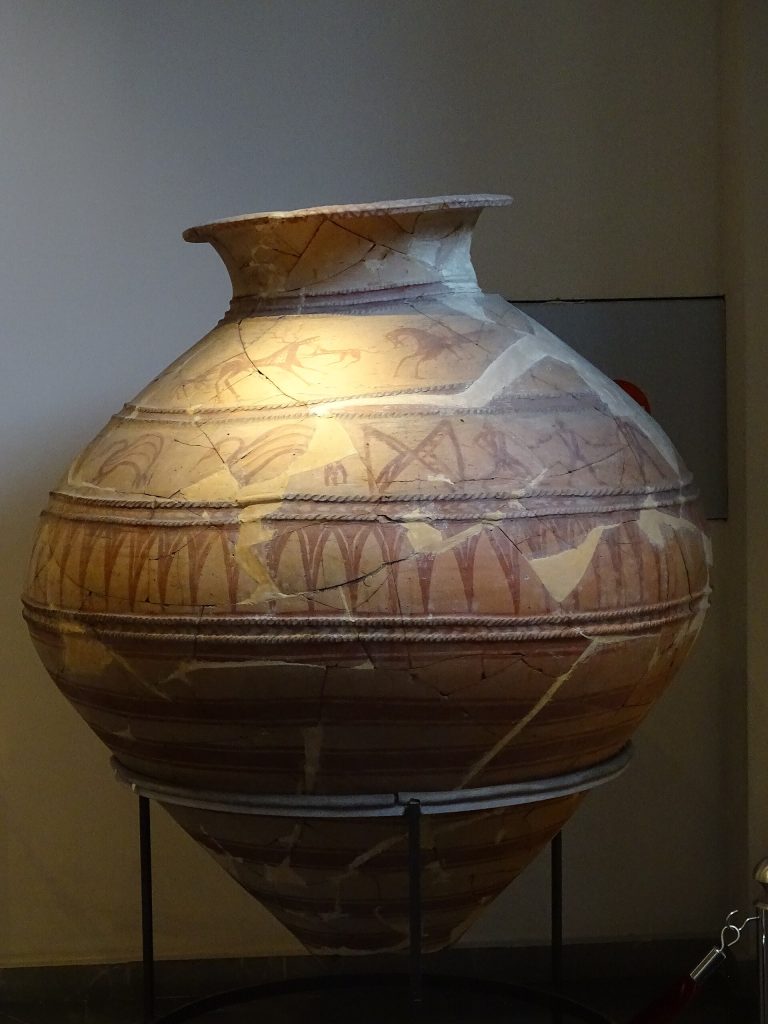
- 6th–5th millennium BC — Archaeobotanical and ceramic evidence from sites in present-day Georgia points to some of the world’s earliest domestication of the grapevine, a foundation of the country’s agricultural self-image recognised internationally in the inscription of the traditional qvevri wine-making method on UNESCO’s Representative List.
- 11th–13th centuries — Under the united Georgian monarchy, royal and monastic estates organised large-scale cultivation of grain, orchards, and vineyards, a period later remembered as an agricultural golden age.
- 1921–1991 — Under Soviet rule, land was collectivised into kolkhozes (collective farms) and sovkhozes (state farms), and agricultural labour was publicly celebrated through Soviet-style exhibitions of rural achievement.
- 1958 — The Tbilisi exhibition grounds that later became ExpoGeorgia were, according to the venue’s own history, first opened to showcase the agricultural and industrial output of the Georgian SSR.
- 1992 — Following independence, Georgia began dismantling collective farming and distributing land into private smallholdings, reshaping the countryside into the fragmented, family-run farms still typical today.
- Late 1990s–2000s — The Georgian state designated a fixed November date to honour agricultural workers, replacing the Soviet calendar of labour holidays with a nationally defined Farmers’ Day.
- 2010s — The Georgian Farmers’ Association was established as an independent body representing smallholders and agribusinesses, and began organising an annual autumn trade fair.
- 2020s — The Ministry of Environmental Protection and Agriculture continues rural-development and cooperative-support programmes announced around Farmers’ Day, while the Agro Expo at ExpoGeorgia has grown into the country’s principal annual showcase of regional produce.
Georgia’s agricultural calendar has always carried more symbolic weight than its small share of the national economy might suggest. The land reforms of the 1990s, which broke up Soviet collective farms into hundreds of thousands of small private plots, created a rural landscape of family farms rather than agribusiness, and it is this smallholder economy — vineyard rows tended by hand in Kakheti, hazelnut orchards in the west, orchards and dairy herds in the mountains — that National Farmers’ Day sets out to honour.
The day’s modern form, a ministerial ceremony followed weeks later by a large trade exhibition, reflects a double purpose: public gratitude toward a workforce that is still disproportionately rural and often older, and a practical marketing platform for cooperatives and producers who otherwise have limited access to urban consumers and export buyers. The pairing of a solemn recognition day with a commercial fair is itself characteristic of how post-Soviet Georgia has rebuilt its public holiday calendar around both memory and market.
Meaning and traditions
On Farmers’ Day itself, the tone is formal rather than festive: the Ministry of Environmental Protection and Agriculture and regional governments typically hold award ceremonies recognising outstanding farmers, cooperatives, and agricultural innovators, sometimes broadcast on national television. There is no fixed liturgy, food, or song specific to 20 November itself; the cultural colour of the season belongs instead to the Agro Expo that follows.
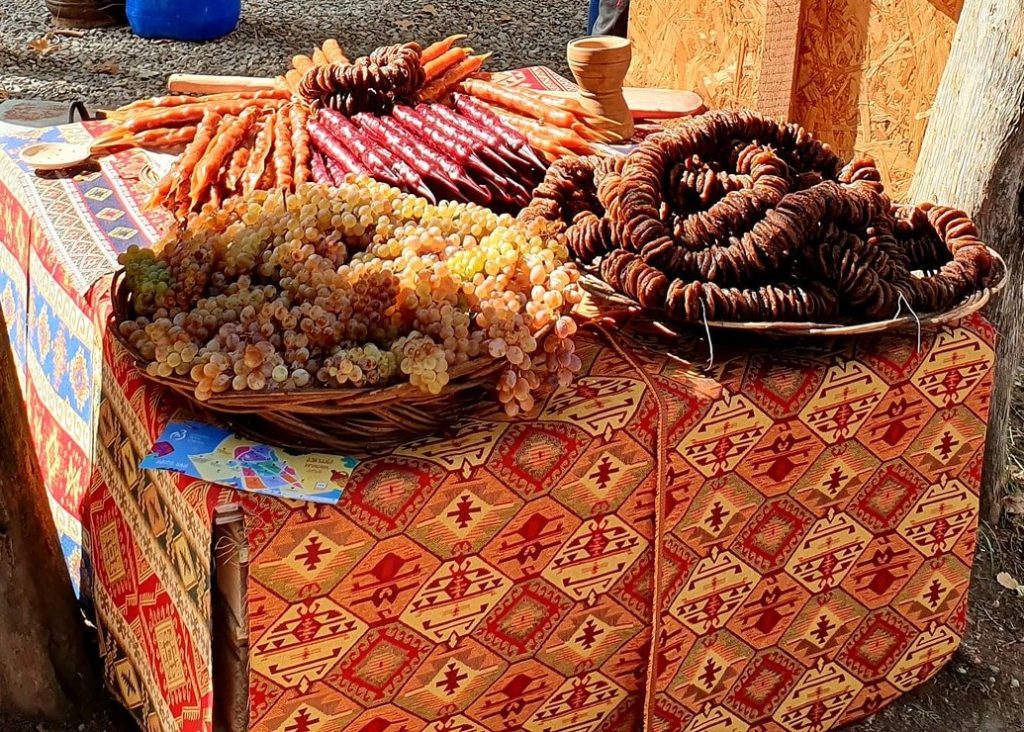
At the fair, visitors encounter the vocabulary of Georgian rural life in concentrated form: meurneoba (farming or husbandry broadly), glekhi (the older word for peasant or smallholder, still used affectionately), mevenakheoba (viticulture), mesakhlieoba (animal husbandry), and tkbileuli (sweets, often fruit preserves on display). Tastings typically include regional cheeses such as sulguni and guda, honey from mountain apiaries, churchkhela, dried fruit, nuts, and wine poured directly by small family producers rather than large commercial houses. Folk ensembles sometimes perform at the opening, and officials and producers exchange toasts in the Georgian supra tradition, though the fair itself is a daytime trade event rather than a feast.
Regional variation is strong: Kakhetian stands emphasise wine and qvevri-aged vintages; Imeretian and Gurian producers bring hazelnuts, citrus, and cheese; Racha and Svaneti exhibitors show honey, cured meats, and highland dairy; Adjara contributes citrus and tea. The event functions as a rare single place where produce from every Georgian region is gathered under one roof.
When it happens
National Farmers’ Day falls on a fixed civil date, 20 November, each year. In 2026 this falls on a Friday; in 2027 it falls on a Saturday. It is not a non-working public holiday under Georgian law, so government offices, banks, schools, and shops operate normally, though ministries and agricultural institutes may hold ceremonies during the working day. The Georgian Farmers’ Association’s Agro Expo at ExpoGeorgia is held separately, typically over a long weekend in late November following the official day; exact dates are announced annually by the organisers and can shift by a week.
Where to experience it
The principal public venue is ExpoGeorgia in Tbilisi, a large exhibition ground with multiple pavilions on the city’s eastern side, easily reached by taxi or ride-hailing app from the centre. The Agro Expo typically runs across a full day or weekend, with pavilions open from mid-morning into the evening; the busiest hours are usually early afternoon, when school groups, families, and buyers mix on the exhibition floor. Visitors can expect stalls of produce, machinery and seed displays, cooperative information desks, and tasting counters for wine, cheese, and honey.
There is no religious etiquette to observe, as the event is entirely secular, but ordinary courtesy applies: ask before photographing individual producers or their stands, and accept a small tasting rather than sampling repeatedly without intending to buy. Outside Tbilisi, regional versions of farmer recognition ceremonies take place in agricultural towns such as Telavi in Kakheti and Kutaisi in Imereti, usually organised by local municipal authorities rather than as large public fairs.
Did you know
- Georgia’s grapevine cultivation is among the oldest attested anywhere, underpinning the UNESCO-recognised qvevri wine-making tradition.
- The word fermeri used in the holiday’s name is a 20th-century loanword from English “farmer,” distinct from the older native term glekhi.
- Georgia’s post-Soviet land reform broke up collective kolkhozes into a large number of small private family farms, a structure still visible in the country’s agricultural landscape.
- ExpoGeorgia, the Agro Expo’s venue, originated as a Soviet-era exhibition ground built to display the agricultural output of the Georgian SSR.
- Farmers’ Day is a day of recognition, not a public holiday, meaning Georgians work as normal while ceremonies and the Agro Expo run alongside daily life.
Practical tips for visitors
Tbilisi International Airport connects easily to the city centre by taxi, and ExpoGeorgia lies a short drive from most central hotels; public transport links are limited, so a taxi or pre-booked transfer is the practical choice, especially during the Agro Expo when traffic around the grounds increases. Late November in Tbilisi is cool and often damp, so a warm layer and waterproof shoes are advisable for an outdoor-adjacent exhibition ground. Entry to the Agro Expo is generally open to the public, though confirming current-year dates and opening hours with the Georgian Farmers’ Association in advance is recommended, as the fair’s exact schedule changes from year to year. Shops, offices, and churches operate on normal hours on Farmers’ Day itself, so no closures should be expected.
Combine it with
A visit built around National Farmers’ Day pairs naturally with a trip into Kakheti, Georgia’s principal wine region and the source of many Agro Expo exhibitors; with Imereti, known for hazelnuts, cheese, and its own regional produce traditions; and with Kartli, the historic agricultural heartland surrounding Tbilisi itself.
Sources
- Georgian Farmers' Association
- Ministry of Environmental Protection and Agriculture
- UNESCO Intangible Cultural Heritage – Qvevri wine-making method
- Georgian National Tourism Administration
- National Statistics Office of Georgia
- Ministry of Culture of Georgia
Plan your Georgia
Want to be in Georgia for National Farmers' Day and Agro Expo? A GTour travel expert designs the itinerary around it and calls you back.
Churchkhela, a traditional Georgian snack of nuts dipped in grape juice, drying in the sun. · Photo: Jon Gudorf Photography / Wikimedia Commons, CC BY-SA 2.0
This page in other languages: Русский
GTour conciergeAsk anything about Georgia · we reply within hours