Archives


Ghvtaeboba in Georgia: dates, meaning and how to experience it
Next dates
29 August 2027 (to be confirmed) · Gardabani municipality villages. See the full events calendar and Georgia today for roads and weather.
What it is
Ghvtaeboba (ღვთაებობა) takes its name from the Georgian word ghvtaeba (ღვთაება), meaning “divinity” or “deity,” itself built on ghmerti (ღმერთი), “God.” The suffix -oba, attached to countless Georgian feast names, turns a noun into the name of a day set aside for it — so Ghvtaeboba is, literally, “the day of the Divinity.” In the villages of Gardabani municipality, on the Mtkvari (Kura) river plain east of Tbilisi, the word is understood specifically as a feast of the Holy Trinity, kept by the parish communities whose local church or shrine is dedicated to it.
The feast belongs to a very large family of Georgian village patronal days — known collectively as saxelobis dge (“name-day”) or jvari dge (“cross day”) celebrations — in which a rural community marks the dedication of its own church rather than a date fixed on the universal church calendar. Those who celebrate Ghvtaeboba are, first, the residents of the Gardabani villages themselves, and alongside them relatives who return from Tbilisi and beyond, and the parish clergy who lead the liturgy that opens the day. It is a local observance rather than a nationwide one, which is part of what makes it worth the detour for a visitor who wants to see Georgian rural religious life as it is actually practised, rather than staged.
Historical background
- 327 — King Mirian III of Kartli adopts Christianity as the state religion after the preaching of St Nino, beginning centuries of church-building across Kartli, including dedications to the Holy Trinity, documented by the Patriarchate of Georgia.
- 6th century — David Garejeli, one of the Thirteen Assyrian Fathers, founds the Davit Gareja monastic complex on the edge of the Gardabani-Kakheti borderlands, anchoring organised Christian life in the wider district.
- 9th–13th centuries — rural parishes multiply across Kartli; village churches are commonly dedicated to the Trinity or the Divinity, and each gains its own patronal feast kept on the parish’s own, locally set date.
- 17th–18th centuries — the Gardabani plain, part of historic Kartli and exposed to Persian and Ottoman incursions, is repeatedly depopulated and resettled; village feast days persist through this period as markers of communal continuity.
- 1921–1990 — under Soviet rule, religious practice is officially discouraged and many parish buildings close or fall into disuse; village patronal days survive informally as family gatherings, often without clergy present.
- 1991 — Georgia restores independence; parish life resumes openly, and local feasts including Ghvtaeboba are again marked with liturgy, procession and public feasting.
- 2000s–present — Gardabani municipality’s villages continue to observe Ghvtaeboba each late August, with the precise day set by the local church community and confirmed only shortly beforehand.
The documented history of Ghvtaeboba itself is thin by design: it is an oral, parish-level tradition rather than a feast fixed by a council or a royal charter, and it has never had the national profile of Tbilisoba or the great Marian feasts. What can be said with confidence is the broader historical frame in which it sits — the Christianisation of Kartli in the fourth century, the spread of monastic and parish life through the medieval centuries, and the survival of rural religious custom through Persian, Ottoman and Soviet disruption. Gardabani itself was historic Kartli’s eastern frontier, a plain watered by the Mtkvari and repeatedly resettled, which is one reason communal feast days carried extra weight here as proof that a village had endured.
Today’s Ghvtaeboba should be understood as a living continuation of that pattern rather than a reconstruction. Villagers describe it simply as “our feast,” tied to their own church’s dedication, and organisers — usually the parish council together with municipal authorities — confirm the exact date each year rather than publishing it in advance on a fixed civil calendar.
Meaning and traditions
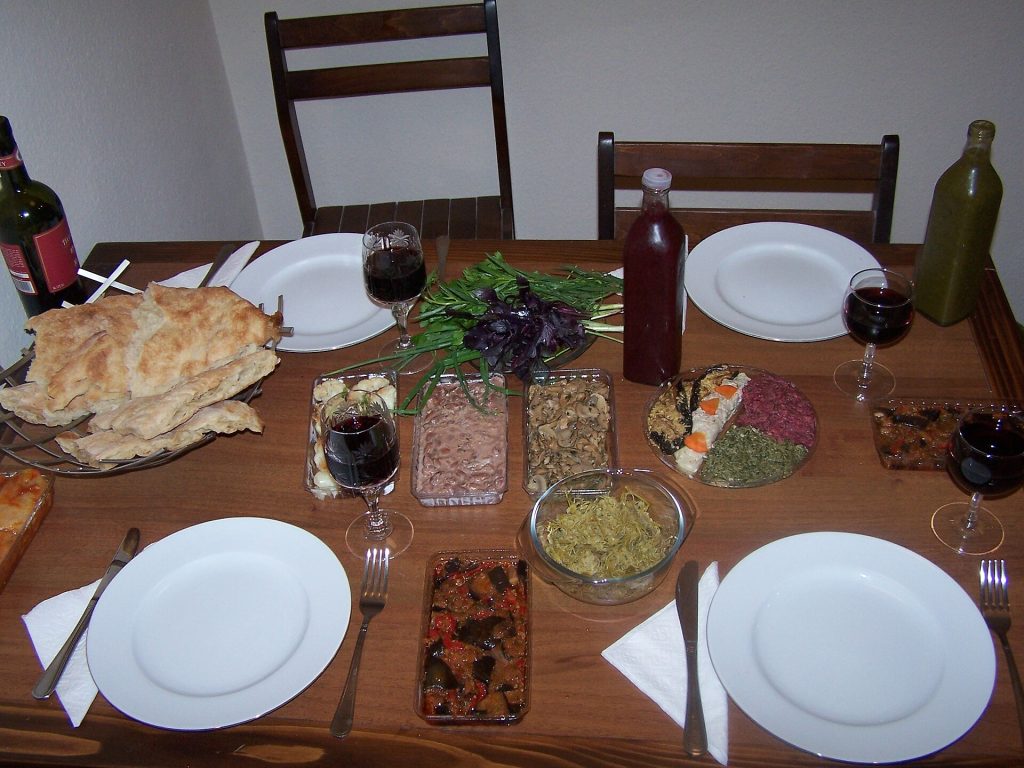
The day typically opens with a liturgy (ghvtismsakhureba) in the village church, often followed by a short procession around the church grounds. Afterwards the community gathers for a supra, the long Georgian table, presided over by a tamada (toastmaster) who leads a fixed sequence of toasts — to peace, to the departed, to the village, to guests. Many villages mark the day with a qurbani, the ritual slaughter and shared distribution of an animal (commonly a ram or bull), its meat cooked and handed out to households and visitors alike as an act of communal charity rather than private feasting.
Food on the table runs to Kartli’s everyday staples rather than anything feast-specific: khinkali, mtsvadi (skewered meat grilled over vine wood), lobio, fresh bread, and churchkhela strung along the fence for children. Wine, usually homemade and poured from a pitcher rather than a bottle, accompanies every toast. Conversation and toasting are interspersed with Georgian polyphonic singing in some villages, a practice recognised internationally as part of the country’s intangible cultural heritage. Regional variants of this kind of village feast exist across Georgia under different names — Alaverdoba in Kakheti, Lomisoba in Mtskheta-Mtianeti — but Ghvtaeboba’s late-August date and its specific dedication to the Trinity are particular to Gardabani’s Georgian villages.
When it happens
Ghvtaeboba is not fixed to a civil date. It falls in late August, with the precise day set by the parish and municipal organisers each year and confirmed only in the weeks beforehand — a pattern typical of village patronal feasts, whose dates often follow a local saint’s or church’s own calendar rather than the fixed cycle of the twelve great feasts. The 2026 observance took place in late August, before this page was written; the next is provisionally expected on 29 August 2027, though organisers had not yet confirmed the exact date at the time of writing. It is not a national public holiday: government offices, shops and transport across Georgia operate normally, and only the host villages and their churches close ordinary business for the day.
Where to experience it
Gardabani municipality lies roughly 30–40 kilometres southeast of Tbilisi on the Mtkvari plain, reached by road rather than rail. A visitor who wants to see Ghvtaeboba should expect a village church courtyard rather than a staged city event: morning liturgy inside a modest rural church, a slower midday gathering as the supra is laid outside under trees or awnings, and an afternoon that runs long with toasts and conversation. Because the date and host village are confirmed locally and close to the day itself, checking with the municipal administration or a local guide shortly beforehand is the only reliable way to be in the right place. Visitors are welcome at the liturgy and at the table, but modest dress is expected inside any church — covered shoulders and, for women, a headscarf, available at most church entrances — and photography during the service itself should be unobtrusive and, where possible, asked about first.
Travel with GTour
Since Georgia in 10 Days — Tbilisi to Svaneti to the Sea begins in Tbilisi, its opening days can be arranged around late August to allow a detour into Gardabani municipality for the village feast of Ghvtaeboba, while Tbilisi & Mtskheta — The Essential First Day can likewise be adjusted if the confirmed date falls within your stay. A GTour travel expert will design the exact route and timing around your dates once they are set.
Did you know
- Kartli, the historic region that includes Gardabani, was the first core territory of Georgia to adopt Christianity, traditionally dated to 327 under King Mirian III.
- Georgian polyphonic singing, often heard at village feasts, is inscribed on UNESCO’s Representative List of the Intangible Cultural Heritage of Humanity.
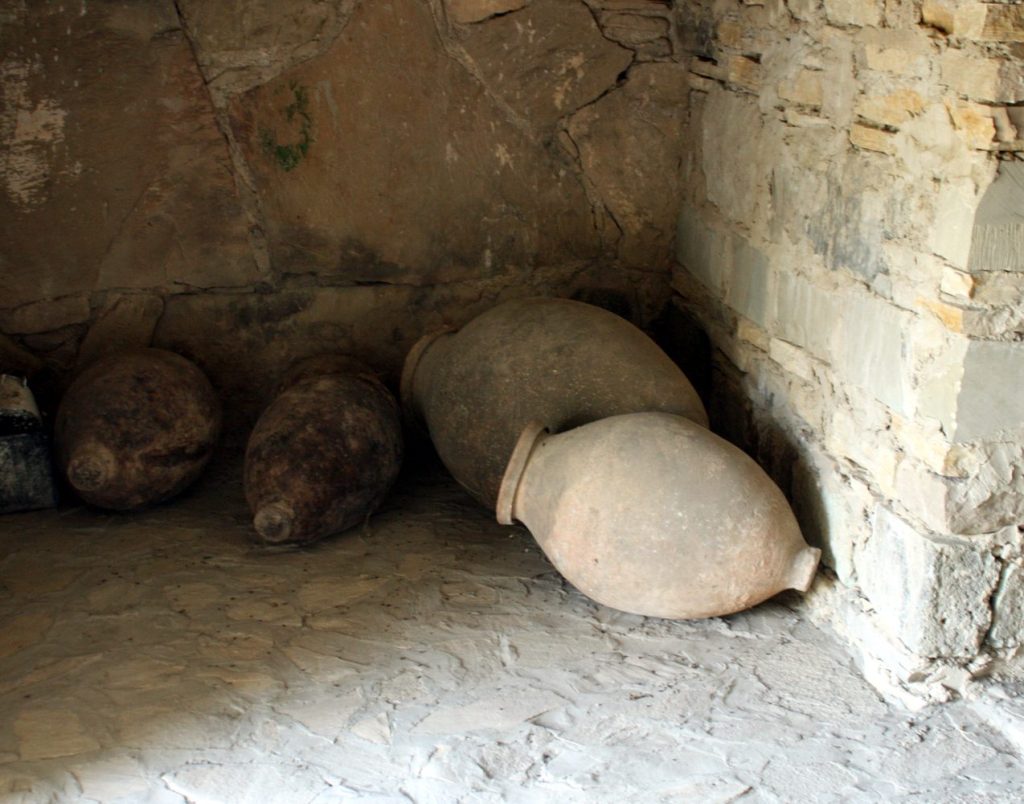
- The traditional Georgian method of fermenting wine in buried clay vessels called qvevri is also recognised by UNESCO as intangible cultural heritage.
- The Davit Gareja monastic complex, near Gardabani and Kakheti, was founded in the sixth century by one of the Thirteen Assyrian Fathers credited with spreading organised monasticism across Georgia.
- Many Georgian village feast days, Ghvtaeboba among them, are not fixed on the national church calendar but set locally each year by the parish itself.
Practical tips for visitors
The most reliable way to reach the host village is by private car or taxi from Tbilisi, since public transport serving individual Gardabani villages is limited and does not run to the feast’s irregular timetable. Late August in this part of Kartli is hot, often above 30°C, so light clothing that still covers shoulders and knees for church visits is practical. No tickets or bookings are required to attend, but confirming the date and village with the local administration close to the day is essential, since it is announced only shortly in advance. GTour arranges a private driver or guide for the day, which is useful given the short notice and limited public transport.
Combine it with
Gardabani sits within easy reach of Kartli’s other historic sites, is a short drive from Tbilisi, and borders the monastic landscapes of Kakheti, including the Davit Gareja complex.
Questions travellers ask
What does “Ghvtaeboba” mean?
It literally means “the day of the Divinity,” from the Georgian word for God, ghmerti. In Gardabani it is understood as a feast of the Holy Trinity, dedicated to the local church’s own patron.
Is Ghvtaeboba a public holiday in Georgia?
No. It is a local, parish-level feast observed in Gardabani’s villages. Offices, shops and transport elsewhere in Georgia operate normally on the day.
Can outside visitors attend?
Yes, villagers typically welcome guests at both the church service and the communal supra that follows. Modest dress and quiet behaviour during the liturgy are expected.
How do I find the exact date each year?
The date is set locally by the parish and municipal organisers and confirmed only shortly before the feast, usually within days or a couple of weeks. Checking with the Gardabani municipal administration or a local guide close to late August is the most reliable approach.
What should I wear or bring?
Clothing that covers shoulders and knees is appropriate for the church; a headscarf for women is customary and usually available at the entrance. Bringing nothing is fine, as guests are fed at the communal table.
Is this the same as Trinity Sunday or Pentecost?
No. The universal Orthodox feast of Pentecost and Trinity falls fifty days after Easter, typically in late spring or early summer. Ghvtaeboba is a separate, locally fixed village patronal day held in late August.
How far is Gardabani from Tbilisi?
Roughly 30 to 40 kilometres southeast of the capital, normally a 45-minute to one-hour drive by road depending on the specific village and traffic.
What food and drink are typical?
Khinkali, grilled mtsvadi, lobio, fresh bread, churchkhela and homemade wine are standard, often with a shared, ritually distributed meat dish if the village holds a qurbani that year.
Sources
- Patriarchate of Georgia
- Georgian National Tourism Administration
- UNESCO Intangible Cultural Heritage Lists
- UNESCO World Heritage List
- Ministry of Culture, Sport and Youth of Georgia
- National Parliamentary Library of Georgia
- Government of Georgia
Plan your Georgia
Want to be in Georgia for Ghvtaeboba? A GTour travel expert designs the itinerary around it and calls you back.
A traditional Georgian feast with laden table, echoing the spirit of village Trinity celebrations. · Photo: rugbyxm / Wikimedia Commons, CC BY 2.0
This page in other languages: Русский
GTour conciergeAsk anything about Georgia · we reply within hours