Archives


Chkondidloba in Georgia: dates, meaning and how to experience it
Next dates
25 September 2027 · Martvili, Samegrelo. See the full events calendar and Georgia today for roads and weather.
What it is
Chkondidloba is the annual feast day of Martvili, a small town in the Samegrelo region of western Georgia, held in honour of St Giorgi Chkondideli, an 11th–12th century bishop and statesman. The name derives from “Chkondidi,” the old name of the settlement and its monastery, traditionally explained in Megrelian as “big hornbeam” (chkoni, hornbeam, and didi, big), after a tree said to have once stood on the site. The suffix “-oba” is the common Georgian way of naming a saint’s day or a local patronal festival, so Chkondidloba literally means “the day of Chkondidi.”
The feast is celebrated by the parish of Martvili Dormition Cathedral, by residents of the town and surrounding villages, by clergy of the Georgian Orthodox Church, and increasingly by visitors who come for both the liturgy and the accompanying town fair. It belongs to a wide family of Georgian local feast days — Alaverdoba in Kakheti, Lomisoba in Mtskheta-Mtianeti, Mariamoba across the country — in which a single parish or region marks its own patron saint with a mixture of church service and communal celebration, distinct from the nationwide feasts of the church calendar.
Historical background
- 7th–8th century — according to tradition, a monastic community is established at the site later known as Chkondidi, on the hill above present-day Martvili.
- 9th–10th century — Chkondidi is recorded among the episcopal sees of western Georgia, under the kingdoms that preceded unified Georgian statehood.
- 1089–1125 — reign of King David IV the Builder, who reunified much of Georgia and reformed church and state administration.
- late 11th–early 12th century — Giorgi, bishop of Chqondidi, is appointed mtsignobartukhutsesi, the chief officer of the royal chancellery, combining the highest church and state offices in one person for the first time in Georgian governance, a model later bishops of Chqondidi continued to hold.
- c. 1118 — traditional date of the death of Giorgi Chqondideli, later venerated as a saint of the Georgian Orthodox Church.
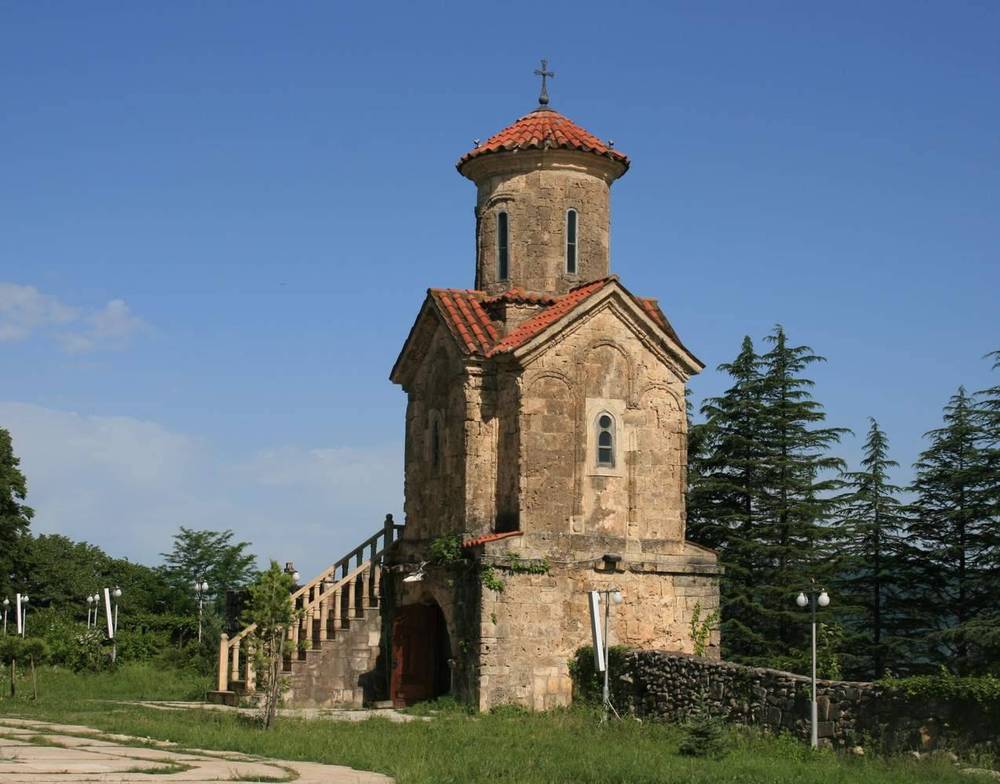
- 13th century — the Dormition cathedral at Martvili is rebuilt and enlarged, incorporating earlier masonry from the original cross-cupola church.
- 17th–18th centuries — Chqondidi remains a centre of ecclesiastical and political authority in Samegrelo under the ruling Dadiani princes of Mingrelia.
- 20th century — like most Georgian monasteries, Chqondidi’s monastic life is interrupted during the Soviet period; the church building survives but active worship is curtailed.
- 1990s–present — monastic life and regular services resume after Georgia’s independence, and the Patriarchate and Martvili municipality revive the autumn feast as the combined liturgical and civic celebration now known as Chkondidloba.
Giorgi Chkondideli is remembered less as a mystic than as a builder of the medieval Georgian state. His dual office — bishop of Chqondidi and chancellor of the realm — placed him at the centre of David IV’s campaign to curb the power of rebellious nobles, reorganise the army, and prepare the ground for the decisive Battle of Didgori in 1121, after which Tbilisi was finally retaken from Muslim rule. The pairing of church and administrative authority in one person, unusual even by medieval standards, made the bishops of Chqondidi among the most powerful clerics in the kingdom for generations afterward. The Patriarchate of Georgia maintains records of the saints and historical hierarchs of the Georgian church, including figures of this formative period of the 11th and 12th centuries.
The monastery itself, perched above the Abasha river valley, continued to serve Samegrelo’s religious and cultural life through the centuries of Ottoman pressure, Mingrelian princely rule, and eventual incorporation into the Russian and then Soviet empires. Its survival as both a working monastery and an architectural monument makes it one of the principal medieval sites of western Georgia, and the modern festival of Chkondidloba is as much an act of regional memory as of religious observance.
Meaning and traditions
The day begins with a Divine Liturgy at Martvili’s Dormition Cathedral, led by clergy of the Chqondidi (Martvili-Abasha) eparchy, often joined by the Catholicos-Patriarch’s representatives for major anniversaries. A procession may circle the cathedral and monastery grounds, and the faithful bring candles, bread and wine to be blessed. After the service, the celebration moves into the town itself, where a fair (bazrobi) fills the streets with stalls of Megrelian produce, wine, and handicrafts.
Food is central to the secular half of the day. Visitors encounter Samegrelo’s distinctive cuisine: elarji (cornmeal cooked with sulguni cheese until elastic), gebzhalia (fresh cheese rolls in mint-infused whey), and mchadi (cornbread), often accompanied by local wine and, at the family table afterward, a supra — a long feast with toasts led by a tamada, or toastmaster. Traditional Megrelian and wider Georgian polyphonic singing frequently accompanies the celebrations, along with dance performances by local ensembles.
Because Chkondidloba is a local patronal feast rather than a nationwide one, its customs resemble those of other -oba festivals: a morning centred on the church, an afternoon centred on the community. What distinguishes it is its deep association with Samegrelo’s Megrelian-speaking identity and cuisine, and with the specific historical memory of a bishop who was also a statesman — a dual role still spoken of locally with evident pride.
When it happens
Chkondidloba is fixed to the civil calendar date of 25 September each year, rather than shifting with the moveable feasts of the Julian-based church calendar. This year the feast fell on 25 September 2026; the next observance will be on 25 September 2027. It is a local and ecclesiastical celebration rather than a nationwide public holiday, so government offices and most businesses across Georgia remain open; in Martvili itself, however, shops may close early and the town centre is given over to the fair and church activities for the day.
Where to experience it
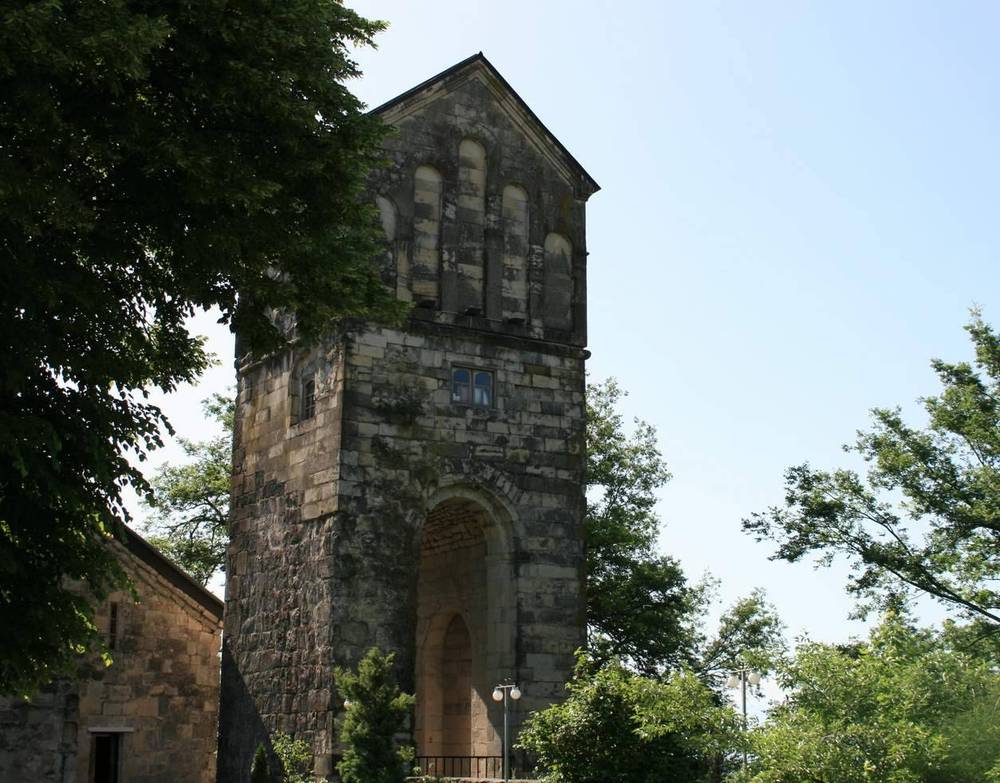
The centre of the celebration is the Martvili Monastery complex and its Dormition Cathedral, on the hill overlooking the town of Martvili in Samegrelo. The liturgy typically begins in the morning; visitors who wish to attend should arrive early to find space inside or in the courtyard. The town’s main square and streets host the fair through the afternoon and into the evening, with food stalls, craft vendors and musical performances.
Inside the cathedral, women are expected to cover their heads and shoulders and wear skirts rather than trousers where possible; men should remove hats. Candles are purchased at a stand near the entrance and lit before icons rather than carried during the service. Photography during the liturgy itself should be discreet or avoided unless clearly permitted; the fair outside is open to casual photography. Many visitors combine the religious day with a trip to nearby Martvili Canyon, a short drive from the monastery, where boat trips run along the turquoise river gorge — a natural counterpart to the day’s cultural programme.
Travel with GTour
The Martvili & Okatse Canyons + Prometheus Cave — Day Trip from Kutaisi already stops in Martvili and can be shifted to 25 September to coincide with the Chkondidloba feast at the monastery, while the Kutaisi & Western Georgia — 3 Days itinerary passes through the same town and allows a similar adjustment. A GTour travel expert designs the exact route around the guest’s dates to make this possible.
Martvili & Okatse Canyons + Prometheus Cave tour Plan my trip
Did you know
- Giorgi Chkondideli held the unusual combined title mtsignobartukhutsesi-chqondideli, merging the roles of royal chancellor and bishop in one office.
- The name “Chkondidi” is traditionally explained in the Megrelian language as “big hornbeam,” a reference to a legendary tree once said to mark the site.
- Samegrelo is home to the Megrelian language, a distinct member of the Kartvelian language family spoken alongside Georgian in the region.
- Martvili Monastery stands only a short distance from Martvili Canyon, one of western Georgia’s most visited natural attractions.
- The suffix “-oba” used in Chkondidloba also names other major Georgian feasts, including Alaverdoba in Kakheti and Lomisoba in Mtskheta-Mtianeti, part of a shared pattern of local patronal celebration across the country.
Practical tips for visitors
Martvili lies roughly 70 kilometres from Kutaisi and about 350 kilometres from Tbilisi; the nearest airport with regular flights is Kutaisi International Airport. Self-driving or hiring a private driver is the most practical way to reach the town, since public transport links are limited on festival day when streets near the monastery may be closed to vehicles. Late September weather in Samegrelo is generally mild but can bring rain, so layered clothing and a light rain jacket are advisable. Modest dress is expected at the cathedral regardless of weather. Accommodation in Martvili itself is limited, so visitors often base themselves in Kutaisi or Zugdidi and travel in for the day; booking ahead is recommended if combining the festival with a Martvili Canyon excursion, as both draw visitors on the same dates. GTour arranges a private driver or guide for the day for travellers who prefer not to organise transport themselves.
Combine it with
Martvili sits within reach of several of western Georgia’s historic regions. Visitors often continue to Imereti, gateway to Kutaisi and its own medieval monasteries, or extend further to Svaneti, whose medieval towers and churches fell historically within the wider ecclesiastical orbit of western Georgian bishoprics such as Chqondidi. A scenic route through Racha offers a further option for travellers extending a western Georgia itinerary beyond the festival day.
Questions travellers ask
Is Chkondidloba a public holiday in Georgia?
No. It is a local and ecclesiastical feast specific to Martvili and the Chqondidi eparchy, not a nationwide public holiday, so government offices and most businesses elsewhere in Georgia operate normally.
Who was Giorgi Chkondideli?
He was an 11th–12th century bishop of Chqondidi who also served as chancellor to King David IV the Builder, combining church and state authority at a pivotal moment in Georgia’s reunification and later venerated as a saint.
Can visitors attend the liturgy at Martvili Monastery?
Yes, the service is open to the public, though visitors should dress modestly, remain quiet during worship, and avoid intrusive photography inside the cathedral.
How do I get to Martvili from Tbilisi or Kutaisi?
Kutaisi, about 70 kilometres away, is the nearest airport and a convenient base; from Tbilisi it is roughly a four-hour drive. Private transport or a hired driver is the most reliable option, especially on the festival day.
Is Chkondidloba the same as Giorgoba?
No. Giorgoba is the nationwide feast of St George celebrated across Georgia, while Chkondidloba honours a specific historical bishop, Giorgi Chkondideli, and is observed only in and around Martvili.
What should I wear to the festival?
Modest clothing is expected for the church portion of the day: women should cover their heads and shoulders, and both men and women should avoid shorts or sleeveless tops inside the cathedral. Casual, comfortable clothing suits the afternoon fair.
Can I combine the festival with a visit to Martvili Canyon?
Yes, the canyon lies a short drive from the monastery and is a popular addition to a day built around Chkondidloba, though both sites draw crowds on the festival date, so an early start is advisable.
Is this kind of festival celebrated elsewhere in Georgia?
Yes, many Georgian towns and villages hold their own patronal feast day, known generically by the “-oba” suffix, such as Alaverdoba in Kakheti or Lomisoba in Mtskheta-Mtianeti, each tied to a local saint or church rather than a nationwide calendar date.
Sources
- Georgian National Museum
- Ministry of Culture and Sports of Georgia
- Georgian National Tourism Administration
- Heritage Sites of Georgia
- National Parliamentary Library of Georgia
- Martvili Monastery complex – Georgian National Museum
- Chkondidloba festival news report
- Martvili Municipality official page
- Cultural heritage monuments of Samegrelo – Ministry of Culture
- Martvili Monastery manuscripts – National Parliamentary Library digital archive
Plan your Georgia
Want to be in Georgia for Chkondidloba? A GTour travel expert designs the itinerary around it and calls you back.
Martvili Monastery, site of the Chkondidloba feast honouring St Giorgi Chkondideli on 25 September. · Photo: Medgeorgia / Wikimedia Commons, CC BY-SA 3.0
This page in other languages: Русский
GTour conciergeAsk anything about Georgia · we reply within hours