

By Nino Gelashvili, Travel News Editor · 26/10/2026
Italian citizens do not need a visa to visit Georgia for tourism, business, or family visits, and the trip is short and straightforward: a direct flight from Milan, Rome, or Bologna takes under five hours, the lari is easy to source from any ATM, and English and increasingly Italian-speaking guides cover most practical needs. The main things to confirm before departure are the exact length of visa-free stay allowed on the day you travel, your flight routing to either Tbilisi or Kutaisi, and whether your travel insurance covers Georgia, since it sits outside the EU health-coordination system.
This guide sets out what an Italian traveller needs to check, pack, and expect, from entry rules and flights to food, wine, language, and safety, with links to the official Georgian pages where details can change. Treat every rule here as a starting point to verify close to your departure date rather than a final answer, particularly visa validity periods and flight schedules, which are reviewed periodically by both governments and airlines.
Visa and entry rules for Italian citizens
Georgia operates a liberal visa-free regime for EU passport holders, including Italians, allowing stay without a visa for tourism and most short-term purposes. The precise permitted duration and any conditions (such as passport validity requirements) are set by Georgian government decree and can be amended, so Italian travellers should check the current rule on Georgia’s official visa portal before booking, not rely on previous trips or blog posts. Start with the government’s visa information page via evisa.gov.ge, which lists visa-free nationalities and stay periods, and cross-check against the Ministry of Foreign Affairs of Georgia at mfa.gov.ge. You need a passport valid for the duration of your stay; an Italian carta d’identità, valid within the EU and Schengen area, is not sufficient to enter Georgia, which is outside the Schengen zone.
If your trip is for study, work, or a stay longer than the visa-free allowance, Georgia has separate residence and long-stay permit categories, again detailed through the official portals above. Italian citizens travelling with minors should check whether parental consent documentation is requested at the border, since practice can vary and it is safer to carry notarised consent if travelling with a child without both parents.
Flights and land borders from Italy
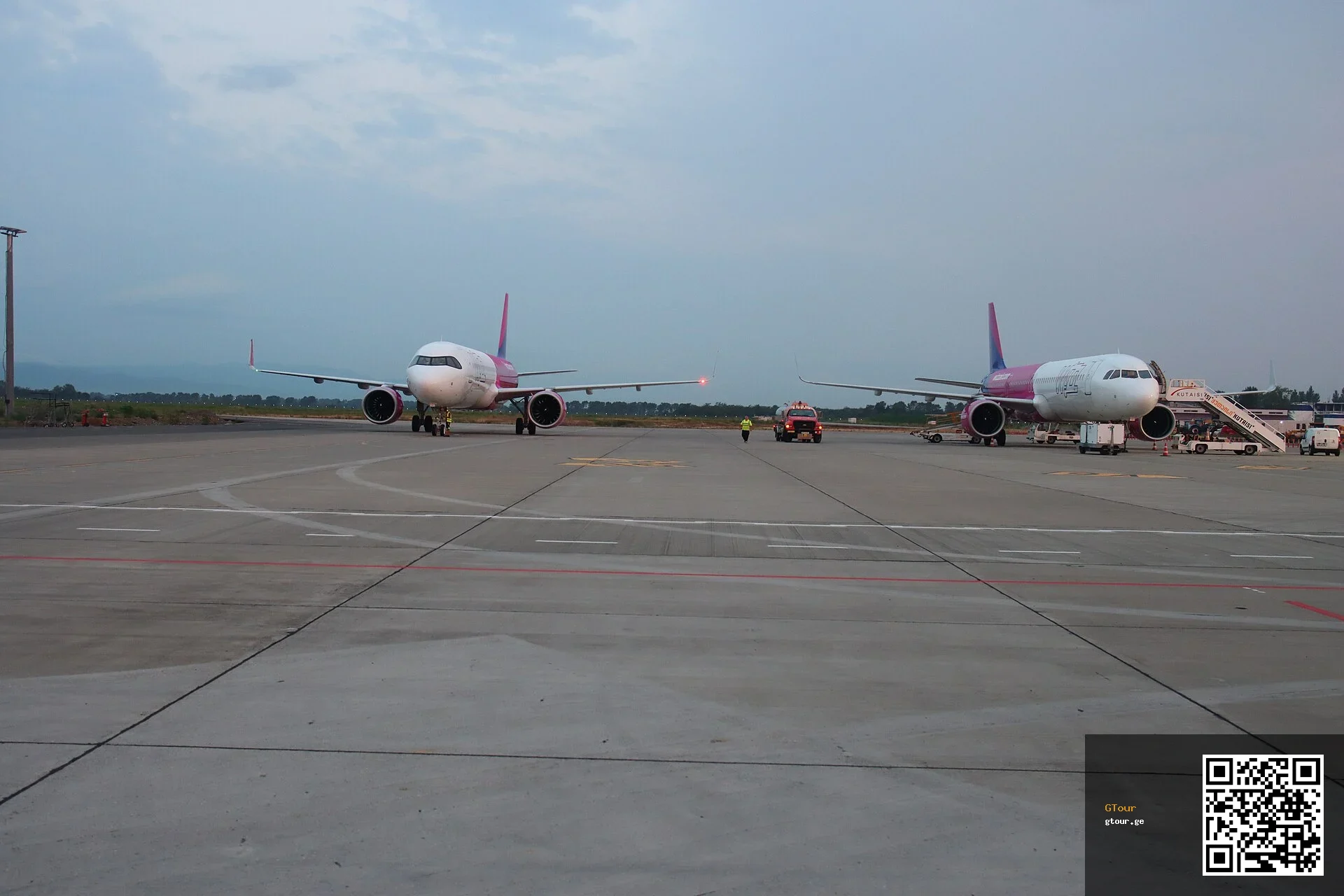
There is no non-stop widebody service, but budget carriers have made direct Italy-Georgia flying routine. Wizz Air and Ryanair operate seasonal and year-round routes from Milan Bergamo, Rome, and Bologna to Kutaisi International Airport in western Georgia, Georgia’s low-cost hub, alongside Tbilisi International Airport, which receives one-stop connections via Istanbul, Warsaw, Vienna, or Doha on Turkish Airlines, LOT, Austrian, or Qatar Airways. Confirm live routes and days of operation directly with the airports, since low-cost schedules shift by season: tbilisiairport.com for Tbilisi, kutaisiairport.com for Kutaisi, and batumiairport.com for Batumi, which has fewer European links but useful for Black Sea itineraries.
Kutaisi suits travellers heading to Imereti, Svaneti, Racha, or the Black Sea coast first; Tbilisi is more convenient if the capital, Kakheti wine country, or the eastern mountains are the priority. Overland entry is possible from Armenia, Azerbaijan, and Turkey if combining Georgia with a wider Caucasus trip, but this is a minority option for most Italian visitors and worth planning with a specialist if attempted.
Driving licence, money, and SIM cards
An Italian driving licence is generally usable for short-term driving in Georgia, and many Italians also carry an International Driving Permit as a backup, since enforcement and rental-company requirements can differ from what the law technically allows. Confirm current practice with your car rental company and, if in doubt, check Georgia’s road authority at georoad.gov.ge before relying solely on your Italian licence for an extended rental.
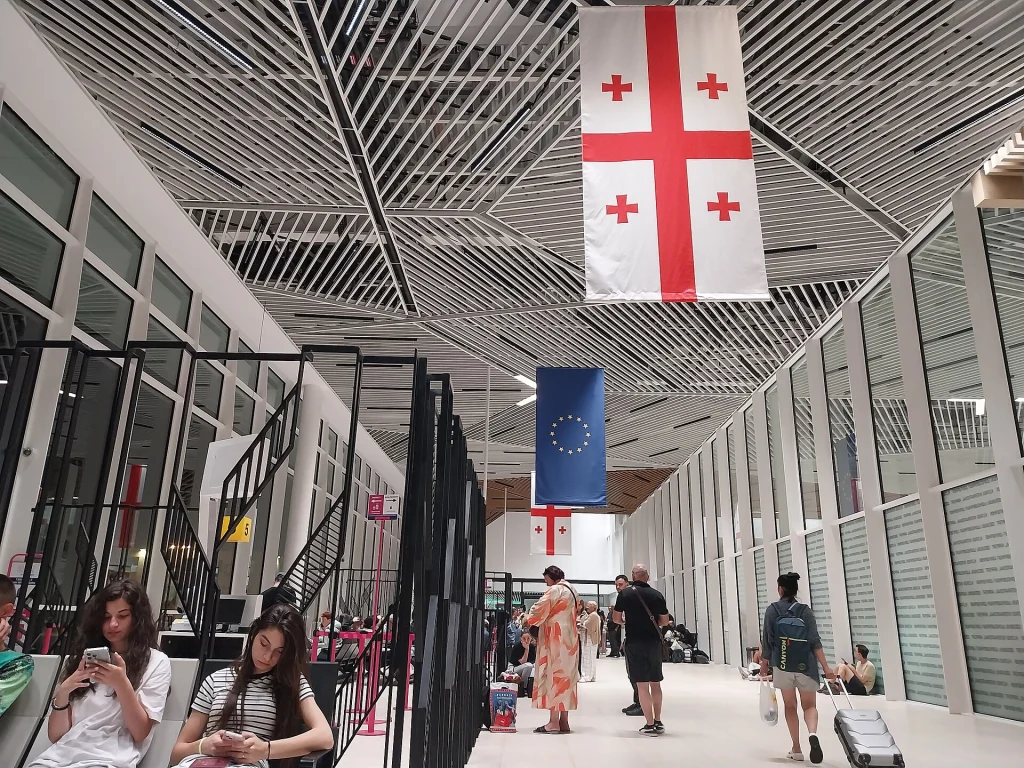
The local currency is the Georgian lari (GEL); euros are not used for payment outside some tourist-facing businesses, and cards are widely accepted in Tbilisi, Batumi, and Kutaisi, less reliably in small towns and mountain villages, where cash is still preferable. ATMs are common in cities; withdraw lari rather than carrying large amounts of cash from Italy. Contactless SIM cards from Georgian operators are inexpensive and available at both airports on arrival, a simpler option than roaming for a short trip, and useful given that mobile data coverage thins out in remote mountain areas like Svaneti or Tusheti.
Language and Italian-speaking guides
Georgian uses its own alphabet and is unrelated to Romance or Slavic languages, so expect no linguistic shortcuts from Italian beyond a handful of loanwords. English is the default second language in tourism, hospitality, and among younger Georgians in cities; Russian is still understood by many older residents. Italian-speaking local guides exist, mainly through Tbilisi-based tour operators and some wine-region guides in Kakheti, reflecting steady Italian tourist numbers and interest in Georgian viticulture; book one in advance for Svaneti, Kakheti, or in-depth historical touring rather than expecting to find one on arrival. For planning a guided itinerary, see GTour’s Tbilisi and Kakheti travel guides.
Food and wine: Georgia compared with Italy
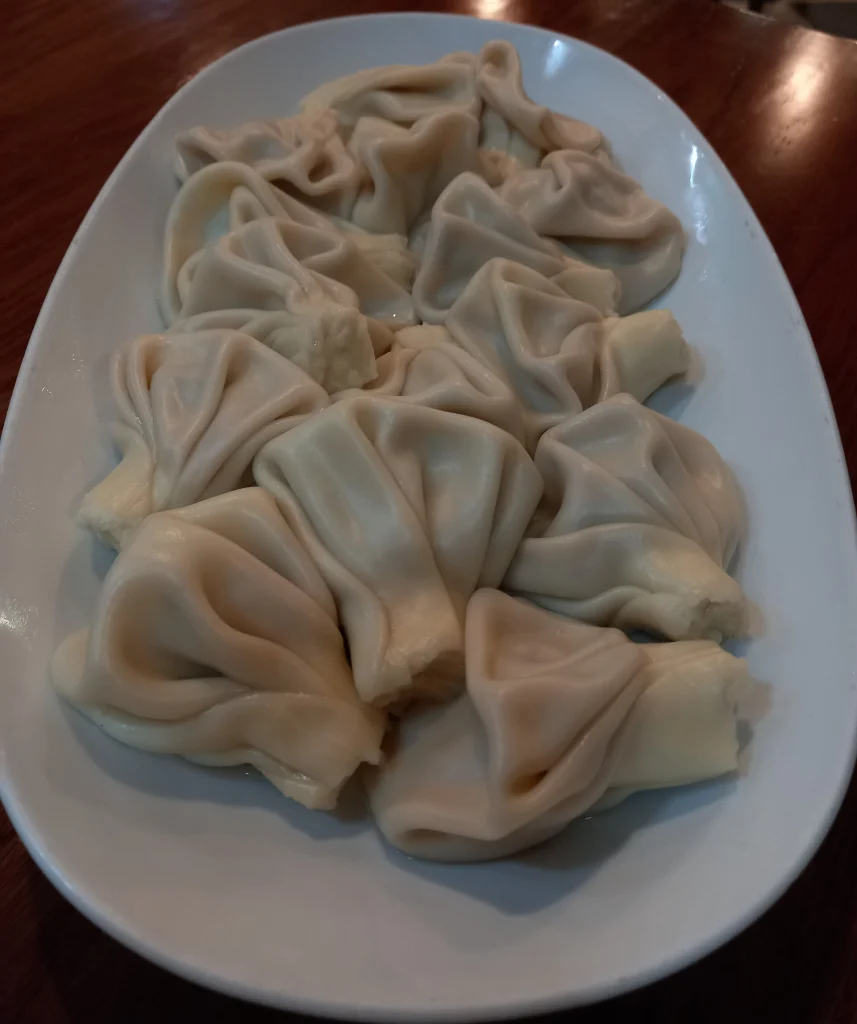
Italians tend to find Georgian food familiar in its seriousness about ingredients and regional identity, but different in form: khachapuri (cheese-filled bread) sits somewhere between pizza and a savoury tart; khinkali (dumplings) share a family resemblance with tortellini but are eaten by hand and not dipped in sauce; and Georgian stews and grilled meats favour pomegranate, walnut, and herb-heavy sauces rather than tomato and olive oil bases. Vegetarians generally eat well, since Georgian cuisine has a strong tradition of bean, eggplant, and walnut-based dishes, but travellers with coeliac disease or strict dietary needs should communicate clearly, as gluten-free and allergen labelling is far less standardised than in Italy; carry a translated dietary card for kitchens outside major cities.
| Italian comparison | Georgian dish | Note |
|---|---|---|
| Pizza / focaccia | Khachapuri | Bread and cheese, regional variants (Adjaran, Imeretian, Megrelian) |
| Tortellini / ravioli | Khinkali | Hand-pleated dumplings, eaten without cutlery, broth inside |
| Antipasti | Supra starters (pkhali, badrijani) | Walnut-based vegetable dishes, often vegetarian |
| Grappa | Chacha | Grape pomace spirit, stronger and less refined than grappa |
Wine is where the comparison gets most interesting for Italian visitors. Georgia claims one of the world’s oldest continuous winemaking traditions, centred on fermenting and ageing wine in buried clay qvevri vessels, a method recognised on UNESCO’s Representative List of the Intangible Cultural Heritage of Humanity, as documented at ich.unesco.org. The resulting amber and orange wines, made with extended skin contact for white grapes, taste markedly different from Italian whites and are worth tasting with an open palate rather than judging against a Soave or Gavi. Kakheti, Georgia’s main wine region, is best visited with a guide who can explain the qvevri method and arrange tastings at family cellars rather than only commercial wineries; for background on Georgia’s official wine sector, see wine.gov.ge.
Religion, culture, and best times for Italian travellers
Georgia is predominantly Eastern Orthodox Christian, and its historic monasteries, churches, and monuments are a major draw, including UNESCO World Heritage properties at Mtskheta, documented at whc.unesco.org, and the Bagrati Cathedral and Gelati Monastery complex, at whc.unesco.org. Catholic Italians can attend Mass in Tbilisi at the Catholic Cathedral of the Assumption on Aghmashenebeli Avenue; service times and language of celebration vary, so confirm locally rather than assuming a fixed Italian-language schedule.
Italy and Georgia share deeper historical threads than most travellers expect: Genoese and Venetian merchants traded along the Black Sea coast in the medieval period, and Georgian architecture, religious art, and viticulture have drawn growing Italian academic and tourism interest in recent decades, visible today in cultural exchanges and twinned heritage projects. Most Italian visitors travel in the warmer months, May to October, when Kakheti’s grape harvest (rtveli) in September and October is a particular draw; Georgia’s Easter calendar follows the Orthodox date, which differs from the Catholic one most years, worth noting if timing a trip around Easter traditions.
Health, insurance, and safety notes for Italians
Georgia is outside the EU’s reciprocal health-coverage system, so an Italian tessera sanitaria does not cover treatment there; private travel insurance with medical coverage is strongly advised, particularly for mountain activities in Svaneti, Kazbegi, or Tusheti, where evacuation can be slow and costly. No special vaccinations are mandatory for entry from Italy; discuss routine and travel vaccinations with your doctor or a travel health clinic before departure, since personal medical history varies. For current travel advisories affecting Italian citizens, check Italy’s own foreign ministry channels alongside Georgia’s Ministry of Foreign Affairs at mfa.gov.ge.
Georgia is generally considered safe for tourists, with petty crime low by European standards in main tourist areas; the usual precautions around valuables and late-night city walking apply as they would in any Italian city. Mountain driving and hiking require more caution than many Italians expect from a country of this size: roads in Svaneti, Tusheti, and parts of Racha are narrow, sometimes unpaved, and seasonal, and mobile signal is unreliable, so a local driver or guide is worth the cost for anything beyond the main asphalt routes. If renting a car, confirm your insurance excess and whether cross-border or off-road driving is covered before signing.
If this guide is part of a trip you are planning, our Rtveli — Wine Harvest in Kakheti (3 Days, September–October) and Racha — Khvanchkara Wine & Mountain Lakes (2 Days) cover the places it describes with a private guide and driver; a GTour travel expert adapts the route to your dates.
Practical summary
- Visa: visa-free for Italian citizens for short stays; confirm current duration on evisa.gov.ge before booking, passport required, ID card not valid for entry
- Flights: direct Wizz Air and Ryanair routes from Milan, Rome, and Bologna to Kutaisi; connections to Tbilisi via Istanbul, Warsaw, or Vienna; check live schedules on tbilisiairport.com and kutaisiairport.com
- Driving: Italian licence generally usable short-term; carry an International Driving Permit as backup and check with your rental company
- Money: Georgian lari only for payment, cards widely accepted in cities, cash needed in rural areas and mountains
- SIM: buy a local SIM at either airport for reliable data, especially before heading to the mountains
- Language: English covers most tourism needs; Italian-speaking guides available for Kakheti and historical tours, best booked in advance
- Food: khachapuri, khinkali, and walnut-based vegetarian dishes are the staples; carry a dietary card if you have coeliac disease or strict allergies
- Wine: qvevri amber and orange wines differ markedly from Italian styles; taste with an open mind in Kakheti with a guide
- Religion: Catholic Mass available at Tbilisi’s Catholic Cathedral of the Assumption; confirm schedule locally
- Insurance: buy travel medical insurance, since Italian public healthcare coverage does not extend to Georgia
- Safety: low crime in main areas; extra caution advised for mountain driving and hiking, local guides recommended beyond main roads
Sources
- Georgia e-Visa and visa-free information
- Georgia Ministry of Foreign Affairs
- Georgia road authority driving information
- UNESCO qvevri winemaking heritage listing
- UNESCO Historical Monuments of Mtskheta
- UNESCO Bagrati Cathedral and Gelati Monastery
- Georgia National Wine Agency
Questions this guide does not answer? Write to info@castle.ge or WhatsApp +995 577 41 63 14 — a person in Tbilisi replies. See also our travel services and all guides.
Wizz Air aircraft at Kutaisi Airport, the main gateway for Italian low-cost flights. · Photo: Draceane / Wikimedia Commons, CC BY-SA 4.0
Been to Georgia? Tell us how it went — the best stories are published here.
Share your tripOne email a week: what changed for travellers in Georgia — rules, roads, flights, seasons — plus one place worth the trip. Written by the GTour desk, no advertising, unsubscribe in one click.
This story across our partner network — ქართულად: შენი დასვენება