Archives


Vaneloba in Georgia: dates, meaning and how to experience it
Next dates
18 September 2027 – 19 September 2027 (to be confirmed) · Vani, Imereti. See the full events calendar and Georgia today for roads and weather.
What it is
Vaneloba takes its name from the Georgian suffix -oba, which turns a place or saint’s name into a feast day — the same pattern that gives Tbilisi its “Tbilisoba” and Alaverdi monastery its “Alaverdoba.” Vaneloba therefore means, quite literally, “the day of Vani,” the municipal and cultural holiday of the small town of Vani in the Imereti region of western Georgia. It is a civic rather than a church festival, organised by the local municipality to mark the town’s identity, its agricultural calendar and, above all, its extraordinary archaeological legacy as one of the principal urban centres of ancient Colchis.
The holiday is celebrated by the residents of Vani and the surrounding villages of Vani Municipality, by former residents who return from Kutaisi, Tbilisi or abroad for the occasion, and increasingly by visitors drawn by the town’s connection to the legend of the Golden Fleece. Teachers, farmers, winemakers, museum staff and local officials all take part, and the day typically combines an official civic programme with folk concerts, sport, a produce and craft market, and open hours at the archaeological site that put Vani on the map.
Historical background
- 8th–6th centuries BCE — Vani develops as a fortified hilltop settlement and cult centre within the kingdom of Colchis, the region later associated in Greek myth with the Golden Fleece.
- 4th–3rd centuries BCE — The settlement reaches its peak of wealth, producing the gold jewellery, bronze figurines and sanctuary remains that distinguish Vani among Colchian sites.
- 1st century BCE — According to the archaeological record, the city is destroyed, a period that overlaps with Roman military campaigns in the Caucasus during the era of Mithridates VI of Pontus.
- 1876 — Local agricultural work near Vani accidentally uncovers gold objects, drawing the first scholarly attention to the site.
- 1947 — Systematic archaeological excavation of Vani begins under Georgian academic institutions, continuing in successive seasons to the present.
- 1985 — The Vani Archaeological Museum opens on the excavation hill, later operating as part of the Georgian National Museum network.
- Soviet and post-Soviet period — Vani is designated a protected cultural heritage territory, with the excavation area managed as an archaeological reserve.
- 21st century — Vani Municipality establishes Vaneloba as an annual September town day, combining heritage programming with contemporary cultural and agricultural events; the 2023 edition was held on 21 September 2023.
Vani’s importance rests on its place within ancient Colchis, the kingdom that Greek and Roman writers located on the eastern shore of the Black Sea and that later tradition linked to the myth of Jason and the Argonauts. The gold ornaments, imported Greek ceramics, bronze sculpture fragments and monumental sanctuary structures recovered from the hill above the modern town indicate a settlement of considerable wealth and long-distance trade contacts, overseen in different periods by priestly or political elites whose precise identity remains debated among historians. The Georgian National Museum, which administers the site’s collections, continues to publish findings from ongoing seasonal excavation campaigns.
The modern festival is a far younger layer laid over this ancient history. As with many Georgian town days instituted or revived after independence, Vaneloba gives a small regional centre a fixed annual date on which civic pride, local produce, folk performance and the deep archaeological record are brought together for residents and visitors alike. It functions less as a religious commemoration than as the kind of community anniversary found across Imereti and other Georgian provinces, where local government, schools and cultural houses coordinate a single day of concerts, sport and markets.
Meaning and traditions
The day usually opens with an official programme in Vani’s central square — short speeches by the mayor (meri) and regional officials, followed by performances from local folk ensembles. Imereti and the neighbouring region of Guria are historically associated with krimanchuli, the high, yodel-like vocal technique found in traditional Georgian polyphonic singing, and ensembles performing this style are a recognisable feature of west Georgian town days. Dance groups typically perform regional dances, and brass or folk-instrument bands accompany the market stalls.
Food and drink follow the Imeretian table. Visitors can expect imeruli khachapuri (the round, cheese-filled bread typical of the region, distinct from the boat-shaped Adjarian version), grilled mtsvadi skewered meat, churchkhela (strung walnuts dipped in grape-must paste), and wine made from the region’s own grape varieties, chiefly Tsitska and Tsolikouri. A shared table, or supra, led by a toastmaster (tamada), remains the customary way for families and visiting guests to mark the occasion in private homes, with toasts offered to the town, to ancestors and to guests present.
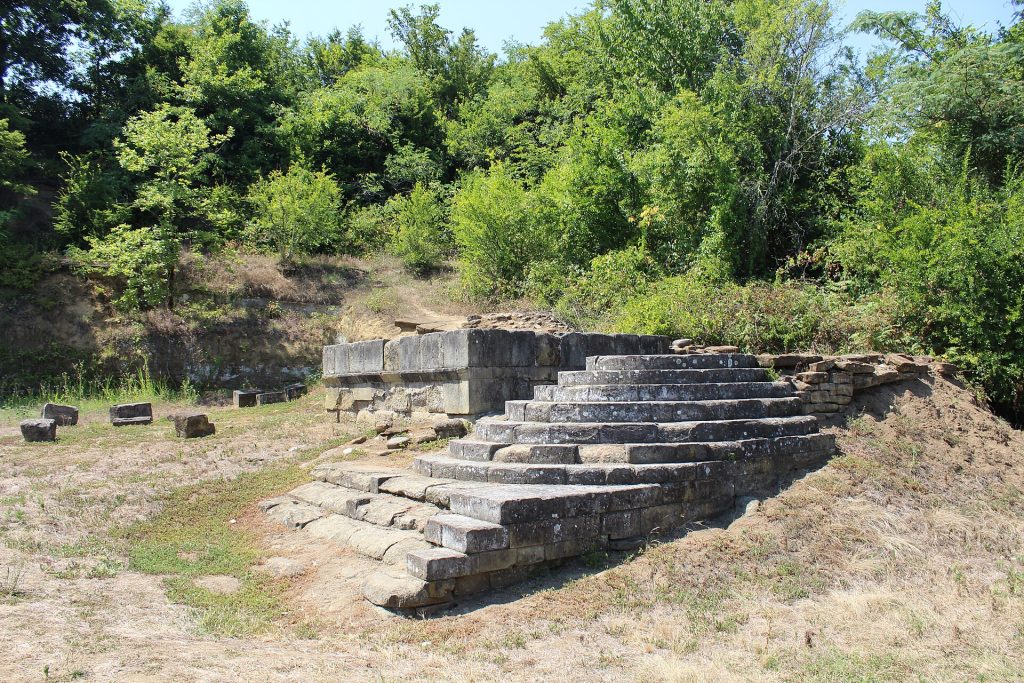
The archaeological dimension gives Vaneloba its distinctive character compared with other Georgian town days: museum staff often extend opening hours, hold temporary displays of replica or recently excavated material, and guide visitors around the hillside sanctuary terraces, something not available on an ordinary visiting day.
When it happens
Vaneloba does not fall on a fixed date. Vani Municipality sets the exact day each year, generally in September, timed to local scheduling rather than to any religious or lunar calendar. The 2023 edition was held on 21 September 2023; the next confirmed edition is provisionally scheduled for 18–19 September 2027, pending final confirmation by the municipality closer to the date. Travellers planning a visit around this event should check with the Vani Municipality or the Georgian National Museum for the confirmed dates in a given year rather than assume a fixed weekend.
Vaneloba is not a national public holiday; government offices, schools outside Vani, and businesses elsewhere in Georgia operate normally. Within Vani itself, some shops, municipal offices and schools may close or shorten hours for the day, and the town centre is closed to traffic during the main programme.
Where to experience it
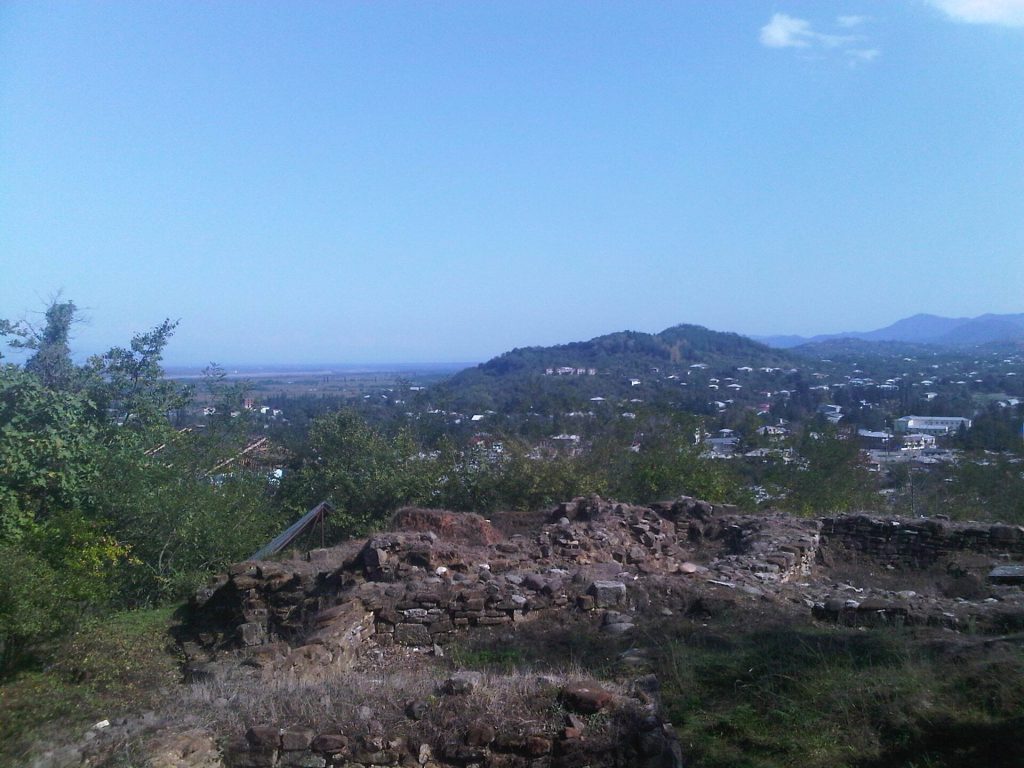
The centre of activity is Vani’s main square and the adjoining streets, where the stage, market stalls and food vendors are set up from morning onward, with concerts and performances continuing into the evening. The Vani Archaeological Museum-Reserve, on the hill above the modern town, is the second essential stop: it houses the gold jewellery, bronze objects and sanctuary remains recovered from the site and typically extends its hours or adds guided tours on the festival day. Visitors should dress modestly and keep a respectful, quiet manner inside the museum galleries, where photography rules for the gold collection may apply; flash photography of the most fragile gold objects is commonly restricted.
Any church included in the day’s programme should be entered with shoulders and knees covered, and women are generally expected to cover their heads inside the sanctuary, consistent with practice at Georgian Orthodox churches throughout the country.
Travel with GTour
Kutaisi & Western Georgia — 3 Days can be arranged to include a stop in Vani around 18–19 September 2027, when Vaneloba marks the town’s Colchian gold heritage, while Martvili & Okatse Canyons + Prometheus Cave — Day Trip from Kutaisi passes through the same Imereti region and can be scheduled on an adjoining day. A GTour travel expert designs the exact route and timing around the guest’s dates, pending confirmation of the festival schedule.
Martvili & Okatse Canyons + Prometheus Cave tour Plan my trip
Did you know
- Vani is one of the principal archaeological sites identified with ancient Colchis, the kingdom later linked in Greek myth to the Golden Fleece.
- Gold ornaments recovered from Vani are considered among the finest Hellenistic-period goldwork found anywhere on the eastern Black Sea coast.
- The first gold finds at Vani were made accidentally in the 1870s, decades before formal excavation began in 1947.
- Imereti, Vani’s home region, is also the source grape varieties Tsitska and Tsolikouri, both still used in local winemaking.
- Krimanchuli, the high yodel-style voice heard in regional folk singing, originates in the broader western Georgian tradition shared by Imereti and Guria.
Practical tips for visitors
The nearest airport is Kutaisi International Airport, roughly forty kilometres from Vani by road; Tbilisi is a longer drive of several hours, and Vani has no train station of its own, with the nearest rail connections running through Kutaisi. September weather in Imereti is generally mild and can include rain showers, so light layers and a compact umbrella are advisable. Because the exact festival date is confirmed annually, it is worth checking with the Vani Municipality or the Georgian National Museum shortly before travelling, and booking any accommodation in Kutaisi in advance, since Vani itself has limited hotel capacity. GTour arranges a private driver or guide for the day for visitors who prefer not to self-drive on the Kutaisi–Vani road.
Combine it with
A visit to Vaneloba pairs naturally with a wider loop through western Georgia: the wine villages and monasteries of Imereti itself, the mountain valleys and wineries of Racha, and, for travellers with more time, the glacier villages of Svaneti further east along the same regional route.
Questions travellers ask
What does “Vaneloba” mean?
It means “the day of Vani,” formed with the Georgian suffix -oba, which is used across the country to name town days and feast days after a place or saint.
When is Vaneloba celebrated?
There is no fixed calendar date; Vani Municipality sets the day each year, usually in September. The 2023 edition fell on 21 September, and 2027 is provisionally set for 18–19 September, subject to confirmation.
Is Vaneloba a public holiday in Georgia?
No. It is a local municipal festival, not a national public holiday, so offices and schools outside Vani operate as usual.
What is the connection between Vani and the Golden Fleece legend?
Vani is identified by archaeologists as one of the key centres of ancient Colchis, the kingdom that Greek tradition placed on the Black Sea coast and associated with the myth of Jason, the Argonauts and the Golden Fleece.
Can visitors see the original Colchian gold artifacts in Vani?
The Vani Archaeological Museum-Reserve, part of the Georgian National Museum network, displays gold jewellery and other objects recovered from the site, with some of the most significant pieces shown here or in Tbilisi collections.
How do I get to Vani from Tbilisi or Kutaisi?
From Tbilisi the drive is several hours by road; from Kutaisi, including its international airport, Vani is about forty kilometres and roughly forty-five minutes by car. There is no direct rail service to Vani.
What should visitors wear or do inside the museum or any church included in the festival?
Modest, respectful dress is expected in both settings; shoulders and knees should be covered in churches, with head covering customary for women, and visitors should follow any photography restrictions inside the museum’s gold collection.
Is Vaneloba similar to other Georgian town days like Tbilisoba?
Yes, it follows the same format of concerts, markets and civic celebration found in town days such as Tbilisoba, but on a smaller, local scale and with a distinctive link to the Colchian archaeological heritage unique to Vani.
Sources
- Georgian National Museum
- Georgia Travel (GNTA)
- Ministry of Culture of Georgia
- Cultural Heritage Sites of Georgia
- National Statistics Office of Georgia
- Vani Archaeological Site — UNESCO Tentative List
- Vani municipality page — Imereti region, gov.ge
- "Vaneloba" town-day celebrations report — Agenda.ge
- Colchis gold and Vani excavations — National Parliamentary Library of Georgia digital archive
Plan your Georgia
Want to be in Georgia for Vaneloba? A GTour travel expert designs the itinerary around it and calls you back.
View of Vani town and its blue-roofed church from the archaeological museum hill. · Photo: А.Мухранов / Wikimedia Commons, CC BY-SA 3.0
This page in other languages: Русский
GTour conciergeAsk anything about Georgia · we reply within hours