Archives


Marneuloba in Georgia: dates, meaning and how to experience it
Next dates
18 September 2027 – 19 September 2027 (to be confirmed) · Marneuli, Kvemo Kartli. See the full events calendar and Georgia today for roads and weather.
What it is
Marneuloba (მარნეულობა) is the annual city-day festival of Marneuli, a market town about thirty kilometres south of Tbilisi in the Kvemo Kartli region. The name follows a common Georgian pattern: the suffix “-oba” turns a place or saint’s name into “the day of,” the same construction used for Tbilisoba, the autumn festival of the capital, or Alaverdoba, the harvest feast at Alaverdi Monastery in Kakheti. Marneuloba is therefore literally “the Marneuli occasion” — a civic and cultural holiday rather than a religious feast day, timed to the end of the harvest season.
The festival is celebrated by the residents of Marneuli municipality as a whole, one of the most ethnically mixed in Georgia. The town and its surrounding villages are home to an ethnic Azerbaijani majority alongside Georgian, Armenian, Greek and other communities, a demographic pattern documented in national census data published by Georgia’s statistics office, Geostat. Marneuloba brings these communities together for a single day of concerts, produce fairs and shared food, and is promoted by Georgian tourism authorities as an example of the country’s interethnic coexistence.
Historical background
- Antiquity — The Kvemo Kartli lowland, watered by the Khrami and Mashavera rivers, lay within historic Kartli, one of the core regions of early Georgian statehood, and served as a corridor linking the South Caucasus trade routes toward Armenia and Azerbaijan.
- Medieval period — The plain remained part of the Kingdom of Kartli and later of united Georgian kingdoms, with its fortunes tied to the wider political history of eastern Georgia, including periods of Persian and Ottoman contest for the region.
- Early 19th century — Following the Russian Empire’s annexation of eastern Georgian kingdoms, formalised after 1801, Kvemo Kartli’s lowlands saw continued settlement by Azerbaijani-speaking Muslim communities already long established in the area, alongside Georgian and Armenian populations.
- Late 19th–early 20th century — The settlement at the heart of today’s town was known as Sarvani, a name still remembered locally, before Georgia’s incorporation into the Soviet Union in 1921.
- Soviet period — Sarvani was renamed Marneuli and administered as a district centre of the Georgian SSR; Soviet planning developed the area’s irrigated farmland into a major vegetable- and fruit-growing belt supplying Tbilisi.
- 1991 — With Georgian independence, Marneuli became the seat of a municipality within the Kvemo Kartli region of the newly sovereign state.
- 2000s — Following decentralisation reforms after the Rose Revolution, Georgian municipalities widely revived or formalised “city day” celebrations (dgheoba), of which Marneuloba is one example, generally staged in early autumn after the harvest.
- Recent years — Marneuloba is held annually with municipal backing, combining agricultural fairs, folk performances and multi-ethnic cultural programming, and is covered by Georgian tourism and regional-affairs media as a showcase of Kvemo Kartli’s diversity.
Kvemo Kartli’s demographic character is not a modern accident but the product of centuries of movement across a lowland crossroads between Georgian, Armenian and Turkic-Persian worlds. The town’s own name change, from Sarvani to Marneuli, mirrors a wider Soviet-era pattern of renaming settlements across the South Caucasus, even as the underlying communities and their languages persisted largely unchanged. The result today is a municipality where Azerbaijani is the first language of a large share of residents, Georgian is the state language of administration and schooling, and smaller Armenian and Greek communities maintain their own churches and associations.
Marneuloba, in this context, functions less as the revival of an ancient rite than as a deliberately civic occasion: a stage on which the municipality presents its agricultural economy, its folk ensembles and its religious and linguistic variety as a single local identity. It sits alongside similar city festivals across Georgia — Tbilisoba in the capital, Batumoba on the coast — that grew out of the late Soviet and post-Soviet habit of marking a town’s own day with music, food and public gathering, independent of the church calendar.
Meaning and traditions
A typical Marneuloba programme centres on the town’s main square and cultural house, where the mayor’s office opens the day with brief official remarks, followed by performances from local ensembles: Georgian polyphonic and dance groups, Azerbaijani ashik singers and mugham performers, and Armenian and Greek folk troupes, often sharing the same stage in succession. Alongside the concerts runs an agricultural and craft exhibition — Marneuli’s farms are known for tomatoes, melons, grapes and greenhouse vegetables, and producers set up stalls to sell and display the season’s crop.
Food is central to the day. Visitors will find Georgian khachapuri and mtsvadi grilling alongside Azerbaijani plov (rice pilaf) and dolma, and Armenian pastries and breads, reflecting the kitchens of the households represented. Useful terms to know: “dgheoba,” the generic Georgian word for a town or community’s own festival day; “toi,” an Azerbaijani word for a festive gathering or feast, sometimes used informally around the celebration; and “bayram,” the Azerbaijani and Turkic word for holiday, occasionally heard in conversation even though Marneuloba itself is a secular, not a religious, occasion. Children’s competitions, sports matches and evening concerts round out the schedule, and in some years the festival has coincided with harvest or wine-themed stalls echoing Georgia’s broader autumn festival season.
When it happens
Marneuloba does not follow a fixed date. It is set by Marneuli City Hall each year, typically for a weekend in mid-to-late September, after the main harvest and before the weather turns cold. The organisers confirm the exact dates only a few weeks in advance, and the schedule can shift because of municipal budgeting, weather or coordination with other regional events.
For 2027 the festival is provisionally placed on 18–19 September, to be confirmed by the municipality closer to the date. Marneuloba is a local, not a national, public holiday: government offices in Tbilisi and elsewhere in Georgia operate normally, and only Marneuli’s own municipal schedule is affected, with some local offices and schools adjusting hours around the main event day. Shops, markets and transport in Marneuli itself continue to function, with extra activity concentrated around the central square in the late afternoon and evening.
Where to experience it
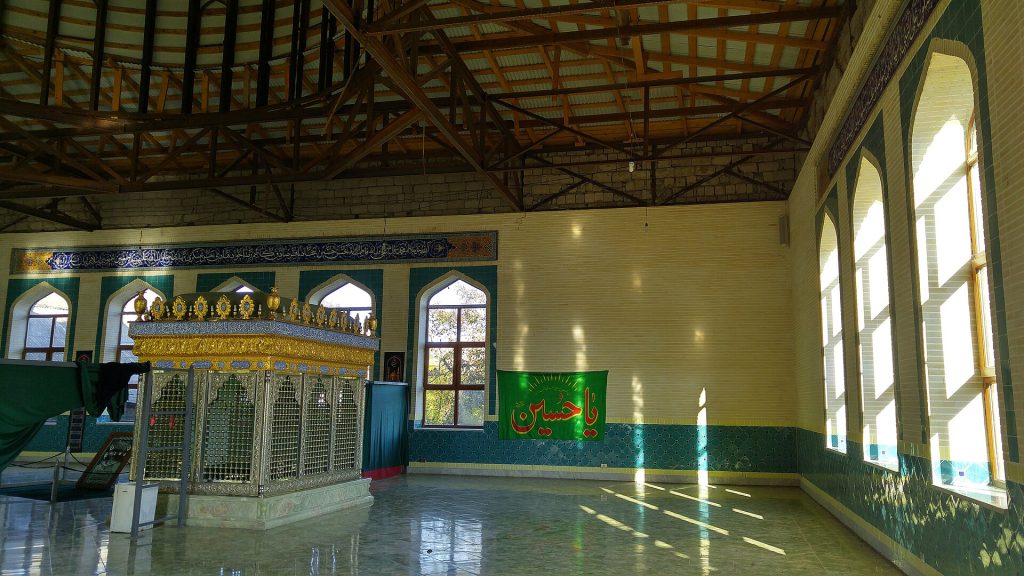
The festival is centred on Marneuli’s town square and the adjoining cultural centre, with the main stage programme usually running from mid-afternoon into the evening. Visitors can also walk the surrounding streets and the town’s central market, where produce stalls and food vendors extend the festival atmosphere beyond the main square. Marneuli’s working mosque and its Georgian Orthodox and Armenian churches are active places of worship year-round; visitors who step inside any of them, whether during the festival or otherwise, should dress modestly, remove hats inside the mosque, and keep voices low during services.
Because Marneuloba is a municipal rather than a ticketed event, there is no formal entry process — visitors simply arrive and join the crowd in the square. Those travelling from Tbilisi for the day typically combine the festival with a short walk through the town and a stop at a roadside restaurant serving Azerbaijani or Georgian dishes along the Tbilisi–Marneuli highway.
Travel with GTour
The Georgia in 10 Days — Tbilisi to Svaneti to the Sea route runs through Kvemo Kartli on its way south, allowing a stop in Marneuli if travel dates overlap with the festival in late September, while the shorter Tbilisi & Mtskheta — The Essential First Day can be extended toward Marneuli for travelers based in the capital. A GTour travel expert designs the exact route around the guest’s confirmed dates.
Did you know
- Kvemo Kartli, the region containing Marneuli, has the largest ethnic Azerbaijani population of any region in Georgia, according to national census figures published by Geostat.
- The town’s earlier name, Sarvani, is still used informally by some older residents and in historical records predating its Soviet-era renaming.
- Marneuli’s irrigated lowlands make it one of Georgia’s principal vegetable- and fruit-growing districts, supplying produce markets in Tbilisi.
- The “-oba” suffix in Marneuloba is the same grammatical construction used in Tbilisoba (Tbilisi’s own autumn city festival) and in church festival names such as Alaverdoba.
- Marneuli lies close to Georgia’s borders with both Armenia and Azerbaijan, making Kvemo Kartli one of the country’s most linguistically layered regions.
Practical tips for visitors
Marneuli is roughly thirty to forty minutes by car south of Tbilisi along the main highway toward the Armenian and Azerbaijani borders, and is also reachable by regular marshrutka minibuses from Tbilisi’s Samgori bus station. September weather in Kvemo Kartli is generally warm by day and cool by evening, so light layers are advisable. No booking is required to attend the public festival area, but visitors wanting a guided day trip, or wishing to combine Marneuloba with nearby sites, can arrange a private driver or guide through GTour for the day. Confirm the current year’s dates with the municipality or local tourism contacts shortly before travelling, since the schedule is set late each season.
Combine it with
Marneuloba works well as a half-day or full-day excursion from Tbilisi, combined with a wider look at the historic Kartli region, or extended further south toward the multi-ethnic towns and monastic sites of Samtskhe-Javakheti.
Questions travellers ask
Is Marneuloba a public holiday across Georgia?
No. It is a local municipal festival specific to Marneuli; national government offices and businesses elsewhere in Georgia operate as usual on the day.
What language will I hear at the festival?
Georgian, Azerbaijani and, to a lesser extent, Armenian are all commonly heard, reflecting the municipality’s mixed population; official announcements are typically given in Georgian.
Is Marneuli safe and welcoming for foreign visitors?
Yes, it is a settled agricultural town accustomed to regional traffic and visiting officials and journalists; festival days bring a relaxed, open atmosphere with no special precautions needed beyond normal travel sense.
Can Marneuloba be combined with a Tbilisi city break?
Yes, the short distance from Tbilisi makes it an easy half-day addition to a stay in the capital, often paired with a stop at a roadside restaurant along the way.
What food should I try there?
Look for Azerbaijani plov and dolma alongside Georgian khachapuri and grilled mtsvadi, plus seasonal produce from Marneuli’s own farms sold at festival stalls.
How do I get to Marneuli without a car?
Regular marshrutka minibuses run from Tbilisi’s Samgori station to Marneuli throughout the day; a private driver can also be arranged for a more flexible schedule.
Is there an entrance fee for the festival?
No, Marneuloba is a free, open-air municipal event held in the town’s public square and streets.
What should I wear, and are there etiquette rules for visiting a mosque or church?
Casual, comfortable clothing suits the festival itself; if entering Marneuli’s mosque or any of its churches, dress modestly, cover shoulders and knees, and remove footwear or headwear as local custom requires at each site.
Sources
- Geostat, National Statistics Office of Georgia
- Georgian National Tourism Administration
- Georgian Government Portal
- Ministry of Culture, Sport and Youth of Georgia
- Ministry of Foreign Affairs of Georgia
Plan your Georgia
Want to be in Georgia for Marneuloba? A GTour travel expert designs the itinerary around it and calls you back.
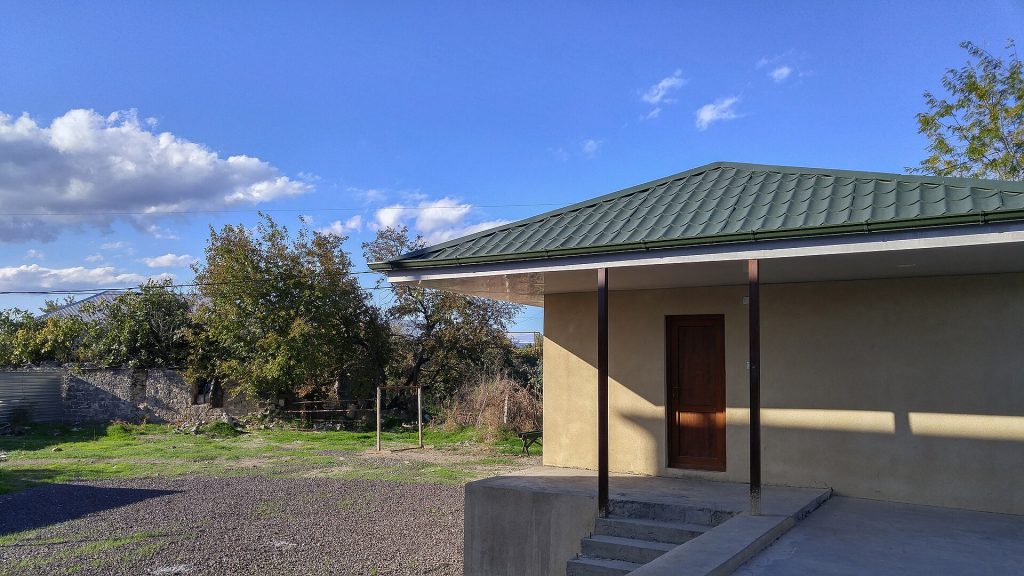
A street view of Marneuli, the Kvemo Kartli city that hosts the annual Marneuloba festival. · Photo: Mostafameraji / Wikimedia Commons, CC BY-SA 4.0
This page in other languages: Русский
GTour conciergeAsk anything about Georgia · we reply within hours