Archives


Borjomoba in Georgia: dates, meaning and how to experience it
Next dates
11 September 2027 (to be confirmed) · Borjomi, Samtskhe-Javakheti. See the full events calendar and Georgia today for roads and weather.
What it is
Borjomoba is the annual town day of Borjomi, the spa town in the gorge of the Mtkvari (Kura) river in Samtskhe-Javakheti. The name follows a familiar Georgian grammatical pattern: the suffix -oba turns a place name into the name of its feast or collective celebration, the same construction behind Tbilisoba (the day of Tbilisi) and the many local saints’-day and harvest “-oba” festivals held across the country. Literally, Borjomoba means “the day of Borjomi,” or “Borjomi-ness” in the loose sense of everything the town represents — its carbonated springs, its nineteenth-century park, and its identity as Georgia’s best-known resort.
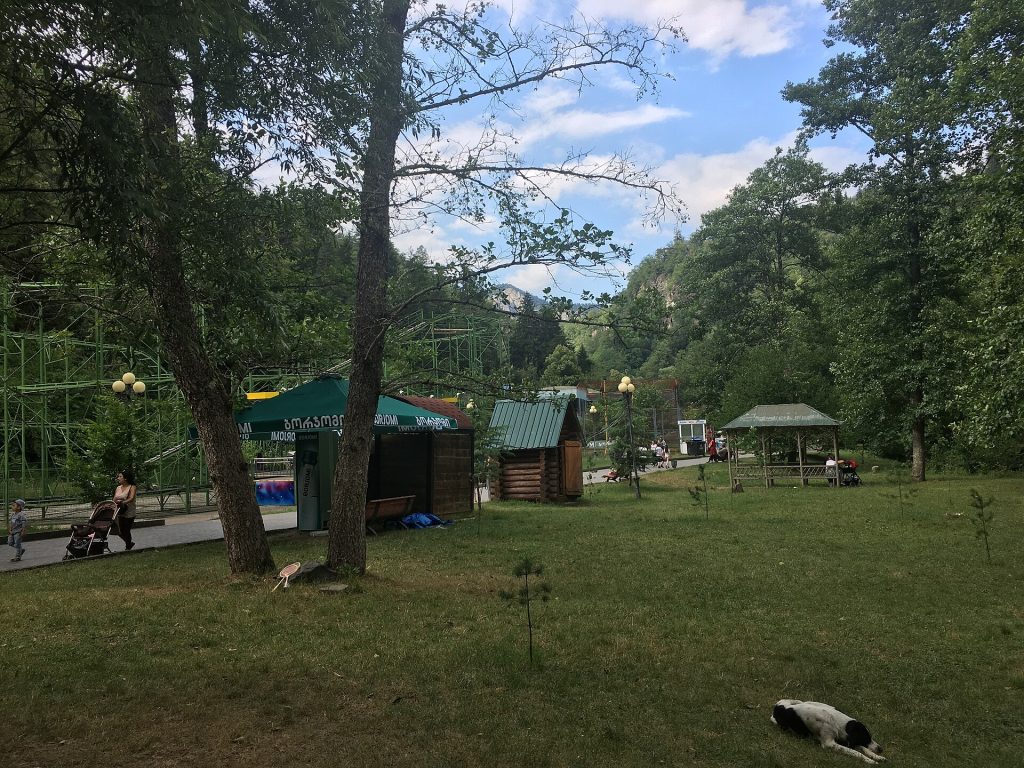
The festival is organized by Borjomi City Hall for residents, people from across Samtskhe-Javakheti, and visitors drawn by the town’s spa reputation. Unlike church feasts tied to the Georgian Orthodox calendar, Borjomoba is a civic, largely secular event: a single day (sometimes a weekend) of concerts, markets, and open-air celebration centered on Borjomi Central Park, the colonnaded gallery where locals and tourists alike still come to drink the warm mineral water.
Historical background
- 1829 — Soldiers garrisoned in the Borjomi gorge are traditionally credited with drawing attention to the naturally carbonated springs that would later give the valley its fame.
- 1850 — Mikhail Vorontsov, Viceroy of the Caucasus, orders simple bathing facilities built over the springs, an early step toward organized spa use.
- 1854 — The first recorded bottling of Borjomi water begins, starting the export trade that made the name known well beyond the Caucasus.
- 1870s–1890s — Grand Duke Mikhail Nikolaevich Romanov, Viceroy of the Caucasus, develops Borjomi into an imperial-era resort, laying out the promenade and springs gallery that form the core of today’s Borjomi Central Park; the Romanov family later builds the Likani residence nearby.
- 1902 — The narrow-gauge mountain railway linking Borjomi to the resort village of Bakuriani opens, one of the rail lines still referenced in Georgian Railway records.
- 1921–1991 — Under Soviet administration Borjomi becomes a flagship state health resort (kurort), its water bottled and distributed across the USSR as a recognizable brand.
- 1995 — Borjomi-Kharagauli National Park, bordering the town, is established, protecting one of the larger continuous forest areas managed by the Agency of Protected Areas of Georgia.
- 2000s to present — Borjomi municipality formalizes Borjomoba as a recurring September town-day celebration in the Central Park, pairing civic pride with the town’s spa and water heritage.
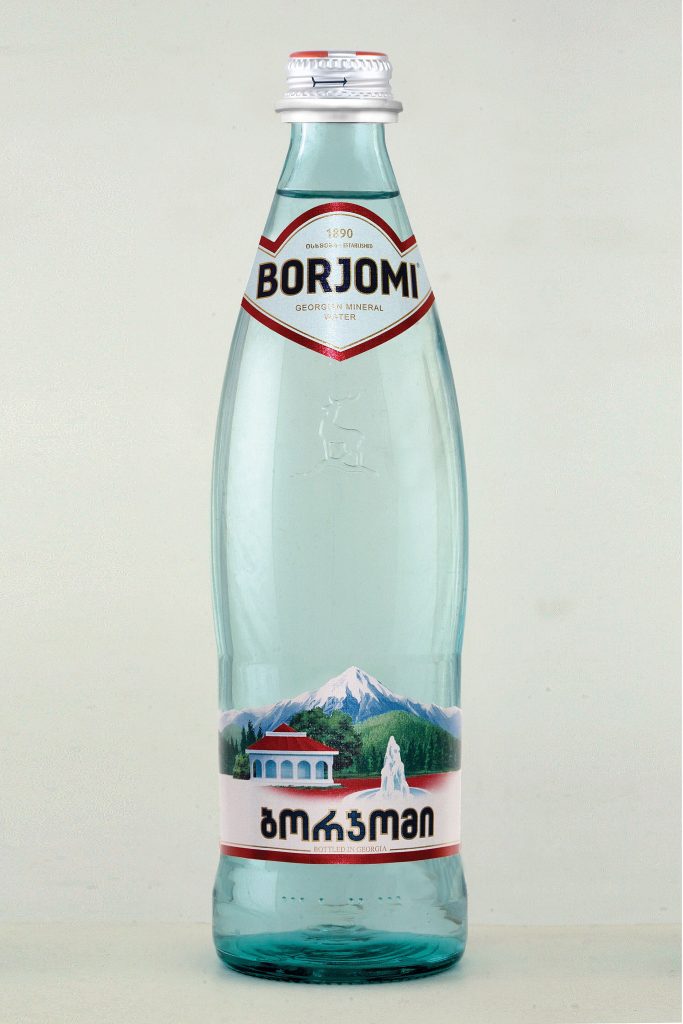
Borjomi’s history is unusual among Georgian towns in that its modern identity was shaped less by a medieval fortress or monastery than by nineteenth-century imperial patronage of its springs. What began as a frontier garrison discovery became, within two generations, a resort patronized by the Russian court, complete with a palace, a formal park, and a bottling industry that outlived the empire that built it. The Soviet period reinforced this identity, turning Borjomi into one of the Union’s most recognizable sanatorium towns, its name printed on bottles sold from the Baltic to the Pacific.
Borjomoba, as a modern civic festival, grew out of this layered history rather than out of a single founding charter or saint’s day. It functions as the town’s way of claiming and celebrating a heritage that is simultaneously local — the park, the gallery, the gorge — and international, since few Georgian place names are as widely recognized abroad as “Borjomi” itself, largely because of the water that still carries the name onto supermarket shelves worldwide.
Meaning and traditions
On the day of Borjomoba, Borjomi Central Park becomes the stage for an open-air program that usually runs from midday into the evening. Folk ensembles perform Meskhetian and broader Georgian dances, local choirs sing, and an evening concert on the park’s main stage draws the largest crowds, often closing with fireworks over the gorge. A craft and produce fair lines the park’s main avenue, selling Samtskhe-Javakheti honey, cheese, bread, and preserves alongside the inevitable khachapuri and mtsvadi stalls.
A visit to the springs gallery, or galereya in Georgian, is central to the day: residents and visitors queue with cups to drink the warm, mineral-rich water straight from the taps, much as they would on any ordinary day, but in a festive crowd. Exhibitions of historic photographs and postcards from the imperial and early Soviet eras — material of the kind held in the digitized collections of the National Parliamentary Library of Georgia — sometimes accompany the festival, tracing the park’s transformation since the 1870s. Children’s activities, amateur sports, and a market of local crafts round out the program.
Regional variations are modest, since Borjomoba is a relatively young civic tradition rather than an ancient feast with fixed ritual. What it shares with older “-oba” festivals such as Alaverdoba or Mtskhetoba is the basic structure: a town or shrine gathers its own people and outsiders for a day that mixes celebration, commerce, and performance, each community adapting the formula to its own landmark — in Borjomi’s case, the park and the springs rather than a cathedral or monastery.
When it happens
Borjomoba does not follow the Julian-based church calendar used for religious feasts; it is set annually by Borjomi City Hall, typically on a Saturday in September, when the town’s weather is mild and the resort season is still active. The exact date is confirmed only a few weeks in advance each year, and can shift depending on the municipal and regional events calendar. In 2026 the festival was scheduled within the September calendar of town-day celebrations; the next edition is provisionally placed on 11 September 2027, a date organizers describe as still to be confirmed.
Borjomoba is not a national public holiday. Shops, banks, pharmacies, and most businesses in Borjomi operate on their normal schedule; only the immediate area around the Central Park sees road closures and changed foot traffic during the afternoon and evening program. Visitors planning a trip around the date should check current listings through Georgia’s national tourism administration closer to the time, since municipal festival calendars are published late in the season.
Where to experience it
The festival is concentrated in and around Borjomi Central Park, entered from Rustaveli Street near the center of town. The colonnaded mineral-water gallery, a short walk inside the park, is where most visitors try the water for the first time; a small cable car (funicular) nearby climbs to a hillside viewpoint over the gorge, running on an extended schedule during the festival. The open-air stage toward the center of the park hosts the main concerts from late afternoon, while stalls line the paths on either side. The Likani area, where the former Romanov palace stands, is a state residence and is not generally open to the public, festival or no festival.
No specific religious observance accompanies Borjomoba, so there is no particular church etiquette tied to the day itself; visitors who stop at churches or monasteries elsewhere in Samtskhe-Javakheti while in the region should dress modestly, covering shoulders and knees, as at any Georgian Orthodox site.
Travel with GTour
The Borjomi, Bakuriani & Rabati — 2 Days tour overnights in Borjomi, so the central park celebrations on 11 September 2027 can fall within the itinerary, while the Vardzia Cave City — Day Trip passes through the town on its route south. A GTour travel expert designs the route around the guest’s dates, confirming whether the festival falls within the visit.
Did you know
- Borjomi water was already being exported from the Russian Empire before the twentieth century, carrying the town’s name into markets far from the Caucasus.
- The Likani residence built for the Romanov family is used today as an official state residence and is not open to casual visitors.
- Borjomi-Kharagauli National Park, adjoining the town, protects one of the larger forested protected areas managed under Georgia’s national park system.
- The narrow-gauge railway between Borjomi and Bakuriani, opened in the early twentieth century, remains one of the country’s few surviving mountain rail lines.
- The “-oba” ending in Borjomoba is the same grammatical device behind Tbilisoba, the capital’s much larger autumn festival, and behind dozens of local saints’-day and harvest feasts across Georgia.
Practical tips for visitors
Borjomi has no airport of its own; the nearest airports are Kutaisi International Airport and Tbilisi International Airport, both roughly two to three hours away by road. Direct train and marshrutka (minibus) services run from Tbilisi’s main stations to Borjomi, and road conditions along the route can be checked through Georgia’s road agency before travel. September evenings in the gorge can be cool even when days are mild, so a light jacket is worth packing alongside comfortable shoes for the park’s gravel paths. Accommodation in this well-known spa town fills quickly around festival dates, so booking ahead is advisable. GTour arranges a private driver or guide for the day for visitors who prefer not to rely on public transport schedules.
Combine it with
Borjomi sits within easy reach of the fortified town of Akhaltsikhe and the wider Samtskhe-Javakheti region, making a combined day or overnight trip straightforward. Travelers continuing north can connect through Kartli toward Tbilisi, while those heading west can extend into Imereti through the Borjomi-Kharagauli park’s western approaches.
Questions travellers ask
Is Borjomoba a public holiday in Georgia?
No. It is a municipal festival, not a state public holiday, so businesses, banks, and offices in Borjomi operate normally except for localized road closures around the park during the event.
What is the exact date of Borjomoba in 2027?
Organizers have provisionally indicated 11 September 2027, but the date is confirmed only a few weeks beforehand by Borjomi City Hall, so travelers should check closer to the time.
Can visitors drink the mineral water for free?
Water from the taps in the Central Park gallery has traditionally been available to drink on site for a small fee or no charge at the public taps, though bottled Borjomi water sold commercially is a separate, paid product.
Is Likani Palace open during the festival?
No. The former Romanov residence at Likani functions today as a state residence and is not opened to the public for Borjomoba or at other times.
How do I get from Tbilisi to Borjomi for the day?
Train and marshrutka services connect Tbilisi to Borjomi in roughly two to two and a half hours; a private driver is also a practical option for visitors who want flexibility around the festival schedule.
What should I wear or bring?
Comfortable walking shoes for the park’s paths and a light jacket for cooler September evenings are advisable; no special dress is required for the festival itself since it is a secular, outdoor event.
Is Borjomoba suitable for children and families?
Yes. The festival includes children’s activities, open space in the park, and a relatively relaxed, daytime-into-evening program that suits family visits.
How is Borjomoba different from Tbilisoba?
Both are “-oba” town-day festivals, but Tbilisoba is a much larger, nationally promoted autumn event in the capital, while Borjomoba is a smaller, locally organized celebration centered on a single park and the town’s identity as a spa resort.
Sources
Plan your Georgia
Want to be in Georgia for Borjomoba? A GTour travel expert designs the itinerary around it and calls you back.
The glass pavilion over Borjomi's main mineral spring, heart of the central park festivities. · Photo: Sergey Sebelev / Wikimedia Commons, CC BY-SA 4.0
This page in other languages: Русский
GTour conciergeAsk anything about Georgia · we reply within hours