Archives


Shuamtoba on Chuduraul and Persati in Georgia: dates, meaning and how to experience it
Next dates
24 July 2027 – 25 July 2027 (to be confirmed) · Chuduraul mountain (Khulo) and Persati mountain (Adigeni). See the full events calendar and Georgia today for roads and weather.
What it is
Shuamtoba (შუამთობა) combines shua (“middle”) and mta (“mountain”) with the suffix -oba, which in Georgian marks a feast day or commemorative gathering — the same ending found in Svetitskhovloba or Mariamoba. Read literally, it means something like “the mid-mountain feast,” and it refers to the midpoint of the alpine grazing season, when shepherds and their families gather on the high summer pastures to mark that the flocks have settled, the grass has peaked, and the first half of the mountain season is complete. It is celebrated by highland communities of Adjara, centered on Khulo municipality, and by the neighboring highlands of Samtskhe-Javakheti, centered on Adigeni municipality — two mountain districts that share the same alpine range and a common tradition of transhumance, the seasonal movement of cattle and sheep between lowland winter quarters and high summer pasture known locally as zeni.
The best known expression of the custom is the large Beshumi Shuamtoba, held at the Beshumi highland resort in Khulo municipality, which has grown into a regional cultural festival with music, dance and food stalls. Alongside it, smaller and more intimate Shuamtoba gatherings take place on individual peaks a day or two earlier: on Chuduraul above Khulo, drawing Adjarian highland villages, and on Persati above Adigeni, drawing Meskhetian communities from the Samtskhe-Javakheti side of the same range. These smaller gatherings are organized by the villages themselves rather than by municipal tourism offices, and they retain more of the working, pastoral character of the tradition — part livestock check, part family reunion, part open-air feast.
Historical background
- Pre-modern era — seasonal transhumance between lowland villages and high alpine pastures was an established pattern of life across the Adjara-Meskheti highlands, shaping the agricultural calendar long before it was written down.
- 1578–1878 — Adjara came under Ottoman administration, during which much of the highland population adopted Islam, a legacy still visible in local architecture, place names and customs.
- 1878 — following the Treaty of Berlin, Adjara was returned to Georgian and Russian imperial administration, ending direct Ottoman rule over the region.
- 1921–1991 — under Soviet rule, livestock herding was reorganized into collective and state farms; communal summer gatherings on the high pastures continued, often reshaped as kolkhoz-organized events rather than purely village ones.
- Mid–late 20th century — Beshumi developed as a highland health resort valued for its mineral springs and cool climate, and its Shuamtoba gathering grew into the larger, more organized festival known today.
- After 1991 — with the end of collective farming, village-level Shuamtoba gatherings on surrounding peaks, including Chuduraul and Persati, were revived as independent community events.
- 2000s onward — Adjara’s tourism authorities began promoting the Beshumi Shuamtoba as part of the region’s summer cultural calendar, while the smaller mountain gatherings remained locally run.
- Today — Shuamtoba continues annually in late July, with village gatherings on Chuduraul and Persati typically preceding the larger Beshumi festival by a day or two, dates set each year by local organizers.
No single founding date can be assigned to Shuamtoba, because it grew out of the practical rhythm of transhumant herding rather than a single historical event, religious council or royal decree. Its closest parallels are the many Georgian -oba feasts tied to agricultural and pastoral cycles — harvest, vintage, first milking — which exist throughout the country in regional variants. What distinguishes the Khulo and Adigeni gatherings is that they sit squarely on the seam between two cultural zones: an Adjara shaped by three centuries of Ottoman rule and a largely Muslim highland population, and a Samtskhe-Javakheti shaped by Georgian Orthodox Christian village life, both practicing an almost identical seasonal pastoral economy on either side of the same ridge.
The Soviet period altered the social organization of the gathering without erasing it: collectivization moved decision-making about herds to the kolkhoz, but the midsummer meeting of highland families on the mountain persisted in practice, and after 1991 villages reclaimed it as a community event on their own terms. The subsequent growth of Beshumi into a larger festival, promoted for visitors, has not replaced the smaller peak gatherings but sits alongside them — Chuduraul and Persati remain closer in spirit to the original working feast of the shepherds than to a staged cultural show.
Meaning and traditions
At its core, Shuamtoba is a check on the herd and a reunion of family. Villagers who spend the summer in the high zeni pastures with their livestock are joined by relatives who come up from the lowland villages and towns, often climbing or driving for hours to reach the gathering point. Long tables are laid out on the grass or inside shepherd huts, loaded with food carried up from both sides of the mountain: shoti bread, boat-shaped Acharuli khachapuri, suluguni and highland guda cheese matured in sheepskin, grilled meat (mtsvadi), honey, and fruit. Chacha and wine typically appear at gatherings in the historically Christian villages of the Adigeni side; in Muslim Adjarian highland communities around Khulo, hospitality more often centers on tea, soft drinks and food rather than alcohol, reflecting the region’s religious makeup.
Music and movement follow the meal: Acharuli folk songs and dances, often performed to the accompaniment of the panduri or accordion, and games that test strength and horsemanship, including wrestling (chidaoba) and, where terrain allows, informal horse races. Elders use the occasion to discuss the state of the pastures and the condition of the animals at the season’s midpoint — a practical purpose behind the celebration that is easy to overlook amid the singing. Regional variation is visible even between the two peaks: gatherings on the Khulo side of Chuduraul lean toward Acharuli dance and horse games tied to the area’s Muslim Georgian heritage, while those on Persati above Adigeni are shaped by the Orthodox Christian villages of Samtskhe-Javakheti, with church visits sometimes folded into the day’s events in nearby settlements.
When it happens
Shuamtoba has no fixed calendar date; it is set each year by the villages and municipal organizers according to the state of the pastures and the weather, and it is traditionally held in the second half of July, close to the midpoint of the summer grazing season. The main Beshumi Shuamtoba usually follows a few days after the smaller peak gatherings. For 2026 the event on Chuduraul and Persati is understood to have taken place around late July, and the next occurrence is provisionally set for 24–25 July 2027, though organizers confirm exact dates only as the season approaches. It is not a national public holiday, carries no effect on banks, government offices or transport schedules, and businesses in Khulo, Adigeni and Batumi operate as normal; the only closures are local, such as temporary road access restrictions near the gathering sites on the day itself.
Where to experience it
Chuduraul rises above Khulo town in Adjara, reached by mountain road from Khulo, itself roughly two to three hours by car from Batumi through the Adjaristsqali valley. Persati sits above Adigeni in Samtskhe-Javakheti, reached via the town of Adigeni, itself accessible from Akhaltsikhe. Visitors who make the trip should expect an open-air gathering rather than a ticketed event: long communal tables, grazing herds nearby, informal music and dancing, and villagers who are welcoming to respectful outsiders but are not running a tourist performance. Photographing people, especially at family tables or during religious observance, should be done with permission first. Modest dress is appropriate throughout, and in the historically Muslim villages around Khulo, visitors should be mindful that alcohol may not be offered or consumed as freely as elsewhere in Georgia.
Travel with GTour
The Batumi & the Ajara Mountains — 2 Days tour climbs toward Khulo near Chuduraul, while the Borjomi, Bakuriani & Rabati — 2 Days route passes close to Adigeni and Persati, both within reach of these late-July highland gatherings. A GTour travel expert can shift either itinerary’s days to line up with the confirmed Shuamtoba dates once announced.
Did you know
- The -oba ending in Georgian holiday names (Svetitskhovloba, Mariamoba, Shuamtoba) marks a feast or commemorative day and appears across dozens of regional festivals.
- Adjara is the part of Georgia most shaped by three centuries of Ottoman rule (1578–1878), which left a historically Muslim Georgian highland population still present in villages around Khulo.
- Beshumi, the highland resort near the main Shuamtoba festival, sits at a high alpine elevation in Khulo municipality and has long been valued for its cool summer climate and mineral springs.
- Transhumance — moving livestock between lowland winter quarters and high summer pastures — remains an active practice in the Khulo highlands, not merely a historical memory.
- Despite differing religious histories, Muslim villages near Chuduraul and Orthodox Christian villages near Persati mark the same midsummer pastoral milestone within sight of one another across the same mountain range.
Practical tips for visitors
The nearest airport for the Adjara side is Batumi International Airport; from there, a car or hired driver is needed to reach Khulo and continue toward Chuduraul, since public transport does not run to the gathering site itself. For the Samtskhe-Javakheti side, Adigeni is most easily reached via Akhaltsikhe. Roads above both towns are steep, sometimes unpaved, and best attempted with a sturdy vehicle; mountain weather can turn cool and wet even in late July, so warm layers, a rain jacket and solid footwear are advisable. There are no ATMs near the gathering sites, so cash should be brought from Khulo, Adigeni or Batumi in advance. Because the date is confirmed only shortly before the event, travelers planning a visit should check with local municipal offices or a regional guide close to the time. GTour can arrange a private driver or guide for the day, including transport to Chuduraul or Persati and help confirming the date with local organizers.
Combine it with
A visit to Shuamtoba pairs naturally with wider travel through Adjara, with its Black Sea coastline and Ottoman-era highland villages, and with Samtskhe-Javakheti, home to the Vardzia cave monastery and the Meskhetian highlands around Adigeni. Travelers continuing north along the Goderdzi Pass route can also connect the trip with Imereti, which lies on the other side of the same mountain range.
Questions travellers ask
What does “Shuamtoba” actually mean?
It combines “shua” (middle), “mta” (mountain) and the feast-day suffix “-oba,” together meaning roughly “the mid-mountain feast” — a gathering held at the midpoint of the summer grazing season.
Is Shuamtoba a public holiday in Georgia?
No. It is a local, community-organized cultural event, not a national holiday, and it has no effect on banks, offices or national transport schedules.
How can I find the exact 2027 dates?
Organizers confirm the date only as the season approaches, typically a few weeks ahead; checking with Khulo or Adigeni municipal offices, or with a regional guide, close to July is the most reliable approach.
Do I need an invitation to attend?
No formal invitation is required, but these are village-run gatherings rather than staged tourist festivals, so visitors should approach respectfully, ask before joining a table or taking photographs, and expect a working feast rather than a ticketed show.
Is Chuduraul or Persati easier for a visitor to reach?
Chuduraul, above Khulo, is generally more accessible from Batumi via a paved and then mountain road; Persati, above Adigeni, requires travel through Akhaltsikhe and is more remote, suiting visitors already touring Samtskhe-Javakheti.
What should I bring or wear?
Warm layers and rain protection are essential even in late July, along with sturdy footwear for uneven mountain ground, modest clothing out of respect for local custom, and cash, since there are no ATMs near the gathering sites.
Will alcohol be served?
It varies by location: villages around Khulo have a historically Muslim Georgian population and may not serve alcohol freely, while gatherings on the Adigeni side, in historically Orthodox Christian villages, more commonly include wine and chacha.
How is this different from the main Beshumi Shuamtoba festival?
Beshumi is a larger, more organized regional festival promoted to visitors, with music programs and food stalls, usually held a day or two after the smaller gatherings; Chuduraul and Persati retain the more intimate, working character of the original pastoral feast.
Sources
- Georgian National Tourism Administration
- Adjara Tourism Portal
- Visit Batumi
- Ministry of Culture of Georgia
Plan your Georgia
Want to be in Georgia for Shuamtoba on Chuduraul and Persati? A GTour travel expert designs the itinerary around it and calls you back.
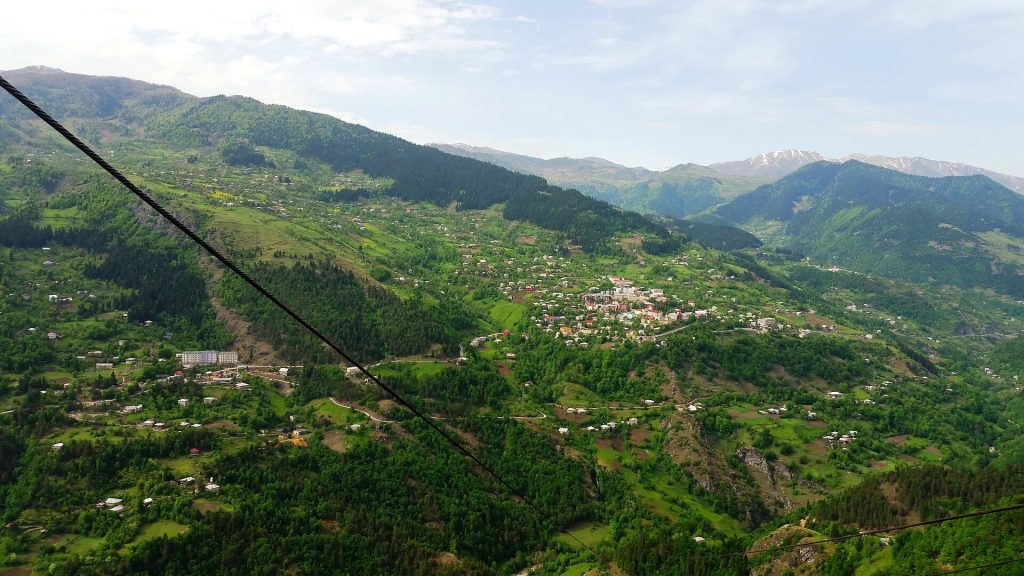
Highland village of Beshumi, Adjara, near where Shuamtoba gatherings are held in summer. · Photo: Aleksey Muhranoff / Wikimedia Commons, CC BY-SA 3.0
This page in other languages: Русский
GTour conciergeAsk anything about Georgia · we reply within hours