Archives


Eliaoba in Georgia: dates, meaning and how to experience it
Next dates
2 August 2027 · Dedoplistskaro, Kakheti. See the full events calendar and Georgia today for roads and weather.
What it is
Eliaoba is the Georgian name for the feast of the Prophet Elijah (Elia in Georgian), one of the fixed dates of the Georgian Orthodox liturgical calendar. The word itself follows a common Georgian pattern: a saint’s name plus the suffix -oba, which turns a name into the noun for “the day of” or “the feast of” that figure — so Eliaoba literally means “Elijah-day,” in the same way Giorgoba means St. George’s day and Mariamoba means the Dormition of Mary. The day belongs to the wider Georgian Orthodox community, but in the town of Dedoplistskaro in Kakheti it has grown into something more specific: a combined church pilgrimage and civic festival that is among the best-known summer events in the eastern wine region.
For residents of Dedoplistskaro and the surrounding villages, Eliaoba is both a religious obligation and a point of local identity. Families who have moved away to Tbilisi or abroad often plan their summer visit home around it, and the municipality treats 2 August as the town’s unofficial “day,” comparable to a patronal festival. Visitors encounter two layers at once: an early pilgrimage to the hilltop church associated with the prophet, conducted with the quiet solemnity typical of Georgian church practice, and a secular afternoon and evening of music, food and trade on the central square that has little to do with liturgy and everything to do with community life.
Historical background
- 4th century — Christianity becomes the state religion of the eastern Georgian kingdom of Kartli (Iberia) under King Mirian III, bringing the Byzantine liturgical calendar — and with it the feast of the Old Testament Prophet Elijah — into Georgian church life.
- 5th–10th centuries — Small hilltop churches dedicated to St. Elijah are built across eastern Georgia, a pattern ethnographers have long linked to the practice of placing Christian shrines on sites that had earlier served as open-air places of seasonal gathering.
- 17th–18th centuries — The Dedoplistskaro area, historically part of the Kiziqi district of the kingdom of Kakheti, develops as a pastoral and viticultural settlement; saints’ days such as Eliaoba mark seasonal turning points tied to livestock movement and the start of the grape-ripening period.
- 19th century — Under Russian imperial administration the town is known as Tsiteltskaro (“red spring”), a name that replaces the older Georgian toponym.
- 1921–1990 — During the Soviet period, organised religious observance is curtailed, but rural Eliaoba customs persist in reduced or semi-secular form, often as regional livestock and produce fairs timed to the old church calendar.
- 1991 — Following Georgian independence, the town reverts to its historic name, Dedoplistskaro (“the queen’s spring”), and public religious festivals, including Eliaoba, are once again marked openly.
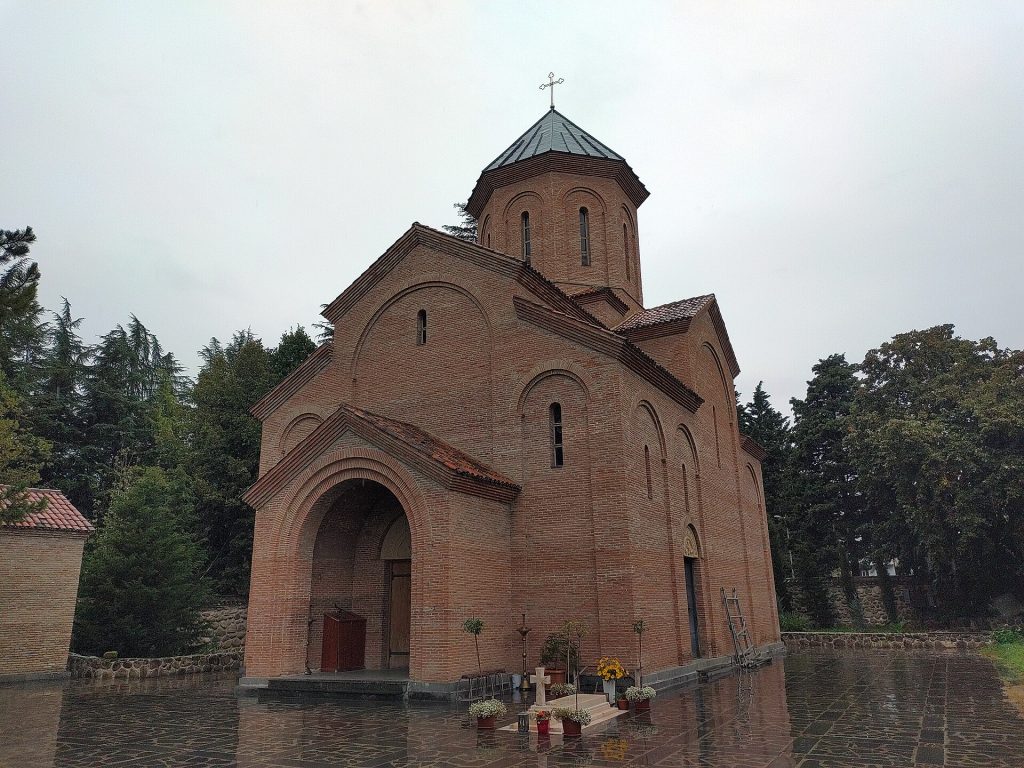
- Present day — Eliaoba is observed every 2 August with a liturgy and pilgrimage to the hilltop Church of St. Elijah above the town, followed by a municipally organised festival of concerts, food and trade on the central square.
The feast of Elijah has a long history in Georgian Christianity, reflecting the broader Old Testament resonance found throughout Georgian church tradition — Georgia’s national cathedral, Svetitskhoveli in Mtskheta, is itself founded, according to tradition, on a legend involving a Georgian Jew of the first century. The specific prominence of Eliaoba in Dedoplistskaro appears to be a more recent, local elaboration of a calendar date observed across the Orthodox world, rather than a uniquely ancient local cult, though the exact point at which the town festival took its present civic form is not precisely documented.
What can be said with confidence is that the feast sits at an agriculturally meaningful moment in the Kakhetian year. Early August falls just before the grape harvest begins in earnest, and communities across the wine region have long treated saints’ days in this window as informal blessings on the coming vintage. This agricultural layer, combined with the pilgrimage to the hilltop church and the town’s own post-Soviet revival of public celebration after 1991, is what gives Eliaoba in Dedoplistskaro its present character.
Meaning and traditions
The core religious observance is simple: a liturgy is held at the Church of St. Elijah on the hill above Dedoplistskaro, and pilgrims — many on foot — climb to attend it, often arriving before sunrise to avoid the summer heat. Candles are lit, and it is customary to walk around the church three times before entering, a gesture common to Georgian pilgrimage practice generally. Some families bring a matagi — a sacrificial animal, usually a lamb — whose meat is later shared among relatives, neighbours and anyone present, a custom with deep roots in Georgian rural religious life and documented most strongly in the mountain regions of Pshavi, Khevsureti and Tusheti, where Eliaoba is marked with communal sacrifice on a larger scale.
After the church observance, the day shifts register entirely. The central square in Dedoplistskaro fills with stalls, folk and popular music concerts, and family groups who have gathered specifically for the day. A supra (feast table) is a near-universal feature of any Eliaoba gathering, whether in a private courtyard or a public tent, and toasts follow the structured order typical of Georgian feasting, often including the toastmaster’s call of mravalzhamier — “may you have many years” — a phrase also preserved in Georgian polyphonic song. Food typically includes grilled meat (mtsvadi), Georgian bread, and the first ripening fruit of the season, washed down with local Kakhetian wine, since Dedoplistskaro sits within one of Georgia’s principal wine-producing districts.
Regional variation matters here. In Kakheti’s lowlands, including Dedoplistskaro, Eliaoba tends toward a balance of church pilgrimage and secular town festival. In the mountain regions further north and west, the day leans more heavily on pre-Christian-inflected communal ritual, including larger-scale animal sacrifice and distribution of meat according to strict customary rules, a practice Georgian ethnographers have studied as evidence of ritual continuity predating the written church calendar.
When it happens
Eliaoba follows a fixed date in the Georgian Orthodox calendar: 20 July according to the Julian reckoning still used by the Georgian Church for its fixed feasts, which corresponds to 2 August on the civil Gregorian calendar used in daily life. The date does not move from year to year. In 2026 the feast fell on Sunday, 2 August; the next observance is Monday, 2 August 2027.
Eliaoba is not a designated non-working public holiday at the national level in Georgia — shops, offices and transport across the country operate normally. In Dedoplistskaro itself, however, the municipality organises the day as a local civic event: the central square is closed to traffic for the festival, some local businesses adjust hours around the concerts, and the church holds its principal service of the year that morning.
Where to experience it
The two places to be in Dedoplistskaro on the day are the hilltop Church of St. Elijah overlooking the town, best visited in the early morning for the liturgy and the cooler walk up, and the central square in the town itself, which comes alive from late afternoon into the evening with concerts, food stalls and trading. Visitors are welcome at the church service but should follow standard Georgian Orthodox church etiquette: women should cover their heads and shoulders, both men and women should avoid shorts, and photography inside the church should be discreet or avoided entirely during the service. The outdoor festival on the square has no such restrictions and is straightforwardly a public, family-oriented event.
Dedoplistskaro is a small district town rather than a major tourist centre, so the festival retains a genuinely local character — visitors are more likely to be invited to join a family’s table than to find organised tourist infrastructure. This is part of its appeal for travellers interested in Georgian life beyond the main heritage circuit of Sighnaghi and Telavi.
Travel with GTour
The Rtveli — Wine Harvest in Kakheti (3 Days, September–October) route passes near Dedoplistskaro, and an early visit can be timed to the 2 August Eliaoba concerts and the walk to Elia church before harvest season starts, with Racha — Khvanchkara Wine & Mountain Lakes (2 Days) added before or after. A GTour travel expert designs the route around the guest’s dates.
Did you know
- Georgian folk tradition has long associated the Prophet Elijah with thunder and weather, so a storm on Eliaoba is traditionally read by farmers as a favourable sign for the coming harvest.
- Dedoplistskaro’s name means “the queen’s spring,” referring to a local tradition about a Georgian queen drawing water there; the town carried the Russian-imposed name Tsiteltskaro for more than a century before reverting to its historic name in 1991.
- Kakheti, home to Dedoplistskaro, produces the majority of Georgia’s wine, and Eliaoba falls just ahead of the start of the grape harvest, giving the feast an informal role as a seasonal blessing.
- In Georgia’s mountain regions, Eliaoba involves ritual animal sacrifice (matagi) and communal meat distribution, a practice ethnographers regard as older than the written church calendar itself.
- Georgian uses the suffix -oba to name dozens of saints’ feast days from personal names — Giorgoba, Mariamoba and Eliaoba all follow the same linguistic pattern.
Practical tips for visitors
Dedoplistskaro lies roughly three hours by road from Tbilisi through Kakheti; a private driver or organised tour is the most reliable option, since public marshrutka connections from Tbilisi and Telavi are infrequent. Early August in Kakheti is hot and dry, so sun protection, water and comfortable footwear for the climb to the hilltop church are essential. Accommodation in the town itself is limited; travellers often base themselves in Sighnaghi or Telavi and drive in for the day. Dress modestly for the church portion of the visit — a headscarf and a shawl or light jacket for shoulders are worth carrying even in summer heat — while the evening festival on the square calls for nothing more formal than typical summer travel clothing.
Combine it with
Eliaoba sits naturally within a wider visit to Kakheti, Georgia’s principal wine region, where Dedoplistskaro can be paired with wine-town stops in Sighnaghi or Telavi. It also works well as a long day trip from Tbilisi, and travellers interested in the broader pattern of Georgian saints’ feasts and pilgrimage churches may wish to extend their trip toward Mtskheta-Mtianeti, home to some of the country’s oldest Christian sites.
Questions travellers ask
What does “Eliaoba” mean?
Eliaoba means “the day of Elijah.” It combines the Georgian form of the prophet’s name, Elia, with the suffix -oba, which Georgian uses to turn a saint’s name into the name of their feast day.
Is Eliaoba a public holiday in Georgia?
No. It is not among Georgia’s official non-working public holidays, so businesses, offices and transport operate as normal nationwide. In Dedoplistskaro, however, the municipality organises local festivities, including closing the central square for the concert programme.
When is Eliaoba celebrated in 2027?
It falls on Monday, 2 August 2027, following the fixed civil date that corresponds each year to 20 July in the Georgian Orthodox Church’s Julian-based calendar.
Why is the feast celebrated so prominently in Dedoplistskaro specifically?
The town has a hilltop church dedicated to St. Elijah that serves as a local pilgrimage site, and the municipality has built a civic festival around the pilgrimage, giving Eliaoba in Dedoplistskaro a scale and public character not found in every Georgian town that marks the date.
Can visitors attend the church service?
Yes, the liturgy is open to the public. Visitors should dress modestly, keep noise to a minimum, and be discreet with photography during the service itself.
What should visitors wear to the church?
Women should cover their shoulders and head with a scarf; both men and women should avoid shorts or sleeveless tops. A light shawl or scarf is worth carrying even on a hot August morning.
How do I get to Dedoplistskaro from Tbilisi?
The town is about three hours’ drive from Tbilisi through Kakheti. A private driver, organised tour, or rental car is more practical than public transport, as direct marshrutka services are limited, especially outside the main festival hours.
Are there other places in Georgia that celebrate Eliaoba?
Yes. The feast is marked across Georgia, with particularly strong traditions in the mountain regions of Pshavi, Khevsureti and Tusheti, where communal animal sacrifice and meat distribution play a larger role than in the Kakhetian lowlands.
Sources
- Svetitskhoveli Cathedral, UNESCO World Heritage List
- Georgia Travel – Kakheti region
- Georgian Orthodox and Apostolic Church (Patriarchate)
Plan your Georgia
Want to be in Georgia for Eliaoba? A GTour travel expert designs the itinerary around it and calls you back.
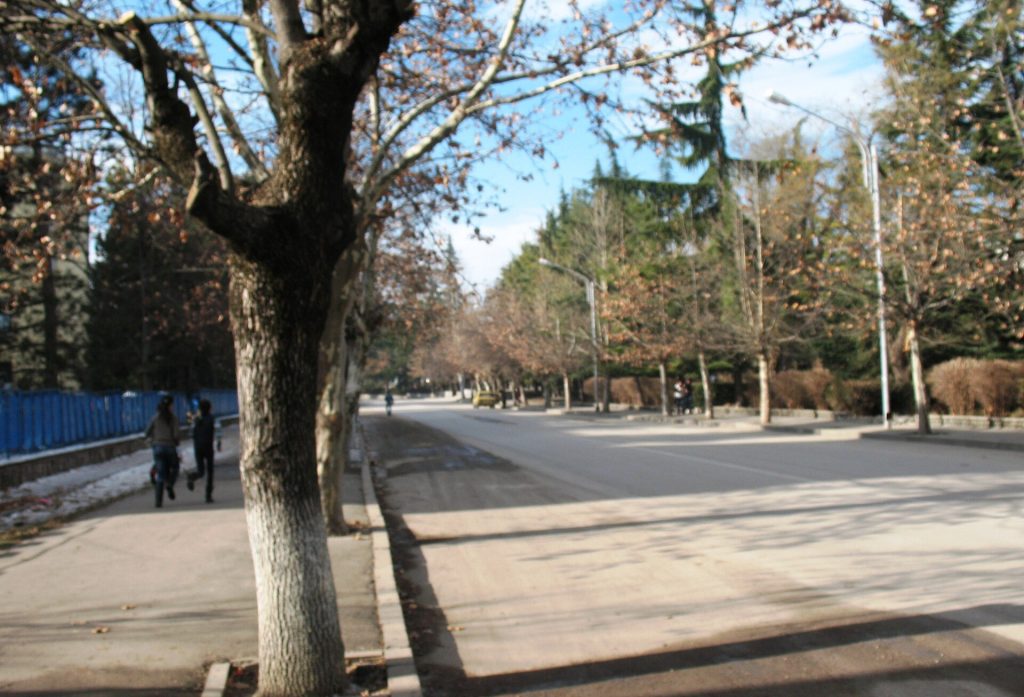
The central square of Dedoplistskaro, where Eliaoba festivities and concerts are held. · Photo: Jelger Groeneveld / Wikimedia Commons, CC BY 4.0
This page in other languages: Русский
GTour conciergeAsk anything about Georgia · we reply within hours