Archives


Mtskheta Cheese Festival in Georgia: dates, meaning and how to experience it
Next dates
4 July 2027 (to be confirmed) · Mtskheta. See the full events calendar and Georgia today for roads and weather.
What it is
The Mtskheta Cheese Festival (Georgian: ყველის ფესტივალი, qvelis pestivali, literally “cheese festival”) is an open-air showcase of Georgia’s traditional dairy products, held each summer in Mtskheta, the country’s ancient capital some twenty kilometres north of Tbilisi. It is organised by an association of small cheesemakers and farmers sometimes referred to, in event materials and local press, as the Georgian Cheese Guild, together with the Mtskheta municipal authorities. The event brings together producers from Kartli, Imereti, Guria, Racha and the eastern mountain regions, each bringing cheeses specific to their valley or pasture.
Unlike church feasts fixed to the liturgical calendar, this is a civic and agricultural festival, closer in spirit to a harvest or craft fair than to a religious holiday. It is celebrated primarily by producers, chefs, restaurateurs and visitors with an interest in Georgian food culture rather than by the population at large, and it carries no fasting rules, saints’ days or household rituals of its own. Its significance lies instead in what it displays: the extraordinary diversity of Georgian cheese-making, a tradition shaped by mountain transhumance, monastic dairying and centuries of trade along the routes that converge on Mtskheta.
Historical background
- 4th–3rd century BCE — Mtskheta becomes the capital of the kingdom of Iberia (Kartli), a position it holds for roughly a thousand years.
- 337 — King Mirian III adopts Christianity as the state religion, traditionally with Mtskheta as the centre of the new faith.
- 5th century — the capital is moved to Tbilisi under King Vakhtang Gorgasali, though Mtskheta retains its status as the spiritual seat of the Georgian Church.
- 1010–1029 — Svetitskhoveli Cathedral, the centrepiece of Mtskheta’s historic ensemble, is built by the architect Arsukisdze.
- 1994 — “Historical Monuments of Mtskheta” is inscribed on the UNESCO World Heritage List.
- 20th century — Soviet-era collectivisation standardises much dairy production, while highland communities continue making cheeses such as guda and tenili by older methods.
- 2000s–2010s — renewed interest in Georgia’s food heritage, paralleling the revival of traditional winemaking, brings attention to indigenous cheese varieties and their protection.
- 2010s onward — Georgia’s intellectual property office begins work on geographical indications for traditional agricultural products, a process relevant to regional cheeses as well as wine.
- Early 2020s — a guild of small producers establishes the Mtskheta Cheese Festival as an annual early-summer event in the old capital, according to organisers and local reporting.
Mtskheta’s claim to host such a festival rests on its symbolic weight rather than on any ancient cheese-making guild of its own. As the first capital of a unified Kartli and the cradle of Georgian Christianity, the town has long served as a stage for events meant to represent the nation as a whole — royal coronations once, cultural and culinary festivals now. Its churches, monasteries and the confluence of the Mtkvari and Aragvi rivers give the festival a setting that few modern food events can match.
The cheeses themselves carry a much older history than the festival that now displays them. Transhumant herding in the Greater Caucasus, Svaneti and Tusheti produced hard, long-keeping cheeses suited to mountain winters, while the warmer valleys of Imereti and Samegrelo developed fresh, brined and stretched-curd cheeses such as sulguni, closer in technique to the pasta filata cheeses of the Mediterranean. Monastic estates around Mtskheta and Tbilisi also kept dairy herds, and cheese appears alongside bread and wine in Georgian hospitality customs recorded since at least the medieval period. The festival gathers these separate regional traditions into one place for a single weekend.
Meaning and traditions
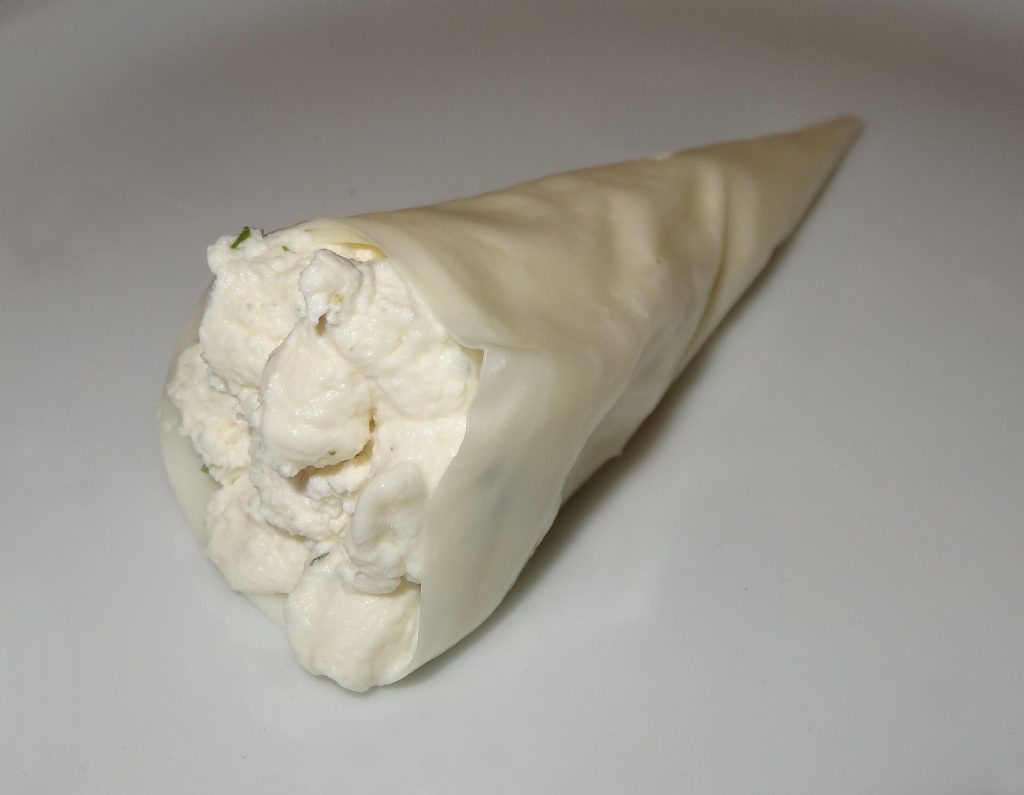
Visitors encounter rows of stalls where producers sell and explain cheeses that rarely appear together outside Georgia: sulguni (a brined, kneaded cheese from Samegrelo), imeruli (fresh Imeretian cheese, the base of many others once aged or smoked), guda (a sheep’s-milk cheese matured in a sewn skin, typical of Tusheti), tenili (a stringy, hand-pulled cheese from Samtskhe-Javakheti), and kalti or smoked varieties from the mountains. Tastings are accompanied by fresh bread, often baked in a tone (clay oven) on site, and by Georgian wine poured from clay jugs or modern bottles alike.
The atmosphere is informal rather than ceremonial: live folk music, demonstrations of cheese-pulling and churning, competitions for the best-tasting or most skilfully made cheese, and conversation between producers and visitors about pasture, breed and method. Phrases a visitor may hear include gaumarjos (“cheers,” literally “may you be victorious”), used in toasts throughout such gatherings, and supra, the traditional Georgian feast table, which the festival loosely evokes on a public scale. Regional variation is the point of the event: a cheese from a Tusheti shepherd and one from an Imeretian dairy farmer will differ sharply in texture, saltiness and ageing, and producers are generally glad to explain why.
When it happens
The festival has no fixed date in the way church feasts do; it is a civil, organiser-set event rather than one tied to the Georgian Orthodox calendar. In practice it has been held in the first week of July, timed to the start of the summer dairy season when milk yields and cheese stocks are at their highest. Organisers confirm the exact date each year, usually a few months in advance, and the date can shift within that first-week window.
It is not a public holiday in Georgia: government offices, banks and most businesses operate normally, and the festival does not affect transport or opening hours outside its own grounds in Mtskheta. For 2027, the date circulating with organisers is 4 July, described as provisional at the time of writing; travellers planning a visit around that date should confirm the schedule with the organisers or the Mtskheta municipal authority closer to the time, since Georgian cultural calendars for georgia.travel and gnta.ge are updated as events are finalised.
Where to experience it
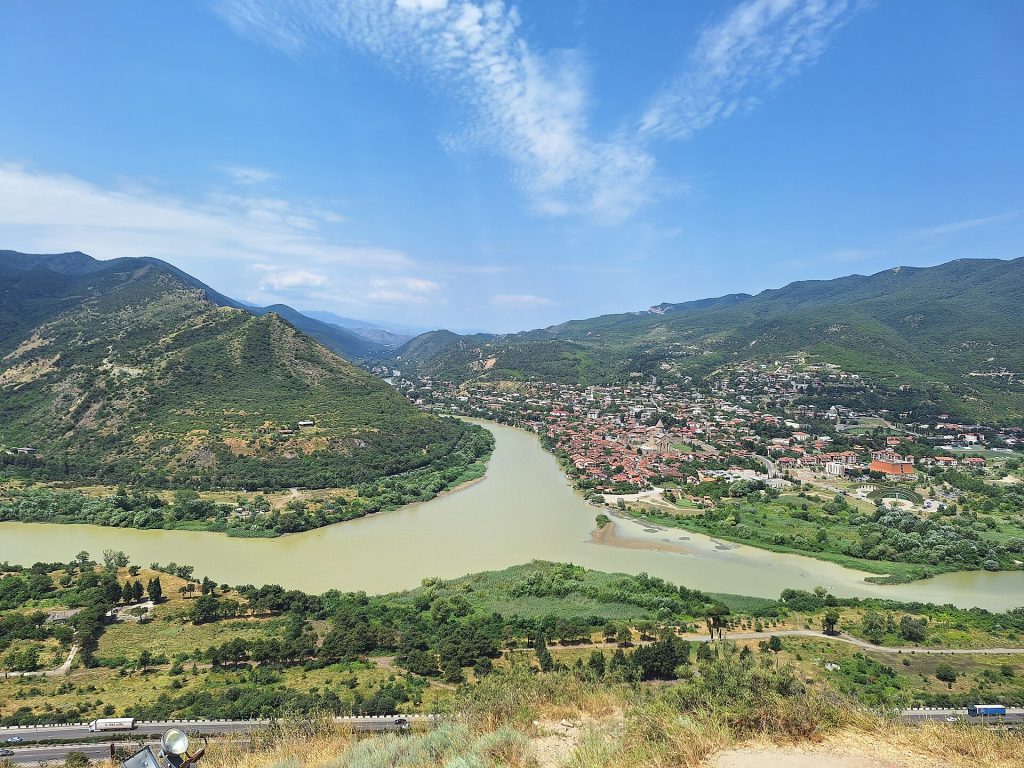
The festival takes place in central Mtskheta, typically on open ground near the town’s main sights, within easy walking distance of Svetitskhoveli Cathedral and the Samtavro Monastery. A day visit allows time for both the stalls and the historic quarter: Svetitskhoveli, the burial place of Georgian kings and, according to tradition, of Christ’s robe; the hilltop Jvari Monastery across the river, visible from much of the town; and the narrow lanes of the old town itself.
Stalls generally open through the morning and run into the afternoon, with music and demonstrations continuing into the evening. As with any visit to Mtskheta’s churches, modest dress is expected inside Svetitskhoveli and Jvari — covered shoulders and, for women, a headscarf, available to borrow at the entrance if needed. Within the festival grounds itself, etiquette is informal: sampling is usually free or low-cost, and asking a producer about their cheese and region is welcomed rather than intrusive.
Travel with GTour
Both Georgia in 10 Days — Tbilisi to Svaneti to the Sea and Tbilisi & Mtskheta — The Essential First Day pass through Mtskheta near the start of the itinerary, allowing an early-July visit to coincide with the Cheese Guild’s gathering in the old capital. A GTour travel expert designs the route around the guest’s dates, adjusting the Mtskheta stop once the festival date is confirmed.
Did you know
- Mtskheta served as the capital of the kingdom of Iberia for roughly a thousand years before the seat of power moved to Tbilisi in the 5th century.
- Svetitskhoveli Cathedral, at the heart of the festival’s setting, is traditionally associated with the burial site of Christ’s robe, according to Georgian church tradition.
- Sulguni, one of the cheeses most often tasted at the festival, is made using a kneading and stretching technique comparable to that used for Italian pasta filata cheeses.
- Guda cheese from Tusheti is traditionally matured inside a sewn sheep or goat skin rather than a mould, a method adapted to high-altitude pastoral life.
- The “Historical Monuments of Mtskheta” were inscribed as a UNESCO World Heritage Site in 1994, grouping several of the churches visible from the festival grounds.
Practical tips for visitors
Mtskheta is a short trip from Tbilisi, reachable by marshrutka (minibus) from Tbilisi’s Didube station, by taxi, or as part of an organised day tour; there is no dedicated festival shuttle, so travellers should plan transport independently or book through a local operator. Early July in eastern Georgia is typically hot, so light clothing, sun protection and water are advisable, with a scarf or cover-up kept on hand for church visits. The festival itself does not require advance tickets in most years, but accommodation in Mtskheta is limited, so visitors wishing to stay overnight, or combine the day with Tbilisi hotels, should book ahead, particularly if the confirmed date coincides with a weekend. Because the date is set annually, checking directly with organisers or the municipal authority in the weeks before travel is the only reliable way to confirm the schedule.
Combine it with
Mtskheta sits within the wider Mtskheta-Mtianeti region, making it easy to pair the festival with a trip toward the mountains. Cheese lovers often continue into Kakheti for wine tastings that pair naturally with Georgian cheeses, while those interested in the royal and ecclesiastical history on display can extend the trip through Kartli, where several of Georgia’s oldest churches and fortresses lie along the same river valleys.
Questions travellers ask
Is the Mtskheta Cheese Festival a religious holiday?
No. It is a civic and agricultural event organised by a guild of cheese producers, not a feast of the Georgian Orthodox Church, and it carries no fasting rules or liturgical observance of its own.
Do I need to buy a ticket in advance?
In most years entry to the festival grounds has not required advance tickets, though individual tastings or workshops may carry a small fee. Checking with organisers closer to the date is recommended, as arrangements can change.
How far is Mtskheta from Tbilisi?
Mtskheta is about twenty kilometres from central Tbilisi, roughly a thirty- to forty-minute journey by marshrutka, taxi or car, making a round trip for the festival comfortably achievable in a single day.
What cheeses should I try first?
Sulguni and fresh Imeretian cheese are good starting points for visitors unfamiliar with Georgian dairy products, followed by guda or smoked varieties for those wanting stronger, more distinctive flavours.
Can I visit Svetitskhoveli Cathedral on the same day?
Yes. The cathedral is within walking distance of the festival grounds and is open to visitors daily; modest dress covering shoulders and knees is expected, and a headscarf is customary for women inside the church.
Is the festival suitable for children?
The open, informal atmosphere, with music, food stalls and demonstrations, generally suits families, though shade and hydration are worth planning for given the July heat.
What happens if the date changes closer to the time?
Because the festival is organised annually rather than fixed by calendar or law, organisers sometimes adjust the date within the first week of July. Confirming the schedule shortly before travel, through local tourism offices or the organisers, is the safest approach.
Is this the only cheese-related event in Georgia?
No. Georgia has a wider ecosystem of food and wine festivals, including wine harvest celebrations in Kakheti, and regional producers elsewhere in the country also hold smaller dairy fairs, though Mtskheta’s event is distinctive for its setting among the country’s oldest churches.
Sources
- Historical Monuments of Mtskheta, UNESCO World Heritage List
- Georgian National Tourism Administration
- Georgian National Tourism Administration (events)
- Georgian Patriarchate
- Ministry of Culture, Sport and Youth of Georgia
- National Statistics Office of Georgia
Plan your Georgia
Want to be in Georgia for Mtskheta Cheese Festival? A GTour travel expert designs the itinerary around it and calls you back.
Sulguni, the traditional Georgian cheese celebrated at Mtskheta's Cheese Guild festival. · Photo: Jon Gudorf Photography / Wikimedia Commons, CC BY-SA 2.0
This page in other languages: Русский
GTour conciergeAsk anything about Georgia · we reply within hours