Archives


Gudauri Freeride Week in Georgia: dates, meaning and how to experience it
Next dates
13 March 2027 – 14 March 2027 (to be confirmed) · Gudauri and Kobi, Mtskheta-Mtianeti. See the full events calendar and Georgia today for roads and weather.
What it is
Gudauri Freeride Week is an annual off-piste skiing and snowboarding event held on the steep, open faces above the resort village of Gudauri, in the Mtskheta-Mtianeti region of the Greater Caucasus. The event combines a Freeride World Qualifier (FWQ) competition, which feeds athletes into the international Freeride World Tour ranking system, with a junior freeride contest for younger riders from Georgia and neighbouring countries. Unlike most entries on this page, the event’s name is English rather than Georgian, since freeride skiing itself is a recent, globally organised sport; the Georgian element lies in the place itself — the toponym “Gudauri,” the mountain culture of the historic Mtiuleti and Khevi districts, and the Georgian Military Road that has carried travellers across this pass for centuries.
The people who gather for Freeride Week are a mix of international athletes, Georgian and regional skiers and snowboarders, resort staff, mountain guides, avalanche-safety teams, and spectators who hike or ride the gondola to vantage points above the start gates. It is not a religious or civic feast in the traditional sense, and it draws no large village-wide ritual; rather, it is best understood as a modern addition to a much older pattern in the central Caucasus, where seasonal gatherings around the mountains — shepherding treks, mountaineering ascents, and now competitive skiing — have long structured the rhythm of life at altitude. For visitors curious about Georgian culture, it offers a vivid, contemporary counterpoint to the historic churches and wine festivals more commonly associated with the country.
Historical background
- Antiquity — The route over the Jvari (Cross) Pass above Gudauri has, according to historical geographers, linked the South Caucasus with the North Caucasus since ancient times, forming part of the broader network of passes that Greek and Roman writers associated with crossing the Caucasus range.
- 1783 — The Treaty of Georgievsk brought the Kingdom of Kartli-Kakheti under Russian protection, a political shift that led directly to greater imperial interest in securing a year-round road across the mountains.
- 1799–1863 — Russian imperial engineers progressively built and upgraded the Georgian Military Road (Gzari Mkhedruli) across the Jvari Pass, with the route completed as an engineered carriage highway by the mid-19th century; Gudauri, a small settlement of the historic Mtiuleti district, sat directly on this line.
- Late 19th century — Gudauri was recorded as a modest highland village of herders and road-station keepers, its economy tied to travel, livestock, and the seasonal opening and closing of the pass.
- 1980s — Soviet planners developed Gudauri as a winter sports base, installing the area’s first ski lifts and establishing it as one of the Georgian SSR’s principal mountain resorts.
- 1990s — Resort operations contracted sharply after the collapse of the Soviet Union, and Gudauri’s lift infrastructure fell into disrepair during a difficult decade for Georgian tourism generally.
- 2000s — Renewed investment, much of it tied to Georgia’s wider post-2003 tourism development push, brought modern gondolas and chairlifts to Gudauri and established the resort’s reputation for extensive off-piste and heliskiing terrain.
- 2010s–present — Gudauri became a recognised stop on the Freeride World Qualifier circuit, with an associated junior competition; organisers, working with the resort and national ski bodies, began holding the combined event annually in March under the name Gudauri Freeride Week.
The deeper history of this stretch of the Caucasus is inseparable from the road itself. For much of the nineteenth and twentieth centuries, Gudauri existed less as a destination than as a waypoint — a place travellers passed through on the journey between Tbilisi and the North Caucasus, often delayed for days by snow at the pass above. That same terrain, prized by engineers for its relatively low saddle across the watershed, is what later made the slopes above the village so attractive to skiers: wide, largely treeless bowls reaching from around 2,200 metres up toward 3,000 metres, with a long season of reliable snow.
The transformation from Soviet-era ski station to internationally ranked freeride venue reflects a broader pattern in Georgian tourism policy since the 2000s, which has sought to position the country’s mountain regions alongside its wine country and old cities as destinations in their own right. The Freeride Week format — pairing an elite qualifier with a junior contest — mirrors this dual ambition: drawing international athletes and media attention while also building a domestic base of young Georgian freeriders in a sport that, unlike alpine ski racing, had no deep local tradition before the resort’s modern redevelopment. Details on the resort’s development and current lift infrastructure are maintained by its official tourism portal and by Georgia’s national mountain-resort development agency.
Meaning and traditions
There is no liturgy or fixed ritual attached to Freeride Week, but the event has developed its own informal customs. Riders and judges hold a safety and route briefing at the top station in the days before competition, assessing snowpack and avalanche risk with local guides; competitors are called one at a time to drop into a judged face, scored on line choice, control, fluidity, jumps, and style, in line with international freeride judging criteria. Spectators gather at the base area and along the gondola line, watching live as athletes descend faces that are normally closed to recreational skiers for the duration of the event.
Georgian terms worth knowing in this context include mta (mountain), tovli (snow), and mkinvartsveri — the Georgian name for Mount Kazbek, meaning roughly “ice-capped peak” or “glacier peak,” the 5,047-metre volcano that dominates the skyline to the north of Gudauri. The historic region is also home to gudastviri, a Caucasian bagpipe traditionally played at highland gatherings, whose name shares a root with “guda,” a leather or skin bag — and, according to local tradition, with the name Gudauri itself, though the toponym’s precise origin is not firmly documented. Après-competition hospitality draws on the wider Georgian table: mulled wine, chacha (grape spirit), and, in nearby Pasanauri — regarded by regional tradition as the birthplace of khinkali — the dumplings that have become Georgia’s best-known dish are a natural stop for travellers driving the Georgian Military Highway to or from Gudauri.
When it happens
Gudauri Freeride Week does not fall on a fixed calendar date. It is held annually in mid-March, when the snowpack is typically at its deepest and most stable for off-piste competition, but the exact two-day window is set by organisers each year according to snow conditions and weather forecasts, and is confirmed only a few weeks in advance. For the 2026–27 season, organisers have indicated 13–14 March 2027 as the provisional dates, to be confirmed. It is not a Georgian public holiday; government offices, schools, and businesses nationwide operate as normal, and the event has no effect on opening hours outside the resort itself. Gudauri’s lifts and slopes remain open to the public throughout the week, with specific off-piste zones closed temporarily on competition days for safety.
Where to experience it
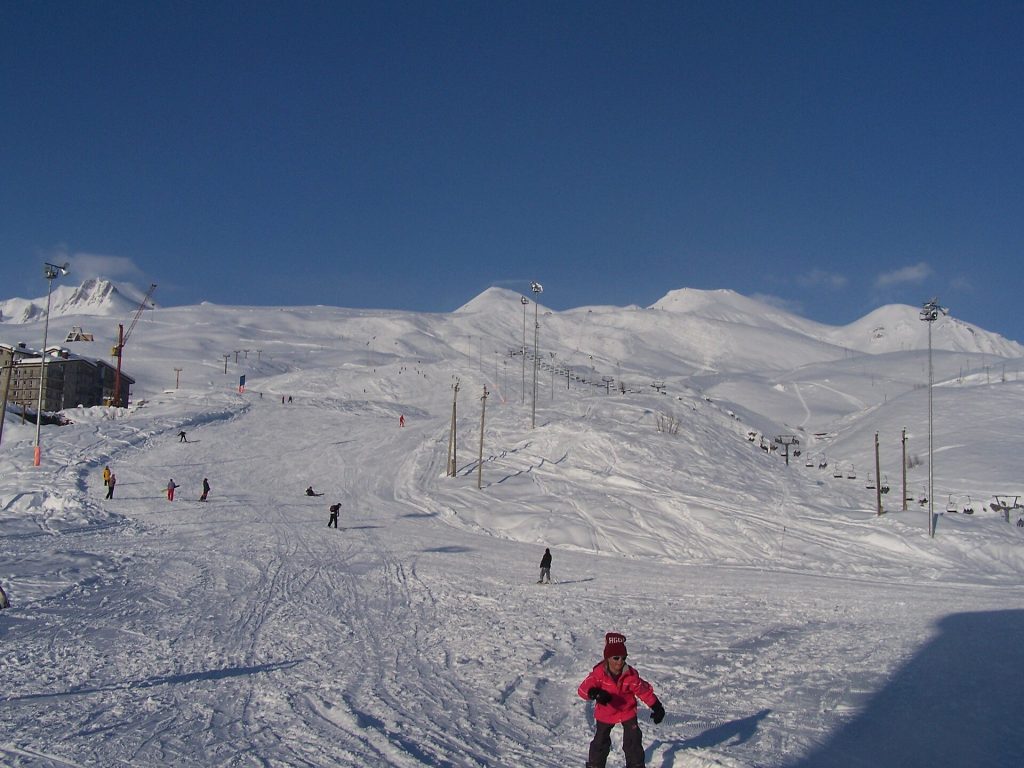
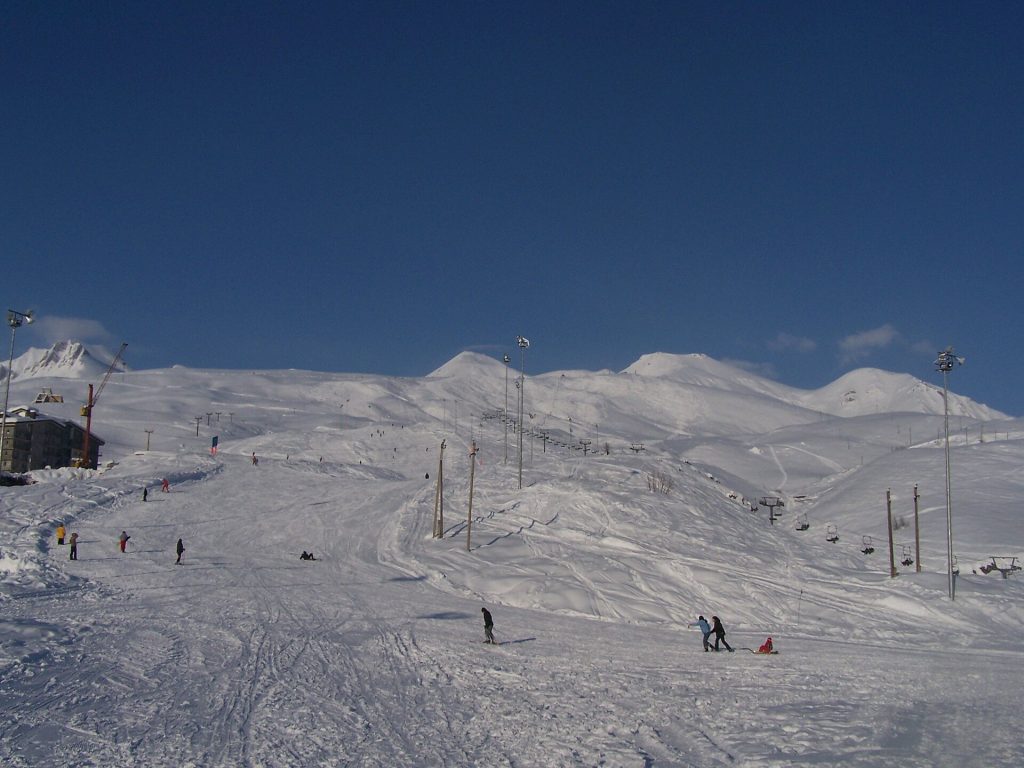
The event is centred on the open faces directly above Gudauri’s main lift base, with the neighbouring village of Kobi — linked to Gudauri by cable car — also used for access and, in some years, as a secondary venue. Spectators typically gather at the base station from mid-morning, when conditions and light are assessed before the first competitors are called; the gondola carries visitors up to viewing points partway up the mountain for a closer look at the judged lines. There is no formal dress code or religious etiquette required, since the event takes place outdoors on the mountain rather than in a church or home, but visitors should stay well back from marked competition zones, follow marshals’ instructions, and avoid flying drones without permission, since unauthorised flights can interfere with safety operations and avalanche-control work.
Travel with GTour
Georgia in Winter — Gudauri Skiing, Tbilisi & Kakheti (6 Days) can be scheduled so its Gudauri segment overlaps with the Freeride Week qualifier runs around 13–14 March, while Gudauri — Mountain Escape stays based right in Gudauri and Kobi where the competition takes place. As dates are still to be confirmed, a GTour travel expert will design the exact route and timing around the guest’s own schedule.
Did you know
- Gudauri sits at roughly 2,196 metres above sea level directly on the Georgian Military Road, a short distance below the Jvari (Cross) Pass, one of the few paved crossings of the Greater Caucasus watershed.
- Mount Kazbek, visible from Gudauri’s upper slopes, is known in Georgian as Mkinvartsveri, meaning “ice-capped peak,” and rises to 5,047 metres.
- Gudauri is one of relatively few resorts worldwide where heliskiing operates within a short drive of a capital-city airport, owing to its proximity to Tbilisi.
- The Georgian Military Road, which Gudauri sits beside, was developed as an engineered highway by Russian imperial authorities in the first half of the 19th century, after centuries of use as a seasonal mountain track.
- Freeride competitions, including the Gudauri event, are judged on criteria shared across the international Freeride World Tour network: line choice, control, fluidity, jumps, and style, rather than finishing time.
Practical tips for visitors
Gudauri is roughly a 90-minute to two-hour drive from Tbilisi along the Georgian Military Highway, reachable by private transfer, tour minibus, or shared marshrutka from Tbilisi’s Didube station. The pass above Gudauri is subject to periodic winter closures for avalanche control or heavy snow; current road status is published by Georgia’s road authority and should be checked before travelling in March. Warm, waterproof layers are essential even for spectators, since conditions at altitude change quickly and viewing points are exposed. Accommodation in Gudauri is limited relative to demand during the competition weekend, so booking well ahead is advisable, and visitors planning to ski or ride during Freeride Week should confirm which off-piste zones remain open to the public on competition days.
Combine it with
Gudauri sits within easy reach of several of Georgia’s best-known mountain and historic sites. Travellers often continue north along the Georgian Military Highway toward Kazbegi, for views of Mount Kazbek and the Gergeti Trinity Church, or explore the wider Mtskheta-Mtianeti region, home to fortified villages, watchtowers, and the historic Ananuri complex along the same highway. A night or two in Tbilisi before or after the drive up allows time to adjust to altitude and pairs the mountain event with the capital’s old town, museums, and restaurant scene.
Questions travellers ask
Is Gudauri Freeride Week open to the public, and is it free to watch?
Yes, spectators are generally free to gather at the base area and along the gondola line to watch the competition; there is typically no ticketed admission for viewing, though access to certain slopes may be restricted on competition days.
Do I need to be an experienced skier to visit during Freeride Week?
No. Gudauri’s groomed pistes remain open to all ability levels throughout the event; only the specific off-piste competition faces are closed to recreational use while judging takes place.
How do I get from Tbilisi to Gudauri?
Most visitors travel by road along the Georgian Military Highway, by private car, organised transfer, or shared marshrutka from Tbilisi, with the drive taking around 90 minutes to two hours depending on conditions and traffic near the pass.
Is Gudauri Freeride Week a public holiday in Georgia?
No. It is a sporting event with no public-holiday status; government offices, schools, and businesses across Georgia operate on a normal schedule during the week.
What happens if bad weather affects the event?
Because safety depends on snow stability and visibility, organisers can delay or adjust the competition schedule within the event window; exact dates and daily timings are confirmed close to the event based on conditions.
Can I still ski normally at Gudauri while the competition is happening?
Yes, the resort’s lift system and marked pistes continue regular operation; only designated off-piste competition zones are temporarily closed to the public on judging days.
Is heliskiing available during Freeride Week?
Gudauri is known for heliskiing outside the immediate competition zones, and operators generally continue offering it during the event subject to weather and airspace coordination with competition organisers; visitors should confirm current availability locally.
What should I bring if I am only there to watch?
Warm waterproof clothing, sturdy boots suitable for snow, sunglasses or goggles against glare, and layers for rapidly changing mountain weather are essential, along with a fully charged phone or camera, since viewing points are outdoors and exposed for extended periods.
Sources
- Gudauri official tourism portal
- Georgian National Tourism Administration
- Georgian road conditions and closures
- Ministry of Environmental Protection and Agriculture
- Agenda.ge – Gudauri Freeride Week coverage
Plan your Georgia
Want to be in Georgia for Gudauri Freeride Week? A GTour travel expert designs the itinerary around it and calls you back.
Skiers and chairlift on the slopes of Gudauri, the venue for the Freeride Week. · Photo: rugbyxm / Wikimedia Commons, CC BY 2.0
This page in other languages: Русский
GTour conciergeAsk anything about Georgia · we reply within hours