Archives


Freeride World Tour in Georgia: dates, meaning and how to experience it
Next dates
22 February 2027 – 28 February 2027 (to be confirmed) · Tetnuldi ski area, Mestia, Svaneti. See the full events calendar and Georgia today for roads and weather.
What it is
The Freeride World Tour — Georgia Pro at Tetnuldi is a stop on the international Freeride World Tour (FWT), the top circuit of judged, off-piste big-mountain skiing and snowboarding. It is not a Georgian folk holiday with a liturgical calendar or an ancient name to translate; “Tetnuldi” is the Georgian and Svan name of the mountain itself, popularly understood from the Georgian root tetri (“white”), describing the peak’s permanent icecap. The event takes its place, since 2024, among a small number of fixtures that have brought an international extreme-sports audience to one of Georgia’s most historically isolated mountain regions.
The competitors are invited professional freeriders — skiers and snowboarders who choose their own line down a steep, ungroomed face rather than following a marked course. The spectators are a mixed crowd: tour staff, sponsors and media who travel with the FWT circuit; Georgian winter-sports fans and journalists; and the people of Mestia and the surrounding Svan villages, for whom the event is now part of the late-winter calendar alongside sheep-herding, timber work and the older rhythms of a region that was, within living memory, cut off from the rest of Georgia for much of the winter.
Historical background
- 9th–12th century — the stone defensive tower-houses of Upper Svaneti, including those still standing in Mestia and Ushguli, are built by local Svan clans as refuges against invasion and blood feud.
- 1868 — the British mountaineer and writer Douglas Freshfield leads one of the first systematic European expeditions into the high peaks of the central Caucasus around Svaneti, bringing the region to wider attention.
- 1996 — Upper Svaneti is inscribed on the UNESCO World Heritage List for its medieval tower-houses and villages, recognising a built landscape shaped by centuries of near-total isolation.
- 2008 — the Freeride World Tour is founded, with Verbier, Switzerland, as a host venue, establishing the judged format — line choice, control, fluidity, technique and exposure — that now defines competitive big-mountain riding worldwide.
- around 2010 — Mestia’s Queen Tamar Airport is rebuilt, cutting the journey from Tbilisi to Svaneti to well under an hour by air and opening the region to large-scale winter tourism for the first time.
- mid-2010s — the Tetnuldi ski area opens above Mestia, developed with steeper, higher-altitude terrain than the older Hatsvali slope and marketed from the outset toward freeride skiers rather than only piste skiers.
- 2024 — Tetnuldi joins the Freeride World Tour calendar as the Georgia Pro stop, the tour’s first fixture in the Caucasus.
- 2025–2026 — the Georgia Pro is held in successive winters, each within a confirmed late-February weather window announced close to the event.
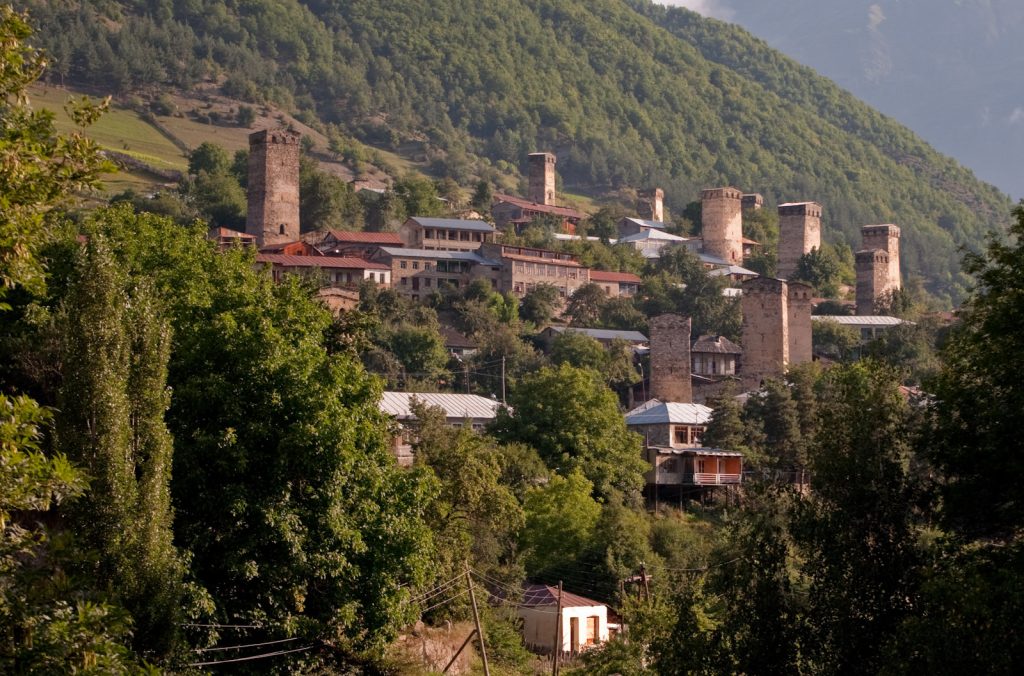
Svaneti’s mountain culture long predates any ski lift. The tower-houses of Mestia and Ushguli, some still inhabited, were built as both homes and fortresses in a landscape where snow could close the passes for months and where clan law, not a distant crown, governed daily life. That isolation preserved an architecture, a dialect and a set of customs — hospitality rites, polyphonic song, particular feast-day observances — that UNESCO later recognised as exceptional within the wider Georgian and Caucasian context.
The arrival of a global extreme-sports tour on that same terrain is a recent and quite different layer of history, part of Georgia’s post-2000s push to develop mountain tourism in Gudauri, Bakuriani, Mestia and beyond. The Freeride World Tour’s decision to add Tetnuldi reflects the mountain’s genuine technical qualities — steep, high, reliably snow-covered faces — rather than any older ceremonial association, and organisers are candid that the fixture is still young and its exact dates are confirmed only when conditions allow.
Meaning and traditions
Unlike a religious feast, the Georgia Pro has no fixed liturgy, but it has quickly acquired its own small set of customs. Riders and judges hold a “face check” from the valley the day before competition, studying the chosen slope through binoculars and discussing lines in the terrain briefing. Competitors then descend one at a time, with no set course, judged on line choice, control, fluidity, technical riding and the size and cleanliness of any jumps — the same criteria used at every FWT stop from Verbier to Alaska.
Around the sport itself, visitors encounter older Svan and Georgian hospitality. A supra (feast table) is a common way for guesthouse hosts to mark the arrival of winter guests, led by a tamada (toastmaster) who proposes a sequence of toasts to guests, ancestors and the mountains themselves. Kubdari, a Svan flatbread filled with spiced meat, is the dish most associated with the region and is widely sold in Mestia during the event. Svan polyphonic singing, recognised by UNESCO as part of Georgia’s intangible cultural heritage, is sometimes heard at evening gatherings, though it belongs to the region’s wider calendar of feasts rather than to the ski event specifically.
Regionally, Tetnuldi’s freeride crowd differs from the older, calmer ski culture of Bakuriani or the more après-ski-oriented Gudauri; Svaneti’s version is smaller, weather-dependent and still closely bound to the rhythms of a working mountain community rather than a purpose-built resort town.
When it happens
The Freeride World Tour does not fix a single calendar date for Tetnuldi. Instead, organisers announce a multi-day “weather window” — typically within the last week of February — during which the tour’s safety and forecasting teams choose the single best day for riding, sometimes with only 24 to 48 hours’ notice. The confirmed window for the next edition is 22–28 February 2027, with the exact competition day to be announced once conditions are assessed; this follows similar late-February windows used since the event joined the tour in 2024.
The event is not a Georgian public holiday. Government offices, schools and businesses across the country operate normally. In Mestia itself, shops, restaurants and transport continue to run, though guesthouses and the ski area’s facilities are notably busier during the confirmed window.
Where to experience it
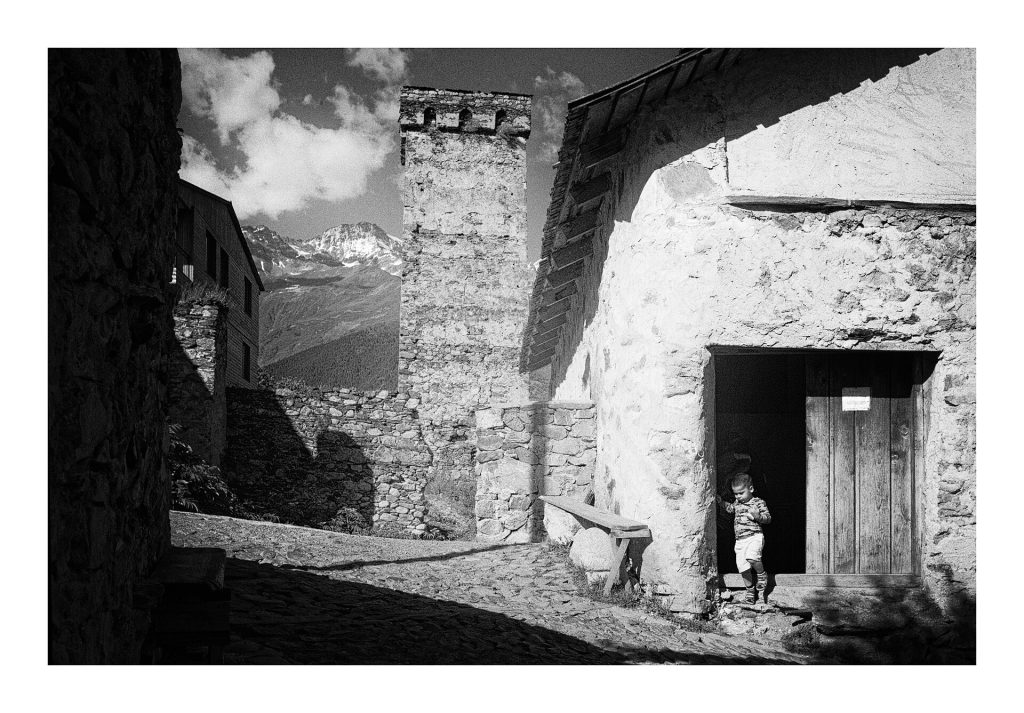
The competition face is on the upper slopes of the Tetnuldi ski area, reached by the resort’s lift system from its base station a short drive above Mestia town. Spectators typically gather at marked viewpoints partway up the lift line, from which the full descent is visible; large screens and a public-address commentary are generally set up near the base station on competition day. Mestia’s old town, with its cluster of medieval Svan towers and the Svaneti Museum of History and Ethnography, makes an easy half-day visit before or after watching the event.
Visitors entering Svan churches should dress modestly, with shoulders and knees covered and, for women, a headscarf where one is offered at the entrance; photography of icons is not always permitted and should be asked about first. If invited into a private home for a meal, it is customary to accept at least a small amount of food and drink and to follow the tamada’s lead before raising a glass.
Travel with GTour
The Svaneti leg of Georgia in 10 Days — Tbilisi to Svaneti to the Sea and the shorter Mestia & Ushguli — 3 Days in Svaneti both pass through Mestia, close enough to Tetnuldi ski area to align with the competition week in late February, weather permitting. A GTour travel expert will shape the exact itinerary around your dates once the event’s schedule is confirmed.
Did you know
- Tetnuldi rises to roughly 4,858 metres, one of the highest summits in the Georgian Caucasus.
- Some of the stone towers of Upper Svaneti, UNESCO-listed since 1996, have stood for close to nine centuries.
- The Freeride World Tour was founded in 2008 in Verbier, Switzerland, and now runs stops on several continents.
- Tetnuldi’s 2024 inclusion made it the tour’s first stop in the Caucasus region.
- Until air and road links improved in the early 2000s and 2010s, parts of Svaneti were effectively cut off from the rest of Georgia for much of the winter.
Practical tips for visitors
Most visitors fly from Tbilisi to Mestia’s Queen Tamar Airport, a flight of under an hour that is frequently weather-dependent and can be delayed or cancelled with little notice; an overland alternative runs via Zugdidi and takes several hours by road, longer in winter snow. Dress in warm, waterproof layers with good sunglasses or goggles, since viewing areas are outdoors at altitude and conditions change quickly. Guesthouse accommodation in Mestia is limited and fills well ahead of the confirmed event window, so early booking is advisable. Because the exact competition day is only confirmed shortly beforehand, travellers planning specifically to watch the event should build flexibility into their itinerary and check tour and local announcements close to arrival.
Combine it with
Most visitors pair the event with wider exploration of Svaneti, including the Ushguli tower villages. Those extending a winter trip often continue to the ski resorts and mountain scenery of Kazbegi, or to the quieter valleys and churches of Racha for a slower, less sport-focused mountain experience.
Questions travellers ask
Is the Freeride World Tour stop at Tetnuldi open to the public, and is it free?
Yes, spectator viewing areas near the ski area are generally open and free to the public, though exact arrangements can vary by year and should be confirmed through tour or local resort channels closer to the date.
How do I know the exact day when the competition will run?
Organisers confirm the specific competition day only once snow and weather conditions are judged suitable, usually a day or two in advance within the announced window; this is standard practice across all Freeride World Tour stops.
Can beginners ski at Tetnuldi during the event?
The ski area includes marked runs suitable for intermediate and advanced skiers alongside the steeper, ungroomed terrain used for competition, but it is not generally recommended for
Plan your Georgia
Want to be in Georgia for Freeride World Tour? A GTour travel expert designs the itinerary around it and calls you back.
A traditional Svan defensive tower, the iconic landmark of the Svaneti region surrounding Mestia. · Photo: Wikimedia Commons / Wikimedia Commons, CC BY-SA 3.0
This page in other languages: Русский
GTour conciergeAsk anything about Georgia · we reply within hours