Archives


Oneloba in Georgia: dates, meaning and how to experience it
Next dates
4 September 2027 (to be confirmed) · Oni, Racha. See the full events calendar and Georgia today for roads and weather.
What it is
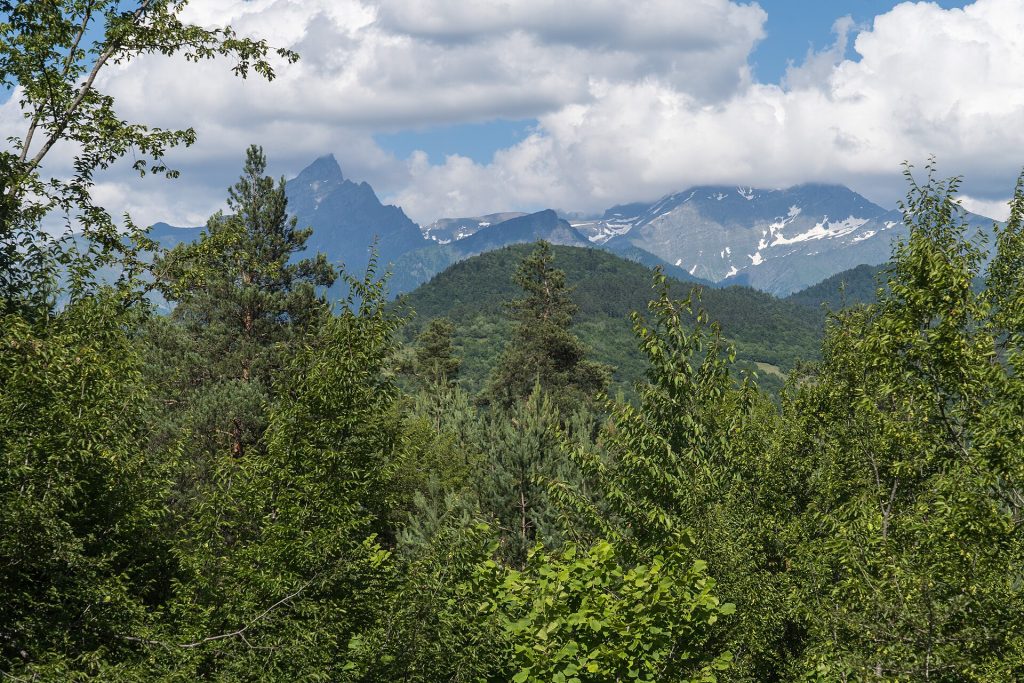
Oneloba is the town-day festival of Oni, the small administrative centre of the Racha-Lechkhumi highlands in northwestern Georgia. The name follows a recognisable Georgian pattern: the suffix -oba turns a place or saint’s name into the word for its feast day, exactly as it does in Tbilisoba (the Tbilisi city day) or in saints’ feasts such as Giorgoba. “Oneloba” therefore means, roughly, “the day of Oni” or “Oni’s feast” — a civic rather than a liturgical holiday, built around the identity of one town rather than around a church calendar event.
The festival is celebrated by residents of Oni and the wider Racha district, by Rachans who have moved to Tbilisi, Kutaisi or abroad and return for the weekend, and increasingly by visitors drawn by Racha’s food, wine and mountain scenery. Because Oni was historically home to one of Georgia’s most significant Jewish communities, the day also carries meaning for the Georgian Jewish diaspora, many of whose families trace their roots to the town’s old synagogue quarter.
Historical background
- Medieval period — Racha appears in Georgian chronicles as a highland duchy (saeristavo) within the unified Kingdom of Georgia, valued for its iron, timber and mountain passes linking Imereti to the north Caucasus.
- Early 11th century — Nikortsminda Cathedral, Racha’s masterpiece of domed church architecture, is built near Ambrolauri, evidence of the region’s wealth and ecclesiastical importance in this period.
- 16th–18th centuries — Oni grows, according to local historical tradition, as a market town serving highland villages, with a Georgian Jewish community established there alongside Georgian and Armenian traders.
- 19th century — under Russian imperial administration, Oni becomes a district (uyezd) centre of the Kutaisi Governorate, and its Jewish community, among the largest in Georgia, builds a large masonry synagogue that still dominates the old town.
- 1921–1991 — during the Soviet period, religious life in Oni continues discreetly; from the 1970s onward many Georgian Jewish families emigrate to Israel, thinning the once-large community while the synagogue building survives as a protected monument.
- 1991 — Georgian independence is followed, across the country, by a revival of local civic holidays and town-day festivals modelled on the older pattern of Tbilisoba.
- 2000s–2010s — Oni’s municipality formalises an annual town day combining a harvest-season fair, Rachan folk ensembles and open visits to the synagogue quarter, scheduled for the first Saturday of September.
- 2020s — the festival continues as a fixed date on Racha’s cultural calendar, promoted alongside the region’s wine, cured-meat and polyphonic-song traditions.
Oni’s deeper history explains why the festival reaches well beyond a simple street fair. The town sits at a crossroads of highland Georgian, Jewish and, later, Russian imperial administrative life, and its built heritage — the synagogue above all — records that layered past more vividly than almost any other town of comparable size in Georgia. Georgian Jewish communities are traditionally described as among the oldest Jewish diaspora populations, with settlement predating much of European Jewish history, and Oni’s 19th-century synagogue stands as one of the clearest surviving monuments to that long presence in a highland setting rather than a capital city.
The festival itself, by contrast, is a modern civic invention rather than an ancient rite. It belongs to a broader post-Soviet pattern in which Georgian towns revived or created “-oba” days to mark local identity, encourage diaspora visits and, more recently, draw tourism to regions such as Racha that lack major transport links. Its content — food, song, craft, open heritage sites — is therefore best understood as a living, evolving civic tradition rather than a fixed ritual passed down unchanged across centuries.
Meaning and traditions
At the centre of Oneloba is the Georgian supra, the long shared feast table, presided over informally by a tamada (toastmaster) who leads rounds of toasts to Racha, to guests, to ancestors and to peace. Food on the day draws specifically on Rachan specialities rather than generic Georgian dishes: rachuli lori (a cured, fatty pork ham unique to the region), rachuli khachapuri (a cheese bread enriched with butter and sometimes egg), sulguni cheese, lobio (bean stew) and bread baked in outdoor clay ovens. Wine is central, and Racha’s own appellations — Khvanchkara and Tvishi, both naturally semi-sweet reds and whites from local grape varieties — are poured generously, often from qvevri, the traditional clay vessels used across Georgia for fermenting and storing wine.
Music and dance follow the supra or run alongside the fair stalls: local ensembles sing Racha-Lechkhumi’s distinct branch of Georgian polyphonic singing, a tradition recognised by UNESCO as Intangible Cultural Heritage, and dancers perform regional round dances (perkhuli) in the main square. Craft stalls sell wool felt goods, wood carving and preserved foods typical of a mountain economy. A specific feature of Oneloba, distinguishing it from most other Georgian town days, is that the old Jewish quarter and synagogue are opened to visitors for the day, with guided explanations of Oni’s Georgian-Jewish history alongside the Christian and secular celebrations elsewhere in town.
Regional variations exist across Georgia’s town-day calendar: Tbilisoba, the best known, takes place in October in the capital with a far larger programme; Kutaisi and Batumi hold their own civic day festivals; Oneloba is distinguished by its small scale, its mountain setting and its explicit inclusion of Jewish heritage, which larger city festivals rarely foreground so directly.
When it happens
Oneloba falls on the first Saturday of September each year, a date set locally by Oni’s municipal administration rather than fixed in national law. In 2026 the festival was held on 5 September; the 2027 edition is expected on 4 September 2027, though as with other town-level festivals this date is confirmed by organisers closer to the time and should be checked before booking travel. The day is not a national public holiday: government offices, schools and most businesses across Georgia operate normally, and only Oni itself sees local closures, with the main square given over to the fair and stalls occupying streets near the synagogue quarter.
Where to experience it
The festival centres on Oni’s main square and the streets leading toward the old synagogue quarter, roughly a short walk apart in a town small enough to cross on foot in fifteen minutes. Activity usually runs from late morning into evening, with food and craft stalls open through the afternoon and concerts or dancing building toward dusk. Visitors can walk through the synagogue quarter and view the exterior of the large 19th-century synagogue building; entry to the interior, where it occurs, should be treated as entry to a place of worship and heritage — modest dress is appropriate, loud conversation inside should be avoided, and photography of the interior or of worshippers should be asked for in advance rather than assumed. In private homes hosting guests for a supra, it is customary to wait for the tamada’s toasts before drinking and to bring a small gift, such as local wine or sweets, if invited.
Travel with GTour
The Racha — Khvanchkara Wine & Mountain Lakes (2 Days) tour passes directly through Oni, so an early-September departure can be set to land on the first Saturday, when the town gathers for Rachan food, folk music and a walk through the old synagogue quarter; the longer Georgia in 10 Days — Tbilisi to Svaneti to the Sea route can be adjusted to pass through Racha on the same weekend. A GTour travel expert will design the exact route around the guest’s dates, confirming the festival schedule closer to the time.
Did you know
- The “-oba” ending used in “Oneloba” is the same grammatical pattern behind Tbilisoba and dozens of saints’ feast days, turning a name into “the day of.”
- Georgian Jewish communities are traditionally considered among the oldest Jewish diaspora populations anywhere, with settlement in Georgia long predating much of the European diaspora.
- Khvanchkara, Racha’s best-known wine, is a naturally semi-sweet red made without added sugar, produced from the Aleksandrouli and Mujuretuli grape varieties grown only in a small part of the region.
- Georgian polyphonic singing, which includes Racha-Lechkhumi’s own regional style, was inscribed on UNESCO’s Representative List of Intangible Cultural Heritage in 2008 (proclaimed in 2001).
- Nikortsminda Cathedral, one of Georgia’s finest 11th-century domed churches, stands less than an hour from Oni and predates the town’s recorded growth as a trading centre by several centuries.
Practical tips for visitors
Oni lies in the mountains roughly four to five hours by road from Tbilisi, usually reached via Kutaisi and Ambrolauri; the route includes winding sections, so a private driver is advisable rather than a self-drive rental for visitors unfamiliar with Georgian mountain roads. September weather is generally mild by day and cool after sunset, so layered clothing is recommended. Accommodation in Oni itself is limited to a small number of guesthouses, which fill quickly on festival weekends, so booking well in advance — or basing in Ambrolauri or Kutaisi with a day trip — is sensible. GTour arranges a private driver or guide for the day for travellers who prefer not to navigate the mountain roads independently.
Combine it with
Oni sits within the wider Racha region, making it easy to pair the festival with Nikortsminda Cathedral, the Shaori reservoir and local wine cellars on the same trip. The mountain road onward connects, with more time, to Svaneti, Georgia’s highest inhabited region and another stronghold of polyphonic song and tower-house architecture, while the return route toward Tbilisi passes through Imereti, home to Kutaisi and the Prometheus and Sataplia caves.
Questions travellers ask
What does “Oneloba” mean?
It combines “Oni,” the town’s name, with the Georgian suffix “-oba,” which forms the word for a day or feast dedicated to something, as in Tbilisoba for Tbilisi. It translates loosely as “the day of Oni.”
When is Oneloba in 2027?
The festival is expected on 4 September 2027, following the usual first-Saturday-of-September pattern, though local organisers confirm the exact date closer to the time.
Is Oneloba a public holiday?
No. It is a local municipal celebration, not a national public holiday, so government offices, banks and businesses elsewhere in Georgia operate as normal.
How do I get to Oni from Tbilisi?
By road via Kutaisi and Ambrolauri, a journey of around four to five hours through mountainous terrain; hiring a private driver is recommended over self-driving for visitors unfamiliar with the route.
Can visitors enter the Oni synagogue?
The exterior and surrounding old quarter can generally be viewed freely during the festival; entry to the interior depends on local arrangements on the day, and visitors should dress modestly and ask before photographing inside.
What food should I try at the festival?
Rachan specialities such as cured lori ham, rachuli khachapuri, sulguni cheese and the region’s own wines, Khvanchkara and Tvishi, are the dishes most closely associated with the day.
Is Oni worth an overnight stay or just a day trip?
Given the travel distance from Tbilisi, an overnight stay in Oni, Ambrolauri or Kutaisi is more comfortable than a single-day round trip, and it allows time for Nikortsminda Cathedral and the surrounding valleys as well as the festival itself.
What else is worth seeing near Oni?
Nikortsminda Cathedral, the Shaori reservoir, Rachan wine cellars and, with additional time, the mountain routes toward Svaneti are the most commonly recommended nearby destinations.
Sources
Plan your Georgia
Want to be in Georgia for Oneloba? A GTour travel expert designs the itinerary around it and calls you back.
The town of Oni in Racha, where rivers Jejora and Rioni meet, hosts the annual Oneloba festival. · Photo: Yasuhiro Kojima / Wikimedia Commons, CC BY-SA 3.0
This page in other languages: Русский
GTour conciergeAsk anything about Georgia · we reply within hours