Archives


Lashkhetoba in Georgia: dates, meaning and how to experience it
Next dates
21 August 2027 – 22 August 2027 (to be confirmed) · Chikhareshi, Lentekhi, Lower Svaneti. See the full events calendar and Georgia today for roads and weather.
What it is
Lashkhetoba is the annual communal feast day of Lashkheti, a historic Svan community whose seat is the village of Chikhareshi, in the Lentekhi municipality of Lower Svaneti. The name follows a pattern common across Georgia and especially in Svaneti: the place-name “Lashkheti” takes the suffix -oba, which turns a noun into the name of an occasion or feast — so “Lashkhetoba” means, literally, “the feast of Lashkheti,” in the same way that Alaverdoba is the feast of Alaverdi or Lamproba is “the feast of torches.” It belongs to a family of Svan and highland Georgian “-oba” festivals that mark the patronal day of a local church or shrine and, by extension, of the community gathered around it.
The festival is celebrated by the people of the Lashkheti community — residents who still live in and around Chikhareshi, and the far larger number who have moved to Tbilisi, Kutaisi or abroad but return each August for the day. It is not a state or church-wide holiday observed across Georgia; it is a local patronal and communal feast, of the kind that exists, with its own name and date, in almost every historic Svan, Rachan and mountain Georgian parish. Visitors are welcome, but the day is organised first of all for the community itself, around a cycle of church observance, family hospitality and shared public celebration.
Historical background
- Pre-Christian era — Svan highland communities maintained a rich pantheon of mountain, hunting and household deities, a layer of belief that later blended with Christian practice rather than disappearing outright.
- 4th century — Christianity was proclaimed the state religion of the kingdom of Kartli under King Mirian III; conversion reached the remote Svan valleys more gradually, over subsequent centuries.
- 9th–11th centuries — stone churches, carved icons, wall paintings and the defensive towers for which Svaneti is known were built across Svan communities, each parish acquiring its own patron and its own annual feast day.
- 19th century — Russian and European travellers and early ethnographers recorded Svan village life, its tower-houses and its calendar of communal feasts, giving the first outside written descriptions of this pattern of worship and celebration.
- 1921–1991 — under Soviet rule, church-centred festivals were discouraged or suppressed in public life; family and village observances of feasts such as Lashkhetoba continued in muted or private form.
- 1996 — Upper Svaneti, the Mestia-district villages including Ushguli, was inscribed on the UNESCO World Heritage List for its medieval tower-houses, bringing international attention to Svan heritage as a whole, though this inscription covers Upper, not Lower, Svaneti.
- Since 1991 — with the restoration of Georgian independence, village patronal feasts across Svaneti, including Lashkhetoba, were revived openly, with church services and public celebration again permitted and encouraged.
- 2010s to present — Lashkhetoba is organised each August by the Lashkheti community in Chikhareshi, drawing residents, diaspora families and a growing number of visitors to Lower Svaneti.
The deeper history of Lashkhetoba belongs to an oral and local tradition rather than to a documented archive: like most Svan “-oba” feasts, it marks the day associated with the community’s patron church or shrine, a date fixed generations ago by local practice rather than recorded in a surviving charter. What can be said with confidence is the broader pattern into which it fits — Svaneti was slow to be fully integrated into church administration compared with the lowlands, and its isolation, reinforced by mountain passes closed for much of the year, allowed communities to develop distinct local observances even as Georgian Christian feast culture spread into the highlands.
That isolation is also what preserved the festival’s character. Svaneti kept its own unwritten language, its own polyphonic singing style, and its own cycle of village feasts through centuries when lowland Georgia was repeatedly invaded, annexed or administratively reorganised. Lashkhetoba today is best understood not as a fixed historical event with a known founding date, but as the living continuation of a very old habit: a mountain community marking its year, and its identity, around the church of its own valley.
Meaning and traditions
The day typically opens with a church service or a visit to the community’s shrine, where candles are lit and a blessing is asked for the harvest, for livestock and for family members living away from the village. This is followed by the central event: a long communal supra (feast table), at which a tamada (toastmaster) leads a sequence of formal toasts — to peace, to the dead, to the community, to guests, to Svaneti itself — each one answered with a drink, traditionally chacha (pomace brandy) or wine.
Food on the table reflects Svan highland cooking rather than lowland Georgian cuisine: kubdari, a flaky bread filled with spiced meat, is the signature Svan dish, often accompanied by tchvishtari (a dense cornbread baked with cheese) and grilled mtsvadi (skewered meat). Singing is inseparable from the feast: Svan polyphonic singing, performed in close, overlapping vocal parts, is sung at the table and often continues into a perkhuli, a circular communal dance performed to unaccompanied song, linking the religious and the festive halves of the day. Elders lead these songs and dances, and younger members of the community, including those visiting from the cities, are expected to join in rather than stand apart.
Regional variants of this pattern are visible across Svaneti and the wider highlands: Lamproba, the torchlit winter feast of Upper Svaneti, and Kvirikoba, observed at churches dedicated to Saint Kvirike across several regions, follow the same basic structure of church rite followed by communal feast, but each community keeps its own date, its own patron and its own local emphasis. Lashkhetoba’s particular value is the reunion it provides: for a community whose working-age population now mostly lives outside the village, the feast day is the one fixed point in the year when the extended family of Lashkheti — scattered across Georgia and abroad — returns together to Chikhareshi.
When it happens
Lashkhetoba falls in August, but its exact dates are set each year by the Lashkheti community and local organisers rather than fixed permanently on the calendar, a pattern typical of village patronal feasts that depend on harvest timing, the availability of returning family members and decisions made locally close to the date. The organisers have indicated 21–22 August 2027 as the likely window for the next confirmed edition, subject to final confirmation; the 2026 edition, which fell earlier this same summer, followed the same late-August pattern. Travellers planning a visit around this date should treat it as provisional until confirmed closer to the time.
Lashkhetoba is not a national public holiday, so government offices, banks and transport across Georgia operate normally. In Chikhareshi and the immediate Lashkheti community itself, ordinary daily activity largely pauses for the day, and small local shops or services may close while the village gathers at the church and the feast tables.
Where to experience it
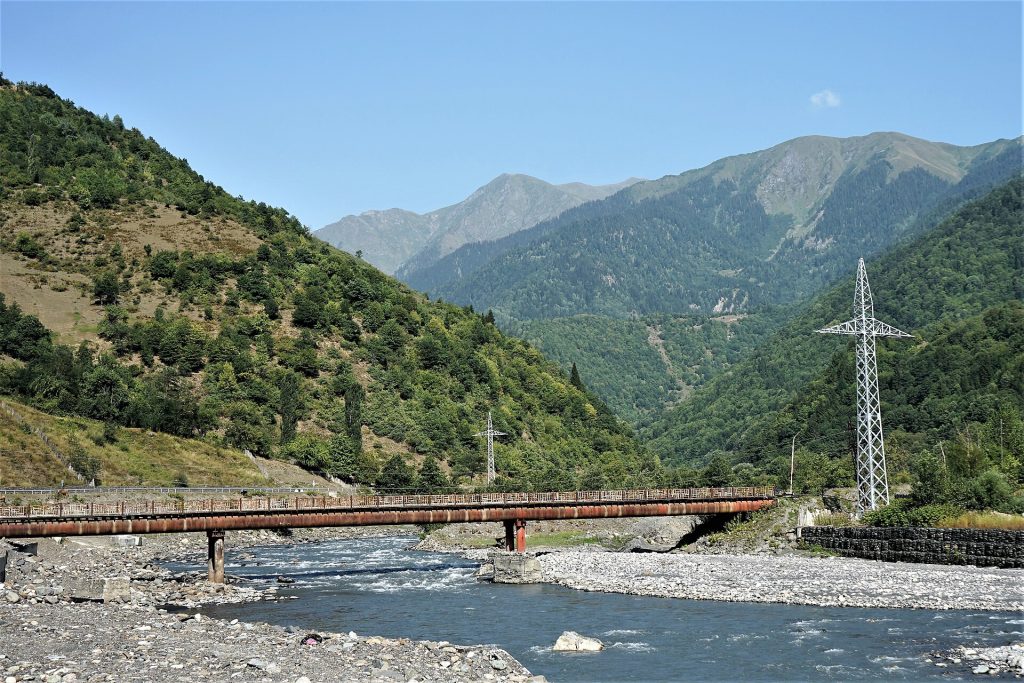
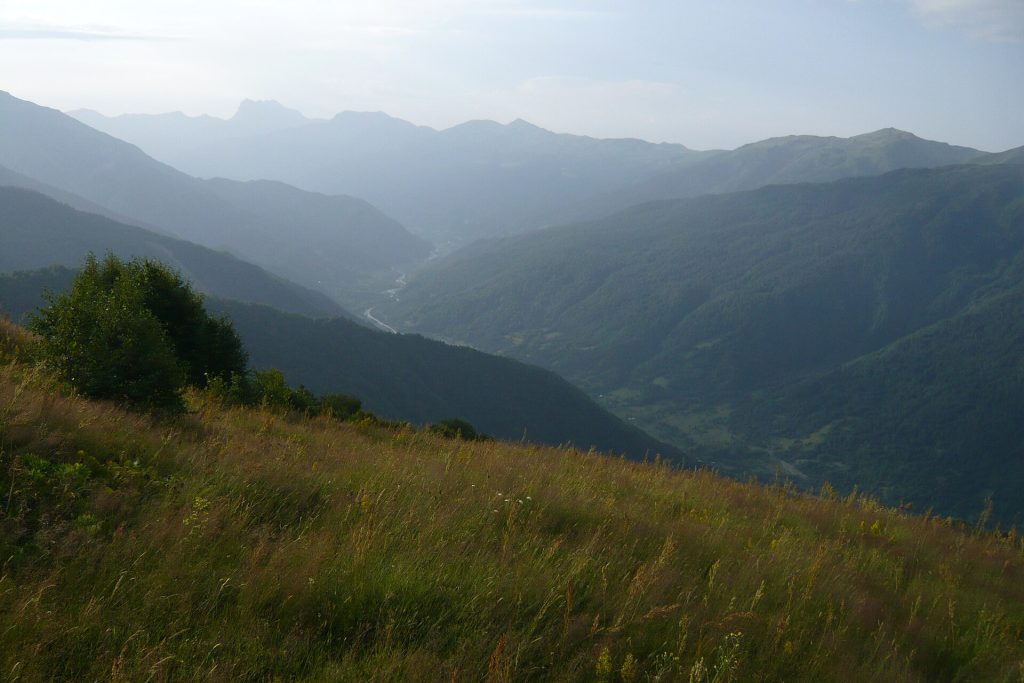
The festival takes place in and around Chikhareshi village, the centre of the Lashkheti community, within Lentekhi municipality in Lower Svaneti. The morning church observance is the most formal part of the day and the place to behave with particular care: dress modestly, cover bare shoulders, remove hats if you are a man entering the church, and ask before photographing people at prayer. The communal feast and singing, which unfold through the afternoon and into evening in the open air or in family courtyards, are far more informal, and visitors who are invited to sit at a supra should accept the toasts offered to them, even if only with a small sip, as refusing outright is considered impolite.
Reaching Chikhareshi requires patience: the road from Lentekhi, the small administrative centre of Lower Svaneti, climbs through narrow mountain valleys and can be rough or affected by weather, so a sturdy vehicle and a local driver familiar with the route are strongly recommended rather than a self-drive rental. The nearest airport with regular service is Kutaisi, from which Lentekhi is reached by road through the Racha-Lechkhumi valleys.
Travel with GTour
The Georgia in 10 Days — Tbilisi to Svaneti to the Sea itinerary runs through Lower Svaneti and can be arranged to pass near Chikhareshi around 21–22 August 2027, when the Lashkheti community gathers for Lashkhetoba, while the Racha — Khvanchkara Wine & Mountain Lakes (2 Days) route lies within reach for those approaching from the east. A GTour travel expert will design the exact route and schedule around the guest’s own travel dates.
Did you know
- Svan is a distinct, historically unwritten language of the Kartvelian family, still spoken daily in Svaneti alongside Georgian.
- The stone defensive towers that define the Svan landscape were built mainly between the 9th and 12th centuries, originally as refuges during blood feuds and raids.
- Upper Svaneti, around Mestia and Ushguli, was inscribed as a UNESCO World Heritage Site in 1996 for its medieval tower-houses, a separate area from Lentekhi and Lower Svaneti.
- Georgian polyphonic singing, the vocal tradition heard at feasts such as Lashkhetoba, is recognised by UNESCO’s Intangible Cultural Heritage programme as a defining element of Georgian culture.
- Lentekhi, the administrative centre nearest to Chikhareshi, sits in the valley of the Tskhenistsqali River, one of the main access routes into Lower Svaneti.
Practical tips for visitors
Dates for Lashkhetoba are confirmed only shortly before the festival, so travellers should check closer to August rather than booking firmly around the tentative window a year ahead. The mountain road into Chikhareshi is unpaved in places and best travelled by a high-clearance vehicle; GTour arranges a private driver or guide for the day for visitors who prefer not to navigate the route independently. Pack warm layers even in August, since Lower Svaneti’s altitude brings cool evenings; accommodation in and around Lentekhi is limited, so rooms should be booked well in advance; and visitors should carry cash, since card payment is unreliable in the villages.
Combine it with
A visit to Lashkhetoba pairs naturally with wider travel in Svaneti for its tower villages, with Racha for its monasteries and wine traditions along the same mountain road, and with Imereti as the lowland gateway region through Kutaisi.
Questions travellers ask
Is Lashkhetoba open to tourists?
Yes. It is a community festival rather than an official public event, so there is no ticketing or formal visitor programme, but outsiders are generally welcomed, especially if accompanied by a local host or guide who can make introductions.
How do I get to Chikhareshi?
The usual route runs from Kutaisi through Lentekhi, the municipal centre of Lower Svaneti, and then along a mountain road into the Lashkheti community; a sturdy vehicle and a driver familiar with the area are recommended.
Is there an entrance fee?
No. There is no admission charge; the feast is a community gathering rather than a ticketed event, though visitors invited to share food and drink should reciprocate with respect and, where appropriate, a small contribution or gift.
What should I wear?
Modest, practical clothing is appropriate throughout, with shoulders and knees covered for the church service in particular; sturdy footwear is useful given the unpaved village terrain.
Can I take photographs?
Photography of the public feast and dancing is generally acceptable, but permission should be asked before photographing people during the church service or close family moments at the table.
Is this the same as Lamproba, the Svan torch festival?
No. Lamproba is a winter torchlit feast associated with Upper Svaneti communities, while Lashkhetoba is a late-summer patronal feast specific to the Lashkheti community in Lower Svaneti; both follow the same general “-oba” pattern but on different dates and in different places.
What is the difference between Upper and Lower Svaneti?
Upper Svaneti, around Mestia and Ushguli, is the UNESCO-listed area best known internationally for its tower villages; Lower Svaneti, where Lentekhi and Chikhareshi lie, is a separate, less-visited mountain district within the Racha-Lechkhumi and Kvemo Svaneti region, with its own Svan communities and traditions.
Is accommodation available nearby?
Accommodation is limited and concentrated in Lentekhi and a small number of guesthouses in surrounding villages, so advance booking is essential, particularly around the festival dates.
Plan your Georgia
Want to be in Georgia for Lashkhetoba? A GTour travel expert designs the itinerary around it and calls you back.
A church in Lentekhi, the district surrounding the Lashkheti community that hosts Lashkhetoba. · Photo: G.N. / Wikimedia Commons, CC BY-SA 3.0
This page in other languages: Русский
GTour conciergeAsk anything about Georgia · we reply within hours