Archives


Lagodekhi International Blues Festival in Georgia: dates, meaning and how to experience it
Next dates
10 July 2027 – 31 July 2027 (to be confirmed) · Blues Village, Lagodekhi, Kakheti. See the full events calendar and Georgia today for roads and weather.
What it is
The Lagodekhi International Blues Festival is a summer music event held in the town of Lagodekhi, in eastern Kakheti, at a dedicated open-air site known as “Blues Village.” Unlike most entries in Georgia’s festival calendar, its name is not a Georgian word carrying an old liturgical or agricultural meaning — “blues” is simply the English genre name, borrowed directly because Georgian has no older native term for it. The town name Lagodekhi itself predates the festival by centuries and its origin is debated among linguists, with no single agreed etymology; what is certain is that the festival takes its identity from the place, not the other way around.
The audience is mixed: Tbilisi residents making a weekend trip east, Kakhetian wine-country visitors extending their itinerary, and a smaller contingent of international travellers and musicians drawn specifically by the genre. It sits alongside Georgia’s other contemporary music gatherings — jazz festivals in Tbilisi and on the Black Sea coast — as part of a cultural scene that has grown steadily since independence, built not on church feast days but on private organisation, open-air staging and the country’s increasing appeal as a summer festival destination.
Historical background
- 1801 — The Kingdom of Kartli-Kakheti, including the Lagodekhi district, is absorbed into the Russian Empire, beginning more than a century of imperial administration in eastern Kakheti.
- early 19th century — A Russian garrison and settlement take shape at Lagodekhi, at the foot of the main Caucasus range, securing the frontier of the Alazani valley.
- 1870s onward — The Polish-born naturalist Ludwig Mlokosevich settles in Lagodekhi and spends decades studying and documenting the local flora and fauna of the surrounding mountains.
- 1912 — The Lagodekhi Protected Areas are formally established, building on Mlokosevich’s advocacy; they are counted among the oldest strict nature reserves in the Caucasus.
- 1921–1991 — Under Soviet rule, Lagodekhi develops as a district centre of Kakheti; organised secular music festivals of the present kind do not yet exist, and cultural life centres on state clubs and houses of culture.
- 1991 — Georgia regains independence, opening the way for privately organised cultural events, including music festivals, for the first time in generations.
- 2010s — According to festival organisers, the Lagodekhi International Blues Festival is established at the Blues Village site near the reserve entrance, part of a wider expansion of regional summer festivals across Georgia.
- 2020–2021 — Like most of Georgia’s public festival calendar, the event is suspended during the COVID-19 pandemic.
- 2020s — The festival resumes as a series of Saturday evening concerts through July, drawing Georgian and visiting international blues musicians to Kakheti.
The festival’s setting is older than the festival itself. Lagodekhi’s protected forests and alpine meadows, shaped into a formal reserve in 1912 through the work of Ludwig Mlokosevich, have long made the town a destination for naturalists and hikers rather than for music tourism. The blues festival is a recent addition layered onto this landscape, reflecting a broader pattern in post-Soviet Georgia: regions once known chiefly for agriculture, wine or wilderness have, since the 1990s, added contemporary arts programming to diversify what they offer visitors.
That the genre chosen was blues, rather than a Georgian musical form, is itself notable. Georgia has its own internationally recognised vocal tradition — Georgian polyphonic singing, inscribed by UNESCO as a Masterpiece of the Oral and Intangible Heritage of Humanity — and the coexistence of an imported American idiom with this much older native practice illustrates how Georgia’s festival calendar now spans both the deeply traditional and the newly adopted, often within the same region and season.
Meaning and traditions
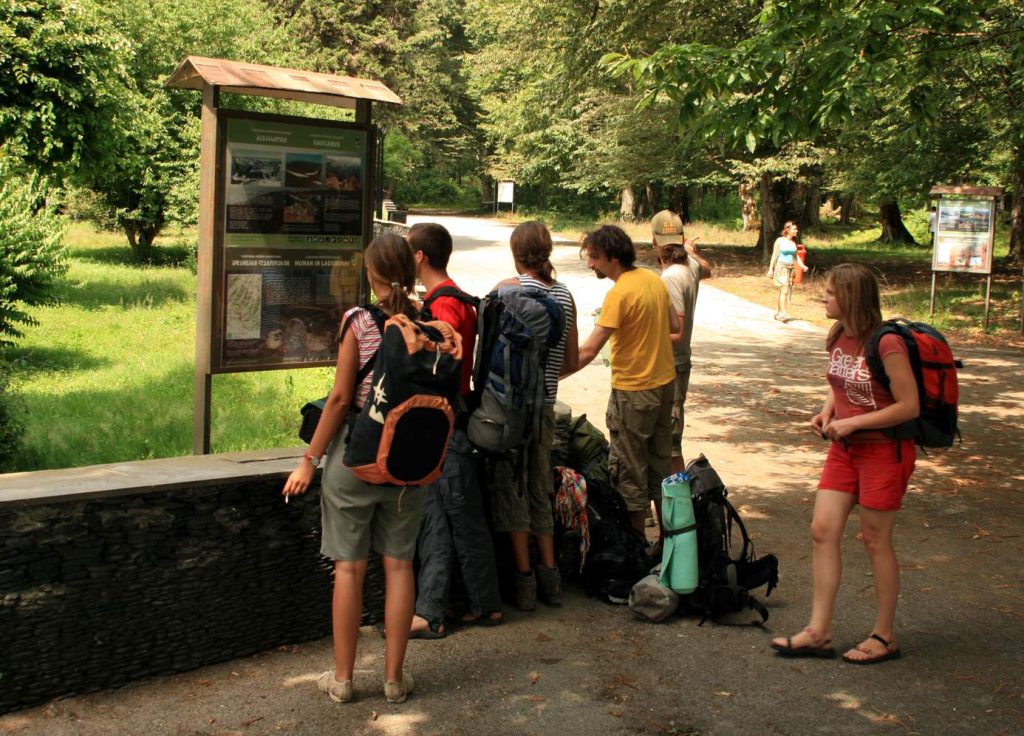
There is no liturgical or ritual content to the Lagodekhi Blues Festival; its customs are those of a modern open-air concert series rather than a feast day. Visitors gather at Blues Village in the evening, often arriving earlier in the day to walk trails at the edge of the Lagodekhi Protected Areas or to visit nearby wineries. Food and drink at the site typically reflect ordinary Kakhetian hospitality rather than festival-specific dishes: grilled skewers known as mtsvadi, bread, regional qvevri-aged wine, and the kind of informal supra (feast table) hospitality that accompanies most Georgian gatherings, formal or not.
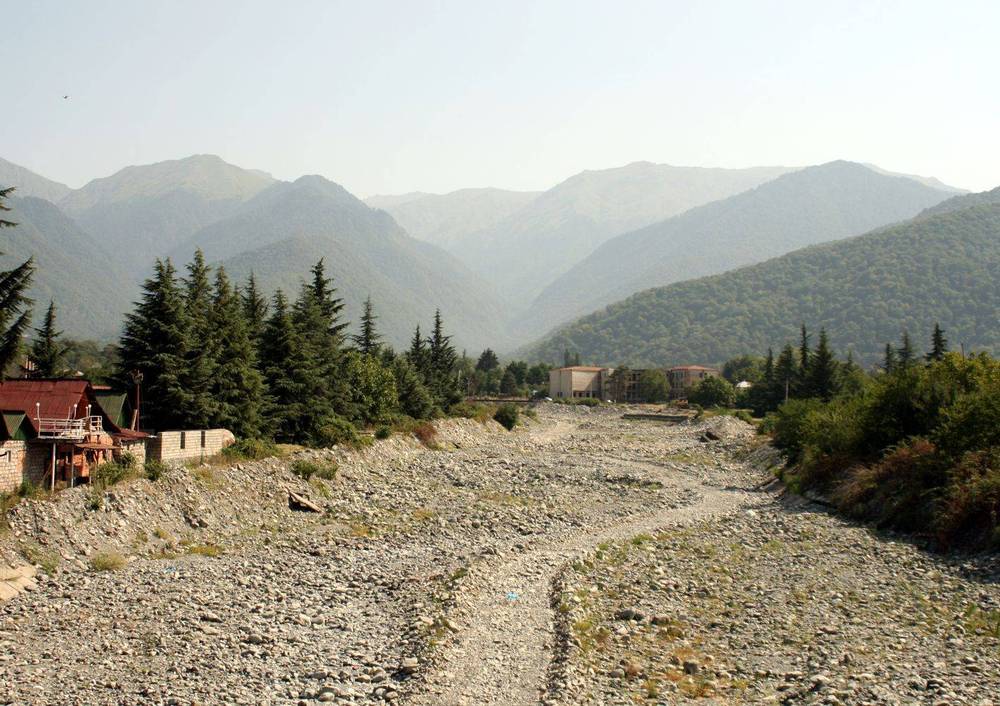
Because the event is a single-site, single-genre festival rather than a nationwide observance, it has no regional variants in the way a church feast does. Its character is set entirely by its location: a small border town backed by forested mountains, within Georgia’s largest wine-producing region. Visitors who want a sense of how Georgia blends imported and traditional culture often pair an evening of blues with a daytime stop at a Kakhetian winery or a short walk into the reserve.
When it happens
The festival does not follow a fixed religious or civil calendar date. The established pattern is a series of concerts on Saturdays through July, at Blues Village near the Lagodekhi Protected Areas entrance, with exact dates confirmed by organisers each year closer to the season. For 2027, the provisional window is 10–31 July 2027, to be confirmed. The equivalent 2026 edition, if held, would already have taken place by the time this page is read in late October 2026; travellers planning ahead should treat early-to-mid July as the reliable general window and verify specific Saturday line-ups nearer the date.
The festival is not a public holiday. Government offices, banks, schools and most businesses in Lagodekhi and across Georgia operate normally during the festival period; nothing closes nationally on account of it.
Where to experience it
All festival activity is centred on Blues Village, on the outskirts of Lagodekhi town, within easy reach of the entrance to the Lagodekhi Protected Areas. Concerts typically begin in the evening, once the day’s heat has eased, and run into the night under open sky. A visitor can expect a modest open-air stage, informal seating or standing areas, food and wine stalls run by local producers, and a mixed crowd of Georgian families, Tbilisi day-trippers and a smaller number of foreign visitors.
Daytime hours are best spent at the reserve itself, which requires no special permission for its lower, more accessible trails but does ask visitors to keep to marked paths, avoid open fires outside designated areas, and respect wildlife. Lagodekhi has no major historic churches of its own comparable to those elsewhere in Kakheti, so visitors seeking that aspect of the region typically combine the festival with a side trip to Alaverdi, Gremi or Ninotsminda; at any of these the usual Georgian Orthodox church etiquette applies — modest dress, head coverings for women, and quiet during services.
Travel with GTour
The road used for Rtveli — Wine Harvest in Kakheti (3 Days, September–October) passes close to Lagodekhi, so a visit can be shifted earlier in the season to coincide with a Saturday concert at Blues Village, while the flexible dates of Racha — Khvanchkara Wine & Mountain Lakes (2 Days) allow a similar detour east before returning to the mountains. A GTour travel expert designs the route around the guest’s dates.
Did you know
- The Lagodekhi Protected Areas, established in 1912, are among the oldest strict nature reserves in the Caucasus.
- The reserve exists largely because of Ludwig Mlokosevich, a Polish-born naturalist who made Lagodekhi his home from the 1870s and catalogued much of its wildlife.
- Georgian traditional polyphonic singing — a genre with no stylistic relation to blues — is recognised by UNESCO as a Masterpiece of the Oral and Intangible Heritage of Humanity.
- Lagodekhi lies near the point where Georgia, Azerbaijan and the Russian region of Dagestan meet, making it one of the country’s more remote festival locations.
- Georgian has no indigenous word for “blues”; the festival’s name uses the English genre term directly, a reminder of how recently the style arrived in the country.
Practical tips for visitors
The nearest international airport is Tbilisi, roughly two and a half to three hours away by road; travellers typically rent a car, book a private transfer, or take a marshrutka (shared minibus) from Tbilisi’s Ortachala station toward Lagodekhi. There is no passenger rail service to Lagodekhi itself. Dress casually, but bring layers: July days in Kakheti are hot, while evenings near the mountains cool considerably after dark. Carry cash, as card acceptance in small-town stalls and markets can be limited. Accommodation in Lagodekhi is modest in capacity, so booking ahead for festival Saturdays is advisable, particularly if combining the concert with hiking in the protected areas the following day.
Combine it with
The festival sits within the broader wine country of Kakheti, where vineyard visits, qvevri wine tastings and historic churches extend naturally from an evening at Blues Village. Most visitors route through Tbilisi, the practical gateway for flights, car rental and onward transport to eastern Kakheti
Plan your Georgia
Want to be in Georgia for Lagodekhi International Blues Festival? A GTour travel expert designs the itinerary around it and calls you back.
Lagodekhi town, nestled below the Caucasus foothills, hosts the annual Blues Festival nearby. · Photo: Labrang / Wikimedia Commons, CC BY-SA 4.0
This page in other languages: Русский
GTour conciergeAsk anything about Georgia · we reply within hours