Archives


Adigenoba in Georgia: dates, meaning and how to experience it
Next dates
2 October 2027 (to be confirmed) · Adigeni, Samtskhe-Javakheti. See the full events calendar and Georgia today for roads and weather.
What it is
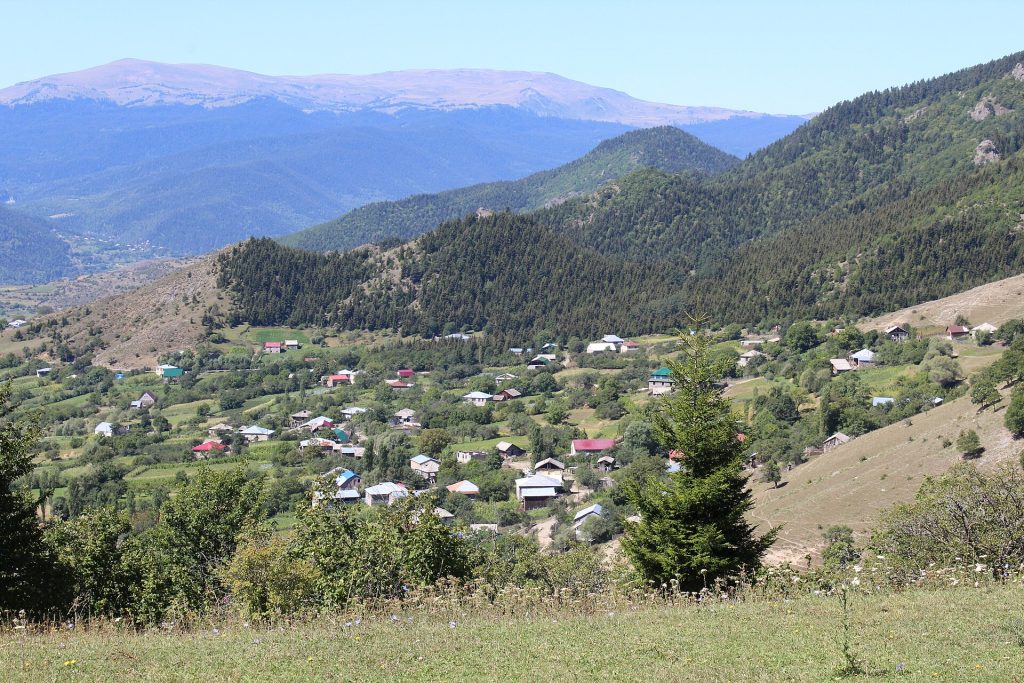
Adigenoba is the annual town festival of Adigeni, a small highland town and administrative center of Adigeni Municipality in the southern Georgian region of Samtskhe-Javakheti. The Georgian suffix “-oba” converts a place name into the name of a feast or collective occasion tied to it — the same pattern that gives Tbilisoba to the capital or Alaverdoba to the cathedral of Alaverdi. Read literally, “Adigenoba” is simply “the day of Adigeni,” the town’s own civic holiday rather than a feast fixed by church calendar or national decree.
The festival is celebrated by the residents of Adigeni and its surrounding villages, together with relatives who have moved to Tbilisi, Batumi, Russia or further abroad and return for the occasion, and by visitors who come for the harvest fair. Because it falls in early autumn, when the apple orchards, potato fields and mountain pastures of the municipality have just been gathered in, Adigenoba functions as both a harvest celebration and a day of reunion for a community whose history has repeatedly scattered and resettled it.
Historical background
- 13th century — the Adigeni valley lies within Samtskhe (Meskheti), governed by the Jakeli atabags, a princely house that administered the region with considerable autonomy from the Georgian crown.
- 1578 — Ottoman forces complete the conquest of Samtskhe during the Ottoman-Safavid wars; the district is reorganized as the Akhaltsikhe Pashalik and remains under Ottoman administration for roughly two and a half centuries, see Britannica on Samtskhe-Javakheti.
- 1828–1829 — Russian troops take Akhaltsikhe during the Russo-Turkish War; the Treaty of Adrianople (1829) transfers the Akhaltsikhe region, including Adigeni, to the Russian Empire.
- mid-19th century — Russian administration resettles Armenian and Georgian populations through the district, reshaping its demography alongside the long-established Muslim Meskhetian community.
- 1944 — Soviet authorities deport the Meskhetian Turk population and other Muslim residents of the Adigeni district to Central Asia, emptying numerous villages; the episode is documented in Georgian national archives, see National Parliamentary Library of Georgia.
- Soviet period — Adigeni becomes the center of a closed border-zone district, access restricted because of its proximity to the Turkish frontier.
- 1991 — Georgian independence; Adigeni is reconstituted as an administrative center within restored Samtskhe-Javakheti region.
- 2007 — Georgia adopts legislation on the repatriation of persons deported from the Georgian SSR in the 1940s, directly concerning families with roots in Adigeni district.
- post-Soviet decades — Adigenoba is established and repeated each year as the municipality’s town day, scheduled for the last Saturday of September or the first Saturday of October.
The layered sequence of Georgian, Ottoman, Russian and Soviet administration explains why Samtskhe-Javakheti’s town days carry a stronger note of homecoming than celebrations elsewhere in Georgia. Few regions were as repeatedly resettled: Ottoman-era conversion to Islam, nineteenth-century Armenian and Georgian colonization, and the 1944 deportation of the Meskhetian Turk population left the district’s villages with discontinuous memory, and decades as a closed Soviet border zone limited contact with the rest of the country. Adigenoba, unlike ancient church feasts such as Alaverdoba, is a modern civic invention rather than a continuously attested tradition, and its value lies precisely in gathering a dispersed community rather than in reenacting an old rite.
Adigeni also sits on the old route toward the Zekari Pass, the historic link between highland Samtskhe and the Black Sea coast of Adjara, used for centuries by traders and shepherds moving flocks between summer and winter pastures. That position as a crossing point between inland Georgia and the coast gives the festival’s fair an old habit of exchange — wool, fruit, cheese and salted goods moving in both directions — that the modern market stalls still echo.
Meaning and traditions
The day typically opens with speeches from the municipal administration in the town’s central square, followed by performances from local folk ensembles and school groups. A harvest fair fills the square and surrounding streets with Adigeni’s apples, potatoes, honey and highland dairy products, alongside handicrafts such as felt cloaks (nabadi) and woodwork. Traditional wrestling (chidaoba) and horsemanship displays are common additions, and the day usually closes with an evening concert and fireworks.
Food stalls and home tables alike serve khinkali, mtsvadi (grilled meat), lobio (bean stew) and bread baked in a clay tone oven, with local specialties such as tklapi, a dried fruit leather made from the valley’s apples and plums. A Georgian supra, the long feast table presided over by a tamada (toastmaster) who leads formal toasts, is the social center of any private celebration held that day, and guests should expect to be drawn into the ritual of toasting even as casual visitors.
Because Adigenoba is a municipal rather than a church festival, variations exist across Samtskhe-Javakheti: neighboring towns hold similar end-of-harvest days under their own names, each emphasizing local produce — apples and dairy in Adigeni’s case, grapes or dairy elsewhere. What distinguishes Adigenoba is the visible presence of returning diaspora, including families whose grandparents were deported in 1944 or who left during the Soviet border-zone decades.
When it happens
Adigenoba has no fixed liturgical or national anchor; the municipal administration sets the date each year, following the informal rule of the last Saturday of September or the first Saturday of October. In 2026 the festival was held on 3 October. The next edition is expected on 2 October 2027, though this remains to be confirmed closer to the date by the Adigeni municipal administration. It is not a public holiday: government offices, banks and most businesses across Georgia operate normally, though schools and municipal offices in Adigeni itself may adjust their schedule for the day.
Where to experience it
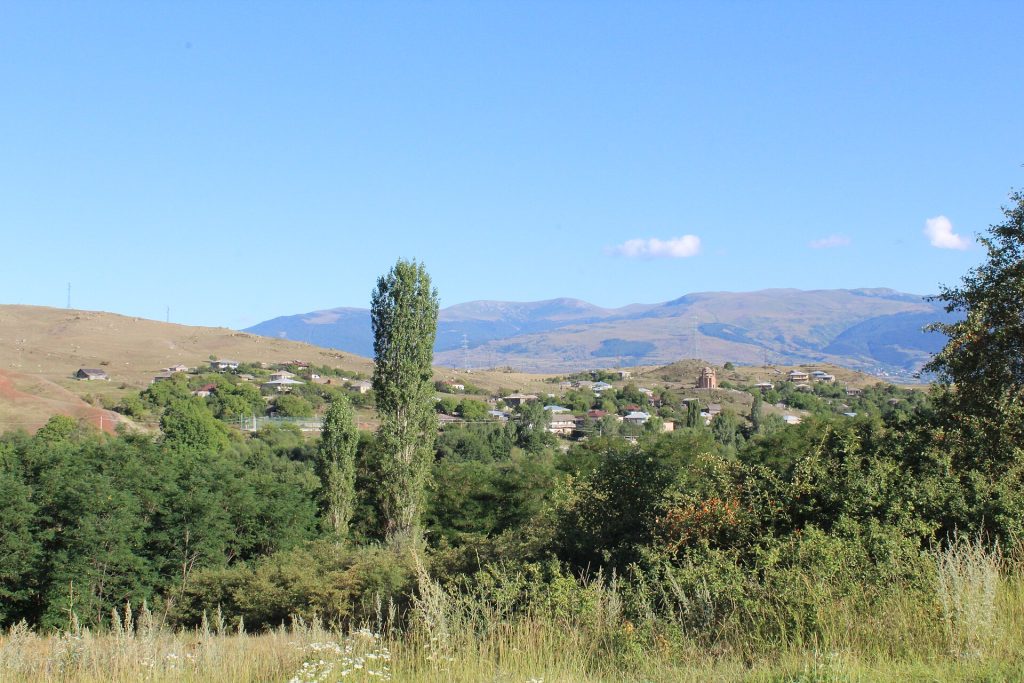
The festival centers on Adigeni’s main square and the adjoining cultural house, with sporting events sometimes held at the town stadium. Visitors can combine the day with a visit to Zarzma Monastery, a thirteenth- to fourteenth-century complex within Adigeni Municipality known for its carved dome and frescoes; modest dress is expected inside any church — covered shoulders and knees, headscarves for women, and quiet behavior during services. Further afield within Samtskhe-Javakheti, Rabati Fortress in Akhaltsikhe and the resort town of Abastumani make straightforward half-day additions to a festival visit.
Travel with GTour
The Borjomi, Bakuriani & Rabati — 2 Days tour travels through Samtskhe-Javakheti and can be scheduled with an overnight extension into Adigeni around 2 October 2027, while the Vardzia Cave City — Day Trip passes near the town en route back toward Akhaltsikhe. A GTour travel expert will design the exact route and timing around the guest’s travel dates once the festival date is confirmed.
Did you know
- Adigeni Municipality contains Zarzma Monastery, a thirteenth- to fourteenth-century complex noted for its dome and medieval frescoes.
- The Meskhetian Turk population deported from this district in 1944 was granted a legal right to repatriation under a 2007 Georgian law, though actual return has remained limited.
- The Zekari Pass road out of Adigeni district has historically linked highland Samtskhe to the Black Sea coast of Adjara, used by traders and transhumant shepherds.
- Samtskhe-Javakheti’s modern “-oba” town days multiplied after Georgian independence, partly as a way of reviving local identity following decades of Soviet-era border restrictions in this frontier region.
- Adigeni’s cool highland climate and apple orchards have long been noted by travelers to the region, and fruit growing remains a defining part of the municipality’s economy today.
Practical tips for visitors
Adigeni lies roughly 220 kilometers from Tbilisi, about four to four and a half hours by car via Borjomi and Akhaltsikhe; marshrutka minibuses run from Tbilisi to Akhaltsikhe, with onward local transport covering the final 20 kilometers. Early October can bring rain or the first cold snaps at higher elevations near Zekari Pass, so warm layers and sturdy footwear are advisable for walking the market stalls. Accommodation in Adigeni itself is limited, so booking in Akha
Sources
- Samtskhe-Javakheti Region Tourism
- Adigeni District Population Statistics
- Local Self-Government Code (Matsne)
- Adigeni News Coverage
- Civil.ge Regional News Archive
- adigeni.ge (2026)
Plan your Georgia
Want to be in Georgia for Adigenoba? A GTour travel expert designs the itinerary around it and calls you back.
A small shop in Adigeni town, the center of the municipality where Adigenoba is celebrated. · Photo: Jelger Groeneveld / Wikimedia Commons, CC BY 2.0
This page in other languages: Русский
GTour conciergeAsk anything about Georgia · we reply within hours