By Safari News — Africa Calling Safaris, Partner desk, Nairobi · 18/10/2026
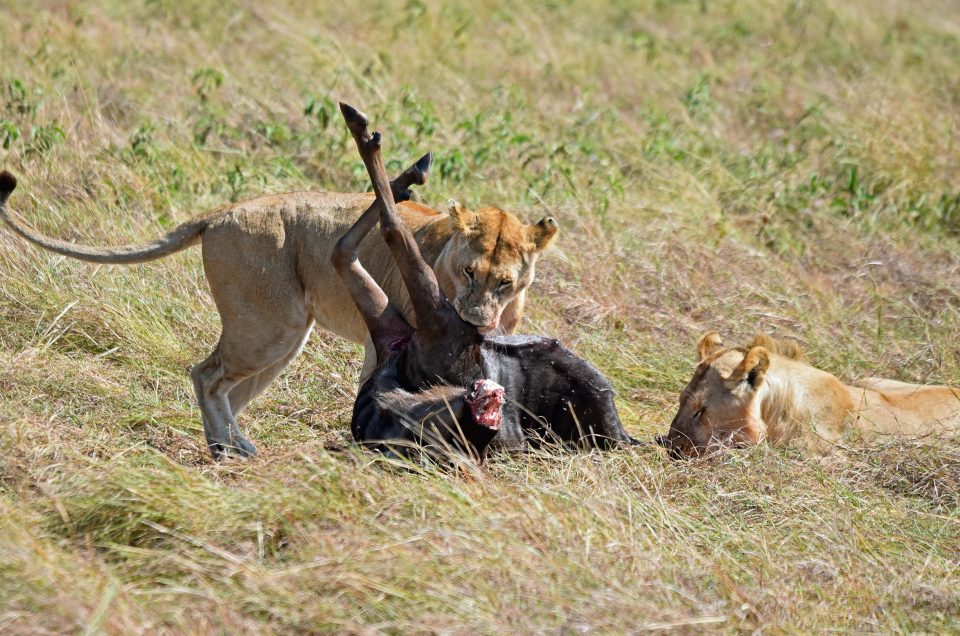
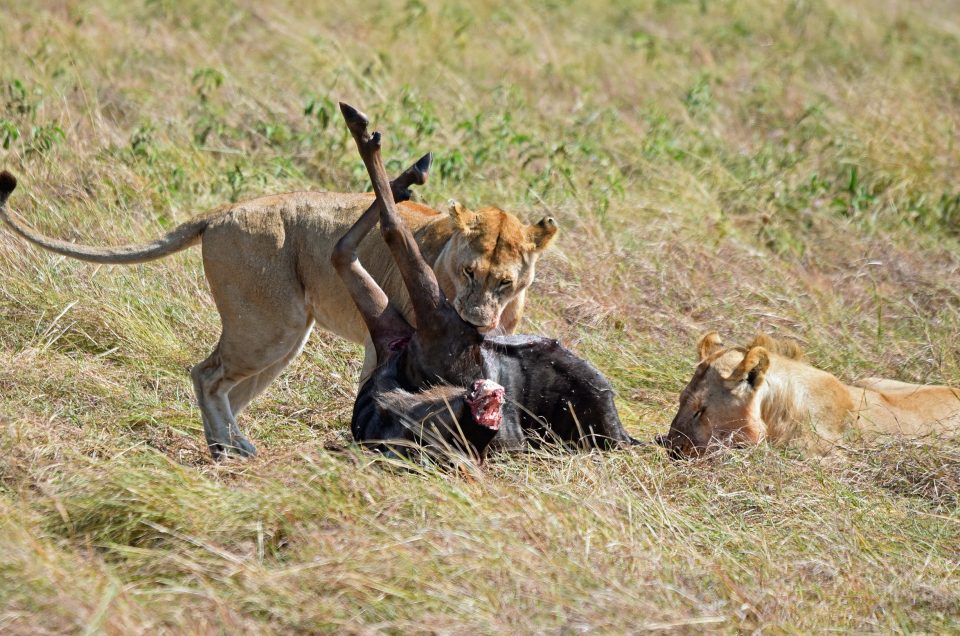
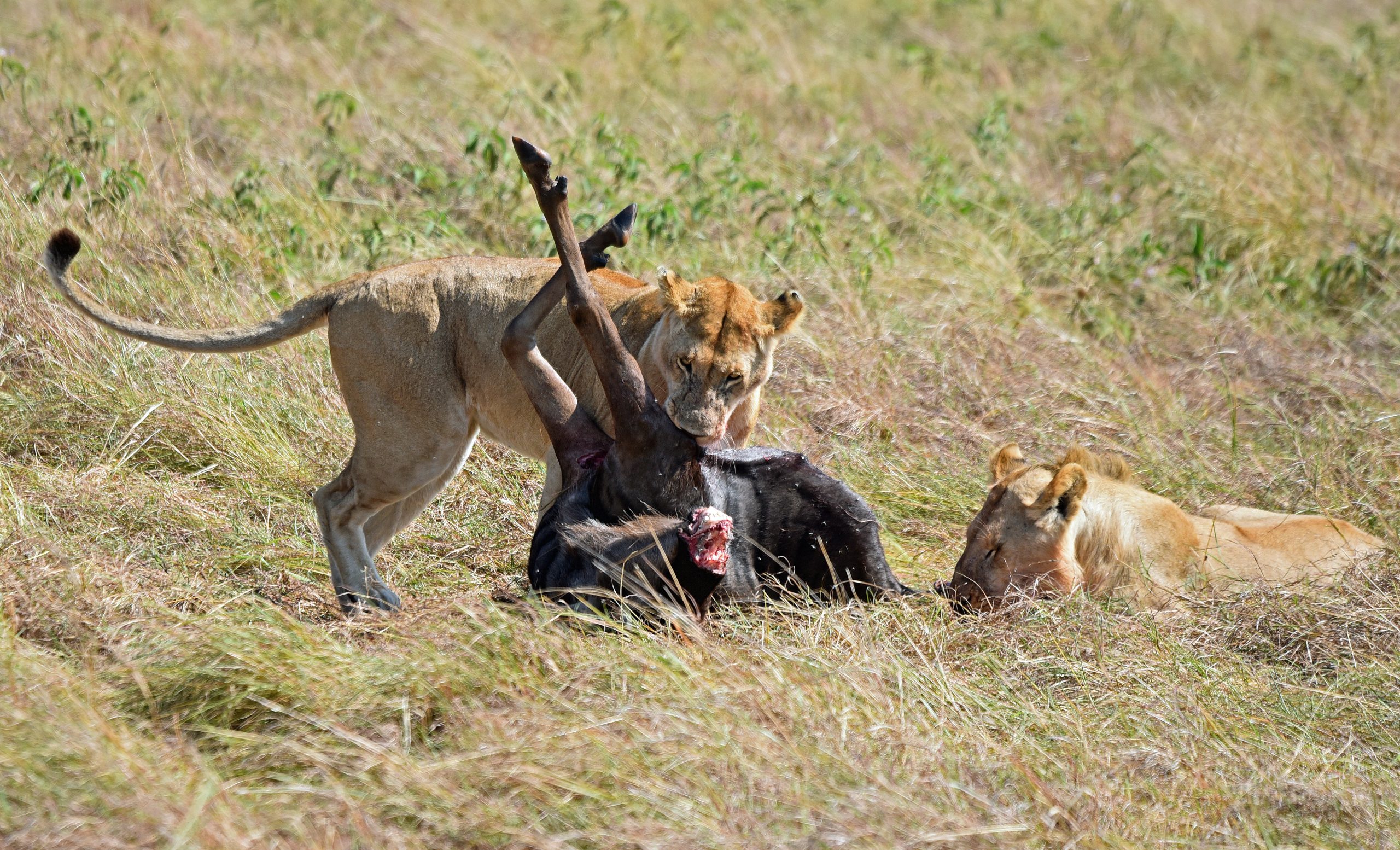
Visitors scanning the Masai Mara for cats often pass over the African buffalo (Syncerus caffer) without a second look. Guides argue this is a mistake: buffalo are the prey species that effectively organises lion society across the Mara-Serengeti ecosystem, and encounters between a large herd and a hunting pride rank among the region’s most absorbing wildlife events. A 2022 reserve census put the wider ecosystem’s buffalo population at roughly 38,000, with about 8,000 resident in the Mara year-round forming the core prey base for local prides; research into lion diets found buffalo account for 28% of large kills by weight, trailing only wildebeest during migration months.
Herd structure shifts with the seasons. Wet-season aggregations of 500 to 2,000 animals break into smaller groups of 20 to 100 once the dry months push cows, calves and younger bulls toward scarce water. Older males are eventually pushed out, forming bachelor groups or going solitary as ‘dagga boys’ — named for the mud wallows they favour. Darker, heavier and carrying a hardened horn shield known as a boss, these bulls are regarded by experienced guides as among Africa’s most dangerous animals, killing more hunters than any other large mammal on the continent.
Buffalo also mount coordinated defence, with bulls ringing cows and calves to face down lions or wild dogs, sometimes pressing forward to reclaim a captured herd member — behaviour echoed in South Africa’s well-known ‘Battle at Kruger’ footage. Africa Calling Safaris managing director Nikos Pocock recalled watching 400 buffalo turn back to drive off a pride that had already killed a calf, the herd standing guard for twenty minutes afterward. For travellers routing from Europe or the Caucasus, the dry season from July to October offers the best odds, with herds gathering at the Mara and Talek rivers; buffalo also carry foot-and-mouth disease, a recurring friction point where cattle and wildlife share grazing near park boundaries.
Based on reporting by Safari News, the travel desk of Africa Calling Safaris (Nairobi), GTour’s partner for East Africa. Read the original there.
Been to Georgia? Tell us how it went — the best stories are published here.
Share your tripOne email a week: what changed for travellers in Georgia — rules, roads, flights, seasons — plus one place worth the trip. Written by the GTour desk, no advertising, unsubscribe in one click.
Planning a trip to Georgia?
GTour runs private tours with English-speaking guides from Old Tbilisi. See all tours or ask the desk on WhatsApp +995 577 416 314.
Source: Safari News — Africa Calling Safaris. Reported by the GTour desk; updated 18 October 2026, 13:11 (Tbilisi).