

By Mariam Lomidze, Culture & Events Reporter · 16/10/2026
Last checked by the GTour desk on 16 October 2026. Rules, prices and schedules in Georgia change; this page is reviewed and the date updated when they do.
Georgian cuisine has a long tradition of meat-free eating, rooted in the Orthodox Christian calendar. The church prescribes many weeks of fasting (lenten) periods throughout the year, and over centuries Georgian cooks developed an enormous repertoire of vegetable, bean, and nut-based dishes to fill those weeks. The result is one of the richest vegetarian traditions in the Caucasus, and a genuinely good destination for vegan travellers as well, provided visitors know what to ask for.
This guide covers the key dishes, the ingredients to watch for, and the phrases that make ordering easier. For more on regional specialities and wine pairing, see Food and Wine.
The lenten (samarkhvo) tradition
The single most useful word for a vegan traveller in Georgia is samarkhvo, meaning lenten or fasting food. During fasting periods, many restaurants mark dishes on the menu as samarkhvo, meaning no meat, dairy, or eggs. Even outside official fasting weeks, asking a waiter whether a dish can be made samarkhvo often prompts a kitchen to leave out the cheese or butter. This word is far more useful than simply saying “vegetarian,” since it taps into a culinary category cooks already understand.
What to order
- Pkhali — cold pâtés of spinach, beetroot, leek, or cabbage, ground with walnuts, garlic, and spices. Usually vegan and found on almost every menu.
- Lobio — a hearty bean stew, often cooked in a clay pot, frequently vegan but worth confirming, as some versions include smoked meat.
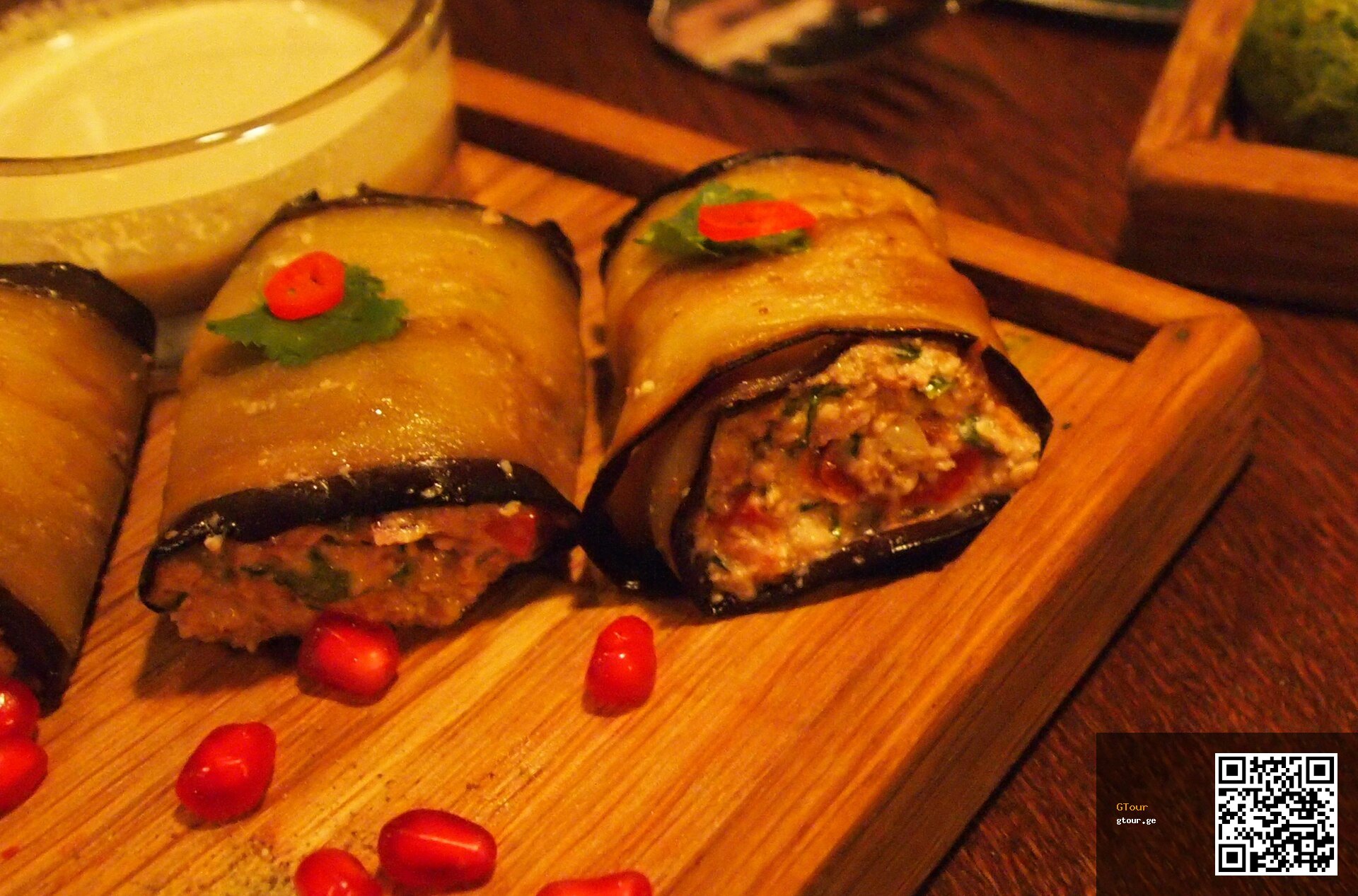
- Badrijani nigvzit — fried aubergine rolled around a walnut-garlic paste, typically vegan.
- Ajapsandali — a Georgian ratatouille of aubergine, pepper, tomato, and onion, usually vegan.
- Mushrooms on ketsi — mushrooms baked in a sizzling clay dish, sometimes with cheese, so ask for it without.
- Lobiani — bread filled with spiced beans, a vegan alternative to khachapuri.
- Khinkali — the famous dumplings are usually filled with meat, but mushroom (soko) and potato (kartopili) versions exist; ask specifically, as they are not always on the printed menu.
- Fresh herbs, tomatoes, and cucumbers — Georgian tables are rarely without a large plate of fresh greens and vegetables.
- Tkemali and ajika — sour plum sauce and spicy herb paste, both vegan, excellent with bread or khinkali.
- Shoti — the standard Georgian bread, baked in a tone oven, normally vegan.
- Churchkhela — strings of walnuts dipped in thickened grape juice, a traditional vegan sweet sold at markets and roadside stalls.
What to avoid or ask about
Georgian khachapuri, the famous cheese bread, is vegetarian but not vegan, and the Adjarian version (khachapuri adjaruli) also contains a raw or semi-cooked egg cracked into the centre. Cheese appears in many unexpected places, including inside bread, on top of vegetable dishes, and as a garnish. Soups, including some vegetable soups, are often made with meat stock, so it is worth asking directly. Restaurant staff may automatically assume “vegetarian” allows fish, cheese, or stock, so being specific helps avoid confusion.
Useful phrases
- Me ar vchami khorts — “I do not eat meat.”
- Ushorod — “without meat,” useful when asking for a dish to be adapted.
- Samarkhvo — “lenten/fasting,” the key word for vegan food, especially useful during Orthodox fasting periods before Easter and Christmas.
Avoid the phrase “sametsnieros,” which does not convey the intended meaning in this context; samarkhvo is the term that Georgian kitchens actually use.
Where to eat
Tbilisi has a growing number of dedicated vegan restaurants and cafés, particularly in the Vera, Vake, and old town areas, alongside traditional Georgian restaurants that handle vegan requests well, especially those with lenten menus. Supermarkets and open-air markets are reliable for fresh produce, nuts, bread, and churchkhela. Outside the capital, in smaller towns and villages, options may be more limited, so it helps to learn the key phrases and to ask about samarkhvo dishes directly, particularly during religious fasting periods when menus are naturally more accommodating.
Practical tips
- Fasting periods (before Easter, before Christmas, and several shorter ones through the year) are the easiest time to find reliably vegan food, as many restaurants adjust their menus.
- At khinkali houses, always confirm the filling, since mushroom and potato versions are not always visible on the menu board.
- Markets are a good source of fresh bread, fruit, nuts, and churchkhela for self-catering travel.
- When in doubt, ask whether a dish contains cheese, butter, or stock — Georgian hospitality generally makes kitchens happy to adjust a dish on request.
Quick answers
Is Georgian food generally vegetarian-friendly? Yes, due to the Orthodox fasting tradition, there is a large existing repertoire of vegetable and bean dishes.
Is khachapuri vegan? No, it contains cheese, and the Adjarian version also contains egg.
What word should I use to ask for vegan food? Samarkhvo, meaning lenten or fasting food, is the most effective term.
Can I get vegetarian khinkali? Yes, ask for soko (mushroom) or kartopili (potato) filling, as these are not always listed on the menu.
Are soups safe for vegetarians? Not always — many are made with meat stock, so it is best to ask directly.
Where is it easiest to find vegan restaurants? Tbilisi has several dedicated vegan restaurants and cafés, mainly in the central and Vera/Vake districts.
Sources
- General knowledge of Georgian cuisine and Orthodox fasting traditions
Tell us your dates and what you love. A GTour travel expert designs a private itinerary and calls you back — no payment until you are sure.
Photo: salvagekat / Wikimedia Commons, CC BY-SA 2.0
Been to Georgia? Tell us how it went — the best stories are published here.
Share your trip