Archives


Tbilisi Honey Festival in Georgia: dates, meaning and how to experience it
Next dates
25 September 2027 – 26 September 2027 (to be confirmed) · Mtatsminda Park, Tbilisi. See the full events calendar and Georgia today for roads and weather.
What it is
The Tbilisi Honey Festival — known in Georgian as Tbilisis Tapli Festivali (თბილისის თაფლის ფესტივალი) — takes its name from tapli (თაფლი), the Georgian word for honey. Unlike the country’s great church feasts, this is not a liturgical holiday but a modern agricultural fair, organised in recent years by the Georgian Beekeepers Union to showcase the honey, wax, pollen and propolis produced across Georgia’s varied climatic zones, from subalpine Svaneti meadows to the chestnut forests of Racha and Guria.
The festival is open to everyone: beekeepers bringing jars and combs from their home villages, Tbilisi residents stocking up for winter, and visitors curious about one of the oldest branches of Georgian rural life. It draws families, chefs, herbalists and small producers rather than pilgrims, and it sits comfortably alongside Georgia’s wine and food festivals as part of a wider autumn calendar of harvest events.
Historical background
- Bronze Age (3rd–2nd millennium BC) — archaeological material from sites in eastern Georgia, including pollen and wax residues recovered from ceramic vessels, points to beekeeping as an early and continuous practice in the South Caucasus, according to the Georgian National Museum.
- 5th century BC — the Greek soldier-historian Xenophon, in the Anabasis, described troops near the Black Sea coast of the Pontus-Colchis region falling ill after eating local wild honey, among the earliest written references to honey from the wider Caucasus area.
- 1st century AD — the geographer Strabo listed wax and honey among the goods moving through Colchian trade routes toward the Black Sea.
- 19th century — Russian imperial agricultural surveys recorded traditional beekeeping across Georgian villages, using woven straw skeps and hollowed-log hives alongside the first frame hives introduced from Europe.
- Soviet period (20th century) — collective and state farms standardised apiculture training and honey grading, while many highland families continued small household hives for local and family use.
- Post-1991 — the end of collective farm structures returned beekeeping largely to family smallholdings, and producer associations such as the Georgian Beekeepers Union began organising markets in Tbilisi to connect rural beekeepers with urban buyers.
- 2010s — a regular honey fair became established at Mtatsminda Park, usually held twice a year, in spring and autumn, growing to include tastings, hive demonstrations and folk performances.
- 28–29 September 2024 — the most recently confirmed autumn edition took place at Mtatsminda Park on the last weekend of September.
- 2026 and after — the autumn fair continues on an annual basis, with the Georgian Beekeepers Union confirming exact dates each year, typically in late summer.
Honey has a long presence in Georgian material culture, reaching back further than the written record. The pollen and resin traces found in Bronze Age pottery, alongside the country’s well-documented antiquity of viticulture, suggest that bees and vines shared the same hillsides for millennia, feeding both the honey jar and the qvevri. Classical authors writing about the lands bordering the Black Sea already understood this region as honey country, sometimes a dangerous one, since certain highland nectar sources, notably rhododendron, could produce the mildly toxic “mad honey” that unsettled Xenophon’s soldiers.
The modern festival is a far younger institution than the craft it celebrates. It belongs to the post-Soviet revival of small-scale agriculture and farmers’ markets, when beekeeping families needed new, direct routes to urban customers after state purchasing systems disappeared. Mtatsminda Park, perched above the capital and reached by funicular, became a natural autumn gathering point: green, breezy, and accessible to both Tbilisi residents and visiting tourists, who found in the honey stalls a tangible way to meet rural Georgia without leaving the city.
Meaning and traditions
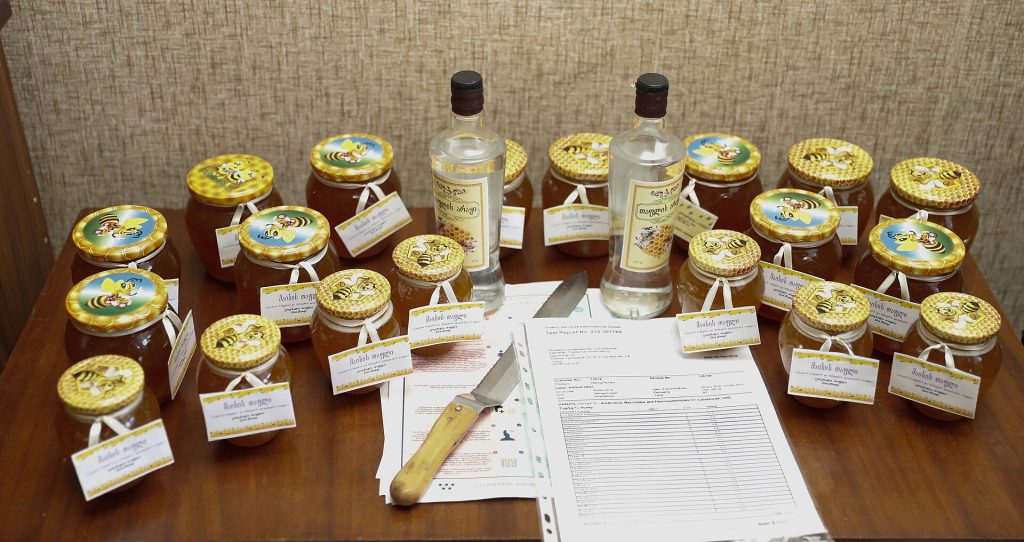
Visitors to the fair find rows of jars labelled by region and flower source: tsabli tapli (chestnut honey) from Racha and Guria, dark and slightly bitter; acacia and linden honeys from Kakheti and Imereti, pale and mild; and wildflower blends from highland Svaneti and Tusheti. Beekeepers often bring uncapped combs for tasting, along with pollen, propolis tinctures and beeswax candles. Vendors are generally happy to let visitors sample honey on a small wooden spoon before buying, and bargaining is not expected, though buying in larger jars usually brings a better price per kilogram.
Food stalls commonly pair honey with Georgian staples: flatbread drizzled with honey, honeyed walnuts reminiscent of gozinaki (the walnut-and-honey brittle eaten at New Year), and herbal teas sweetened on the spot. Folk ensembles sometimes perform polyphonic songs nearby, and children’s activities can include simple hive-viewing boxes that let visitors watch bees safely behind glass. There is no fixed liturgical vocabulary attached to the day, since the festival is civic rather than religious, but many beekeepers still speak of their craft in terms passed down from grandparents, calling a traditional straw hive a sapkhuri and a beekeeper mepchave.
When it happens
The Tbilisi Honey Festival’s autumn edition does not follow a fixed calendar date; organisers set it for the last weekend of September, adjusting slightly from year to year according to harvest timing and park availability. The most recently confirmed dates were 28–29 September 2024. The 2026 edition followed the same late-September pattern, and the next edition is expected on 25–26 September 2027, though organisers confirm the precise dates closer to the event. It is not a public holiday in Georgia: government offices, banks and shops operate normally, and the festival affects only the Mtatsminda Park area for its two days.
Where to experience it
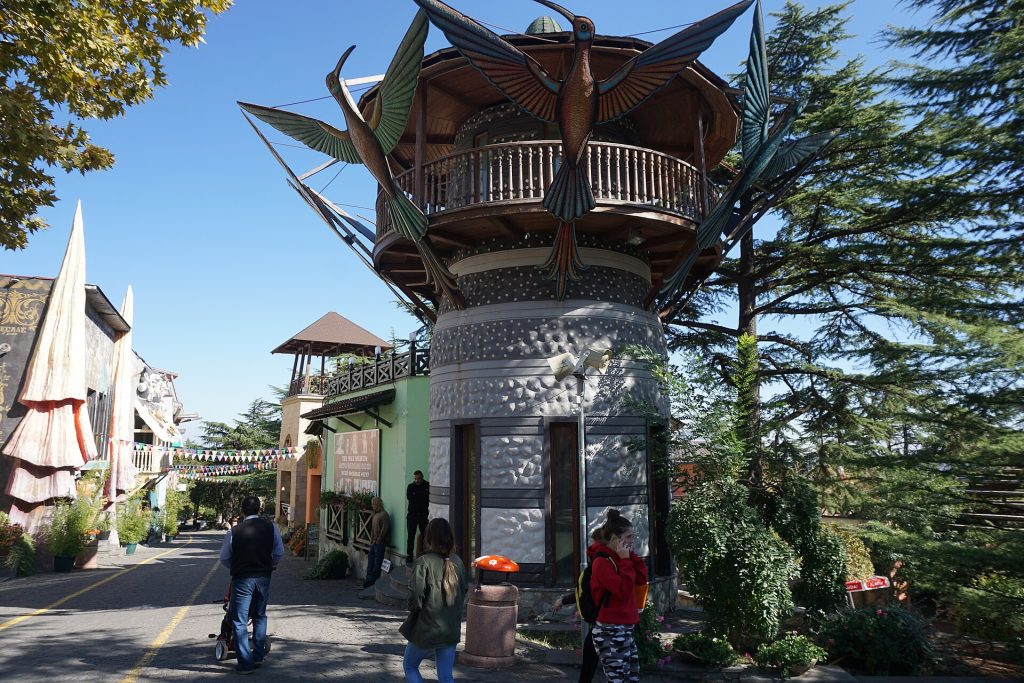
The fair is held at Mtatsminda Park, on the summit plateau of Mount Mtatsminda above central Tbilisi, reached by the historic Tbilisi Funicular or by road. Stalls typically open through the day, with the liveliest hours in the late morning and early afternoon, when light and foot traffic are best for tasting and photographing hive demonstrations. The surrounding park offers panoramic views over the old city, and a visit can easily be combined with the nearby Mtatsminda Pantheon. No particular dress code or religious etiquette applies, since the event is entirely secular, though visitors should ask before photographing individual vendors or their products up close, and keep children at a safe distance from any live bee displays.
Travel with GTour
The Tbilisi & Mtskheta — The Essential First Day tour begins in central Tbilisi and can include an easy ride up to Mtatsminda Park on the festival weekend, while the Georgia in 10 Days — Tbilisi to Svaneti to the Sea route opens with city days in Tbilisi that can be set to overlap with the fair before heading onward. A GTour travel expert designs the exact route and schedule around the guest’s dates.
Did you know
- Georgia is home to the endemic Caucasian grey bee (Apis mellifera caucasica), noted among beekeepers for its unusually long proboscis, well suited to deep-throated flowers such as red clover.
- Chestnut honey from Racha and Guria is prized for its dark colour and slightly bitter, mineral finish, distinct from the paler acacia and linden honeys of the lowlands.
- Pollen and wax traces recovered from Bronze Age ceramic vessels in eastern Georgia suggest beekeeping here is several thousand years old, according to the Georgian National Museum.
- The Tbilisi Funicular that carries visitors up to Mtatsminda Park first opened in 1905, making the ride itself part of the city’s heritage.
- Honey and walnuts combine in gozinaki, the brittle Georgians traditionally eat at New Year as a wish for a “sweet” year ahead, linking the autumn honey harvest to midwinter custom.
Practical tips for visitors
Reach Mtatsminda Park by the funicular from Chonkadze Street or by taxi; traffic up the mountain road can be slow on festival weekends. Late September in Tbilisi is mild by day but cools quickly after sunset, so a light jacket is useful for evening visits. No tickets are required for the fair itself, though the funicular and some park attractions charge separate entrance fees. Jars of honey travel well in checked luggage if sealed; for larger purchases, declare them normally at customs when leaving Georgia. A GTour private driver or guide can be arranged for the day, which is useful given the park’s hillside location and limited festival-day parking.
Combine it with
Pair a honey festival visit with Georgia’s wider honey-and-wine country: Kakheti for vineyards and acacia honey, Racha for chestnut forests and mountain apiaries, and Imereti for its own regional honey traditions and limestone caves.
Questions travellers ask
Is the Tbilisi Honey Festival a public holiday?
No. It is a civic agricultural fair organised by the Georgian Beekeepers Union, and it does not affect government offices, banks or standard business hours.
Do I need to buy tickets in advance?
Entry to the fair itself is generally free; visitors only pay separately for the funicular or specific park attractions at Mtatsminda Park.
Can I bring honey home with me?
Sealed jars of honey are normally fine in checked luggage on international flights; travellers should follow standard customs declarations for food products when departing Georgia.
Is the festival suitable for children?
Yes, many editions include supervised hive-viewing boxes and tastings suited to families, though small children should be kept away from any open hives or loose bees.
What happens if it rains?
The fair usually proceeds under cover at stalls, since late September in Tbilisi brings only occasional showers rather than sustained rain; organisers rarely postpone for weather.
Can I taste honey before buying?
Most vendors offer small tastings on a spoon before purchase, a normal and expected part of buying honey at Georgian fairs.
How do I get to Mtatsminda Park?
The historic Tbilisi Funicular, opened in 1905, is the classic route up the mountain; taxis and private transfers also reach the park by road.
Are there other honey-related events in Georgia besides this festival?
Yes, regional beekeeping fairs and markets occur periodically in areas such as Kakheti and Racha, often timed to local harvest seasons rather than a fixed national calendar.
Sources
- Georgian National Tourism Administration
- Georgian National Museum
- Ministry of Culture, Sport and Youth of Georgia
- Tbilisi City Hall
- National Parliamentary Library of Georgia
- Alliances Caucasus Programme (ALCP)
- Ministry of Environmental Protection and Agriculture
- Alliances Caucasus Programme (ALCP)
- Georgia Today report
Plan your Georgia
Want to be in Georgia for Tbilisi Honey Festival? A GTour travel expert designs the itinerary around it and calls you back.
Mtatsminda Park's pavilion, the hillside venue hosting Tbilisi's autumn Honey Festival. · Photo: Andrew Milligan sumo / Wikimedia Commons, CC BY 2.0
This page in other languages: Русский
GTour conciergeAsk anything about Georgia · we reply within hours